New to the forum here -- but it looks like this is the place to get electrical advice.
I am looking to add 2x 240V 30A receptacles in a detached garage -- I am in Washington and my city uses the NEC 2020. I've read a TON online and the codebook -- and I think I am getting close -- or at least I am starting to understand the difference between the EGC, grounded conductor and grounding electrode!

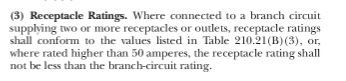
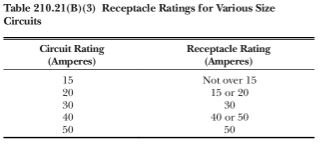
I was planning to add 2x 30A 240V outlets using 10-3 (w/ ground) 4-wire NEMA L14-30 receptacles. Based on my read, this is the current code for new-build 240V outlets.
Unfortunately, it appears the service in my panel is only 3-wire -- and the neutral and grounding bars are bonded -- or rather -- whoever wired it just threw the grounds and neutrals on the same buses -- you can see in the picture here:

I was hoping I had a 4-wire service out here, as then I'd know for sure waht to do to add these outlets -- but seeing the neutrals and grounds bonded like this in a subpanel has me confused about how to make this installation to code.
At first I freaked out -- thinking this whole panel was wired wrong and was a ticking time bomb -- but then realized it was probably grand-fathered in and was to-code when it was installed. The house was built in 1993 -- so I imagine this detached garage is from a vintage where 3-wire service w/ bonded ground/neutral in a detached building was acceptable.
I was hoping the run from the main panel to the sub-panel was in EMT and could serve as the EGC -- but it doesn't appear that is the case!
To complicate matters further -- it also appears *something* is bonded directly to the sheet metal of the panel on a the small ground bus near the lower right hand corner of that picture. The wire is coming in from the lower left of the panel, traced in green:

There is a chance it is a bonded to the water pipes and there's also a chance it IS the EGC -- or maybe it is the connection to a grounding electrode (?). This is not connected in parallel with the neutral bus -- which if it is a grounding electrode, seems like it should be if the neutral and ground bus are in parallel.
This is on the to-do list to determine all of these facts by either trying to find the termination of that wire in the main panel or testing for continuity between that wire and the water pipes or ground stake (if there is one).
If that wire is NOT a separate EGC or bonded to the water pipes -- it seems the exceptions to 250.32(B) have me covered -- and it is OK to use run the EGC and grounded conductor in parallel in this sub-panel - but, still, how in this case should I wire in a couple 240V plugs to pass the NEC 2020 inspection?
Should I use 4-wire receptacles running the neutral and EGC back to the same bonded neutral/EGC bus? Should I use 3-wire receptacles with just a "EGC" wire? These circuits will be for a welder/grinder/dust collector/etc. nothing that is cross-listed as 120V/240V.
I know the *right* thing to do is pull an EGC in from the main panel, add grounding electrodes (if there aren't any) and re-wire the subpanel completely. However, this is a 100 FT+ long wire run underground and I have no idea if it is buried cable or in conduit -- so let's just assume that is out of the question. I'll do it if I have to -- but I really just need a couple 240V plugs for a welder/duster collector/etc.
Isn't electricity fun? I sure think so.
I am looking to add 2x 240V 30A receptacles in a detached garage -- I am in Washington and my city uses the NEC 2020. I've read a TON online and the codebook -- and I think I am getting close -- or at least I am starting to understand the difference between the EGC, grounded conductor and grounding electrode!
I was planning to add 2x 30A 240V outlets using 10-3 (w/ ground) 4-wire NEMA L14-30 receptacles. Based on my read, this is the current code for new-build 240V outlets.
Unfortunately, it appears the service in my panel is only 3-wire -- and the neutral and grounding bars are bonded -- or rather -- whoever wired it just threw the grounds and neutrals on the same buses -- you can see in the picture here:
I was hoping I had a 4-wire service out here, as then I'd know for sure waht to do to add these outlets -- but seeing the neutrals and grounds bonded like this in a subpanel has me confused about how to make this installation to code.
At first I freaked out -- thinking this whole panel was wired wrong and was a ticking time bomb -- but then realized it was probably grand-fathered in and was to-code when it was installed. The house was built in 1993 -- so I imagine this detached garage is from a vintage where 3-wire service w/ bonded ground/neutral in a detached building was acceptable.
I was hoping the run from the main panel to the sub-panel was in EMT and could serve as the EGC -- but it doesn't appear that is the case!
To complicate matters further -- it also appears *something* is bonded directly to the sheet metal of the panel on a the small ground bus near the lower right hand corner of that picture. The wire is coming in from the lower left of the panel, traced in green:
There is a chance it is a bonded to the water pipes and there's also a chance it IS the EGC -- or maybe it is the connection to a grounding electrode (?). This is not connected in parallel with the neutral bus -- which if it is a grounding electrode, seems like it should be if the neutral and ground bus are in parallel.
This is on the to-do list to determine all of these facts by either trying to find the termination of that wire in the main panel or testing for continuity between that wire and the water pipes or ground stake (if there is one).
If that wire is NOT a separate EGC or bonded to the water pipes -- it seems the exceptions to 250.32(B) have me covered -- and it is OK to use run the EGC and grounded conductor in parallel in this sub-panel - but, still, how in this case should I wire in a couple 240V plugs to pass the NEC 2020 inspection?
Should I use 4-wire receptacles running the neutral and EGC back to the same bonded neutral/EGC bus? Should I use 3-wire receptacles with just a "EGC" wire? These circuits will be for a welder/grinder/dust collector/etc. nothing that is cross-listed as 120V/240V.
I know the *right* thing to do is pull an EGC in from the main panel, add grounding electrodes (if there aren't any) and re-wire the subpanel completely. However, this is a 100 FT+ long wire run underground and I have no idea if it is buried cable or in conduit -- so let's just assume that is out of the question. I'll do it if I have to -- but I really just need a couple 240V plugs for a welder/duster collector/etc.
Isn't electricity fun? I sure think so.