To avoid these ads, REGISTER NOW!

Adding a dedicated 240v 20amp outlet in my garage...

Jaguar Fan

Well-known member
Joined
Mar 13, 2008
Messages
5,509
Location
Park City for Ski Season; Las Vegas for Poker Seas
Seeking a little wiring advice. How would accomplish this? Or rather, how would you suggest I accomplish this?

I want to add a 240v 20 amp outlet in my garage. I'll use it for a portable charging cable for my plug-in hybrid. The charger plugs in to a standard household electric outlet (120v), and comes with a physical adaptor so it can plug into a 240v outlet. The writing on the side of this charger says either way it draws 16 amps.

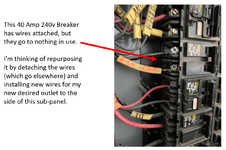
I have an existing 240v 40 amp breaker in the box - it is wired to a single location somewhere else in the house; it is unused. I was thinking of just disconnecting the existing wires from the existing breaker and add an outlet right next to the sub panel. But perhaps that is a dumb idea.

Here are pictures to help visualize this:

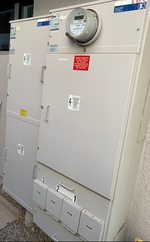
1) I have 600 amp service to the house:
screenshot-1834.png

screenshot-1835.png

2) There are three sub-panels in the house, two of which are inside the garage while the third is in a closet inside the house. Each of the sub-panels has a 200 amp breaker for that sub-panel:

screenshot-1836.png

screenshot-1837.png


3) Here's a sub-panel in my garage:

screenshot-1839.png

Here's the panel with the door open:

screenshot-1840.png

And with the cover off:

screenshot-1841.png

And specifically:

screenshot-1842.png

4) The other end of the existing wiring from that breaker I wish to repurpose - that circuit is not used:
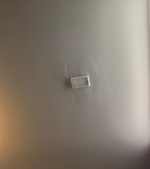
screenshot-1843.png

*******

My thinking is to run new wire up through the top of this sub-panel, and then someplace above it, cut a small hole in the sheetrock for the new wire to come out. At that point, I'd use surface mounted (that is, not behind the sheetrock) 4 square box on the wall above panel, EMT pipe & connectors to put a surface mount box for a 240v outlet. I hope my description is clear.

Is this a dumb approach?

Instead of repurposing the existing 40 amp/240v breaker, should I just add a new 20 amp/240v breaker? Physically it appears there is space on the left bank to do so.

Here's one issue - the inside of the sub panel at the top is pretty darn crowded already. Ideally I'd go up this side - I guess I can fish wire up though one of those knock-outs
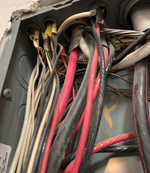
screenshot-1844.png


Any thoughts/advice?

Or should I just bite the bullet and hire a licensed electrician?

Many thanks for any comments.
 
To avoid these ads, REGISTER NOW!

wyliesdiesels

Well-known member
Joined
Aug 14, 2012
Messages
20,250
Location
Modesto, CA
Seeking a little wiring advice. How would accomplish this? Or rather, how would you suggest I accomplish this?

I want to add a 240v 20 amp outlet in my garage. I'll use it for a portable charging cable for my plug-in hybrid. The charger plugs into a standard household electric outlet (120v), and comes with a physical adaptor so it can plug into a 240v outlet. The writing on the side of this charger says either way it draws 16 amps.
what type of adapter is it? it would have to have a 14-20p (120/240v) on it as a 6-20p (240v only) doesnt have a neutral.

can the charger be converted to 240v?

why bother with a 240v outlet when it can plug into 120v?
 

infinkc

Well-known member
Joined
Jan 19, 2012
Messages
862
Yeah, wow that’s a bunch of power.

that breaker you say that’s not being used, seems to be marked “car” is that outlet nearby? I would just plug into that if it has a plug already, If no plug, put one in and get an adapter to go to the 20a plug on the charger. Much better to have it sized higher. Or buy a wall charger instead of the portable one that will do 32a.
 
OP
J

Jaguar Fan

Well-known member
Joined
Mar 13, 2008
Messages
5,509
Location
Park City for Ski Season; Las Vegas for Poker Seas
what type of adapter is it? it would have to have a 14-20p (120/240v) on it as a 6-20p (240v only) doesnt have a neutral.

can the charger be converted to 240v?

why bother with a 240v outlet when it can plug into 120v?

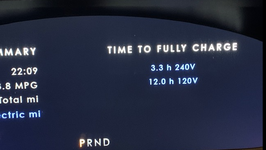
The "why bother" is time-to-charge the plug-in hybrid vehicle battery. It takes nearly 12 hours at 120v to fully charge the vehicle's battery from depleted. The vehicle specs say it would take a bit less than 4 hours to fully charge at 240v.

The charger itself does not need to be converted to 240v. Just like a laptop computer external charger, it accepts both US voltage (120) and European voltage (240) with just a physical adapter.

The type of 240v physical plug called for is this type:

plug.jpg
 

pattenp

Well-known member
Joined
Jun 4, 2008
Messages
10,175
Location
Virginia - USA
I see no issue with changing the 40A to a 20A and wiring the new 20A 240v outlet next to the subpanel. Should be very straightforward.
 
OP
J

Jaguar Fan

Well-known member
Joined
Mar 13, 2008
Messages
5,509
Location
Park City for Ski Season; Las Vegas for Poker Seas
Yeah, wow that’s a bunch of power.

that breaker you say that’s not being used, seems to be marked “car” is that outlet nearby? I would just plug into that if it has a plug already, If no plug, put one in and get an adapter to go to the 20a plug on the charger. Much better to have it sized higher. Or buy a wall charger instead of the portable one that will do 32a.

Yeah, it is marked "car." When the house was built, that circuit was intended to be for future use. The future is now, of course, but it turns out the other end (currently with a plate over it) isn't easily accessible. It is on the other side of the garage in the CEILING. I'm not sure why the original electricians who wired the house put it in the ceiling, but they did. It is right in the middle of another car bay on the far side of the garage. If I were to plug the vehicle-supplied portable charger into it, it would dangle down to the concrete slab and thus be in the way of everything, including our other car.

I suppose I could put a receptacle in that ceiling & use the circuit. Then I guess I could buy or make an extension cord with the appropriate physical connectors at each end, and run it across the ceiling and down to where my car is.

Now that I think about it, I could access the wires in the ceiling behind that cover, and just run EMT across the ceiling and then down the wall where the panel is, all through EMT.

I'm under the impression that a wall charger is pretty pricey, and then of course, I need to wire it to the panel in the pictures. One thing I'm not sure about is charging the vehicle with a 32a charger - I wonder if that is supported by the vehicle (is there such a thing as charging to quickly?)
 
Last edited:

wyliesdiesels

Well-known member
Joined
Aug 14, 2012
Messages
20,250
Location
Modesto, CA
The "why bother" is time-to-charge the plug-in hybrid vehicle battery. It takes nearly 12 hours at 120v to fully charge the vehicle's battery from depleted. The vehicle specs say it would take a bit less than 4 hours to fully charge at 240v.

The charger itself does not need to be converted to 240v. Just like a laptop computer external charger, it accepts both US voltage (120) and European voltage (240) with just a physical adapter.

The type of 240v physical plug called for is this type:

plug.jpg
Well that explains it. If the charger is rated for 240v input then the 6-20r pictured will work just fine. 6-20r doesnt have a neutral which is needed for 120v operation....
 

nadogail

Well-known member
Joined
Jan 23, 2009
Messages
32,306
Location
Coronado, CA
IMHO, I don't have enough information to make an intelligent suggestion; it would be better to have an Electrician look at your installation and prepare an analysis of you anticipated load.

What you are suggesting seems to be simple, but without looking for possible hidden problems I am unwilling to risk my reputation by giving you bad advice.
 

pattenp

Well-known member
Joined
Jun 4, 2008
Messages
10,175
Location
Virginia - USA
Thanks. Can you summarize the straight forward approach? Sorry for being so basic; I've never actually added a circuit to a subpanel.
I'd cut out drywall below panel. Come out bottom of panel with circuit, drill hole through stud into next bay to put romex through to new outlet. Repair drywall.
 

ycgoat

Well-known member
Joined
Mar 28, 2020
Messages
971
Location
S.E. Va
good lord your house has a huge electrical service.... why do you have 600a? how big is this house?
It looks to me like a multi family dwelling, and the main utility service is 600 amps, with 4 service disconnects, (1) of which is their 200 amp service.

I see no issue with changing the 40A to a 20A and wiring the new 20A 240v outlet next to the subpanel. Should be very straightforward.
I agree with this. Change the abandoned 2 pole 40amp breaker to a 2 pole 20 amp breaker, run a #12 NM-B (Romex) out the side of the panel or below it to your new outlet.
 

DJF3

Well-known member
Joined
Feb 15, 2020
Messages
186
Location
British Columbia, Canada
Something you stated doesn't make sense. You said either way it draws 16 amps. If you double your volts, your amps should drop in half. It sounds like you have a 120V charger, with an adapter that will allow it to plug into a 240V outlet, but still only pulling 120V at 16 amps.
 
To avoid these ads, REGISTER NOW!

Jeepster04

Well-known member
Joined
Jun 25, 2013
Messages
3,113
Something you stated doesn't make sense. You said either way it draws 16 amps. If you double your volts, your amps should drop in half. It sounds like you have a 120V charger, with an adapter that will allow it to plug into a 240V outlet, but still only pulling 120V at 16 amps.

The charger could still pull 16 amps, if it wanted to, at 240v.
 

kbeefy

Well-known member
Joined
Sep 14, 2013
Messages
3,524
Location
Harington, Eastern Washington
Something you stated doesn't make sense. You said either way it draws 16 amps. If you double your volts, your amps should drop in half. It sounds like you have a 120V charger, with an adapter that will allow it to plug into a 240V outlet, but still only pulling 120V at 16 amps.
120v x 16A = 1920w
240v x 16A = 3840w and half the charging time


Jagman, how about going straight down and mounting the receptacle below the panel?
Then theres no studs to deal with, and the bottom of your panel is a lot less congested.
And don't do a surface mounted box, get an 'old work' box that will flush mount, your doing sheetrock anyways.
If your careful, you can do all your work through a double gang cutout.
 

pizza

Well-known member
Joined
Dec 4, 2019
Messages
1,739
Location
Midwest, USA
it just seems like a weird coincidence to me that it happens to draw the same current at either voltage. i would also assume that it uses the same power at either voltage (i.e. is actually only a 120V device).

but that could be a coincidence.

aside from taking the device apart, the answer could lie in the 120V to 240V adapter it comes with. i wonder what the pinout is on it.
 

wyliesdiesels

Well-known member
Joined
Aug 14, 2012
Messages
20,250
Location
Modesto, CA
It looks to me like a multi family dwelling, and the main utility service is 600 amps, with 4 service disconnects, (1) of which is their 200 amp service.


I agree with this. Change the abandoned 2 pole 40amp breaker to a 2 pole 20 amp breaker, run a #12 NM-B (Romex) out the side of the panel or below it to your new outlet.
earlier he said its a 7500 sq ft SFR with subpanels
 

infinkc

Well-known member
Joined
Jan 19, 2012
Messages
862
Yeah, it is marked "car." When the house was built, that circuit was intended to be for future use. The future is now, of course, but it turns out the other end (currently with a plate over it) isn't easily accessible. It is on the other side of the garage in the CEILING. I'm not sure why the original electricians who wired the house put it in the ceiling, but they did. It is right in the middle of another car bay on the far side of the garage. If I were to plug the vehicle-supplied portable charger into it, it would dangle down to the concrete slab and thus be in the way of everything, including our other car.

I suppose I could put a receptacle in that ceiling & use the circuit. Then I guess I could buy or make an extension cord with the appropriate physical connectors at each end, and run it across the ceiling and down to where my car is.

Now that I think about it, I could access the wires in the ceiling behind that cover, and just run EMT across the ceiling and then down the wall where the panel is, all through EMT.

I'm under the impression that a wall charger is pretty pricey, and then of course, I need to wire it to the panel in the pictures. One thing I'm not sure about is charging the vehicle with a 32a charger - I wonder if that is supported by the vehicle (is there such a thing as charging to quickly?)
What type of car is it? I had a Volvo XC90 that came with a similar plug in charger. I put in a wall charger instead, the car is what limits how many amps it can charge at, 32a is pretty normal for most cars these days. Just gives you a much quicker charge, basically twice as fast of a 16a.
 

sparky 1971

Well-known member
Joined
Oct 9, 2018
Messages
8,133
Location
Central Iowa
*******

My thinking is to run new wire up through the top of this sub-panel, and then someplace above it, cut a small hole in the sheetrock for the new wire to come out. At that point, I'd use surface mounted (that is, not behind the sheetrock) 4 square box on the wall above panel, EMT pipe & connectors to put a surface mount box for a 240v outlet. I hope my description is clear.

Is this a dumb approach?
It's going to be a ***** getting out of the top of the panel, then around all of the wires in the wall to come out at the top. You won't be able to get through the existing connectors because the have a slide in lock on top of them that keeps the cables from moving. Why not cut a box in right underneath the panel and put the receptacle there? Or you could fish down and out into the 4" square box then pipe up to next to the panel. You could make it even easier by cutting in a single gang box under the panel so you can get your hands in there to grab the wire, then install the box and put a Raco 187 type box over the single gang (see picture), then run the conduit up to your desired location.
Instead of repurposing the existing 40 amp/240v breaker, should I just add a new 20 amp/240v breaker? Physically it appears there is space on the left bank to do so.
Since it appears that there are no spaces left, just remove the 240 and install a 220. Officially, the wire in the panel that will be disconnected is supposed to be labelled as to where it goes. If you're on the 2020 code, that receptacle is supposed to be GFCI protected, but there's no way I'd be installing one unless there is going to be an inspection.
 

Attachments

  • 187 Raco.jpg
    187 Raco.jpg
    23 KB · Views: 6
OP
J

Jaguar Fan

Well-known member
Joined
Mar 13, 2008
Messages
5,509
Location
Park City for Ski Season; Las Vegas for Poker Seas
It looks to me like a multi family dwelling, and the main utility service is 600 amps, with 4 service disconnects, (1) of which is their 200 amp service.


I agree with this. Change the abandoned 2 pole 40amp breaker to a 2 pole 20 amp breaker, run a #12 NM-B (Romex) out the side of the panel or below it to your new outlet.
Thanks!
 
OP
J

Jaguar Fan

Well-known member
Joined
Mar 13, 2008
Messages
5,509
Location
Park City for Ski Season; Las Vegas for Poker Seas
Something you stated doesn't make sense. You said either way it draws 16 amps. If you double your volts, your amps should drop in half. It sounds like you have a 120V charger, with an adapter that will allow it to plug into a 240V outlet, but still only pulling 120V at 16 amps.
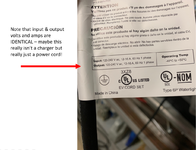
See pics below. I think I've been mistaken - I think this thing might not be a charger at all, even though it is labeled "charger." - I think this thing might just be a power cord providing AC to the car. I don't know for sure.

Pic #1 - see - it says "Portable EV Charger." The male prongs on the right are for standard household 120v line voltage.

screenshot-1850.png

Now, even though it says it is a charger, see the following pic of the tag explaining electrical characteristics - I wonder if this is really just a power CORD and not a CHARGER!

screenshot-1852.png


Here is the physical adapter for 240v:

screenshot-1853.png


screenshot-1854.png
 
Last edited:
OP
J

Jaguar Fan

Well-known member
Joined
Mar 13, 2008
Messages
5,509
Location
Park City for Ski Season; Las Vegas for Poker Seas
120v x 16A = 1920w
240v x 16A = 3840w and half the charging time


Jagman, how about going straight down and mounting the receptacle below the panel?
Then theres no studs to deal with, and the bottom of your panel is a lot less congested.
And don't do a surface mounted box, get an 'old work' box that will flush mount, your doing sheetrock anyways.
If your careful, you can do all your work through a double gang cutout.

Makes sense. I think I'll go straight down. I wondered about going down, but since all other wires go up, I was thinking maybe there was a reason the original electrician never went down - perhaps it violates "best practices" or code or something. I should say that box is mounted on a wall where the other side is outside the house, in case that matters.
 
OP
J

Jaguar Fan

Well-known member
Joined
Mar 13, 2008
Messages
5,509
Location
Park City for Ski Season; Las Vegas for Poker Seas
it just seems like a weird coincidence to me that it happens to draw the same current at either voltage. i would also assume that it uses the same power at either voltage (i.e. is actually only a 120V device).

but that could be a coincidence.

aside from taking the device apart, the answer could lie in the 120V to 240V adapter it comes with. i wonder what the pinout is on it.
See photos in a reply I posted above - I'm wondering if it really is not a charger at all (even though it says it is)
 
OP
J

Jaguar Fan

Well-known member
Joined
Mar 13, 2008
Messages
5,509
Location
Park City for Ski Season; Las Vegas for Poker Seas
What type of car is it? I had a Volvo XC90 that came with a similar plug in charger. I put in a wall charger instead, the car is what limits how many amps it can charge at, 32a is pretty normal for most cars these days. Just gives you a much quicker charge, basically twice as fast of a 16a.
It is a Lincoln Aviator (essentially a Ford Explorer with delusions of grandeur). I'll see if I can do a wall charger a bit later.

For now, here's a pic from the dashboard showing recharge time after I had pretty much fully depleted the hybrid battery:

screenshot-1855.png

One thing that is odd is that I would have expected charging time to be cut about 50% by utilizing 240v compared to 120v; I'm not sure why the recharge time is cut by so much more than that (72.5%)
 

Kezorm

Well-known member
Joined
Aug 18, 2021
Messages
174
Location
Twin Cities, MN
I'm wondering if it really is not a charger at all
You'd be correct. Not really a "charger". Given 120V, the car will limit itself to 12A because it has to assume 15A circuit. Given 240V, the car gets to pull 16A.

 
Last edited:
To avoid these ads, REGISTER NOW!
Top Bottom