To avoid these ads, REGISTER NOW!

Adding three phase sub panel to Suburban garage

Sincerd

Well-known member
Joined
May 12, 2023
Messages
75
A couple years ago I added a 220 single phase sub panel in the garage. Everything is worked well, but now I'm starting to get three phase equipment. I plan to get a phase perfect, 7.5 horsepower or 10 horsepower version. After that connection, I want to run it to a subpanel. And I just found one for way less than it would have costed me otherwise. I have a lot of questions about what you guys would suggest?

1. Connections - I know that three phase lowers the required amperage. What gauge wires are you using? What specific cable are you using or would you suggest? Should I get soow? Thwn and conduit? If so, what specific connections? Main panel to converter? Converter to panel? Panel to machines?

2. Should I run off of the garage sub panel? Or directly to the main? My existing panel is completely full but I may be able to tie a few dedicated circuits together. It's not an ideal, but at this point I don't really want to change the main breaker panel. Probably going to move in the next 5 to 10 years as I'm already running out of space.

3. Is there any specific permits for three days? I did get my garage door panel permitted. I wonder if it's the same process or slightly different?

4. Any other pointers or suggestions, to give me some areas to research would be greatly appreciated.
 
To avoid these ads, REGISTER NOW!
OP
S

Sincerd

Well-known member
Joined
May 12, 2023
Messages
75
It depends on where you live.
Call an electrician.
Same thing they told me about the original sub panel. I we'll end of doing it myself for several different reasons. Professional quality is more of of a risk as doing it myself with quality materials. I'll get to learn the system in case I need to add to it, make changes or repairs.
 

RTM

Well-known member
Joined
May 13, 2019
Messages
13,081
Location
SF Bay Area
My ignorant question would be:

Do you have 3 phase out at the pole? My neighborhood does not. Nearest industrial locations are almost 2 miles away. Apartment buildings and schools a little closer at 1/2 mile, but not sure they have 3phase, never looked.
 

mike93lx

ALLIANCE MEMBER
Joined
Dec 9, 2013
Messages
37,403
Location
Richmond, VA
My ignorant question would be:

Do you have 3 phase out at the pole? My neighborhood does not. Nearest industrial locations are almost 2 miles away. Apartment buildings and schools a little closer at 1/2 mile, but not sure they have 3phase, never looked.
He's using a phase converter
 

theoldwizard1

Well-known member
Joined
Feb 22, 2011
Messages
43,100
Location
SE MI
The 7.5HP version says the max input is 45A. I would use a 50A breaker to feed it. Wire size accordingly.

Also, if it is not too far ($$$) I would wire it into the main panel, even if I had to move some circuits there to duplex breakers. You don't list distances from the main, so it is hard to say which cable. Definitely NOT SOOW !
 

crashmtb

Well-known member
Joined
Aug 2, 2006
Messages
93
Location
Winnipeg
Same thing they told me about the original sub panel. I we'll end of doing it myself for several different reasons. Professional quality is more of of a risk as doing it myself with quality materials. I'll get to learn the system in case I need to add to it, make changes or repairs.
If you call an electrician, they may have advice.
 

KenC

Well-known member
Joined
Dec 20, 2009
Messages
2,577
All my wiring is conduit with THHN conductors. Not everyone buys into this, but the conduit is the safety ground, but all connections are compression vs set screw. I believe those to provide a better electrical connection.

My 3phase service is 240 delta so I get 240 single and 120 as well in the same panel.

Here is a good source for a wire size calculator
 

Grant Gunderson

Well-known member
Joined
May 17, 2013
Messages
2,318
Location
Bellingham, WA
It depends. I am running a sub panel off of my main panel for all of my 220 tools. It’s nice that each is on its own breaker as it allows my to lock them out centrally as I have a 6 year old kid. My 3 phase equipment each has its own VFD for various reasons. I only use 1 tool at a time. If I was going to use more than two at once I’d need a higher rated master breaker and wire feeding my sub panel. Since it’s just me it’s not an issue.

Some 3 phase tools make better sense to run off of a VFD then a phase converter so it’s worth looking at that before putting them all on the same rotary converter. Ie some tools are nice to able to vary the speed with the VFD.

Ideally feed the rotary phase converter directly off of a breaker in the main panel. Otherwise you are limited by tge power whatever else on the sub panel is pulling. It all counts against the breaker feeding it.

I’d then run a sub panel ideally with breakers or at least with a power distribution block after the rotary phase converter to control power to each tool individually. This way if one had an issue it doesn’t shut the rest down.

THHn wire in conduit is the way to go. I’d also use ferrules to terminate the ends. As always gauge is dependent on amperage. If you plan to be there a while it’s worth going to a larger gauge to give some additional overhead when tools change and you need more power.
 

Steve from Socal

Well-known member
Joined
Jan 27, 2009
Messages
3,491
Location
Hutchinson Ks.
First, I have to question anyone who wants to do power distribution calling 240 single phase 220?

As for a sub-panel, you can use a breaker panel and hard wire the equipment. That would generally be done using THHN wire and EMT. I guess you want the Phase-perfect powering the breaker panel? The Phase-Perfect is the line in to the sub-panel, it would be powered by your single phase panel to the sub-panel with however many machines connected to the sub.

You will need to size the wire for each circuit based on amps/distance. As mentioned above, unless you need the PP for a particular reason CNC or drive with current dumping there are far less expensive options
 

no704

Well-known member
Joined
Apr 27, 2016
Messages
5,207
Keep track of the generated “false leg” as to not hook to it for any controller systems.
 

bpwoodworking

Well-known member
Joined
Jul 6, 2023
Messages
254
I have a couple rotary phase converters and a couple VFD’s. For some machines a vfd is fantastic, nice to dial in the speed or have it set to stop quickly or start slowly. Rotary is great for most everything else outside of cnc equipment.
 

cretedog

ALLIANCE MEMBER
Joined
Mar 27, 2012
Messages
232
Location
North Dakota USA
A couple years ago I added a 220 single phase sub panel in the garage. Everything is worked well, but now I'm starting to get three phase equipment. I plan to get a phase perfect, 7.5 horsepower or 10 horsepower version. After that connection, I want to run it to a subpanel. And I just found one for way less than it would have costed me otherwise. I have a lot of questions about what you guys would suggest?

1. Connections - I know that three phase lowers the required amperage. What gauge wires are you using? What specific cable are you using or would you suggest? Should I get soow? Thwn and conduit? If so, what specific connections? Main panel to converter? Converter to panel? Panel to machines?

2. Should I run off of the garage sub panel? Or directly to the main? My existing panel is completely full but I may be able to tie a few dedicated circuits together. It's not an ideal, but at this point I don't really want to change the main breaker panel. Probably going to move in the next 5 to 10 years as I'm already running out of space.

3. Is there any specific permits for three days? I did get my garage door panel permitted. I wonder if it's the same process or slightly different?

4. Any other pointers or suggestions, to give me some areas to research would be greatly appreciated.
Did the same thing in one of my shops and couldn't be happier. 10HP Phase Perfect fed from a 200A panel with a 2 pole 70A. Feeds a small 3 phase panel. Greenfield in and out of the PP. Run various 3 phase machines from 1HP to 10HP. Glad I opted for the optional small screen on the PP- has some additional diagnostic functions I wasn't aware of. Also had the electrician wire an on off switch and indicator light into the front door of the panel.
 

Attachments

  • IMG_1477.jpg
    IMG_1477.jpg
    794.3 KB · Views: 77
OP
S

Sincerd

Well-known member
Joined
May 12, 2023
Messages
75
1.) What size is your sub panel feeder breaker and what do you plan on feeding with this thing?

4.) For $4500 and 60a input current you can buy a lot of VFDs.
80 amp feed to the existing panel. Biggest machine is a 7.5 hp lathe

Pp has cheaper options although I probably will spring for their more expensive model. I never regret going bigger, unless it's not going big enough. Figure I'll hook up a few 3ph to 3ph vfds eventually. I'd rather spend more now than have to rip stuff out if I eventually need more power, because that will cost a lot more than that 4500. Being cheap always cost me in the long run.
 

Steve from Socal

Well-known member
Joined
Jan 27, 2009
Messages
3,491
Location
Hutchinson Ks.
Phase-Perfect are a great way to get 3 phase, for single motor tools like a saw or drillpress consider VFD's. PP are mostly used with CNC machines or motor drives with regenerative braking. Unlike a rotary converter PP do not have a manufactured leg but, they are current limited. 10 HP is fine for a small shop, if you have any sights on bigger machines that would require a PP up size now.

Also remember like other frequency drives the PP has capacitors with a life limit. Not a big issue but, they do have ongoing needs.
 
To avoid these ads, REGISTER NOW!
OP
S

Sincerd

Well-known member
Joined
May 12, 2023
Messages
75
The motor doesn't care if it's Y or ∆, it cares only that the phase to phase voltages are somewhat balanced.
So you don't think it would require a neutral? I haven't picked up the lathe yet, I'm going off information online to try to be as prepared as I can to get it set up.

It's an osama Sr 1760g / shen jay / victor
 

mikegt4

Well-known member
Joined
Sep 12, 2005
Messages
3,265
Location
sw ohio
First, I have to question anyone who wants to do power distribution calling 240 single phase 220?

As for a sub-panel, you can use a breaker panel and hard wire the equipment. That would generally be done using THHN wire and EMT. I guess you want the Phase-perfect powering the breaker panel? The Phase-Perfect is the line in to the sub-panel, it would be powered by your single phase panel to the sub-panel with however many machines connected to the sub.

You will need to size the wire for each circuit based on amps/distance. As mentioned above, unless you need the PP for a particular reason CNC or drive with current dumping there are far less expensive options
I can't speak for the OP but I learned residential wiring as 110/220 and still catch myself referring to it as such for time to time. I still have several power tools with 110,115/220,230 on the data plate. One of the many unsettling things about being old and bewildered in today's world.
 

Steve from Socal

Well-known member
Joined
Jan 27, 2009
Messages
3,491
Location
Hutchinson Ks.
I can't speak for the OP but I learned residential wiring as 110/220 and still catch myself referring to it as such for time to time. I still have several power tools with 110,115/220,230 on the data plate. One of the many unsettling things about being old and bewildered in today's world.
At 63 I am not a spring chicken,

I have been working with three phase machinery for 50 years and have machines from pre WWII with 220/440. That said, the voltage in the US has been 480/240-120 my entire life. While the motors may say 110 or 115 I have known even as a lad that the voltage in the US is 120/240 single phase. 208 was the one voltage I didn't get til I was in my teens!
 
OP
S

Sincerd

Well-known member
Joined
May 12, 2023
Messages
75
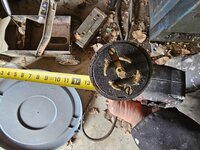
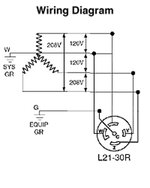
Went to pick up the bridge for today and tried to find the motor name plate but couldn't. I did snap a picture of the original plug. Looks to me like it's got a neutral, but honestly not sure. Is that 4 wire w ground? If so, can I just rewire the motor? If not, maybe change the motor? Definitely don't want to have to get a transformer.
 

Attachments

  • 20231203_142034.jpg
    20231203_142034.jpg
    842.1 KB · Views: 37

Steve from Socal

Well-known member
Joined
Jan 27, 2009
Messages
3,491
Location
Hutchinson Ks.
I just looked at the controls of a Osama 1760G at Wheeler machinery, it looks like a delta config with an onboard transformer. There should be no neutral required or needed, L1,L2,L3 and ground.
 

bronuc

Member
Joined
Nov 17, 2016
Messages
21
The Phase perfect is not a rotary. There is no wild leg. it's a true balanced 3ph output.

The PP generates the equivalent of high-leg delta. The third (generated) leg of a PP is quite a bit higher than 120V to neutral/gnd of the incoming 240V supply, approx 200V. If you hook up machinery that uses neutral and one of the legs to drive the controls assuming 120V, it is very important not to use the generated leg.
 
OP
S

Sincerd

Well-known member
Joined
May 12, 2023
Messages
75
I just looked at the controls of a Osama 1760G at Wheeler machinery, it looks like a delta config with an onboard transformer. There should be no neutral required or needed, L1,L2,L3 and ground.
That plug tell you anything?
 
OP
S

Sincerd

Well-known member
Joined
May 12, 2023
Messages
75
1000044452.jpg
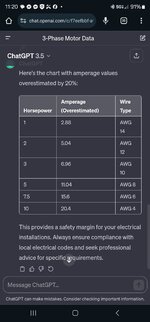
Does this look right to you electrical guys?

We're adding 20% like image number two1000044453.jpg
 
Last edited:
OP
S

Sincerd

Well-known member
Joined
May 12, 2023
Messages
75
You need to post a photo of the name plate of the motor. It should have all of the required details on it. It may even tell you how to wire it for high / Low voltage 3Phase as well.
Yeah I tried to look for it. Unless they removed nameplate and put it on the lathe , it's inaccessible without removing the motor. I see fairly cheap 7.5 horsepower three phase Motors near me. I'd rather swap the motor than mess around with Transformers. Is a motor swap fairly straightforward tying into existing electronics on the lathe? I can't seem to find much information about that.
 

Steve from Socal

Well-known member
Joined
Jan 27, 2009
Messages
3,491
Location
Hutchinson Ks.
The transformer is likely to supply control power to the machine. The motor is a 7.5 HP AC induction motor, by nature it is a delta start/delta run. The transformer may be at 120 'line voltage' OR 24 VAC the reason for the transformer is to use a 3 wire three phase delta power source. That plug 'may be' some work around the on-board trandformer. The 4 wire/5pin plug shown may just be what the shop had? The other possibility is someone added a 120 leg with neutral to power a DRO or other 120 device?
 

jar944

Well-known member
Joined
Jul 26, 2010
Messages
5,898
Location
Northern VA
Yeah I tried to look for it. Unless they removed nameplate and put it on the lathe , it's inaccessible without removing the motor. I see fairly cheap 7.5 horsepower three phase Motors near me. I'd rather swap the motor than mess around with Transformers. Is a motor swap fairly straightforward tying into existing electronics on the lathe? I can't seem to find much information about that.

Get your phone up/under/inside thr motor/housing and take a video/picture.

Unless you have a data plate somewhere else on the machine you are just guessing at the requirements.

also, 220v/230v Motors work fine on 240v service

Screenshot_20231204_120413_Gallery.jpg20231204_115347.jpg
 

micromind

Well-known member
Joined
Sep 24, 2023
Messages
3,012
Location
Fernley, Nevada, about 30 miles east of Reno.
1000044452.jpg
Does this look right to you electrical guys?

We're adding 20% like image number two1000044453.jpg

I've spent 32 years as a commercial/industrial electrician. This chart is absolute garbage. Whoever came up with those wire sizes is a complete fool.

The motor currents are quite a bit high for 480 3 phase and the wire sizes are way high.

For example, I've connected about 50 10HP motors to 480 3 phase. They are almost always somewhere between 11 and 15 amps. Unless they're a long way from the source, #12 is perfectly fine. The only way I'd use #4 is if the motor was more than 1,000' away.

It annoys me to no end that something this misleading gets published.........
 

micromind

Well-known member
Joined
Sep 24, 2023
Messages
3,012
Location
Fernley, Nevada, about 30 miles east of Reno.
Is a motor swap fairly straightforward tying into existing electronics on the lathe?

If the new motor is the same frame size, same voltage (within 10%), same RPM (again, within 10%) and same number of phases, it's pretty easy to swap.

If you're replacing a 3 phase one with a single phase model, it's a bit more tricky. If the frame size and RPMs are the same, you'll need to modify the power circuit all the way from the input terminals to the motor itself, and very likely change the starter. The control circuits stay the same.
 

Snapped-off

Well-known member
Joined
Feb 22, 2012
Messages
4,728
Location
Indiana
I've spent 32 years as a commercial/industrial electrician. This chart is absolute garbage. Whoever came up with those wire sizes is a complete fool.

The motor currents are quite a bit high for 480 3 phase and the wire sizes are way high.

For example, I've connected about 50 10HP motors to 480 3 phase. They are almost always somewhere between 11 and 15 amps. Unless they're a long way from the source, #12 is perfectly fine. The only way I'd use #4 is if the motor was more than 1,000' away.

It annoys me to no end that something this misleading gets published.........
I typically see 15-22, give or take. I'd hate to hook up a 12 wire with 4awg inside the typical p-head.. 😂
 
To avoid these ads, REGISTER NOW!
Top Bottom