To avoid these ads, REGISTER NOW!

advice needed

worn shoes

Member
Joined
Sep 13, 2008
Messages
19
Location
Whittier, CA
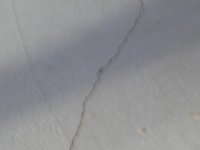
Thanks ahead of time for reading this and hopefully responding back to me. About 2 weeks ago I had my slab/foundation poured for my garage/workshop. Today I had noticed that it has cracks in it running in both directions. One of the cracks even traveled up the stem wall. Is this call for concern? Will the added weight of my vehicles cause further issues? My contractors plan is to grind it out and inject epoxy. Is this a good solution or a short term fix? I feel bummed that I would pay so much and that this would happen so soon.:sad:
 
To avoid these ads, REGISTER NOW!

Doxhog

Well-known member
Joined
Apr 1, 2011
Messages
148
Location
Illinois
Kind of sounds like the stone base underneath wasn't compacted enough. I know that concrete is going to crack at some point. Just my thought.
 

chickenhauler

Well-known member
Joined
May 31, 2011
Messages
473
Location
Pennsylvania
It depends how deep they are. They could just be surface cracks from the shrinking if it wasn't covered during curing. My slab got a couple in the part I had retarder added, but for the most part, they vanished when I power troweled. Grinding it out and injecting epoxy sounds like probably the most sensible approach though.
 

ConCretin

Well-known member
Joined
Jan 20, 2011
Messages
3,378
Location
Central Maine
Really depends on the nature of the cracks. Plastic shrinkage cracks, which I suspect is the case, are primarily cosmetic. They can be addressed with epoxy injection but since they will still show it might not be worth the effort.

With regard to cracks spreading to the stem wall, this is unlikely and probably a coincidence.

More info would help. Do you have pictures? How is the slab reinforced? What were the weather conditions on the day of the pour? Control joints?
 
OP
W

worn shoes

Member
Joined
Sep 13, 2008
Messages
19
Location
Whittier, CA
Thank you for the replies. I will be taking picture in a bit then load them later. The slab was poured over plastic and wire mesh with a few inches of sand. It was done at 6am but still on a hot June day about 2-3 weeks ago. Please excuse me but I don't know what a control joint is. The inspector checked the density of the ground before the pour and said it was great.
 

ConCretin

Well-known member
Joined
Jan 20, 2011
Messages
3,378
Location
Central Maine
A control joint is a saw-cut or tooled groove in the floor. They are intended to create a plane of weakness to induce a crack that is not noticeable. The crack occurs in the bottom of the groove so you don't see it.

Was glad to hear you checked the compaction of the sub grade. it eliminates some nasty potential issues.
 
OP
W

worn shoes

Member
Joined
Sep 13, 2008
Messages
19
Location
Whittier, CA
A control joint is a saw-cut or tooled groove in the floor. They are intended to create a plane of weakness to induce a crack that is not noticeable. The crack occurs in the bottom of the groove so you don't see it.

Was glad to hear you checked the compaction of the sub grade. it eliminates some nasty potential issues.

Thanks for the knowledge. No saw cuts or gloves were made. The cracks span the whole garage in both directions. 40' x 37' feet of cracking in a new slab is no good
 

ConCretin

Well-known member
Joined
Jan 20, 2011
Messages
3,378
Location
Central Maine
Your cracking is most likely the result of shrinkage when the concrete was very 'young'. They are not structural and will not affect the serviceability of your new floor.

If it makes you feel any better, think about it this way. Floors with control joints are cracked just like yours, their cracks are just straighter.
 

Shadowdog500

Well-known member
Joined
Dec 7, 2009
Messages
9,832
Location
Down the shore
Thanks for the knowledge. No saw cuts or gloves were made. The cracks span the whole garage in both directions. 40' x 37' feet of cracking in a new slab is no good

What!! You have a slab that big with no expansion joints???:wtf:

Concrete always cracks, the expansion joints give it a place to crack that don't look bad.


Chris
 
OP
W

worn shoes

Member
Joined
Sep 13, 2008
Messages
19
Location
Whittier, CA
What!! You have a slab that big with no expansion joints???:wtf:

Concrete always cracks, the expansion joints give it a place to crack that don't look bad.


Chris

They told me that expansion joints were for looks only. I had mentioned making cuts into it. (even though I didn't know the proper term) These guys told me that it would never crack. They said with it having sand, wire, plastic and it being 3,000 psi concrete it would be very unlikely to crack. I even watered it 3 times a day.
 
To avoid these ads, REGISTER NOW!
OP
W

worn shoes

Member
Joined
Sep 13, 2008
Messages
19
Location
Whittier, CA
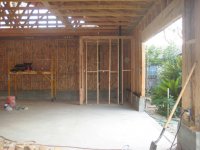
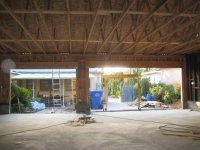
just a few shots from the inside
 

Attachments

  • garage 054.jpg
    garage 054.jpg
    139.2 KB · Views: 25
  • garage 057.jpg
    garage 057.jpg
    138.2 KB · Views: 27
  • garage 052.jpg
    garage 052.jpg
    140.9 KB · Views: 27

rockchucker

Well-known member
Joined
Mar 27, 2010
Messages
1,764
Location
Seattle WA
Those look very small to me. Nothing to be worried about structurally.

Concrete is basically going to crack no matter what.
 
OP
W

worn shoes

Member
Joined
Sep 13, 2008
Messages
19
Location
Whittier, CA
Those look very small to me. Nothing to be worried about structurally.

Concrete is basically going to crack no matter what.

Thanks for the input, I'm starting to feel better about the situation. I keep hearing that concrete will crack no matter what. But at my other house a house built in 1950 the garage slab has no cracks. Its never been redone before as my grandparents were the original owners. Better concrete? My driveway that was poured in 1998 has not one single hairline crack whats so ever. I guess having seen these other examples gave me false expectations.
 

Gary S

Well-known member
Joined
Dec 27, 2008
Messages
2,972
Location
Bismarck, ND
They told me that expansion joints were for looks only. I had mentioned making cuts into it. (even though I didn't know the proper term) These guys told me that it would never crack. They said with it having sand, wire, plastic and it being 3,000 psi concrete it would be very unlikely to crack. I even watered it 3 times a day.


"THEY" aren't right, and your concrete proves it. When I poured my slab, my building inspector told me that I needed to make the control cuts ASAP or I would have cracks like yours. I poured one afternoon, and was out in the rain the following morning making the cuts. I'm glad I did because within a couple of weeks, every cut had a crack down in the cut where I wanted it.
 
OP
W

worn shoes

Member
Joined
Sep 13, 2008
Messages
19
Location
Whittier, CA
"THEY" aren't right, and your concrete proves it. When I poured my slab, my building inspector told me that I needed to make the control cuts ASAP or I would have cracks like yours. I poured one afternoon, and was out in the rain the following morning making the cuts. I'm glad I did because within a couple of weeks, every cut had a crack down in the cut where I wanted it.

I know, your right. Now I have to deal with it. I realize that my contractor is full of s**t.
 

ConCretin

Well-known member
Joined
Jan 20, 2011
Messages
3,378
Location
Central Maine
They told me that expansion joints were for looks only. I had mentioned making cuts into it. (even though I didn't know the proper term) These guys told me that it would never crack. They said with it having sand, wire, plastic and it being 3,000 psi concrete it would be very unlikely to crack. I even watered it 3 times a day.

They were techically right about the first part. Control joints are just for looks. They create a place for the concrete where it won't show i.e. in the bottom of a straight saw cut or groove.

I'd say they were full of **** on the second part. There is nothing about sand, wire, plastic or 3000 psi that would keep a slab that big from cracking.

With all that said, no need to torture yourself now. The cracks won't bother a thing and with the wire mesh in there, they are not likely to get bigger nor is likely that more will form.

Enjoy your new slab and chaulk it up to experience. :)
 
OP
W

worn shoes

Member
Joined
Sep 13, 2008
Messages
19
Location
Whittier, CA
They were techically right about the first part. Control joints are just for looks. They create a place for the concrete where it won't show i.e. in the bottom of a straight saw cut or groove.

I'd say they were full of **** on the second part. There is nothing about sand, wire, plastic or 3000 psi that would keep a slab that big from cracking.

With all that said, no need to torture yourself now. The cracks won't bother a thing and with the wire mesh in there, they are not likely to get bigger nor is likely that more will form.

Enjoy your new slab and chaulk it up to experience. :)

Thanks for all your input LLwillysfan. Making me feel better pal!
 
To avoid these ads, REGISTER NOW!
Top Bottom