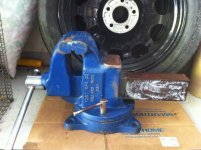
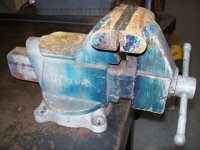
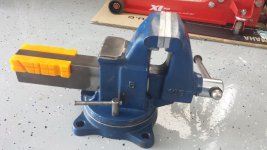
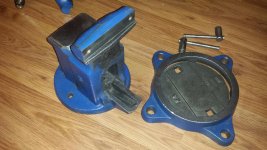
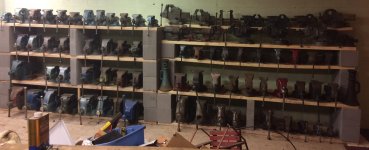
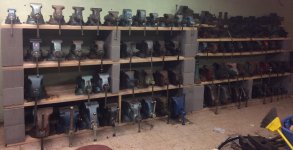
I have used a lot of different methods to remove rust over the years. If you want to attack the slides and hard to reach areas on a vise, I would recommend doing an immersion in liquid. Personally I don't like using abrasives as it removes good metal with the rust ( as Bill mentioned, the least damaging method). A sandblasting shop should be able to use walnut shells or baking soda which is less damaging to the metal, if you go that route.
I've used electrolysis for rust removal most commonly as it's cheap and effective. My vises have been cleaned with this method.
Evaporust is also very effective, but can be expensive to get enough to completely cover the vise. I put the smaller parts in evaporust (nuts/bolts/rings/etc)
I have had mixed results with the molasses & water technique - I've found it can take weeks and seems to be temperature dependent (has to stay warm).
Citric acid & vinegar are effective, but I have also had funny results with both methods. I used to use vinegar for cleaning cast iron cookware; some pieces started to clean up within 15 minutes, other pieces had to be repeatedly soaked. I do not understand what variables seem to cause this.
I do not use hydrochloric acid anymore. I attempted to remove rust from a Miller's Falls hacksaw years ago - after an hour it had reduced most of the visible rust but unknowingly chewed the threads on all the screws to an unusable state. Some of the old timers suggested that some of the older steels were mixed with pot metal and other steel grades, making them more/less reactive than other steels used on the same tools.
After the rust removal is complete you'll have to scrub the residue off the pieces. I give stuff a good scrub and then dry everything as quickly as possible in front of a fan. You will get some flash rusting, but a wipe down with BLO will take that right off. I like Boeshield T9 spray for getting into those tight places; it will dry and seems to last longer than WD40.