To avoid these ads, REGISTER NOW!

Advise on making a mobile ladder crane

ozzythesly

Member
Joined
Jun 4, 2024
Messages
11
Hello, this is my first post. I own an HVAC-r company in Florida and I saw this guy's invention called the ladder crane. For reference to what I'm attempting to build u can find it at laddercrane.com . I want to make one like this, only I want to make it from light weight aluminum (wich I don't have any issues with), and I want to be able to use an m18 milwaukee battery to power the 12v electric hoist. The reason I came here was to ask any electrical nerds if I would need anything special in between the battery pack that is 18v and the 12v hoist, like a buck converter to drop the 18v to 12? Or anything that I'm not thinking of here. The specs on the hoist is at zero load it takes 17 amps, at 500lbs it's 42 amps, and at 800 lbs it's max lifting it is at 58 amps. I will not be lifting anything over 500 lbs, at that point I will just hire a full sized crane, but for lifting replacement compressors on to a roof or just a condenser that may weight 150-350lbs tops on average, it's probably only going to need to pull between 25-35 amps max. I didn't assume I was just going to be able to connect an m18 battery directly to a 12v hoist. FYI: i can use an m18 high out put battery either 8.0 or 12 mah, the big boy, not sure how much they can safly discharge. Some guy on YouTube already apparently made this device but no one is selling it, so I need to make it. Any advise is greatly appreciated!
 
To avoid these ads, REGISTER NOW!

Schurkey

Well-known member
Joined
Oct 27, 2011
Messages
2,369
Location
The Seasonally Frozen Wastelands
at 500lbs it's 42 amps, and at 800 lbs it's max lifting it is at 58 amps. I will not be lifting anything over 500 lbs
Have you found a ladder rated for AT LEAST 500 pounds? Around here, it takes a special effort to find a ladder rated for 350, and most are significantly less than that.

I don't know about rechargeable batteries for power tools. Is 42 amperes out of one of them realistic? I'd have expected much less.
 

GeoBruin

Well-known member
Joined
May 5, 2018
Messages
3,738
Have you found a ladder rated for AT LEAST 500 pounds? Around here, it takes a special effort to find a ladder rated for 350, and most are significantly less than that.

I don't know about rechargeable batteries for power tools. Is 42 amperes out of one of them realistic? I'd have expected much less.
Ladders have a 4x safety factor. Do with that information what you will.

Most of the larger, and certainly the high output m18 batteries can deliver that kind of current easily. The problem you're going to have is finding a buck converter rated for that current. Realistically, you may not need to step the voltage down. The winch is probably capable of 14 and 1/2 or so volts from a car's alternator and under load, an 18 volt battery will sag a little. Granted, it's probably higher than 18 volts fresh off the charger.

If you do end up getting up buck converter, one of the little Power Wheels adapter versions on Amazon is probably not going to cut it. You may want to instead consider one intended to be used as a car jump starter. Much bigger cable and 60 amp fuse.
 
OP
O

ozzythesly

Member
Joined
Jun 4, 2024
Messages
11
Ladders have a 4x safety factor. Do with that information what you will.

Most of the larger, and certainly the high output m18 batteries can deliver that kind of current easily. The problem you're going to have is finding a buck converter rated for that current. Realistically, you may not need to step the voltage down. The winch is probably capable of 14 and 1/2 or so volts from a car's alternator and under load, an 18 volt battery will sag a little. Granted, it's probably higher than 18 volts fresh off the charger.

If you do end up getting up buck converter, one of the little Power Wheels adapter versions on Amazon is probably not going to cut it. You may want to instead consider one intended to be used as a car jump starter. Much bigger cable and 60 amp fuse.
Thanks for the info so far. This is what I wanted to bounce off others. I also had thought I "might be able" to use one of them hot wheels buck converters u were just referring to on Amazon, they r only rated to 20 amps max. Not sure if they make a buck converter capable of doing 35 amps max. I know that would be the "proper way" to go about it, yet, if I can not locate one, would it be all that bad to go like u said straight from the battery into the 12v hoist? Is there a potential for damaging either hoist or battery long term? It's a heavy duty warn hoist so it's not some cheap Chinese stuff. Let's say that I don't exceed say 300 lbs at this point because I'm definitely seeing what limitations I can achieve with just a 18v big battery pack.
 

GeoBruin

Well-known member
Joined
May 5, 2018
Messages
3,738
Thanks for the info so far. This is what I wanted to bounce off others. I also had thought I "might be able" to use one of them hot wheels buck converters u were just referring to on Amazon, they r only rated to 20 amps max. Not sure if they make a buck converter capable of doing 35 amps max. I know that would be the "proper way" to go about it, yet, if I can not locate one, would it be all that bad to go like u said straight from the battery into the 12v hoist? Is there a potential for damaging either hoist or battery long term? It's a heavy duty warn hoist so it's not some cheap Chinese stuff. Let's say that I don't exceed say 300 lbs at this point because I'm definitely seeing what limitations I can achieve with just a 18v big battery pack.
There certainly is the possibility of damaging one or both long term, but I don't know how probable it is, nor could I guess at the specific mechanism.

It sounds like you're married to the winch and the batteries because you already have both correct? It won't be long before people are in here telling you that a winch is not a hoist, and they they are not for lifting, but just in case they don't, I'll be the first to say it. Beyond that's, it's up to your discretion.

Here's that milwaukee jump starter I mentioned.


bonneyman

Well-known member
Joined
Apr 22, 2010
Messages
8,795
Location
Desert SW
Always wrestled with an idea like that for removing/installing compressors in the newer tall condensing units. Nice to see someone make a commercial jig to do that. Will definitely save the back!
 

American Locomotive

Well-known member
Joined
Jan 8, 2017
Messages
10,957
Location
Rhode Island
18v into a 12v motor, especially one that will be doing work will not be good for the motor. That's a 50% over voltage. It will not like that.

You will either need a very beefy buck converter or a just get a 12v rechargable lithium pack. An LiFePO4 12v battery should be light enough to do what you want, and be easily chargable.
 
OP
O

ozzythesly

Member
Joined
Jun 4, 2024
Messages
11
There certainly is the possibility of damaging one or both long term, but I don't know how probable it is, nor could I guess at the specific mechanism.

It sounds like you're married to the winch and the batteries because you already have both correct? It won't be long before people are in here telling you that a winch is not a hoist, and they they are not for lifting, but just in case they don't, I'll be the first to say it. Beyond that's, it's up to your discretion.

Here's that milwaukee jump starter I mentioned.

Thanks for the info on the jump starter, I'm guessing it has a high amp buck converter built in if it takes 18v to 12v, I'll most likely get that and utilize it. I am not married to any one idea yet, I did not purchase or make anything because I have done that before and wasted a lot of time and money, and in all my posts I did make sure to say "hoist" not "winch" I'm very aware of the difference, I do not want a free moving clutch on the motor like a winch, I want something that has a locker if anything happends lifting a load, the one I had in mind is 100% a hoist.
 
OP
O

ozzythesly

Member
Joined
Jun 4, 2024
Messages
11
18v into a 12v motor, especially one that will be doing work will not be good for the motor. That's a 50% over voltage. It will not like that.

You will either need a very beefy buck converter or a just get a 12v rechargable lithium pack. An LiFePO4 12v battery should be light enough to do what you want, and be easily chargable.
That u gor ur suggestion with the LiFePO4 12v, the one down side that wount work for this application is it needs to be portable and not very heavy, this battery is basicly the size of a motorcycle battery in my opnion and that just wount work, I need at biggest a battery for a tool.
 

GeoBruin

Well-known member
Joined
May 5, 2018
Messages
3,738
That u gor ur suggestion with the LiFePO4 12v, the one down side that wount work for this application is it needs to be portable and not very heavy, this battery is basicly the size of a motorcycle battery in my opnion and that just wount work, I need at biggest a battery for a tool.
What about a 3s LiPo? Smaller, lighter, and cheaper than a tool battery and able to deliver waaaay more current. This is not a high runtime application so you could choose your capacity based on your maximum size/minimum current delivery requirements.

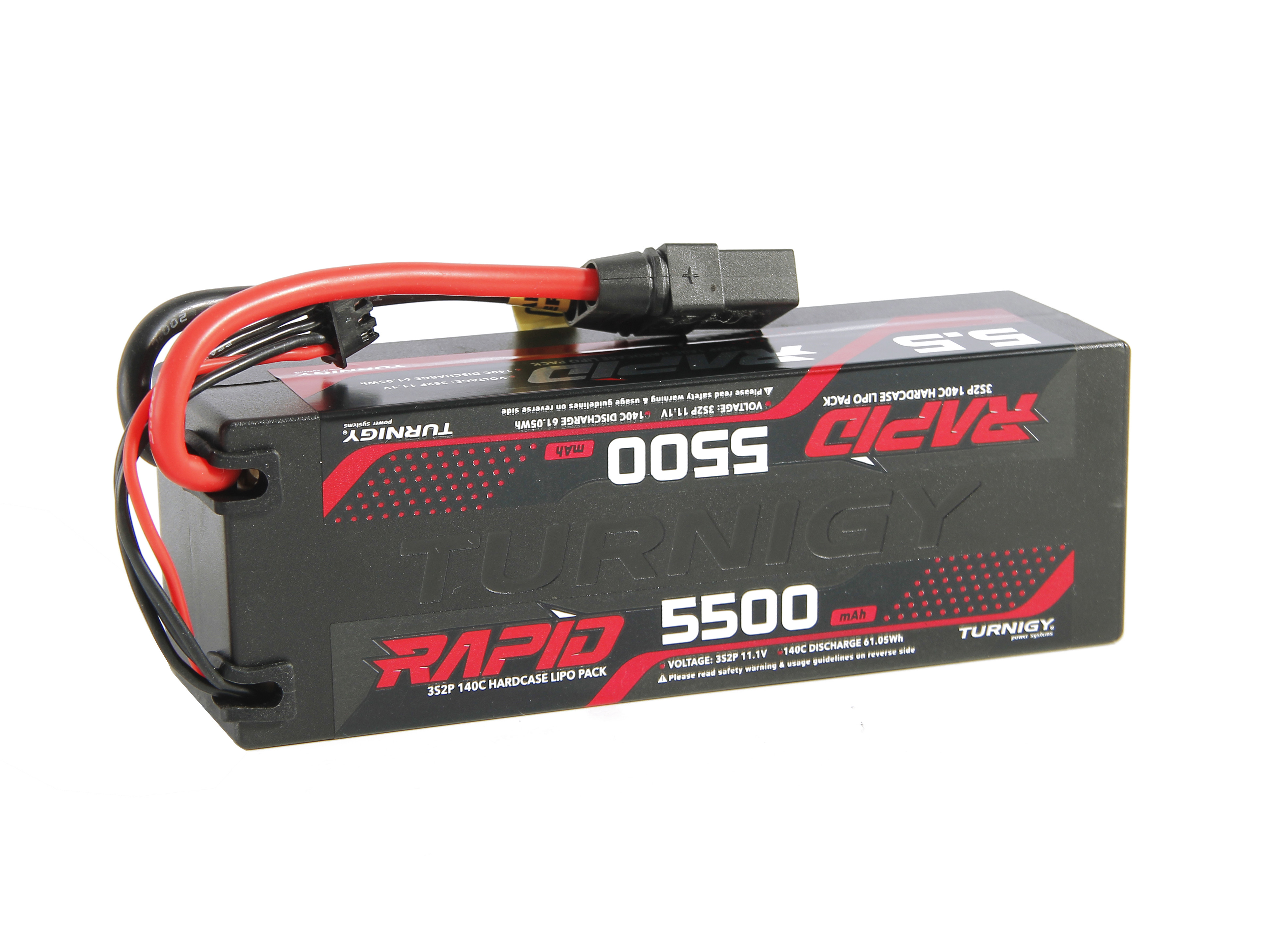
I'm not up to speed on the latest and greatest as far as lipos go, but a quick search shows something like this 5ish amp hour hard shell pack rated at 140C. That's over 700 amps! And it's tiny, weighs less than a pound, and is only $30.


MoonRise

Well-known member
Joined
Nov 5, 2010
Messages
4,028
Location
NJ
If you are 'making' a lifting device (hoist, crane, whatever), there are all sorts of rules and regulations that you MUST comply with. OSHA, ASME, ANSI , etc.

There is currently no '500 lb rated' ladder category.


The highest rated category is IAA (extra heavy duty) with a weight rating of 375 lb.

Using a ladder with a higher load than it is rated for and WHEN it breaks/fails then YOU as the business owner/boss who did that are on the hook for any and all injuries and damage. And fines, penalties (OSHA and other), and other $$$$ ramifications.

I'm all for DIY.

But a business is NOT a DIY situation. That is flat out negligence, and an injury/negligence lawyer would probably have a field day with that sort of situation. Calling @bulletpruf

Modern battery packs (like a Li-ion or LiPo or LiFe pack) often have some sort of charge controller and load controller circuitry built in. Because those battery chemistry packs do NOT like electrical situations (either current/power IN or OUT) outside of certain design parameters. Else they literally go flash-bang-boom.

Old-school lead acid car starting battery can supply hundreds of amps for a short period of time. A deep cycle lead-acid battery can usually supply about 1/10 of the 'rated' amp-hours in amps without too much issue, but using that type and construction of battery for high amp uses damages and shortens the life of the battery. So a 100 amp-hour deep cycle battery can supply 10 amps for about 10 hours ok, but trying to pull 100 amps for 1 hour and the battery life is probably shortened a lot.

With a lithium-whatever battery, you have to check for the rating in both amp-hours AND max allowable amp draw that the load circuitry will allow before the circuit 'thinks' there is a short-circuit condition and it just stops ALL current flow until reset somehow.

And 50 amps pulled from any battery is not a trivial amount of current. For the battery and the wiring to deal with too.

An RC hobby battery like https://hobbyking.com/en_us/turnigy...-100c-lipo-battery-pack-w-xt90-connector.html is 6 A-hr rated.

I'll round things off a little here. If you pulled 60 amps from that you might get 6 minutes of use best-case. A hobby RC use-case might accept that short of a run time, a tool user might not like that short of a run time. And the battery will most likely get HOT and have to cool off before being recharged and then have to cool off before being used again.

It's all about trade offs. Size, weight, cost, life time, total available power, max power that can be withdrawn at a time, etc. TANSTAAFL.

:beer:
 
OP
O

ozzythesly

Member
Joined
Jun 4, 2024
Messages
11
If you are 'making' a lifting device (hoist, crane, whatever), there are all sorts of rules and regulations that you MUST comply with. OSHA, ASME, ANSI , etc.

There is currently no '500 lb rated' ladder category.


The highest rated category is IAA (extra heavy duty) with a weight rating of 375 lb.

Using a ladder with a higher load than it is rated for and WHEN it breaks/fails then YOU as the business owner/boss who did that are on the hook for any and all injuries and damage. And fines, penalties (OSHA and other), and other $$$$ ramifications.

I'm all for DIY.

But a business is NOT a DIY situation. That is flat out negligence, and an injury/negligence lawyer would probably have a field day with that sort of situation. Calling @bulletpruf

Modern battery packs (like a Li-ion or LiPo or LiFe pack) often have some sort of charge controller and load controller circuitry built in. Because those battery chemistry packs do NOT like electrical situations (either current/power IN or OUT) outside of certain design parameters. Else they literally go flash-bang-boom.

Old-school lead acid car starting battery can supply hundreds of amps for a short period of time. A deep cycle lead-acid battery can usually supply about 1/10 of the 'rated' amp-hours in amps without too much issue, but using that type and construction of battery for high amp uses damages and shortens the life of the battery. So a 100 amp-hour deep cycle battery can supply 10 amps for about 10 hours ok, but trying to pull 100 amps for 1 hour and the battery life is probably shortened a lot.

With a lithium-whatever battery, you have to check for the rating in both amp-hours AND max allowable amp draw that the load circuitry will allow before the circuit 'thinks' there is a short-circuit condition and it just stops ALL current flow until reset somehow.

And 50 amps pulled from any battery is not a trivial amount of current. For the battery and the wiring to deal with too.

An RC hobby battery like https://hobbyking.com/en_us/turnigy...-100c-lipo-battery-pack-w-xt90-connector.html is 6 A-hr rated.

I'll round things off a little here. If you pulled 60 amps from that you might get 6 minutes of use best-case. A hobby RC use-case might accept that short of a run time, a tool user might not like that short of a run time. And the battery will most likely get HOT and have to cool off before being recharged and then have to cool off before being used again.

It's all about trade offs. Size, weight, cost, life time, total available power, max power that can be withdrawn at a time, etc. TANSTAAFL.

:beer:
I definitely appreciate all the data and advise. I'm aware of all the fun legality involved, that's why I alone the owner would be the only one using it and just for small jobs like a 3 ton condenser at max or a compressor. I'm on here to see how "practical " or even "possible" it would be and I'm starting to think I should pretty much ditch the battery powered option and just stick with a plug in version. It seems that in order to achieve the duration wich may be like 3-8 mins hoisting run time wise, I probly have to get a battery the size of a motorcycle battery just to make sure the battery doesn't get pounded and that is too much weight and heft to make this practical. I knew it would be a stretch but I thought mabye I'm just being negative thinking it can't be done. If anyone else has anything to add that would make this possible I would love to know, but at this point I probably need to go plug in hoist.
 

American Locomotive

Well-known member
Joined
Jan 8, 2017
Messages
10,957
Location
Rhode Island
I'm not so sure why you are hung up on the weight of a motorcycle battery. A LiFePO4 motorcycle battery would be like 8 pounds. How heavy do you think the hoist, which you need to carry up onto the roof, will be?
 
OP
O

ozzythesly

Member
Joined
Jun 4, 2024
Messages
11
I'm not so sure why you are hung up on the weight of a motorcycle battery. A LiFePO4 motorcycle battery would be like 8 pounds. How heavy do you think the hoist, which you need to carry up onto the roof, will be?
Literally the whole point of this was to make a light weight version of the origional plug in all steel ladder crane. I was going to make an aluminum frame version that used a battery pack. I know I can't cave much weight of thw hoist but the power pack and frame I'd where the weight can be saved. I can shave off a few lbs from steel to aluminum but thw battery pack shouldn't weight much more than 2 lbs, and that's still kinda pushing it in my opnion from just plugging the damn thing in. It would be super *** and great to just pop a battery pack on this and wamo, mobile light weight crane. I wasn't going to pick up anything over about 375 at this juncture with this set up.
 

GeoBruin

Well-known member
Joined
May 5, 2018
Messages
3,738
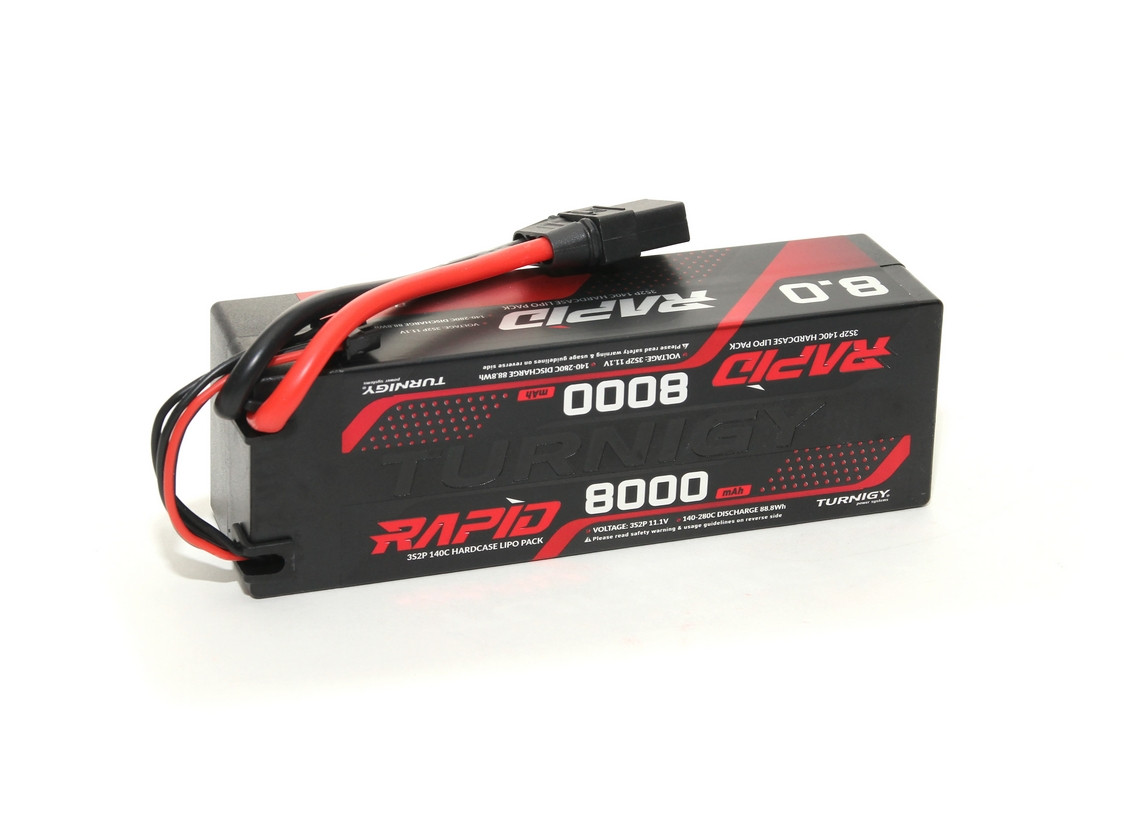
There are still plenty of lipo options available. Even if you go 3s instead of 4 s, there are 8, 9, 10, and even 14 Amp Hour packs available that deliver ridiculous amps less than 2 pounds and for less than a new m18 battery.


ChevyEFI

Well-known member
Joined
Sep 2, 2012
Messages
8,735
Location
Phoenix, AZ
Combine a hand crank winch lifter and ladder lift. Add a gear reduction box to the hand side and add a drive compatible with a drill / ratcheting tool. If the tool isn't over loaded and your existing batteries work, that should do it. If the batts are low, you can still work.
 

Zebu Fellenz

Well-known member
Joined
Aug 3, 2010
Messages
1,687
Location
Phelps, NY
Combine a hand crank winch lifter and ladder lift. Add a gear reduction box to the hand side and add a drive compatible with a drill / ratcheting tool. If the tool isn't over loaded and your existing batteries work, that should do it. If the batts are low, you can still work.

I think this is the best idea so far. Assuming you carry a relatively high torque & low speed cordless drill with you.
 
OP
O

ozzythesly

Member
Joined
Jun 4, 2024
Messages
11
I think this is the best idea so far. Assuming you carry a relatively high torque & low speed cordless drill with you.
I have thought about that idea first and foremost because it takes the least path of resistance. But it does not suit what I need, wich was the origional post. I'm very happy for all of the ideas but I would like to stay on track to solving the solution to the origional post. I want to make a battery powered, light weight crane hoist device. No mechanical cranks that need a drill or anything of that nature. I was mainly trying to asking electrical guys for a solution that I mabye was not aware of. The best so far is switching out the milwaukee m18 pack out for a super high end lithium ion pack that is already at the proper 12v so no need for a buck converter. Does anyone know the math on what size battery pack I would need that would run up to 40 amps for up to 5 mins continous, then again up to 5 mins later. If I have to have 2 precharged packs for an up and down that's fine but 1 pack is obviously preferred. The average amps most likely will be between 25-35 but I want some extra so it dosnt beat the battery too bad.
 
To avoid these ads, REGISTER NOW!

5ubtle

Well-known member
Joined
Jun 15, 2016
Messages
393
Location
Spartanburg, SC
5 min = 1/12 th hour = 0.083 hr
40 amp x 0.083 hr = 3.33 Amp-hours (Ah)

More Ah is better. Have a factor of safety.
Your battery would also need a "C rating" of 12 or more.
 
OP
O

ozzythesly

Member
Joined
Jun 4, 2024
Messages
11
5 min = 1/12 th hour = 0.083 hr
40 amp x 0.083 hr = 3.33 Amp-hours (Ah)

More Ah is better. Have a factor of safety.
Your battery would also need a "C rating" of 12 or more.
U know so much more about batteries than I do, I am not as familiar. What size MAH battery would I need? I belive I understand that C rating is the amp rating I think based on earlier posts. I'm not sure how I could use the "ah" to translate the MAH so I know what type of battery to look for. I'm sorry if I'm frustrating to talk to about this subject, I'm a specialist in a few fields, yet batteries is not one of them. Again, sorry for my ignorance.
 

driftpin

Well-known member
Joined
Dec 22, 2016
Messages
11,250
Location
Miami-Dade/Broward Co. Florida
I believe this is the type of situation where you need to think about your liability, and let that lead you to an acceptable solution for your lifting. One of my life-long friends here in south FL just retired as a HVAC contractor, working primarily in Palm Beach County. He just called for a crane to move something which couldn't be serviced with a purpose-built manual lift.

I bet on the way to a job in FL you probably pass three or four billboard ads for personal injury attorneys.

Use the right tool for the job. Your liability attempting to do what you propose is enough to re-think your idea. If in-doubt refer to the first sentence of this paragraph.
 

5ubtle

Well-known member
Joined
Jun 15, 2016
Messages
393
Location
Spartanburg, SC
MAH = Milli Amp Hour
Milli = 1/1000 th (think 1mm in 1 meter, if you know metric)
1 Ah = 1000 mAh
3.33 Ah = 3330 mAh

Any of the batteries identified by @GeoBruin in post #15 will be great.
 
OP
O

ozzythesly

Member
Joined
Jun 4, 2024
Messages
11
I believe this is the type of situation where you need to think about your liability, and let that lead you to an acceptable solution for your lifting. One of my life-long friends here in south FL just retired as a HVAC contractor, working primarily in Palm Beach County. He just called for a crane to move something which couldn't be serviced with a purpose-built manual lift.

I bet on the way to a job in FL you probably pass three or four billboard ads for personal injury attorneys.

Use the right tool for the job. Your liability attempting to do what you propose is enough to re-think your idea. If in-doubt refer to the first sentence of this paragraph.
Thank u very much for the second time for ur legal advise. BUT, I do belive this is not a legal advise forum, nore was any of my questions in the origional post about liability or osha or any of that. I know and have plenty of individuals I can call and get this type of advise from IF I so seemed it. I wanted advise on electrical information. If someone dosnt have advise on specifically just that I really am not interested. But thank u for assuming I know nothing of this due to the fact that I'm just trying to make a fun project as a proof of concept. Next time I need legal advise I'll definitely know where I should go next time ( here), I'm not trying to sound like an ungrateful ***** but I never asked for that type of help and I already said that in another post in this thread I belive.
 
OP
O

ozzythesly

Member
Joined
Jun 4, 2024
Messages
11
MAH = Milli Amp Hour
Milli = 1/1000 th (think 1mm in 1 meter, if you know metric)
1 Ah = 1000 mAh
3.33 Ah = 3330 mAh

Any of the batteries identified by @GeoBruin in post #15 will be great.
Thank sir, u and geobruin have been the most help in this discussion in my opnion with the battery solutions and math. U guys r why I came here!
 
OP
O

ozzythesly

Member
Joined
Jun 4, 2024
Messages
11
I (and probably GeoBruin also) are worried about your safety too. Please don't make us regret helping you.:unsure:
Jesus, nm, I will not build this device. And next time I need to build something I'll just do it and figure it out. I'm very aware of all the safety issues involved. I'm also a welder and I know what weight requirements things r and require. This was my first post on this forum, and I'm pretty sure it will be my last after this. If I was dabbling in making a giant tesla coil that could hurt me I would understand ur concerns, but I'm very aware of what could happen to me if said anything should fail. I'm just going to get a plug in hoist and be done with it. Thanks to anyone who has actually had useful advise to give about the direct origional post I posted. This has been an enlightening talk. I didn't mean to piss anyone off if I did but next time perhaps keep advise that people never asked for to ur self. Thanks for caring about other safety but after one person says something about it, feels like ur beating a dead horse at that point.
 

GeoBruin

Well-known member
Joined
May 5, 2018
Messages
3,738
Jesus, nm, I will not build this device. And next time I need to build something I'll just do it and figure it out. I'm very aware of all the safety issues involved. I'm also a welder and I know what weight requirements things r and require. This was my first post on this forum, and I'm pretty sure it will be my last after this. If I was dabbling in making a giant tesla coil that could hurt me I would understand ur concerns, but I'm very aware of what could happen to me if said anything should fail. I'm just going to get a plug in hoist and be done with it. Thanks to anyone who has actually had useful advise to give about the direct origional post I posted. This has been an enlightening talk. I didn't mean to piss anyone off if I did but next time perhaps keep advise that people never asked for to ur self. Thanks for caring about other safety but after one person says something about it, feels like ur beating a dead horse at that point.
Please don't be discouraged. Nearly every thread on this forum ultimately winds up with some kind of disagreement. People have differences of opinion and quite often people offer "unsolicited" advise. I use quotations there because you did come here looking for input. Asking people to respond only to your specific questions without letting their own experience and opinions creep in to their responses is probably not reasonable.

That said, only you know your skills, experience, risk tolerance and the specific context of your application, so you ultimately get to decide what information shared here is relevant to you and what you can disregard.

I find that approach makes the forum most tolerable... er... um... enjoyable :)
 

Steve_P

Well-known member
Joined
Sep 15, 2010
Messages
5,185
I'm a mechanical engineer and worked at a ME design and consulting firm for 13 years. We'd have a "ladder hoist" type guy come in at least once a year wanting help to design something similar for a commercial product to sell. We turned EVERY single one of them away. Quite simply, as has been said, it's a lawsuit waiting to happen. An overhead lifting device like this isn't something to ask for help from a forum if most real ME consulting firms won't touch it from an individual or corporation. Overhead lifting design is highly specialized because the liability concerns.
I know this isn't what OP wants to hear, but if everyone here was like, "Yeah, you can do it, just...." this wouldn't be a very good "community".

These were my 2 cents, and I will now disappear from this thread.
 

driftpin

Well-known member
Joined
Dec 22, 2016
Messages
11,250
Location
Miami-Dade/Broward Co. Florida
I spent a 20 year career responding to the emergency healthcare needs of people who did things resulting in serious injuries, amputations, and deaths. In construction accidents it's often a commercially-designed and operated piece of equipment which either has a failure during use, or operator error causing the injury/fatality.

I spoke with my Palm Beach County FL HVAC business owner best-friend about lifting machinery, and he said that his goal starting every day on the job was to be around the next day to work, again.

Good luck with your project.
 

Joemctag

Well-known member
Joined
Aug 11, 2017
Messages
813
Location
Outside raleigh nc
If you are 'making' a lifting device (hoist, crane, whatever), there are all sorts of rules and regulations that you MUST comply with. OSHA, ASME, ANSI , etc.

There is currently no '500 lb rated' ladder category.


The highest rated category is IAA (extra heavy duty) with a weight rating of 375 lb.

Using a ladder with a higher load than it is rated for and WHEN it breaks/fails then YOU as the business owner/boss who did that are on the hook for any and all injuries and damage. And fines, penalties (OSHA and other), and other $$$$ ramifications.

I'm all for DIY.

But a business is NOT a DIY situation. That is flat out negligence, and an injury/negligence lawyer would probably have a field day with that sort of situation. Calling @bulletpruf

Modern battery packs (like a Li-ion or LiPo or LiFe pack) often have some sort of charge controller and load controller circuitry built in. Because those battery chemistry packs do NOT like electrical situations (either current/power IN or OUT) outside of certain design parameters. Else they literally go flash-bang-boom.

Old-school lead acid car starting battery can supply hundreds of amps for a short period of time. A deep cycle lead-acid battery can usually supply about 1/10 of the 'rated' amp-hours in amps without too much issue, but using that type and construction of battery for high amp uses damages and shortens the life of the battery. So a 100 amp-hour deep cycle battery can supply 10 amps for about 10 hours ok, but trying to pull 100 amps for 1 hour and the battery life is probably shortened a lot.

With a lithium-whatever battery, you have to check for the rating in both amp-hours AND max allowable amp draw that the load circuitry will allow before the circuit 'thinks' there is a short-circuit condition and it just stops ALL current flow until reset somehow.

And 50 amps pulled from any battery is not a trivial amount of current. For the battery and the wiring to deal with too.

An RC hobby battery like https://hobbyking.com/en_us/turnigy...-100c-lipo-battery-pack-w-xt90-connector.html is 6 A-hr rated.

I'll round things off a little here. If you pulled 60 amps from that you might get 6 minutes of use best-case. A hobby RC use-case might accept that short of a run time, a tool user might not like that short of a run time. And the battery will most likely get HOT and have to cool off before being recharged and then have to cool off before being used again.

It's all about trade offs. Size, weight, cost, life time, total available power, max power that can be withdrawn at a time, etc. TANSTAAFL.

:beer:
OSHA applies to employees. He’s the owner. Now, it could very well be that his customers want him to be OSHA-compliant anyway.
 

545_days

Well-known member
Joined
Oct 30, 2016
Messages
583
Location
Texas
I will only add this.

Look at the top video on the laddercrane website. Notice where the guy using the laddercrane is standing and what direction he is pushing as he supports part of the weight of the laddercrane device and the AC condenser. If the lifting device suddenly failed, or the strap slipped and the load dropped, which direction would he go? What would he land on?

Maybe most guys would hang on and could recover from a foreseeable incident, but I wouldn't want to bet on it.
 
To avoid these ads, REGISTER NOW!
Top Bottom