To avoid these ads, REGISTER NOW!

Air compressor drain

MotorCityBear

Active member
Joined
Sep 24, 2012
Messages
31
Location
Blairsville, GA
So what are you guys doing for an air compressor drain? I have an 80 gal Dewalt air compressor and I have been opening the bottom drain into a hose and running it out of the garage, but that is a pain. I want to run a permanent drain through an exterior wall outside. Just looking for ideas.
 
To avoid these ads, REGISTER NOW!

nadogail

Well-known member
Joined
Jan 23, 2009
Messages
31,907
Location
Coronado, CA
After moving the drain valves on my compressors, I cut a piece of PVC pipe to make a wrench so i can drain my compressors without having to get on my knees; the floor and everything on it seems to keep getting further away every year.

The small amount of condensate that comes from my compressors is allowed to evaporate from the shop floor.
 

BreeStephany

ALLIANCE MEMBER
Joined
May 19, 2012
Messages
849
Location
Oregon
On my shop compressor, I removed the drain petcock, installed a 3/8" close ****** and a 90, ran 3/8" NPT galvanized pipe out the drain past the edge of the compressor and installed a easily accessible ball valve.

On a larger 1800cfm 75hp vane compressor I worked on, they ran threaded pipe from the compressor and auxiliary storage tank to a solenoid valve that we triggered to open for 30 seconds on an hourly timer, to open for 30 seconds following reaching high pressure cutoff and to open once pressure was below 10psi and remain open pressure hit above 10psi. The solenoid valve was piped with copper to the exterior of the building. The compressor ended up maintaining pressure for the building 24/7, so it ended up being more complicated than necessary and a simple timer valve would have essentially done the same thing since the compressor never dropped below temperature except during service/inspection.
 

johnre

Well-known member
Joined
Dec 1, 2016
Messages
1,042
Location
Portland, OR
I have a 4 HP hot ********* compressor that's in a crawl space back of the garage wall, roughly 6' feet above the garage floor. All of the compressor functions are brought out to a panel on this wall, including the air drain, so most operations can be done from this side, other than oil check / change, air filter service, and belt service. The elevated platform the compressor sits on is about 4" above the top of this panel.

1762159741001.jpeg

All that I needed for this was a 72" x 3/8" hose whip, and a feed-thru hex reducer to join the hose end and the tank's standard drain petcock - you can see the latter two items in the image above. The reducer uses a washer and nut on the outside threads in the back of the panel to mount it, rather than a plumbing fitting.

And I did make sure that the hose was always descending, so as not to trap any water.

It does mean that hose whip is always at full tank pressure, but the one I got is a decent brand and rated 300 PSI. When I need to replace it, I replace it. And I always drain the system down at the end of the day anyway.

And yes, this just blows the water out onto the floor. No big deal, there's not a lot coming out.
 

Citation

Well-known member
Joined
Jan 20, 2016
Messages
3,210
Location
Indy
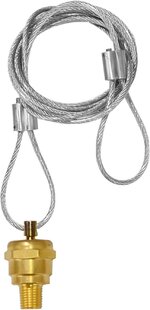
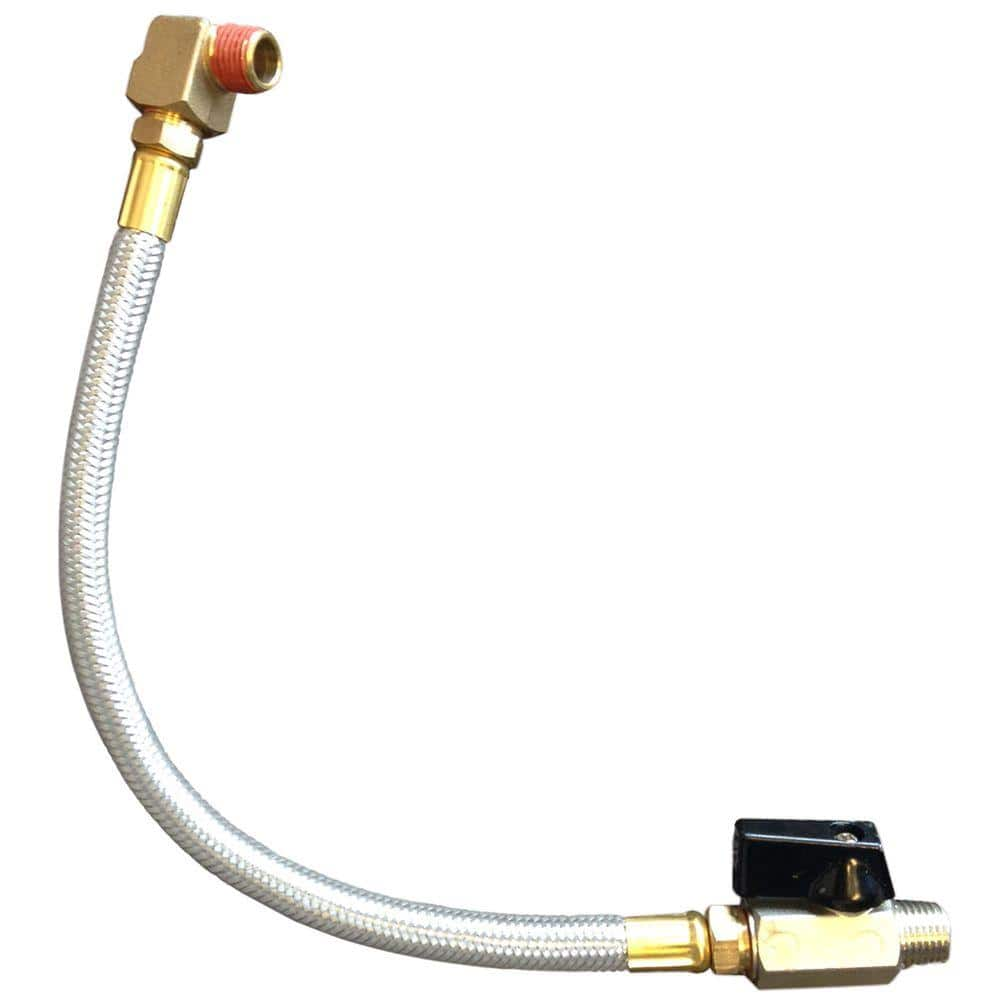
For my smaller compressor I added something like this (no longer remember the actual brand). Yes, I still have to reach to the bottom of the tank but at least it's easier to get at vs bottom of tank.
 
To avoid these ads, REGISTER NOW!

micromind

Well-known member
Joined
Sep 24, 2023
Messages
3,003
Location
Fernley, Nevada, about 30 miles east of Reno.
Most drains are 1/4" pipe threads. I remove the petcock that it came with and install a 1/4" street 90, a length of 1/4"galv pipe and a valve.
The output can go anywhere, usually a short hose through the wall to the outside.

The reason for the street 90 is because if the pipe gets stepped on or otherwise broken, it'll break where it screws into the 90 and not where it screws into the tank. Simply replace the 90, no trying to remove a broken ****** in a bad location.
 

Rinspeed

Well-known member
Joined
Apr 26, 2020
Messages
1,816
Location
NY
I got some used 1/2" compression fittings from work and a 1/2" ball valve, just plumbed it out and an old paint tray sits under the tubing, it works very well for me.
 

Beerhippie

Well-known member
Joined
Oct 13, 2023
Messages
9,649
Location
Far NE Oregon
Like others, I replaced the petcocks with ball valves, ******* and street ells. I drain directly to the shop floor as I like to see the condensate to keep an eye on what's going on--oil, rust, etc indicating I need to do something.

I kick the valves open a few times a day. This time of year, there's rarely more than a few tablespoons of condensate (comp is on 24/7), but come warm weather it can be a gallon or more in a half-day.
 

Jeeper99

Well-known member
Joined
Apr 14, 2024
Messages
65
I used to work on compressors for a living and now take care of a dozen at my current employer. A lot of the compressors I worked on had electric auto drains, some had manual ball valves. I have a love hate relationship with electric auto drains, when they work they work well though they are very temperamental. 1 chunk of rust or weld BB will make them worthless and either not open or stick wide open. Manual drains require the human element of remembering to open them, some were never touched till we were there every 3 to 6 months performing preventative maintenance, other shops had the old guy who religiously drained it daily.

We've started going with zero loss mechanical auto drains. If you have the elevation to fit one they work great. With an auto drain in the system I'd still T in a manual ball valve before the auto drain to verify the auto drain is working.

https://www.grainger.com/product/SPEEDAIRE-External-Auto-Drain-1-2-in-4GNN1

4GNN1_AS02?$adapimg$&hei=536&wid=536.jpg
 
To avoid these ads, REGISTER NOW!
Top Bottom