To avoid these ads, REGISTER NOW!

Air Compressor In closet - whip hose routing?

Speedy!

Well-known member
Joined
Dec 23, 2014
Messages
271
Location
TN
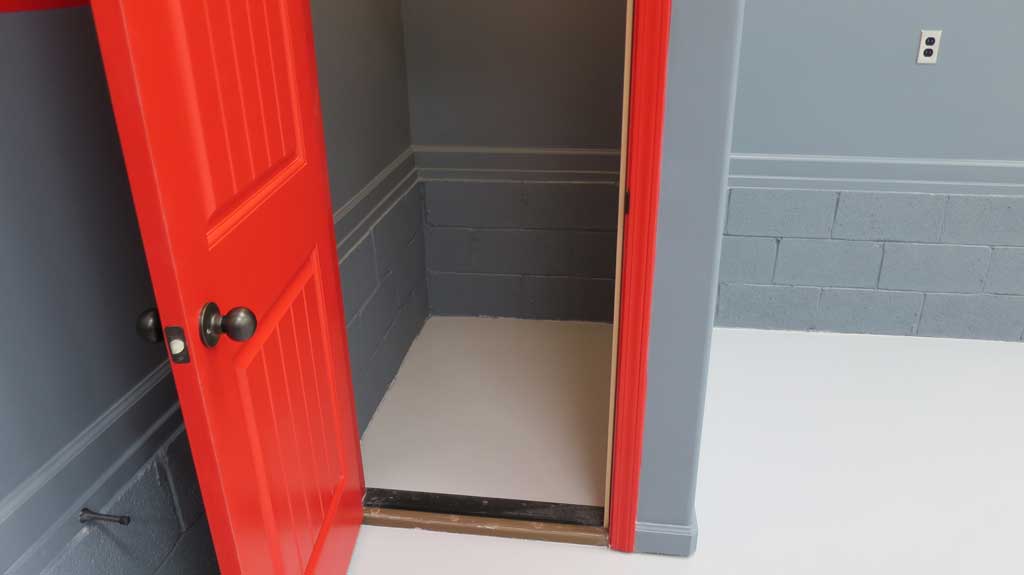
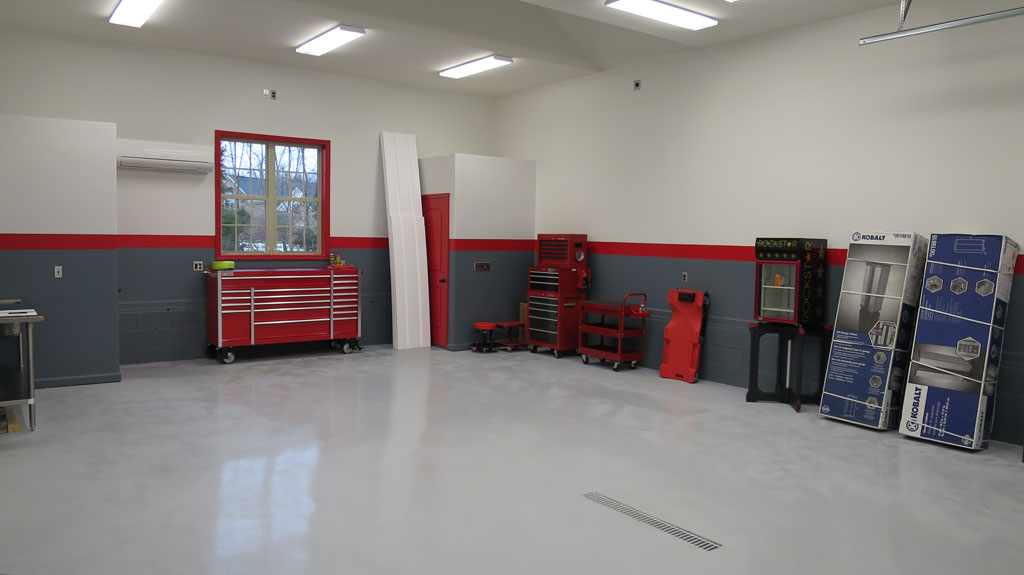
When I built my shop, I built a 3' x 4' interior dimension closet to house a 60 gallon air compressor. The walls are sound deadening sheetrock and it's insulated as well. Ventilation is provided with a space between the solid core door and the threshold (think exterior type door and threshold) along with a light fan combo with the fan on a separate switch that vents to the out side if needed.

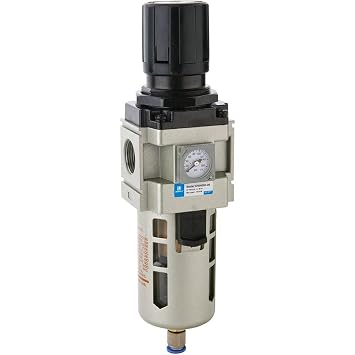
The compressor showed up this week and I chose a Quincy QT-54 that a nabbed on sale at Nothern Tool with free shipping. I will be connecting it to a Rapid Air 3/4" regulator/filter that I plan to mount on the outside of the closet and then run that to a Maxline system for air distribution around the shop.

The compressor power plug is a 30A and inside the closet and controlled by a switch on the outside wall. The idea is to turn the compressor on and off with the switch as needed, rarely having to enter the closet itself.

I'm looking for ideas and suggestions on how to get the air from the compressor through the wall to the regulator that will be mounted outside the closet. I'm thinking a piece of 2" PVC pipe with a whip hose coming from the compressor through the wall inside the PVC to the regulator. I was then thinking of using some pipe insulation as a buffer around the whip hose inside the PVC to insulate and sound deaden.

Ideas/suggestion?

Here's a picture of how it looks:
speedysgarage_30_86_web.jpg
 
To avoid these ads, REGISTER NOW!

matt_i

Well-known member
Joined
Mar 14, 2008
Messages
10,752
Location
SE Michigan
You had me worried at PVC, LOL but its just a sleeve. Sounds like a good idea.

We need pics of the Quincy :)
 

ItsNemo

Well-known member
Joined
Mar 5, 2016
Messages
4,806
Location
Canada
Just run black gas pipe through the wall and use a sound proofing caulking around the holes.
 

CNGsaves

Well-known member
Joined
Sep 26, 2012
Messages
13,233
Location
KS and OK
^ ^ ^ This. Black pipe steel secured to 2x4 in wall and union on closet side so you can attach a hydraulic hose for your flexible connection to compressor that will handle vibration.

On shop side, just connect black pipe steel to your RapidAir airline system.
 

tab2

Well-known member
Joined
Apr 9, 2009
Messages
381
Location
Boston
Just run black gas pipe through the wall and use a sound proofing caulking around the holes.

^ ^ ^ This. Black pipe steel secured to 2x4 in wall and union on closet side so you can attach a hydraulic hose for your flexible connection to compressor that will handle vibration.

On shop side, just connect black pipe steel to your RapidAir airline system.

:beer:
 
OP
S

Speedy!

Well-known member
Joined
Dec 23, 2014
Messages
271
Location
TN
I can technically run Maxline through the wall, my concern with doing black pipe was trying to get it cut/threaded to size and all of that. It'll come out of the compressor which is about 16" from the wall, then go through the wall (6 inches thick or so?) then turn 90 degrees up to meet the elbow that will come out of the regulator. Obviously need a flex line to the connection through the wall to absorb vibration, but this is a finished garage so I want it to look nice and finished as well. I'm not sure black pipe will provide that. That's why I was thinking of using the PVC as a "tunnel" to get through the wall and I could put those plastic rings on it like you see on plumbing work to make it finished. The pipe wrap I thought would seal up the "tunnel" and keep the sound deadened.

I'm also not sure how to attach the pipe to a stud? The walls are finished inside and out of the closet.

speedysgarage_30_75_web.jpg
 
Last edited:

csp

Well-known member
Joined
Mar 23, 2010
Messages
5,720
Location
Franktown, CO
Unistrut and a pipe clamp is one method. There are all kinds of clamps/hangers made for black pipe.
 

ItsNemo

Well-known member
Joined
Mar 5, 2016
Messages
4,806
Location
Canada
Home Depot, etc have the black pipe pre-cut/threaded in various lengths including 6 inches, one foot, 2 feet, and so forth. They will also usually cut and thread each piece you buy to a specified length if you want something exact for no extra cost.

Attaching it, use a couple elbows on either side of the wall, turn down the pipe, and use the pipe standoffs to attach it on either side and it won't move. You can add a drain leg on the inside or outside on that turn down if you use a T joint too.

32E.bmp
 

rick carpenter

Well-known member
Joined
Jan 20, 2011
Messages
3,788
Location
Huntsville, East Texas
How about a whip from the comp to a bulkhead fitting on the inside of the closet and then a short flexy hose within the wall cavity to another bulkhead fitting on the outside of the closet? This will keep your comp isolated & insulated plus provide a sturdy anchor point in the shop for the air hose.
 
OP
S

Speedy!

Well-known member
Joined
Dec 23, 2014
Messages
271
Location
TN
I'll take a look at HD this weekend and see what I see. I like the idea of a bulk head fitting with a quick connect on each side of the wall, but that may be getting too complex for what this is. I also have to go from 1/2" out of the compressor to 3/4" in to the regulator.

51RnMdJf1nL._SY355_.jpg
 

72Anthony

Well-known member
Joined
May 22, 2010
Messages
296
Location
Houston, TX
One other point...since you don't plan on going into the closet on a regular basis...have you considered an automatic tank drain to get rid of the water?
 
OP
S

Speedy!

Well-known member
Joined
Dec 23, 2014
Messages
271
Location
TN
Good point. I wasn't going to do an automatic drain, but definitely run the line over by the door so I can drain it regularly. I don't think I'll run it that often to need an automatic, unless just having pressure in the tank builds moisture on it's own? I can always install one if needed.

I'm ashamed to say I have a little 30 gallon unit in my other garage that I've never drained EEEEK. I'm afraid to now after 8 years.
 

78Bird

Well-known member
Joined
Apr 23, 2010
Messages
528
Location
Charlotte, NC
Do it... I worked part time for a guy and on a whim, opened the drain on his 80 gal compressor... I must have gotten 5-6 gallons of water out of that thing.

Just having pressure doesnt create moisture, but it brings more in every time it runs.

Is the shop climate controlled? If so, is the compressor drawing from inside or outside air? If it's pulling in conditioned air, lots less moisture for it to collect.

You don't NEED an auto drain, just plumb it to where you can twist a valve and it's plumbed to go outside or into a drain of some sort... Auto would be less hassle though.
 
OP
S

Speedy!

Well-known member
Joined
Dec 23, 2014
Messages
271
Location
TN
Ok still trying to sort this out. I've spec'd the black pipe to go through the wall, but can't find a solution to mount it to the stud/drywall for security. I'm going to do a 6" black pipe 3/4" through the wall with a 90 deg elbow on each side. The closet side will go to a whip to the compressor. The shop side will go to the Rapid Air regulator. I'll set it so that the regulator is the highest point and will collect any moisture on that side. Anything in the whip side will drain back to the compressor to be drained there.

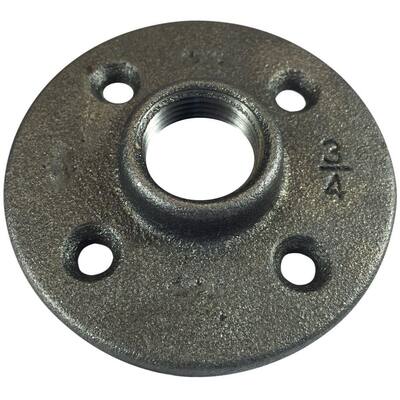
How do I secure the pipe to the wall. I found some 3/4" floor flanges at HD that were promising, but they're threaded and the pipe won't pass through. I'd have to bore them out. Is there a better way?

e819d06e-58fa-44fe-b0e8-06381e827d99_400.jpg
 

csp

Well-known member
Joined
Mar 23, 2010
Messages
5,720
Location
Franktown, CO
Put a hole in the drywall the correct size for the pipe to pass through. Make the edge of the hole even with the edge of the stud. Use a pipe clamp to clamp the pipe to the edge of the stud. Use two clamps if needed.
2hole-galvanized-pipe-strap-clamp.jpg


Those floor flanges aren't for plumbing purposes. They are for using pipe as a leg on something mounted to the floor.
 
To avoid these ads, REGISTER NOW!

TXNinAZ

Well-known member
Joined
Oct 9, 2011
Messages
507
Location
Phoenix, AZ
Ok still trying to sort this out. I've spec'd the black pipe to go through the wall, but can't find a solution to mount it to the stud/drywall for security. I'm going to do a 6" black pipe 3/4" through the wall with a 90 deg elbow on each side. The closet side will go to a whip to the compressor. The shop side will go to the Rapid Air regulator. I'll set it so that the regulator is the highest point and will collect any moisture on that side. Anything in the whip side will drain back to the compressor to be drained there.

How do I secure the pipe to the wall. I found some 3/4" floor flanges at HD that were promising, but they're threaded and the pipe won't pass through. I'd have to bore them out. Is there a better way?

e819d06e-58fa-44fe-b0e8-06381e827d99_400.jpg


Low voltage electrical boxes (old work if the drywall is already up) back to back through the wall. Then drill appropriately sized holes in blank cover plates for the pipe to pass through. Did this through the wall and stucco for my compressor discharge line to outside and it turned out very nicely.
 
OP
S

Speedy!

Well-known member
Joined
Dec 23, 2014
Messages
271
Location
TN
I'm more concerned about any vibration or weight causing drywall problems over time. I must be dense, but I don't see how the strap posted above would work with a pipe coming out of the wall on a perpendicular plane?

Maybe I'm overthinking it and pipe through the wall is just fine? Electrical boxes aren't a bad idea, but I'd rather keep the hole as small as possible
 

CGT80

Well-known member
Joined
Aug 29, 2014
Messages
867
Location
IE, SoCal, USA
You are way overthinking this. It is not like there will be gun shots or a bomb going off in that closet..........well, hopefully not.

For the electrical straps, the black pipe would be in the shape of the letter L or the letter C. One part through the wall, and then a 90 degree elbow and another ******. This gives you a parallel pipe on one side or both sides, which will run horizontally and cross a stud. The strap goes over the pipe and the screws will go into the stud. If you have a good whip hose, vibration shouldn't be a big deal. Try it, if it fails, then go to plan b. It won't be the end of the world if you have to change it. Drywall is easy to fix.

Use a bushing in the regulator to go from the 3/4 female on the regulator to 1/2 female in the bushing. If your main air lines are 1/2", then a 1/2 whip should be fine, especially if it is at tank pressure and the pressure after the regulator will be lower.

X2 on caulking around the pipe where it passes through the wall. If you use an L shape, let the extra couple inches hang out inside the closet and set the pipe tight on the shop side, or use a small wood block under the strap, so that the pipe is slightly above the surface of the wall and it will allow a fitting on the end of the pipe or it will allow it to enter the regulator where needed.
 
OP
S

Speedy!

Well-known member
Joined
Dec 23, 2014
Messages
271
Location
TN
Ah, now I see the thinking. In my scenario there won't be an "L" or "C" shape. I was planning to set this up so that it's whip hose to a 90° elbow then straight through the wall and a 90° elbow straight in to the regulator horizontally on the outside. Very little pipe showing at all, just the elbows really. Regulator will be mounted to a small wood block that's attached to a stud. The bracket for the reg is wider than my stud is, thus the need for the block.

I'll likely have a custom whip hose made that's 1/2 male on one side and 3/4 swivel on the other. There's a local place that can make them pretty cheap.

I just figured there was some pre-fabbed pipe clamp thingamabob for going through the wall, but sounds like it's really just find something that'll work.
 

csp

Well-known member
Joined
Mar 23, 2010
Messages
5,720
Location
Franktown, CO
You're definitely overthinking this. The method I suggested could have as little or as much pipe showing on the drywalled side of the wall as you want.

The stud is vertical and the pipe is horizontal, mounted to the stud perpendicular to the drywall face. Put the pipe as far into the room as you want it to be. If you're going to put a 90 at the end of it install the elbow onto the pipe then push it back into the closet so the face of the 90 is touching the drywall. Then clamp the pipe to the stud inside the closet. You won't see any of the pipe at that point. Pipe ******* come in all sorts of different lengths. Bust out the tape measure and figure out what length works best for your situation.

The fact that you're clamping the pipe to the stud should alleviate any concerns you have with drywall problems. The drywall isn't going to be supporting anything and the whip eliminates vibrations from the compressor. Give yourself 1/8" of clearance around the pipe if you're still worried about it.

I could do a mock up with scrap pieces of lumber and drywall if you're still not seeing it.
 
Last edited:
OP
S

Speedy!

Well-known member
Joined
Dec 23, 2014
Messages
271
Location
TN
You're definitely overthinking this. The method I suggested could have as little or as much pipe showing on the drywalled side of the wall as you want.

The stud is vertical and the pipe is horizontal, mounted to the stud perpendicular to the drywall face. Put the pipe as far into the room as you want it to be. If you're going to put a 90 at the end of it install the elbow onto the pipe then push it back into the closet so the face of the 90 is touching the drywall. Then clamp the pipe to the stud inside the closet. You won't see any of the pipe at that point. Pipe ******* come in all sorts of different lengths. Bust out the tape measure and figure out what length works best for your situation.

The fact that you're clamping the pipe to the stud should alleviate any concerns you have with drywall problems. The drywall isn't going to be supporting anything and the whip eliminates vibrations from the compressor. Give yourself 1/8" of clearance around the pipe if you're still worried about it.

I could do a mock up with scrap pieces of lumber and drywall if you're still not seeing it.

No need to build a mock up. I'm no builder so I'm still missing something. How does the pipe clamp attach to the stud? They're behind drywall on both sides of the closet (inside and out) and it's QuietRock with insulation as well. I'm not up for cutting out a section of drywall, repaint, etc. to get to the stud. Whatever solution I find will have to be on painted drywall.
 

csp

Well-known member
Joined
Mar 23, 2010
Messages
5,720
Location
Franktown, CO
Oh, so now you tell us that both sides of the wall are finished! That blows my idea out as an option.
 
OP
S

Speedy!

Well-known member
Joined
Dec 23, 2014
Messages
271
Location
TN
I said they were sheetrocked and posted a giant picture LOL

At least now I know I'm not as dense as I was starting to feel!
 

ItsNemo

Well-known member
Joined
Mar 5, 2016
Messages
4,806
Location
Canada
I already offered the solution before...run solid pipe through, use those pipe hangers. Do a 90 degree turn on either side of the wall, mount the hanger to the wall. Job done.
 

csp

Well-known member
Joined
Mar 23, 2010
Messages
5,720
Location
Franktown, CO
Saying the walls are sheetrocked doesn't necessarily mean inside and out. Who drywalls the inside of a closet in a garage that's going to be used like this one is?

You picture doesn't show the inside of the wall you're going through either.
 
OP
S

Speedy!

Well-known member
Joined
Dec 23, 2014
Messages
271
Location
TN
Saying the walls are sheetrocked doesn't necessarily mean inside and out. Who drywalls the inside of a closet in a garage that's going to be used like this one is?

You picture doesn't show the inside of the wall you're going through either.

Someone who wanted it sound deadened. It has QuietRock sheetrock inside and out with insulation in the walls as well.

Thanks for the suggestions, I'll figure it out.
 
OP
S

Speedy!

Well-known member
Joined
Dec 23, 2014
Messages
271
Location
TN
I hate when threads never get updated with the solution, so here's how I got it done.

1 x 6 poplar cut 18" to cover two studs. 1 1/8 hole saw through poplar and drywall. Run pipe through. Put piple on a slight angle toward the regulator to drain any moisture to the regulator's filter. Worked great and gave me a place to also mount the regulator.

I also ran maxline and all that's done too. Update in my garage build thread on that for those interested.

Setting up the angle of the pipe:

qt54_hardline_02_web.jpg

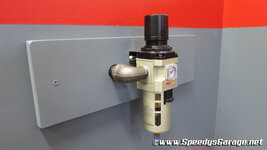
Regulator mounted:

qt54_hardline_03_web.jpg

Inside the closet:

qt54_hardline_05_web.jpg
 
To avoid these ads, REGISTER NOW!
Top Bottom