To avoid these ads, REGISTER NOW!

Am I ready to paint?

Rob Sot

Member
Joined
Oct 10, 2020
Messages
7
Location
UK
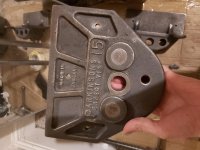
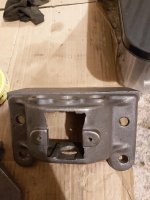
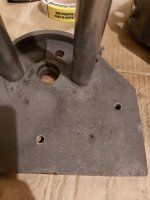
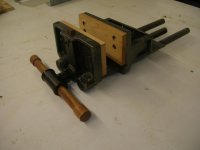
Hi all, I'm in the middle of a vintage carpenters vise restoration but I can’t seem to get the main vise body any cleaner than this! I have used paint stripper, wire wheel, degreaser, soap and hot water and everything else I had access to but can’t get it in any cleaner shape. Am I ok to paint as is, or do I need to try something else and if so any thoughts?

My plan is to paint with an oxide primer and then a machine enamel on top of that.

Photos below show how it currently looks.

Many thanks for any help you can offer.
Rob
 

Attachments

  • 20201025_180023.jpg
    20201025_180023.jpg
    117.1 KB · Views: 97
  • 20201025_180020.jpg
    20201025_180020.jpg
    129.2 KB · Views: 81
  • 20201025_180055.jpg
    20201025_180055.jpg
    88.4 KB · Views: 62
  • 20201025_180041.jpg
    20201025_180041.jpg
    114.3 KB · Views: 58
  • 20201025_180028.jpg
    20201025_180028.jpg
    151.3 KB · Views: 62
  • 20201025_180044.jpg
    20201025_180044.jpg
    86.5 KB · Views: 51
To avoid these ads, REGISTER NOW!

Farmer J.

Well-known member
Joined
Sep 18, 2016
Messages
1,995
Location
UK, Cornwall/Hertfordshire.
Good evening Rob.
Nice vice!
It looks perfectly ready for painting to me. I reckon you should get some oxide primer on there before the rust starts.
Machine Enamel paint is quite forgiving of uneven surfaces, but I have found that different makes have varying amount of pigment in them so some do not 'cover' well.
Last few years I have been using Coach Enamel stuff from 'Paintman' and had very satisfying results.
Here's the link to his website. It has some good advice on there too.
https://paintman.co.uk/

Please post up progress pictures for us to see!
 

1982fxr

Well-known member
Joined
Jan 7, 2012
Messages
10,011
Location
Phoenix
Looks good to me. You could always get a can of Pre or any other brand of spray final wipe down before priming.
 
To avoid these ads, REGISTER NOW!
OP
R

Rob Sot

Member
Joined
Oct 10, 2020
Messages
7
Location
UK
Thanks everyone for your help! Sounds like I better get on it with the painting soon then.
The suggestion of coach paint from Paintman is really useful, I was about to order machine enamel from Paintmaster as its a little more friendly to a university student budget. Has anyone had experience using this paint?

Also do people recomend painting the surface that mates against the wooden jaws or should I leave that with a simple oil finish and no paint?
 

Boilerhouse

Well-known member
Joined
Mar 20, 2012
Messages
1,320
Location
Muskoka
What is the point of contaminating the surface with oil before painting? That makes zero sense.

No need to paint. The boiled linseed treatment is the surface finish. It produces a unique patina but perhaps not everyones cup of tea. It is how I did mine.

On edit - just reread and saw the poster suggested oil then paint. Anyways here is the effect for anyone interested.

Before and after shown;
 

Attachments

  • DSCN5970.jpg
    DSCN5970.jpg
    151.5 KB · Views: 44
  • N Slater Refurbished.jpg
    N Slater Refurbished.jpg
    79.8 KB · Views: 57

Farmer J.

Well-known member
Joined
Sep 18, 2016
Messages
1,995
Location
UK, Cornwall/Hertfordshire.
Hi Rob,
People on this forum are just great, and so helpful.
Some comments on your earlier queries:
-That enamel from 'Paintman' looks pretty expensive in small quantities. It seemed pretty reasonable for enough to paint a Land Rover, but maybe not the choice for one aerosol if you are on a tight budget!
-Boiled Linseed Oil, thinned 50% with white spirit does look great. I have used it a lot on vintage tools and of course it doesn't cost much at all. It's easy to apply, but heed the warnings on disposing of used rags afterwards.
-Suggestion, you could always use BLO now, then paint the vice at a some time in the future as funds allow. As a traditional woodworkers finish that would be in keeping, when I was a kid I remember watching the village wheelwright after school and he mixed all his own paint using Linseed Oil, turpentine and coloured powder for the pigments. They probably contained plenty of lead! There are modern recipes for mixing paint this way if you search the internet..
If you prefer your life to be less toxic there is a book about it, but I haven't yet managed to get a copy: 'Shellac, Linseed Oil, & Paint - Traditional 19th Century Woodwork Finishes by Stephen Shepherd'
-You enquired about painting beneath the wood on the jaws. I unscrewed the wood on my old Record vice and had a look, and that has paint underneath. I bought it new 50 years ago and it's original. All done with blue paint except the top and side edges of both jaws which are a bare metal.

Looking forward to seeing your progress.. J.
 
Last edited:

y'sguy

Well-known member
Joined
May 1, 2010
Messages
1,320
Location
Tulsa, Oklahoma
You are getting some great advice on GJ. That vice is a real beauty and you have done a great job preparing it. I will have to say if it were mine I would also use the Boiled linseed oil method. Like FarmerJ said if you decide to change your mind later on you can easily ready it for paint. It looks great. I will also add that BLO canbe reapplied at anytime if it starts to wear. It is just the natural metal look.
 

John Hall

Member
Joined
Oct 26, 2020
Messages
9
Location
Manchester
A dilated solution of phosphoric acid will remove any hidden rust, then a coat of etch primer will ensure a good adhesion before final coats...
Google Paragon Paints, Yorkshire, they have a really good selection of brushing enamels, in Matt semi gloss and gloss...I’ve used their Roundel Blue semi gloss to restore a lot of Record vices, it’s tough and leaves a really good finish..
 
Last edited:
To avoid these ads, REGISTER NOW!
Top Bottom