To avoid these ads, REGISTER NOW!

"Another" insulation question, help please

Rosco

Well-known member
Joined
Jan 4, 2009
Messages
1,140
Location
South Georgia
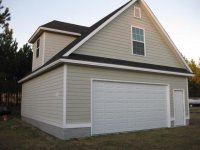
I am getting ready to put a large chunk of money into the insulation of my garage and have been researching every thread and internet site available. I am willing to pay the extra cost for spray foam, but I have the following dillema between 2 options (I live in south GA);

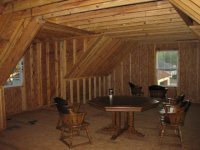
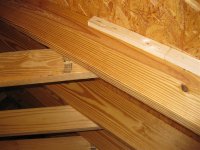
1. Spray Foam - The contractor states that 2 inches of closed cell foam will give me an R factor of R-19, and the benefits of the sealing properties will far outweigh any cellulose or fiberglass batting. Based on the estimate I can only afford to go 2 inches thick. I have sloped cielings in the bonus room with 2X8 rafters on 16" centers. If I decide to go with spray foam, my plan is to leave the eave and gable vents, put 1X2 runners down the sides of the rafters against the roof sheathing (from eave to cieling brace) and then cover the 1X2's with another piece of OSB (7/16) leaving a solid 1 1/2" air vent cavity between the foam and the black shingles. This should give me a spray foam quality R-19 insulation factor with constant air ventilation between the foam and the roof (powered gable vent fans also). The bonus room has a flat 8' cieling that is also 8' wide (2X6) that I plan on loose fill or batting to at least R-38.

2. BAT insulation - Everything the same as above except instead of OSB covering the 1X2 runners on the rafters, I will use 3/4" blue DOW board and be able to fit JM R-21 batting with a vapor retarder. This should give me a R factor of R-25 (R-4 for the DOW board and R-21 for the batting).

Both options will have the 1 1/2" solid vent cavity (sealed) from eave vents to top of cieling braces which is a small attic. Powered gable vents on both sides and off-ridge vents on each dormer.

The batting option is still cheaper, but will require more labor (no big deal). My main question after being so long winded is.....which option is better? I will not have to worry about hidden leaks with the solid vent cavity, but also do not want to worry about batting degredation over the long haul. The roof is black and the heat down here is my main concern. Everyone in the south (maybe the country) complains about their bonus room temparature.

I hope I made sense.

Sorry so long winded, but I am pulling the trigger soon. Thanks.

SEE MORE PICS IN POST BELOW
 

Attachments
  • IMG_0198 (Small).JPG
    IMG_0198 (Small).JPG
    48.7 KB · Views: 45
  • IMG_0201 (Small).JPG
    IMG_0201 (Small).JPG
    53.5 KB · Views: 79
Last edited:
To avoid these ads, REGISTER NOW!

rburke65

Well-known member
Joined
Nov 10, 2007
Messages
12,349
Location
Canfield, Ohio
I have no educated opinion to give. I just wanted to comment when you said "Sorry so long winded". Better to be long winded....at least we....someone can answer you. It's a lot better than asking 'which should I use foam or fiber? with no added facts or where you live or......
 
OP
R

Rosco

Well-known member
Joined
Jan 4, 2009
Messages
1,140
Location
South Georgia
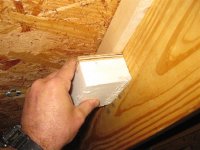
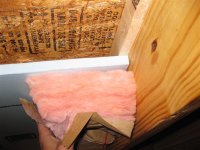
Hopefully some more pics will help. The pic with the batting is R-13 not R-21, it is all I had for reference.
 

Attachments

  • IMG_0703 (Medium).JPG
    IMG_0703 (Medium).JPG
    77.7 KB · Views: 73
  • IMG_0702 (Medium).JPG
    IMG_0702 (Medium).JPG
    87 KB · Views: 86
  • IMG_0700 (Medium).JPG
    IMG_0700 (Medium).JPG
    70.8 KB · Views: 86
  • IMG_0699 (Medium).JPG
    IMG_0699 (Medium).JPG
    71.6 KB · Views: 93

Garyl53

Active member
Joined
Oct 25, 2009
Messages
44
Location
Colorado
Hi, I am not sure of your location but you can go here to get some information. there are other areas of the site that have specific geographic recommendations for cathedral ceilings. Good luck and nic space you have got there!
Gary
 

jtillery

Well-known member
Joined
Oct 17, 2008
Messages
170
I have very limited experience in insulation, so take my advice/opinion for what its worth :)

This time last year I was insulating my 3200 sq ft shop in NE Ohio, I couldn't decide how much insulation to put in. At Home Depot the charts showed R19 for the walls and R30 for the ceiling for my area. I knew I wanted to heat the building above freezing all winter, but didn't want huge heating bills to do it. Also when I talked to several friends and relatives that added insulation within the last year, none of them noticed any significant savings on their gas/electric usage.

I started doing more research and found several insulation energy savings calculators, I tried several of them and they all gave similar results. I was surprised by the findings it said R11 walls and ceiling would pay for itself within 4 months, but it showed it would take 20 years to recoup the additional cost spent on the insulation if I went with R19 wall and R30 ceiling.

I ended up going with R11 everywhere. On Saturday I heated the shop up to 62 degrees while I was working in there. When I left Saturday around 2pm I set the furnace back to 40 degrees. When I got there this morning around 8am it was still 58 degrees inside. Not bad at all if you ask me, since it highs have been 25 degrees and lows near 0 degrees and it has been real windy.
 
OP
R

Rosco

Well-known member
Joined
Jan 4, 2009
Messages
1,140
Location
South Georgia
Thanks all for the replies so far. Just had another contractor come by to confuse me even more........

He claims that the best bang for my buck is cellulose. Basically for the same money I put in closed cell foam I could have 50% more R factor with cellulose. Supposedly treated for mold, fire, and insects. I really do not want to regret my decision but I guess its like anything else, to each their own. I do know there is risk of settling and deterioration

I wish they only sold one type, damn this is frustrating :).
 

nonhog

Well-known member
Joined
Nov 6, 2007
Messages
2,449
Location
Arizona (Tucson)
In your first post you said.........

"Both options will have the 1 1/2" solid vent cavity (sealed) from eave vents to top of cieling braces which is a small attic. Powered gable vents on both sides and off-ridge vents on each dormer."

What has your insulation contractors said about this? Is that enough space for air flow?
I have no idea(in the same place you are,planning)I suppose with powered vents it would be fine.

I am just curious.
 

Colonial Cobra

Well-known member
Joined
Nov 21, 2007
Messages
459
Location
Yorktown, VA
If you go without the

"1X2 runners down the sides of the rafters against the roof sheathing (from eave to cieling brace) and then cover the 1X2's with another piece of OSB (7/16) leaving a solid 1 1/2" air vent cavity between the foam and the black shingles. This should give me a spray foam quality R-19 insulation factor with constant air ventilation between the foam and the roof"

Spray foam on the underside of the roofing surface increases shingle life.

Not sure what type of foam he's using but most are R-7 per inch. Which would only give you R-14 with two inches.
 
OP
R

Rosco

Well-known member
Joined
Jan 4, 2009
Messages
1,140
Location
South Georgia
In your first post you said.........

"Both options will have the 1 1/2" solid vent cavity (sealed) from eave vents to top of cieling braces which is a small attic. Powered gable vents on both sides and off-ridge vents on each dormer."

What has your insulation contractors said about this? Is that enough space for air flow?
I have no idea(in the same place you are,planning)I suppose with powered vents it would be fine.

I am just curious.

I hope I explained it correctly. If you look at the pics, there will be a 1 1/2" gap between the OSB or DOW board (whichever I decide) and the OSB sheathing on the roof, by sealed I mean that no insulation will be touching the vented space. So in essence it is 1 1/2 " by 15 inches for every space between the rafters extending from the eaves continuously up to the attic space. This is double the amount of vent space than the "baffles" that all of the contractors use, and will not be near as susceptible to moisture from the roof or being flattened by pressure. Plus if I use the DOW board it will give me another R-4 and a moisture barrier for the insulation

Here is a pic of what the contractors use. I know, I even confuse myself.....

The closed cell foam contractor wanted to spray it directly on my roof sheathing with no baffle. Here in South Ga with black shingles I do not like that option as there is nowhere for that heat to go. Not many shingle companies will back up their warrantee like that, plus if you get a leak you will never know it until too late. My thinking was if closed cell is that great it should be better if it is vented behind it. Kinda like leaving your cooler in the 100 degree sun or putting it in the shade......
 

Attachments

  • baffle.jpg
    baffle.jpg
    24.8 KB · Views: 22
Last edited:
OP
R

Rosco

Well-known member
Joined
Jan 4, 2009
Messages
1,140
Location
South Georgia
Spray foam on the underside of the roofing surface increases shingle life.

Not sure what type of foam he's using but most are R-7 per inch. Which would only give you R-14 with two inches.

That is the first time I heard of that. I do not doubt you as I am not a roofer or shingle manufacturer, but can you give me some more info? If true, that would save me some work and money.

When I called my building supply, they said that most shingle manufacturers would not warrantee the shingles if closed cell foam was sprayed directly against the sheathing. They said the heat buildup would overheat the shingles and they would not last. Here in Ga during the summer you cannot even walk on a well vented black roof without tearing asphalt shingles
 

walrus

Well-known member
Joined
Nov 12, 2008
Messages
11,677
Location
Maine
When I called my building supply, they said that most shingle manufacturers would not warrantee the shingles if closed cell foam was sprayed directly against the sheathing. They said the heat buildup would overheat the shingles and they would not last. Here in Ga during the summer you cannot even walk on a well vented black roof without tearing asphalt shingles

This is correct I believe.Ever had a shingle company warranty a shingle? Know anyone who has?

If I were you I'd use rigid foam instead of osb for my vent. 2" of closed cell foam is only R14. Use 2in rigid foam on a couple of sleepers and then spray the foam giving R28. Around here I have a guy who sells factory
2nd foam, sometimes it beat up, sometimes its tapered. I cut and fit it and then had the guy spray, filled all the gaps
 

pcmeiners

Well-known member
Joined
Aug 13, 2009
Messages
7,892
Location
In the only town in Pennsylvania, Bloomsburg.
"2. BAT insulation - Everything the same as above except instead of OSB covering the 1X2 runners on the rafters, I will use 3/4" blue DOW board and be able to fit JM R-21 batting with a vapor retarder. This should give me a R factor of R-25 (R-4 for the DOW board and R-21 for the batting)."
Like this setup, as it provides a space between the roof sheathing, with proper fitting foam board should stop air movement, once the air movement is abated, then the fiberglass is more efficient, but will be quite a bit of labor.

I have fondness for cellulose, as It saved my mom and her house after a fire started in the basement. Fire demolished the wood floor above it but nothing else. House is balloon framed, and would have had flames in the attic in minutes but for the boric acid retardant mixed with the cellulose. ***** with cellulose is if it gets wet. Properly packed, better then fiberglass, as it retards air movement within the insulation. Still, if your willing to go through the labor I like your #2 idea over the cellulose.

If you go foam, a pro suggested to use 1" foam spray, then the remainder of the space insulated with fiberglass to cut down cost. 1" foam provides insulation, and just as important, stops air movement. Still like your#2 idea over foam. I am in the same boat believing foam directly on the sheathing adds to the temperature the shingle must endure.
 
Last edited:
OP
R

Rosco

Well-known member
Joined
Jan 4, 2009
Messages
1,140
Location
South Georgia
"2. BAT insulation

I have fondness for cellulose, as It saved my mom and her house after a fire started in the basement. Fire demolished the wood floor above it but nothing else. House is balloon framed, and would have had flames in the attic in minutes but for the boric acid retardant mixed with the cellulose. ***** with cellulose is if it gets wet. Properly packed, better then fiberglass, as it retards air movement within the insulation. Still, if your willing to go through the labor I like your #2 idea over the cellulose.

If you go foam, a pro suggested to use 1" foam spray, then the remainder of the space insulated with fiberglass to cut down cost. 1" foam provides insulation, and just as important, stops air movement. Still like your#2 idea over foam. I am in the same boat believing foam directly on the sheathing adds to the temperature the shingle must endure.

Very good options. I am glad to hear the fire retardent saved your Mom and the house. Fire issues used to be a drawback of cellulose before they started treating it. The last quote I got was a cellulose guy (happened to be the same contractor who did my house), and so far for the money he seems to have the highest R factor. To get the same R rating with foam it would be triple the cost (I guess I could just not finish it but be warm.... )

Man you guys are awesome! I appreciate all of the feedback as I am trying to get this thing done.

Why cant I be the guy who just pulls the trigger and moves on to the next issue
 

rlme36

Well-known member
Joined
Feb 17, 2008
Messages
331
I am in the same boat and have many quotes for all 3, foam, cellulose and fiberglass. I am going with Cellulose. Its a price issue for me, I can get dense pack in the walls, R20 with 2x6 walls and R34 in the ceiling rafters, just like yours except no venting for $4.7k vs about $7k for the partial foam and batt approach. I like the fact that cellulose doesn't need to be covered with a vapor barrier and can stay that way until I get around to sheetrocking.

I live in the NE and need to keep warm. I was told that if I ever needed to pass code for the space, it was CO'd on open framing since its detached, that the foam would need to be at least 3" thick and 2lb closed foam if it was applied to the roof sheathing. just another point.
 

ttensirk

Well-known member
Joined
Dec 23, 2009
Messages
88
Location
Whitley County, IN
How much of a price difference is 1" spray foam vs 2"? If the price is substantial, I would consider the following.
Use the 1"x2" runners on the rafters as you described. Instead of using OSB to sheet inbetween each rafter, use 2" XPS foam sheets cut to fit. Then top the whole thing with 1" of closed cell spray foam to make air tight. For a total of 3" of Foam insulation with an approx R21.

If you are concerned with the heat buidup in the vented areas. Why not set your 1"x2" runners 1" off the roof decking so you have a 2.5" x 15" vented area. Just an idea...
 
OP
R

Rosco

Well-known member
Joined
Jan 4, 2009
Messages
1,140
Location
South Georgia
How much of a price difference is 1" spray foam vs 2"? If the price is substantial, I would consider the following.
Use the 1"x2" runners on the rafters as you described. Instead of using OSB to sheet inbetween each rafter, use 2" XPS foam sheets cut to fit. Then top the whole thing with 1" of closed cell spray foam to make air tight. For a total of 3" of Foam insulation with an approx R21.

If you are concerned with the heat buidup in the vented areas. Why not set your 1"x2" runners 1" off the roof decking so you have a 2.5" x 15" vented area. Just an idea...

OK, now you have me thinking..........I have only constructed 1 of 32 so taking it down is easy. Very good ideas, just have to price it out.
 

GSSFC

Well-known member
Joined
Apr 13, 2008
Messages
423
Location
Wolfeboro, NH
I am getting ready to put a large chunk of money into the insulation of my garage and have been researching every thread and internet site available. I am willing to pay the extra cost for spray foam, but I have the following dillema between 2 options (I live in south GA);

1. Spray Foam - The contractor states that 2 inches of closed cell foam will give me an R factor of R-19, and the benefits of the sealing properties will far outweigh any cellulose or fiberglass batting. Based on the estimate I can only afford to go 2 inches thick. I have sloped cielings in the bonus room with 2X8 rafters on 16" centers. If I decide to go with spray foam, my plan is to leave the eave and gable vents, put 1X2 runners down the sides of the rafters against the roof sheathing (from eave to cieling brace) and then cover the 1X2's with another piece of OSB (7/16) leaving a solid 1 1/2" air vent cavity between the foam and the black shingles. This should give me a spray foam quality R-19 insulation factor with constant air ventilation between the foam and the roof (powered gable vent fans also). The bonus room has a flat 8' cieling that is also 8' wide (2X6) that I plan on loose fill or batting to at least R-38.

2. BAT insulation - Everything the same as above except instead of OSB covering the 1X2 runners on the rafters, I will use 3/4" blue DOW board and be able to fit JM R-21 batting with a vapor retarder. This should give me a R factor of R-25 (R-4 for the DOW board and R-21 for the batting).

Both options will have the 1 1/2" solid vent cavity (sealed) from eave vents to top of cieling braces which is a small attic. Powered gable vents on both sides and off-ridge vents on each dormer.

The batting option is still cheaper, but will require more labor (no big deal). My main question after being so long winded is.....which option is better? I will not have to worry about hidden leaks with the solid vent cavity, but also do not want to worry about batting degredation over the long haul. The roof is black and the heat down here is my main concern. Everyone in the south (maybe the country) complains about their bonus room temparature.

I hope I made sense.

Sorry so long winded, but I am pulling the trigger soon. Thanks.

SEE MORE PICS IN POST BELOW

Hi,

2" is NOT R-19, ask for the technical data sheet, don't let the contract fool you!

Check out this thread...

http://garagejournal.com/forum/showthread.php?t=51897

That might help you decide on filterglass vs. foam!

Tim
 

GSSFC

Well-known member
Joined
Apr 13, 2008
Messages
423
Location
Wolfeboro, NH
Thanks all for the replies so far. Just had another contractor come by to confuse me even more........

He claims that the best bang for my buck is cellulose. Basically for the same money I put in closed cell foam I could have 50% more R factor with cellulose. Supposedly treated for mold, fire, and insects. I really do not want to regret my decision but I guess its like anything else, to each their own. I do know there is risk of settling and deterioration

I wish they only sold one type, damn this is frustrating :).

Cellulose is only marginally better than filterglass...R-Value is NOT the most important factor with insulation!

Tim
 

iflytbm

Member
Joined
Apr 28, 2009
Messages
6
I live in South Florida and my garage was recently torn down and rebuilt with a bedroom above. I chose to spray the R19 rated cc foam ( a Dow Corning product) throughout the addition and into the existing portion of the home. I have noticed over the past 5 months roughly a $100/mo savings on my energy bill. The home does in fact hold its internal temperature better.

This week is abnormal and as I write this the outside temp is in the 40's and projected to drop into the low 30's. I know, I'll cry a river for all those who live in truly cold places- but for this Florida boy who lives in shorts and sandals after the coat and tie come off- anything below 70 is sweater weather. I don't even want to go outside tonight. But over the past few nights of unseasonably cold weather, the home has remained warm with minimal heat. In fact we will heat it at night and then shut it off during the day for 8 hours, coming home has only allowed it to drop a few degrees. The Summer results are similar and even on an 9o degree day the attic is surprisingly 'cool' compared to how it was with the old fiberglass base with a blown in topper.

So the proof for me is there, I chose the foam because I hate the fiberglass products and a few friends encouraged me to insulate the home like a coolerbox. For me- money well spent. Noise insulation is also slightly superior if that matters to you. The downside- leaks, particularly on an overhead application like the roof chord. It is impossible to pinpoint a leak as the entire area will saturate needing removal, repair and then a re-spray. Something to think about. My vote- foam it
 
To avoid these ads, REGISTER NOW!
OP
R

Rosco

Well-known member
Joined
Jan 4, 2009
Messages
1,140
Location
South Georgia
Hi,

2" is NOT R-19, ask for the technical data sheet, don't let the contract fool you!

Check out this thread...

http://garagejournal.com/forum/showthread.php?t=51897

That might help you decide on filterglass vs. foam!

Tim

I replied to that thread. The pictures are great, but I am wondering if the fiberglass had any vent area between the insulation and sheathing. A picture is worth a thousand words.........thanks!

Cellulose is only marginally better than filterglass...R-Value is NOT the most important factor with insulation!

Tim

Since I am a novice and all manufacturers and contractors boast about R ratings, can you tell me what else I should be looking for?
 

GSSFC

Well-known member
Joined
Apr 13, 2008
Messages
423
Location
Wolfeboro, NH
I replied to that thread. The pictures are great, but I am wondering if the fiberglass had any vent area between the insulation and sheathing. A picture is worth a thousand words.........thanks!


Since I am a novice and all manufacturers and contractors boast about R ratings, can you tell me what else I should be looking for?

The house had a ridge and soffit vents, I can only assume they installed the vent as well, however, venting doesn't have anything to do with heat loss, it if for moisture problems. Once the heat has passed through the filterglass...it's gone...and melting the snow on the roof.

Air sealing is the most important. You can have 20" of fiberglass, but if air can pass through it (and it will) you will be losing heat. If you air seal a building from the foundation to the ridge, you don't have air loss or air infiltration. This allows your heating system and building to be efficient.

With inadequate insulation in the roof, your whole house acts like a chimney. As the warm air rises and escapes, to maintain a consistent pressure in the building, air must be drawn in to replace the escaping air. This is the reason people experience drafts in a house (around outlets, doors, windows etc). The air is actually be DRAWN INTO the building due to the design of the building. When you air seal, you have minimal air loss, and therefore minimal air infiltration. This is why the roof is the most important part of the house to insulate properly.


Tim
 
Last edited:
OP
R

Rosco

Well-known member
Joined
Jan 4, 2009
Messages
1,140
Location
South Georgia
Very informative post Tim, thank you. Down here my #1 problem will be the heat in the summer months with a bonus room and black shingles. Do these same properties apply? That is why (from talking to locals and reading) I am so stuck on the ventilation portion. Any thoughts?
 

GSSFC

Well-known member
Joined
Apr 13, 2008
Messages
423
Location
Wolfeboro, NH
I don't live in a climate with consistently high heat, so I cannot experiment too much with shingle temps in real work setting, but I have done some small scale tests in my shop.

The venting does not have anything to do with shingle or roof temps.

A roof insulated with foam will only get about 5* warmer (surface temp) than a traditionally insulated building. However, (with foam in a hot roof) once the sun goes down and the temps drop, the roof is immediately allowed to cool off. With a traditional attic, the temp inside the attic can be well over 120*, this huge airspace and thermal mass will be in contact with the roof deck, and even though the exterior temp. has dropped, the interior temp is still very high, not allowing the shingles to cool down.

I don't have 30 years of test date yet, so you have to take my experiments with a grain of salt.

I do believe that the weather here in New England, the snow and ice is far more damaging to a shingle roof than the type of insulation you choose. I have yet to see a 30 year shingle perform past 15 years here.

If you are talking about the radiant heat of a black roof and the potential to pass the heat into the bonus room...then I do have considerable experience with that. I have an office above my shop, and when we first moved in the previous owner has installed fiberglass (can't recall what flavor or r-value). I didn't remove it, makes me itch just thinking about it. The office was unbearable in the summer, I couldn't work up there it was so hot. We replaced the fiberglass with about 7" of OPEN cell foam (just because I could) and the difference was unreal, stayed 60* in the office, without any A/C.

Tim
 

janaka

Member
Joined
Apr 27, 2009
Messages
9
Location
Cambridge, Ontario, Canada
I guess I'll input my experience as well

I just (dec 17th) took possession of a new house which is "Energy-Star" rated.
Our garage is attached to the house but by the builder was NOT going to be insulated as it didn't need to be to qualify for the E-star rating. Being that we put on a 3 car garage (approx 35x24) there was approximately NO WAY I wasn't going to insulate it. I paid the builder to put R33 in the cieling (blown FG) which was dirt cheap to do $700 approximately. I couldn't have done it for that cheap myself most likely, especially if you consider the value of my time etc.
The walls were all 16" on center and average about 12-13' and the middle bay is vaulted higher so I can put a hoist down the road.
I researched quite a bit about the insulation levels and what was 'recommended' and what was 'needed'. I am in Canada (eh!) and our winters DO get pretty chilly (We are -10*C before windchill right now, which equates to -25*C).
Our home has R5 foam board and R20 FG bats (2x6"; 24" on center) which exceeds the mininum building standards for our climate (R18).
When I first got looking at insulation foam was the FIRST thing that I wanted and looked into. Since our garage walls were 2x4 on 16" centers the foam guy quoted either 1lb or 2lb foam which would basically fill the entire cavity. The 1lb foam would net an R12 ad the 2lb would net an R22. The quote was about $1500 for the R12 and just over $2200 if my memory serves correct for the R22. My other option was FG bats in R14, that was about $750 cost for the material since I get contractor pricing (wife works for the builder) and another $150 to pay labourer's to install it for me, so $900 total.

In my research the benefit to go from an R12 to an R24 was approximately a 4% thermal efficiency improvement. Thats right doubling my R-value was worth 4 points efficiency. So $700 more for the R22 wouldn't even net me a 4% improvement in energy savings. In the end I went with the R14 FG bats for $900 installed. Last night my friend and I built my work bench for the garage, it was about the temps as mentioned above (and windy so -25*C type temps) and we were comfortable working in the garage with just jackets on and NO heat source at all. If we had one of those tiny 1500w ceramic heaters going I'm sure we could have been wearing just sweaters if we gave the garge some time to warm up first. We also have no neighbours (note the canadian spelling there) currently so the wind just blasts the house, I can only imagine when we have a wind block (aka houses around us) it will be even better.

Coles notes: R33 ceiling and R14 FG bat wall insulation and 3 single insulated garage doors in Canada. Works pretty well. I do plan on putting a radiant natural gas heater on the wall next year with a thermostat so I can maintain a cozy temperature all the time for my cars, but I'm spoiled being in the HVAC industry :).

I hope that helps a little. More isn't always better, the pay back can be extremely long on insulation depending what you are trying to accomplish. You certainly need to take into consideration the law of diminishing returns when it comes to R-values.

Cheers.
 
OP
R

Rosco

Well-known member
Joined
Jan 4, 2009
Messages
1,140
Location
South Georgia
Hate to revive this thread but I have one more simple (not to me :headscrat) question. I have decided to go with the 1 1/2" runners, cover with 3/4 DOW residential sheathing (leaves a 1 1/2" vent space) and then use fiberglass bats (JM MR faced R-19).
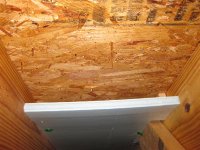
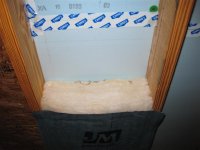
my question is........The DOW board is a moisture barrier and the insulation has a mold resistant facing on it that says it is a vapor retarder. Am I sealing the insulation too tightly? I know that I have seen this done on houses (blue board with faced fiberglass bats) and it seems like a good plan, I just want to be sure before I proceed. The vented space will be between the blue board and the roof OSB.

Here are a couple of pics. Thanks again!
 

Attachments

  • IMG_0709 (Medium).JPG
    IMG_0709 (Medium).JPG
    88.2 KB · Views: 39
  • IMG_0708 (Medium).JPG
    IMG_0708 (Medium).JPG
    67.3 KB · Views: 39
  • IMG_0707 (Medium).JPG
    IMG_0707 (Medium).JPG
    50.1 KB · Views: 39

Spaggs

Well-known member
Joined
Apr 25, 2009
Messages
61
Location
*******, GA
Spray-in insulation seals a heck of lot better than bats. That's what I did with my garage. It also helps with noise reduction. Neighbors can't hear you as well and you can't hear them as well either. R value is always something to consider, but if your insulation wont' seal, it's worthless.

Spaggs
 
OP
R

Rosco

Well-known member
Joined
Jan 4, 2009
Messages
1,140
Location
South Georgia
I got a quote on spray in insulation and fell over.........

I am pretty sure that my set-up with the DOW board will help the sealing property of the fiberglass batting as long as I tape/caulk all of the seams.
 

little d

Well-known member
Joined
Nov 13, 2009
Messages
815
Location
NW Oklahoma
rosco, yes you did it right at the sofit, now when ya get to the top of the knee walls, break it over to the ceiling, leaving the rafters open to vent. by the way, they make card board "chases" that staple to the rafters that do what you did with the foam. ya don't get the r-value, just easer to put in. if ya go with the blown in, most places will loan, or rent ya the blower, very easy to do. if your not sure about the thickness, take a few paint stirrers, staple them to the ceiling joists at the hight you want the blown in at, this will give ya a reference point in different areas. Celsius is pretty cheep, and easy, add a little for settling
 
Last edited:
OP
R

Rosco

Well-known member
Joined
Jan 4, 2009
Messages
1,140
Location
South Georgia
rosco, yes you did it right at the sofit, now when ya get to the top of the knee walls, break it over to the ceiling, leaving the rafters open to vent. by the way, they make card board "chases" that staple to the rafters that do what you did with the foam. ya don't get the r-value, just easer to put in. if ya go with the blown in, most places will loan, or rent ya the blower, very easy to do. if your not sure about the thickness, take a few paint stirrers, staple them to the ceiling joists at the hight you want the blown in at, this will give ya a reference point in different areas. Celsius is pretty cheep, and easy, add a little for settling

Thanks Little D, I do plan on leaving the top of the R-19 open at the cieling. Am I correct in thinking that the facing on the insulation is too much? I used the DOW board to help from the summer heat/humidity here in south Ga. and have read that a vapor retarder on both sides is a bad thing. Cutting/fitting the DOW board is a pain, but hopefully will give me the hot humid vapor retarding I need in the summer. If I use unfaced R-19 will that be better?
 

Colonial Cobra

Well-known member
Joined
Nov 21, 2007
Messages
459
Location
Yorktown, VA
That is the first time I heard of that. I do not doubt you as I am not a roofer or shingle manufacturer, but can you give me some more info? If true, that would save me some work and money.

When I called my building supply, they said that most shingle manufacturers would not warrantee the shingles if closed cell foam was sprayed directly against the sheathing. They said the heat buildup would overheat the shingles and they would not last. Here in Ga during the summer you cannot even walk on a well vented black roof without tearing asphalt shingles


Don't get confused with a non ventilated attic space.
The heat below the shingles is what causes them to curl. And not that you'd ever get them to honor a warranty anyway. I've never seen it.

Most shingle manufacturers are starting to come around to the spray foam techniques. Tests have shown that the spray foam applied directly to the underside of roof decks does decrease temperature and temp is more a factor of shingle color than anything else.


With the cellulose, you will be better off than the fiberglass but do looks the affects the foam give of totally sealing out the cavity from air infiltration.

Remember,,,,Air flow is the killer with insulation..... Most R=13 walls perform at less than R-5 due to air infiltration.
 

little d

Well-known member
Joined
Nov 13, 2009
Messages
815
Location
NW Oklahoma
If I use unfaced R-19 will that be better? i would think so, you want your space to breath. i remember when i was young, and one of the first complete remodel job i did, the guy wanted vapor bearer on the walls and ceiling. i didn't think this was right, but his money, so what the hell,lol. well about a month later he calls me, and i go over and sure as ****, his house is sweating. i climbed into the Attic, pulled back the insulation, cutting the plastic............ wa la, no more sweating. the point is, you can get it to tight.
 

Colonial Cobra

Well-known member
Joined
Nov 21, 2007
Messages
459
Location
Yorktown, VA
A Vapor barrier is a must.... Vapor is the enemy... Actually, air movement in general is bad. Trapped air is good. That's why the closed cell foam works so well.

What was sweating? Ceiling? Was the vapor barrier facing the heated space or attic? The problem with cutting the vapor barrier is that the moisture can then get into the drywall creating mold and moisture problems down the road. I've seen people lay plastic over the insulation creating a condensation problem. The barrier should be against the heated space.
 
OP
R

Rosco

Well-known member
Joined
Jan 4, 2009
Messages
1,140
Location
South Georgia
A Vapor barrier is a must.... Vapor is the enemy... Actually, air movement in general is bad. Trapped air is good. That's why the closed cell foam works so well.

What was sweating? Ceiling? Was the vapor barrier facing the heated space or attic? The problem with cutting the vapor barrier is that the moisture can then get into the drywall creating mold and moisture problems down the road. I've seen people lay plastic over the insulation creating a condensation problem. The barrier should be against the heated space.


In the deep south they want the vapor retarder to the outside, based on heating/cooling days and outside air temp/humidity.

Just North of us (mixed climate) no vapor barrier at all. Then in the colder North, vapor retarder on the inside as you stated.
 

nonhog

Well-known member
Joined
Nov 6, 2007
Messages
2,449
Location
Arizona (Tucson)
Just North of us (mixed climate) no vapor barrier at all. Then in the colder North, vapor retarder on the inside as you stated.

I'm in a mixed climate and confused as heck but great food for thought here.
Thanks for a great thread Rosco all the best with your project. Keep the pics coming. :thumbup:
 

Colonial Cobra

Well-known member
Joined
Nov 21, 2007
Messages
459
Location
Yorktown, VA
In the deep south they want the vapor retarder to the outside, based on heating/cooling days and outside air temp/humidity.

Just North of us (mixed climate) no vapor barrier at all. Then in the colder North, vapor retarder on the inside as you stated.

I've never seen that before. Vapor barrier should always be against the heated/cooled space. Barrier on the outside will trap moisture in the insulation and almost negate all the insulating qualities. Not to mention the mold and rot problems
 
OP
R

Rosco

Well-known member
Joined
Jan 4, 2009
Messages
1,140
Location
South Georgia
I always had the same thinking until I started all of my confusing research. I have always put the facing on an insulation batt or a vapor barrier on the inside before now. The internet is a dangerous place!

The last study I read did an actual inspection of 2 houses in Florida and found mold between the sheetrock and the kraft paper facing (vapor retarder to the inside) and the recommendation was to eliminate the facing or put it against the exterior wall. It was on a knee wall in the second story (attic air) which probably had a lot to do with it, but relevant to my situation.

Thanks for all of the advice, just trying to do it once......:)
 

Snap50

Well-known member
Joined
Dec 29, 2009
Messages
145
Location
New England
Be sure to provide venting between the roof deck and the insulation otherwise you'll be replacing rotted deck due to condensation. You want air flow in your roof system if the insulation is under the roof as opposed to outside like flat roofed buildings with builtup roofing.

The facing, or vapor barrier, goes on the warm side.
 
Last edited:

little d

Well-known member
Joined
Nov 13, 2009
Messages
815
Location
NW Oklahoma
cobra, the plastic was stapled to the ceiling joist between the sheetrock and the insulation, and then blown in celoius. like i said, i went back and pulled back the celious, cut the plastic, and with in a week the moisture dryed up. luckly, we caught it in time, and no real problems ocured.

rosco, i think you got a handle on it, keep us updated on it, would love to see how it turns out, d.
 
To avoid these ads, REGISTER NOW!
Top Bottom