To avoid these ads, REGISTER NOW!

Any plumbers I can ask a question please?

krux

Well-known member
Joined
Jan 21, 2012
Messages
468
Location
na
Hey guys,

I hate to ask since this is a garage forum but many of you are in trades. Most of the time I can figure stuff out but this plumbing problem has me baffled.

House Year: 1958
Problem: Floor drain backs up when using washing machine
Done so far: Snaked 50 feet with no clogs, put water in vent pipe on roof with no clogs, and put main drain line cleaner and let it set for 10 hours.
What I have tested: When backing up flushing the toilet to see if it made a difference which it did not.
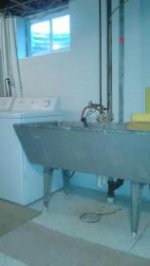
What I have noticed: The floor drain water moves up and down about 1-1 1/2 inches when washing machine is draining. This happens fairly quick once the water is dispensing in the old cast iron tub.

I appreciate any help since this is causing me a headache. All the plumbers just give me prices when asking and I don't want to pay for something that won't solve the problem.
 
To avoid these ads, REGISTER NOW!

Dagny

Well-known member
Joined
Jul 25, 2014
Messages
2,984
Location
Northern Wi.
partial clog somewhere washing machine put out a large volume of water in short amount of time. You could take an educated guess by how long it takes to fill pipes. The longer it takes the farther the restriction.
 
OP
K

krux

Well-known member
Joined
Jan 21, 2012
Messages
468
Location
na
Hi Dagny,

This happens about 15-20 seconds the water starts to rise from the floor drain. Is it normal for the floor drain water to rise and lower when the washing machine is draining?

At times it will only raise up about 1-1/2 from the small little hole.
 

Bobdog

Well-known member
Joined
Jul 24, 2013
Messages
1,190
Location
South Jersey
Rent a drain camera and run it down the line.Short of pulling up the whole floor, it's the only way to really see what's going on down there.
 

James-W

Well-known member
Joined
Feb 3, 2013
Messages
12,432
Location
Southeastern Wisconsin
Are you on city sewer or do you have a septic system?

Obviously, there is a partial blockage somewhere in the system. The problem is, WHERE is it blocked? If you have, or could rent, some sort of snake with a light and a camera attached to it, you could run it down the drain system and actually see the blockage. Additionally, this would give you an idea of what it would take to dislodge the blockage and clear it.
 
OP
K

krux

Well-known member
Joined
Jan 21, 2012
Messages
468
Location
na
Rent a drain camera and run it down the line.Short of pulling up the whole floor, it's the only way to really see what's going on down there.

I would do that but nobody in my area rents a camera. I would have to drive some far distance to rent one and from what I seen it's $200 for 4 hours plus a $300 deposit.
 

Kevin54

MEMBER EMERITUS
Joined
Jan 12, 2005
Messages
29,341
Location
Urbana, Ohio
Can you take a pic of where the washer line is draining into the main, that is also tied into the floor drain? The washer drain should have a street ell that send the water in one direction and not come straight in to the line where it can backflow into the floor drain if that make sense. And I second the vote on getting a camera and going further down than 50'. What sort of drain tile do you have in the yard (I assume clay belled tiles) and do you have any **** trees nearby? By **** trees, I mean Silver Maple or Willows? The reason I ask is that their roots will run for quite a few feet in search of water, and by a few feet, they can run between 50 and 100 feet. If you have clay tiles, chances are you have hair roots in the tiles (if trees are nearby) or you may have a crushed tile or two in the main line.
 
OP
K

krux

Well-known member
Joined
Jan 21, 2012
Messages
468
Location
na
Are you on city sewer or do you have a septic system?

Obviously, there is a partial blockage somewhere in the system. The problem is, WHERE is it blocked? If you have, or could rent, some sort of snake with a light and a camera attached to it, you could run it down the drain system and actually see the blockage. Additionally, this would give you an idea of what it would take to dislodge the blockage and clear it.

I am currently connected to a city sewer system.

The washer machine and kitchen are connected on one vent pipe and the bathrooms on the other side of the house are connected on their own vent pipe. I was thinking if food would collect but we strain all the food and lint so I would think this is kept at a minimal.

Also should the floor drain p trap move up and down with water?

Thanks,
 
OP
K

krux

Well-known member
Joined
Jan 21, 2012
Messages
468
Location
na
Can you take a pic of where the washer line is draining into the main, that is also tied into the floor drain? The washer drain should have a street ell that send the water in one direction and not come straight in to the line where it can backflow into the floor drain if that make sense. And I second the vote on getting a camera and going further down than 50'. What sort of drain tile do you have in the yard (I assume clay belled tiles) and do you have any **** trees nearby? By **** trees, I mean Silver Maple or Willows? The reason I ask is that their roots will run for quite a few feet in search of water, and by a few feet, they can run between 50 and 100 feet. If you have clay tiles, chances are you have hair roots in the tiles (if trees are nearby) or you may have a crushed tile or two in the main line.

Hey Kevin,

My washer drain line goes into the tub and then drains into the pipes behind the tub which should be a vent pipe and the other pipe being from upstairs sink. Picture is attached.

I don't have any drain tiles just normal soil and grass? I don't believe I have a **** tree just a normal baby tree that's about 3 years old. I believe the pipes are cast iron soil.

You had some good questions and hopefully I was able to answer them.
 

Attachments

  • 20150620_092040.jpg
    20150620_092040.jpg
    6.1 KB · Views: 262

sberry

Banned
Joined
Jun 18, 2005
Messages
35,747
Location
Brethren, Michigan
The trap will probably rise some. The differences in head (elevation) may be very low here, long runs add to it. It may need to be vented, vents do seem to get plugged from growth occasion.
 
OP
K

krux

Well-known member
Joined
Jan 21, 2012
Messages
468
Location
na
Just backed up again ugh......

I called a plumber and he is going to call me back. I will ask him the questions you guys asked me. I will update once I find the results. Hopefully he can come out today still at 2pm.
 

FXDawg

Well-known member
Joined
Jan 24, 2012
Messages
322
Location
Rehoboth, MA
Sometimes those floor drains go to a "dry well" and not the house sewer. It is not uncommon to drain the washing machine to that same "dty well" Sometimes those "dry wells" are just a hole in the earth filled with rocks and the drain pipe just routed to the rock filed hole and sometimes it could be a pre cast concrete vessel with holes in it. My guess is that you have a dry well and it may have become less able to filter the water from the washing machine.

It looks to me that the pipe going down into the slab is a 2". That's too small fur a house main. This further enforced the dry well theory. You probably have a large pipe, 3"typically, penetrating the foundation wall somewhere else. The town sewer our septic system is probably to high for this drain. That would explain the dry well. The unfortunate part is how deep, below grade, the dry well would have to be judging by that retaining well at your window. Digging it up and refreshing it would be quite a chore.

You could, if the house sewer is accessible, tie the washing machine into that.

I'd need more info and photos to help you do that properly.
 

404

Well-known member
Joined
Aug 23, 2014
Messages
3,463
Location
Mass
As an alternative, the washing machine could empty into a 55 gallon plastic drum. A small line from the bottom of the drum lets the water go down the drain at a slow controlled rate. Free, at least. Get drum from a car wash, the soap and wheel cleaner come in these drums. If getting a drum that had wheel cleaner in it, DO NOT get that on your hands. IF it gets on, use vinegar to counter act it.
 

NUTTSGT

Super Moderator
Staff member
Joined
Sep 14, 2009
Messages
50,903
Location
Northern Central Ohio
Pop the cover off the floor drain and see if you can shove a garden hose into it. If you can feed it inside the drain, see how far it'll go before it stops. Mark the hose, pull it out lay it out on the floor. It should show the general area where the blockage could be or just a turn that hose can't get past.
 

Dick in Wisconsin

Well-known member
Joined
Mar 3, 2012
Messages
3,048
Location
Shawano, Wisconsin
I'm not a plumber, but I enjoy thinking through problems like this and what the solution might be.

Right now I'm voting for dry well theory. The house I grew up in was built in 1955, was at the end of the city sewer line ("dead end" on the river) hence the sewer line in the street was high. Higher than the basement floor. The sewer went out to the street through a pipe that was three feet off the basement floor. Hence we couldn't have a toilet or an active sink in basement; my Dad didn't want to put a pump in to pump the water up to the sewer line. The washer/dryer were on the first floor.

I suspect the waste lines in the OP's house for the washer and the floor drain go out to the dry well and any of the waste lines for first floor and above go to city sewer which goes out the side of the basement wall.

The OP mentioned flushing a toilet. Where is the toilet located? In the basement or on the first floor? If in the basement, then I think this theory goes down the drain.

Unsure of the plumbing code if you try to improve on the situation, but the solutions range from DYI pretty easy and pretty inexpensive to professionally done at a reasonable cost.
 

mires

Well-known member
Joined
Jan 12, 2014
Messages
600
Location
Columbia, MO
I'm a plumber and it sounds to me like that line just needs to be jetted. Just sounds like a partial clog. Cast iron can be snaked and snaked and will almost always start to drain slow again shortly after until it eventually just clogs again. The walls of the pipe corrode, rust and catch debris until there is a blockage/partial blockage. When you run a snake down it, you are just poking a hole basically and it won't be long before it closes back up. By jetting it, you are actually blowing all that crud out which should fix your problem. Should. Without being there and seeing it, none of us will be of much help to you. That is why the plumbers want to come out. My guess is they could have you fixed up in less than an hour for a couple hundred dollars and you can get on with enjoying your weekend without having to deal with it yourself.
 

kbs2244

Well-known member
Joined
Nov 11, 2006
Messages
14,065
Is this a new problem?
If so what have you changed lately?
New washer?

Does the toilet water level move at all when the washing machine is draining?
Washers dump a lot of water quickly.
If the washer is connected to the city sewer line, and you have a clog, you may see enough air pressure built up to cause ripples in the toilet.

I would also get in touch with the city sanitation department to see if the have any documentation on how the drains were done when the house was built.
 

Kevin54

MEMBER EMERITUS
Joined
Jan 12, 2005
Messages
29,341
Location
Urbana, Ohio
All of the suggestions above are good, and I hope the plumber can get you set to where you won't have anymore problems. Seeing that the house was built back in the 50's it may have cast iron run to the outside of the foundation, then belled tiles the rest of the way to the main. I ran into that with my tiles, and the people I bought the house off of, put a bathroom in, in the early 60's. Also some tiles are just a paper like product mixed with an asphalt like base. So over the years the tiles will deteriorate and collapse. This sort of tile makes it hard to run a snake with a cutter head through it without causing further damage. Hopefully you can get to the bottom of it without too much damage to the old wallet.
 
OP
K

krux

Well-known member
Joined
Jan 21, 2012
Messages
468
Location
na
Update:

This is a p-trap drain that ties in underneath the concrete like a Y and then goes goes to the main sewer line and goes to the city street/curb. Sorry if I didn't make that clear earlier.

I had a plumber come over. He was only $125 and I told him what is happening. He took a snake and bladed it out until about 30 feet which he hit a small/medium snag. He cleaned that up and informed these old pipes don't handle a ton of water like the newer houses do.

He made a couple of points that I never thought of. He asked how far up the tub gets filled with water. I informed him when I moved in the house it use to go high as far as 3/4 but since I snaked it and cleaned up the tub it gets up about 1/4. He informed me that I need to find something to help with resistance to keep the water just pouring into the pipe which it can't keep up and goes the least path of resistance. Maybe he is right? He suggested a rubber plug with holes in it to help the flow.

Afterwards we plugged the tub to about 3/4 and ran the upstairs kitchen water that runs into this and let it go. It didn't back up and the p-trap water barley moved. So I am hoping all is good with the pipe. The guy indicated that it might happen once a year with this and to be honest I wouldn't know why it would. I use the cheapest toilet paper so it dissolves, use lint catchers for the washer, and use food catchers on the upstairs sink. Hopefully I am ok for awhile. I do have to say that little tool he had was fricken great!!!!
 
To avoid these ads, REGISTER NOW!
OP
K

krux

Well-known member
Joined
Jan 21, 2012
Messages
468
Location
na
Pop the cover off the floor drain and see if you can shove a garden hose into it. If you can feed it inside the drain, see how far it'll go before it stops. Mark the hose, pull it out lay it out on the floor. It should show the general area where the blockage could be or just a turn that hose can't get past.

Garden hose will hit the bottom of the drain quick since it acts as a p trap. I have snaked it out before.

I'm not a plumber, but I enjoy thinking through problems like this and what the solution might be.

Right now I'm voting for dry well theory. The house I grew up in was built in 1955, was at the end of the city sewer line ("dead end" on the river) hence the sewer line in the street was high. Higher than the basement floor. The sewer went out to the street through a pipe that was three feet off the basement floor. Hence we couldn't have a toilet or an active sink in basement; my Dad didn't want to put a pump in to pump the water up to the sewer line. The washer/dryer were on the first floor.

I suspect the waste lines in the OP's house for the washer and the floor drain go out to the dry well and any of the waste lines for first floor and above go to city sewer which goes out the side of the basement wall.

The OP mentioned flushing a toilet. Where is the toilet located? In the basement or on the first floor? If in the basement, then I think this theory goes down the drain.

Unsure of the plumbing code if you try to improve on the situation, but the solutions range from DYI pretty easy and pretty inexpensive to professionally done at a reasonable cost.

Toilet it is in the basement. When finding the clog it was right around the toilet area. Toilet is about 25 feet from the drain and the clog was 30 feet roughly from snaking.

I'm a plumber and it sounds to me like that line just needs to be jetted. Just sounds like a partial clog. Cast iron can be snaked and snaked and will almost always start to drain slow again shortly after until it eventually just clogs again. The walls of the pipe corrode, rust and catch debris until there is a blockage/partial blockage. When you run a snake down it, you are just poking a hole basically and it won't be long before it closes back up. By jetting it, you are actually blowing all that crud out which should fix your problem. Should. Without being there and seeing it, none of us will be of much help to you. That is why the plumbers want to come out. My guess is they could have you fixed up in less than an hour for a couple hundred dollars and you can get on with enjoying your weekend without having to deal with it yourself.

It's funny he never mentioned jetting since this seems like a good idea. If you don't mind, how do you "jet" the pipes"?

Is this a new problem?
If so what have you changed lately?
New washer?

Does the toilet water level move at all when the washing machine is draining?
Washers dump a lot of water quickly.
If the washer is connected to the city sewer line, and you have a clog, you may see enough air pressure built up to cause ripples in the toilet.

I would also get in touch with the city sanitation department to see if the have any documentation on how the drains were done when the house was built.


The problem happened about 6 months ago. The only thing I can think we changed was the toilet paper. My fiancee (soon to be married in two months) has long hair and I don't think that would affect it?

That's a great way to ask about the city drains. One thing I am mad about is that the city requires a tree in your front lawn. They typically place them right on a pipe too which I think is b/s causing problems with your pipe. Plus if anything happens to the pipe it's your problem since you own it. Kind of a double edge sword on getting screwed.
 
OP
K

krux

Well-known member
Joined
Jan 21, 2012
Messages
468
Location
na
Plus did I ever tell you guys how much I love you?????
 

mires

Well-known member
Joined
Jan 12, 2014
Messages
600
Location
Columbia, MO
It's funny he never mentioned jetting since this seems like a good idea. If you don't mind, how do you "jet" the pipes"?

This will give you an idea of how it works. You are basically just pressure washing the inside of your pipes. It's very effective and almost necessary for cast iron drain lines at some point. The water that comes out the other end is nothing short of disgusting even just after snaking the drain. If it's draining fine now, then I would just leave it be but if it clogs again, call around and check prices to just jet the line rather than just run a snake down it.

iframe>
 

HoosierMark

Well-known member
Joined
Jan 31, 2013
Messages
1,441
Location
Southeast IN
First if you have room try one of the expanding bladders that you hook to a garden hose. It expands to seal the pipe and then lets the water pressure push the clog thru. I have found them to be very effective. Second. As soon as you can fix it correctly. It will clog up again and typically when it is most inconvienent. Now you are just working around it which is ok but will cause an issue later. When you go to sell, it will need to be disclosed so why not just fix it now? I know I would.
 
OP
K

krux

Well-known member
Joined
Jan 21, 2012
Messages
468
Location
na
First if you have room try one of the expanding bladders that you hook to a garden hose. It expands to seal the pipe and then lets the water pressure push the clog thru. I have found them to be very effective. Second. As soon as you can fix it correctly. It will clog up again and typically when it is most inconvienent. Now you are just working around it which is ok but will cause an issue later. When you go to sell, it will need to be disclosed so why not just fix it now? I know I would.
I thought I read something online if the pressure is built up to high it can crack the pipe or burst if there is a weak spot. This does seem like a good idea but wouldn't the pressure also go out the vent pipe on the roof?
 
OP
K

krux

Well-known member
Joined
Jan 21, 2012
Messages
468
Location
na
It's funny he never mentioned jetting since this seems like a good idea. If you don't mind, how do you "jet" the pipes"?

This will give you an idea of how it works. You are basically just pressure washing the inside of your pipes. It's very effective and almost necessary for cast iron drain lines at some point. The water that comes out the other end is nothing short of disgusting even just after snaking the drain. If it's draining fine now, then I would just leave it be but if it clogs again, call around and check prices to just jet the line rather than just run a snake down it.

iframe>
I will keep that in mind on jetting. Sounds like a great idea and something that can be done in the future. I wonder if a wad of toliet paper was plugging the pipe since when he snaked it was near toliet area.
 

HoosierMark

Well-known member
Joined
Jan 31, 2013
Messages
1,441
Location
Southeast IN
The pressure on the drain will be equal to the pressure in the water pipes. Our local water pressure is approximately 45 lbs of pressure. I have used these rubber bladders to open many pipes that have been clogged in my rentals using these. It is simple and easy in my opinion. I understand your concern about your pipes possibly breaking from the pressure but if they are that weak won't you have a problem in the future from leaks from weak pipes anyway?
 

CNGsaves

Well-known member
Joined
Sep 26, 2012
Messages
13,233
Location
KS and OK
Had similar problem with house built in 50's. Plumber snaked the line (with cutter head) and said it was likely hair roots from tree nearby (40 ft tall ash tree).

Determined that no check valve in floor drain as it backed up into mechanical room in basement.

Next plan is tear out portion of floor and put in check valve.

Subsequent problem this year is just like OP's where the washer backs up the OTHER floor drain in other part of basement . . . . . ARRRRRRGHHH !!!! Now I likely need floor tore up in 2 spots to put in check valves. The washing machine would slowly raise water level above basement floor drain and I'd have to squeegee water over about 6 feet to sump pump hole. Basically makes the washer worthless as you have to babysit the floor drain in basement.

QUESTION: Can the plumber still do snake/jet out IF those 2 check valves are put in ??? Or does a new clean-out port get added downstream of the check valve ???
 

HoosierMark

Well-known member
Joined
Jan 31, 2013
Messages
1,441
Location
Southeast IN
If your tearing up the floor and putting a check valve in, why not put a clean out in just past it and terminate it at floor level? I also wonder why you need check valves. The only reason I would have them is if there was back up from the city sewer coming in to your basement. Otherwise I would have an open drain line with no restrictions. Any type of edge or similar can catch toilet paper or anything else flushed and slowly create a blockage. The house has lasted 65 years with apparently only this problem, so why not fix it the right way by replacing the outside line or whatever it takes and enjoy good drains for another 65 years!!!! After all how many times do you want to deal with the tree roots in the future?
 

FXDawg

Well-known member
Joined
Jan 24, 2012
Messages
322
Location
Rehoboth, MA
You have to install check valves do they are serviceable. You need to be able to replace our repair when they fail. Also, a check valve may stop the water coming up the floor drain but, it may back up somewhere else. The next highest opening. Probably the slop sink. There is no reason a 2 inch drain cannot handle a washing machine. Especially if you are dumping into the slop sink and the slop sink drain is what is really backing up. You should be able to fill that sink and then just let the drain go without backing up. I know roto router uses some liquid drain cleaner with some kind of enzyme in it to keep drains clean. Maybe you just need something like that as s maintenance thing. There is also a product called "clobber" available. The original clone was some kind of acid that smelled like rotten eggs but, I seem to recall they came up with a less aggressive version of it. If you can find something like that and use it at maybe a monthly interval you could keep that drain working properly. Also, a clogged vent can really slow a drain like this...
 

FXDawg

Well-known member
Joined
Jan 24, 2012
Messages
322
Location
Rehoboth, MA
You know, an under pitched pipe could also be your problem. I had a recurring clog problem once. The thing would back up once a month out so. Finally, I got into the ceiling below and found a run of poor r that was pretty flat, maybe even a slight back pitch. I played around with the hangers and all the lengths to show pitch on the level and the clog calls stopped coming in.

That's my new theory, you have a run of pipe that is back pitched between the for drain and the main. The allows, not only laundry water to sit in there but, probably allows a little of the contents of the main to route off into the back pitched beach on the way by. That stuff just sits there getting crusty because you don't use the drain every day and keeps building up... if you open the floor, expose that whole branch line, right back to the main and make sure you have plenty of pitch.
 

CNGsaves

Well-known member
Joined
Sep 26, 2012
Messages
13,233
Location
KS and OK
Sorry for sidetrack but another related story. My BIL had very nice house on creek/lake property which was close enough to BIG nearby creek that spilled over to lake and his creek, in turn flooding (50 yr flood levels) in '98 and city sewer systems failed (pumps swamped - - turned off) so that sewage backed up into his downstairs mechanical room floor drain and the shower drain in basement bathroom. It was so bad that had to "stopper" the shower in bathroom and let sewage run into "pool" in basement after a 2x4 was glued to basement floor creating wall around the floor drain. Then a centrifical pump was used to pump sewage water back outside (ie on lawn or into creek)!!

There ARE times when check valve is appropriate . . . surely in HIS situation.

My house (built in 50's) that I've been in 3 yrs has it's problems but borderline on "needing" the checkvalves. I will have to come up with solution so that dang washer will work. I'm tempted to "hillbilly it" and route washer water directly to sump pump hole and just water the grass with that water. ;) My problem could indeed be slope as THAT overflowing floor drain is far north end of basement while outgoing sewer line is nearly entire length of house towards south end. Way too costly to tear up basement concrete floor for 40 ft to see if slope is problem. Will try the snake/jet method on that leg of sewer drain that goes from north floor drain next time I have a plumber out!! :thumbup:
 

FXDawg

Well-known member
Joined
Jan 24, 2012
Messages
322
Location
Rehoboth, MA
And is that the floor drain in the photo right by the laundry tub?

One other option is to move the laundry to another part of the basement, closer to the main sewer line. You could cut a Wye and 45 into a riser add a vent and a trap. That washing machine will pump water up over 8'. This won't be too bad. Depending on what pipe material. Cast iron is tough to cut but, they make mission couplings to tie plastic pipe to cast iron properly you see shady applications of fernco couplings but, thats just wrong.. if your interested in that approach post some pictures of potential locations and the pipe near by. Or you could run pipe over head and leave the machines where they are. If there are exposed drain lines in you basement, you have some options
 

sberry

Banned
Joined
Jun 18, 2005
Messages
35,747
Location
Brethren, Michigan
I usually try to tear it all right up if possible and get it over with. I just did one and at first my helper was ready to get a snake and I said,,, no, we going to dig it up and come to find out some time ago a sat installer hit the pipe, cracked it and grass roots plugged it up. It might have worked temp with a snake but if would have been a fooler. We replaced it, still is an amateur elevation job from a lazy contractor but it now works.
 

Kevin54

MEMBER EMERITUS
Joined
Jan 12, 2005
Messages
29,341
Location
Urbana, Ohio
Update:

This is a p-trap drain that ties in underneath the concrete like a Y and then goes goes to the main sewer line and goes to the city street/curb. Sorry if I didn't make that clear earlier.

I had a plumber come over. He was only $125 and I told him what is happening. He took a snake and bladed it out until about 30 feet which he hit a small/medium snag. He cleaned that up and informed these old pipes don't handle a ton of water like the newer houses do.

He made a couple of points that I never thought of. He asked how far up the tub gets filled with water. I informed him when I moved in the house it use to go high as far as 3/4 but since I snaked it and cleaned up the tub it gets up about 1/4. He informed me that I need to find something to help with resistance to keep the water just pouring into the pipe which it can't keep up and goes the least path of resistance. Maybe he is right? He suggested a rubber plug with holes in it to help the flow.

Afterwards we plugged the tub to about 3/4 and ran the upstairs kitchen water that runs into this and let it go. It didn't back up and the p-trap water barley moved. So I am hoping all is good with the pipe. The guy indicated that it might happen once a year with this and to be honest I wouldn't know why it would. I use the cheapest toilet paper so it dissolves, use lint catchers for the washer, and use food catchers on the upstairs sink. Hopefully I am ok for awhile. I do have to say that little tool he had was fricken great!!!!

a few things......one....you are on a city sewer system, Secondly, the plumber states that old drains don't drain as much as new drains, and thirdly, you use the cheapest ******* paper that you can get, and don't use a garbage disposal.


YOU ARE ON CITY SEWER. ******* paper shouldn't matter as it goes to the street. Old drains will drain just as well as new drains if there is no problem. The plumber hit a snag and cut it out. That tells me that you have the older bell mouthed tile and you have roots or a break in the tile somewhere. If the old tile is clear, it will drain.

Lastly, you shouldn't have to drain water into a tub, just to slow the water down enough to let it drain into your main. The water should drain as fast as you can put it down there.

I hate to say, but it sounds like you are up for a new sewer before long. A good sewer line should never need cleaned out unless you are on a septic and run things down the pipes that you shouldn't, and flush grease from a garbage disposal, or plug up the septic somehow. A city sewer should take almost anything that you can throw at it.

My advice.....save up your pennies now because if the plumber is saying that you can get by cleaning it once a year, you are throwing a bandaid at it every time you get it cleaned out. Before long, the bandaids will wear out and you will be faced with replacing the sewer with new PVC sewer. Not cheap, but not bad for what it is. And all it takes is one time of the city cleaning the sewers to backup **** water into your basement.

Good luck, but be prepared for the future cost which will be around $2500-$5000 for a new sewer line all dependent on location. I know, I put a bandaid on mine a few times until it was around zero outside and everything backed up into the basement:lol:
 
OP
K

krux

Well-known member
Joined
Jan 21, 2012
Messages
468
Location
na
a few things......one....you are on a city sewer system, Secondly, the plumber states that old drains don't drain as much as new drains, and thirdly, you use the cheapest ******* paper that you can get, and don't use a garbage disposal.


YOU ARE ON CITY SEWER. ******* paper shouldn't matter as it goes to the street. Old drains will drain just as well as new drains if there is no problem. The plumber hit a snag and cut it out. That tells me that you have the older bell mouthed tile and you have roots or a break in the tile somewhere. If the old tile is clear, it will drain.

Lastly, you shouldn't have to drain water into a tub, just to slow the water down enough to let it drain into your main. The water should drain as fast as you can put it down there.

I hate to say, but it sounds like you are up for a new sewer before long. A good sewer line should never need cleaned out unless you are on a septic and run things down the pipes that you shouldn't, and flush grease from a garbage disposal, or plug up the septic somehow. A city sewer should take almost anything that you can throw at it.

My advice.....save up your pennies now because if the plumber is saying that you can get by cleaning it once a year, you are throwing a bandaid at it every time you get it cleaned out. Before long, the bandaids will wear out and you will be faced with replacing the sewer with new PVC sewer. Not cheap, but not bad for what it is. And all it takes is one time of the city cleaning the sewers to backup **** water into your basement.

Good luck, but be prepared for the future cost which will be around $2500-$5000 for a new sewer line all dependent on location. I know, I put a bandaid on mine a few times until it was around zero outside and everything backed up into the basement:lol:

You might be right bro on a lot of things with the sewer line being old and needing replacement. I do know it's common for toilet paper to back up if you get the more expensive kind which we just switched to the cheaper kind even if it goes out to the street. Slowly it builds up and bam it will back up. Seen that in a couple of houses. My mother house would get backed up from time to time due to this and food down the sink. As for me having the pipes clean I am not sure when the last time it happened or if the previous owner put food down the sink. I do know the previous owner never used a lint catch and had that go down the sink. The sink would fill up until I snaked it and now I wonder if some or a lot of that lint went down the drain and plugged up over the years. Plus we are cooking a lot more in the house which started just as we are getting back ups. Not all 100% food is collected and I am guessing maybe 80% is so that could build up over time. Also when cleaning out the pipe he did not pull out any dirt or sand indicating a break in the pipe and he felt that my pipes were in good shape. I am not sure how much I like the idea of PVC pipes in the ground. It gets cold up here in MN and I have heard some stories from a previous plumber here that at times they can crack or burst.
 

reader2580

Well-known member
Joined
Dec 31, 2014
Messages
14,516
Location
Minneapolis, MN
My house was built in 1980 and has cast iron pipe under the basement slab with PVC everywhere else. There has been an ongoing problem with the lines under the slab plugging up and there are roots in the main line where the cast iron attaches to the PVC going to the septic.

My plan is to dig up the slab and replace all the cast iron pipe with PVC. It will be a lot of work, but it should eliminate the clogging. My plan is to do this in the summer of 2016 as I have too many other projects already this summer.
 

FXDawg

Well-known member
Joined
Jan 24, 2012
Messages
322
Location
Rehoboth, MA
I can't imagine roots growing in the pipes under your basement slab...

In the yard? Yes.

It sounds like the guy only snaked the branch if I'm reading right, and never really got outside the foundation. Garbage disposals were always clogging lines. Other than that, nothing should really build up. If the pipes are pitched properly, they should be washed clean with every drain. Cast iron is a superior product. Typing that out to install plastic would be like scrapping a perfectly good old Mercedes for a new Hyundai. I've been in buildings a century old with cast iron pipe and had to cut into it. It was fine. As far s the po, if you are only having an issue with that one branch, you probably only having issues with that one branch. Roots, broken lines, I'm not seeing any evidence of that in what I've read here. Buy a cheap snake from harbour freight and start running it down that drain if seems to slow until you can open the floor and fix the problem properly. Only fix what is broke in this instance. Even if it means cleaning that drain now and then to save money. The rest is unsubstantiated theory imho.
 
To avoid these ads, REGISTER NOW!
Top Bottom