You are using an out of date browser. It may not display this or other websites correctly.
You should upgrade or use an alternative browser.
You should upgrade or use an alternative browser.
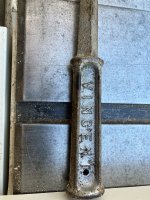
Anybody know what this tool is??
- Thread starter Ran58
- Start date


pcrov
Well-known member
Grinding wheel dresser. Demonstration:
RoninB4
Well-known member
-As posted above it's a very basic dressing tool for the bench grinder. The video suggests that it's good for maintaining sharp corners on the grinding wheel, it can/does. To me, it's far more important to use maintain the periphery surface/face of the wheel. Grinding wheels frequently get clogged from the material being ground, glazed from heat/friction, or just dull when the sharp corners of the abrasive particles have been rounded over. A visual inspection of the wheel while it's unplugged will reveal whether it needs dressing or not. If the "pores" in the wheel show bits of anything besides the wheel (hopefully not aluminum!!) then it needs dressing. If the wheel has a somewhat shiny/glazed appearance then it needs dressing. Dressing fractures the abrasive particles in the wheel to expose fresh sharp edges in what the wheel is made of, this allows faster/cooler grinding to occur. Dressing also removes the "furrows/grooves" in the wheel from the bad habit of holding an object in one place on the wheel while grinding. Dressing shouldn't require much more than about 5 seconds to do. If it takes longer than that your grinding technique needs to be improved. Light/medium pressure while dressing is enough. There's a lot of abrasive particles thrown off from dressing so wear a face mask, abrasive particles are VERY bad to breathe in. A light source will reveal how much **** goes airborne, ventilation/vacuum is advisable if available. Gloves are optional but keeps your hands clean, a paintbrush for the dust created is also good. If using vacuum be wary of sucking sparks in that creates a fire hazard.
-To @Ran58 it's a nice older dresser, the star wheels in yours are about in need of replacement so the dresser handle doesn't contact the grinding wheel (that will load up the grinding wheel with material from the casting). The star wheels are fairly cheap, a pack of 10 is under $20 and would last a lifetime, less than 10 is more than enough.
-To @Ran58 it's a nice older dresser, the star wheels in yours are about in need of replacement so the dresser handle doesn't contact the grinding wheel (that will load up the grinding wheel with material from the casting). The star wheels are fairly cheap, a pack of 10 is under $20 and would last a lifetime, less than 10 is more than enough.
Last edited:
Beerhippie
Well-known member
My high school shop teacher and my father are both rolling in their graves.....Dressing also removes the "furrows/grooves" in the wheel from the bad habit of holding an object in one place on the wheel while grinding. ....
Thank you. A wealth of knowledge on this site.-As posted above it's a very basic dressing tool for the bench grinder. The video suggests that it's good for maintaining sharp corners on the grinding wheel, it can/does. To me, it's far more important to use maintain the periphery surface/face of the wheel. Grinding wheels frequently get clogged from the material being ground, glazed from heat/friction, or just dull when the sharp corners of the abrasive particles have been rounded over. A visual inspection of the wheel while it's off will reveal whether it needs dressing or not. If the "pores" in the wheel show bits of anything besides the wheel (hopefully not aluminum!!) then it needs dressing. If the wheel has a somewhat shiny/glazed appearance then it needs dressing. Dressing fractures the abrasive particles in the wheel to expose fresh sharp edges in what the wheel is made of, this allows faster/cooler grinding to occur. Dressing also removes the "furrows/grooves" in the wheel from the bad habit of holding an object in one place on the wheel while grinding. Dressing shouldn't require much more than about 5 seconds to do. If it takes longer than that your grinding technique needs to be improved. Light/medium pressure while dressing is enough. There's a lot of abrasive particles thrown off from dressing so wear a face mask, abrasive particles are VERY bad to breathe in. A light source will reveal how much **** goes airborne, ventilation/vacuum is advisable if available. Gloves are optional but keeps your hands clean, a paintbrush for the dust created is also good. If using vacuum be wary of sucking sparks in that creates a fire hazard.
-To @Ran58 it's a nice older dresser, the star wheels in yours are about in need of replacement so the dresser handle doesn't contact the grinding wheel (that will load up the grinding wheel with material from the casting). The star wheels are fairly cheap, a pack of 10 is under $20 and would last a lifetime, less than 10 is more than enough.
RoninB4
Well-known member
-I stated something that might promote the roll? Your contention is.......?My high school shop teacher and my father are both rolling in their graves.
Beerhippie
Well-known member
Just the idea that, someone, somewhere in the world might be doing that.-I stated something that might promote the roll? Your contention is.......?
pcrov
Well-known member
My high school shop teacher and my father are both rolling in their graves.
Shifting around while doing so to ensure even wear on the full grave, naturally.
RoninB4
Well-known member
-Doing what? Grinding in one place on the wheel?Just the idea that, someone, somewhere in the world might be doing that.
Beerhippie
Well-known member
Yep. A good way to earn a dope slap--and not a gentle one. Teaching used to be much more hands-on--on the students, that is.-Doing what? Grinding in one place on the wheel?
RoninB4
Well-known member
-If I may be so inquisitive (nosy) what did your father do?and my father are both rolling in their graves.
Beerhippie
Well-known member
Engineer and minor inventor--who "retired" at 45 and spent the rest of his days sailing the Pacific in small multi-hulls. He spend his last days in NZ.-If I may be so inquisitive (nosy) what did your father do?
He was a fanatic about tool use--we had a small machine shop in the basement through most of my youth--and would go ape-**** if you dragged a file backwards or, heaven forbid, held something static on the grinding wheel.
Shop teacher was borderline sadistic, but knew his ****. Come to think of it, about 60% of my high school teachers were either borderline sadists or psychopaths--or both. Maybe I just brought out the worst in teachers....
Last edited:
Miss the Pontiacs
Well-known member
I have a grinder wheel dresser. Haven’t used it yet, either I don’t grind much or I don’t abuse the damn thing. Maybe the SIL trues it up when I’m not watching. 
RoninB4
Well-known member
-Interesting person that likely followed his own vision.Engineer and minor inventor--who "retired" at 45 and spent the rest of his days sailing the Pacific in small craft. He spend his last days in NZ.
-My early days in the shop were guided by grumpy older men like that. I did learn a lot from them.He was a fanatic about tool use--we had a small machine shop in the basement through most of my youth--and would go ape-**** if you dragged a file backwards or, heaven forbid, held something static on the grinding wheel.
-Common attributes in shop teachers, especially if they did the apprenticeship in Europe for some reason.Shop teacher was borderline sadistic, but knew his ****.
-I only had one year of shop classes, 7th grade, because I was supposed to be heading for college and wouldn't need shop classes. I went to 3 different high schools and didn't get to meet the sadistic psychopaths until I worked in machine shops. It's not a career for the thin-skinned, easily offended, or those expecting a level playing field.Come to think of it, about 60% of my high school teachers were either borderline sadists or psychopaths--or both.
-Perhaps we could say that you were inspirational? Maybe they felt you were tough enough to withstand the maelstrom? Love often comes packaged in prior experience. The larger question is whether you continue the "tradition" you were taught by. I try not to but I am now "Grumpy Old Man". We become what we have seen. Thanks for your reply.Maybe I just brought out the worst in teachers....

Private Lugnutz
Well-known member
@Ran58
What is the forged-in marking on the opposite side of the handle from "DETROIT"? I can't quite make it out.
I started collecting hand tools as a hobby to outfit my '43 Willys MB jeep, and expanded to General Mechanics' Toolkits from there. Dressers were not a wartime GMTK issue tool, but they were part of several wartime tool-sets (including 3rd Echelon Sets No. 1 and 2, special Armored Forces sets, etc) associated with any depot where a grinder would be found, and I have a few from that era, which is all just prelude for posting a very nice rendering of one from a wartime TM.
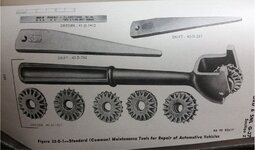
What is the forged-in marking on the opposite side of the handle from "DETROIT"? I can't quite make it out.
I started collecting hand tools as a hobby to outfit my '43 Willys MB jeep, and expanded to General Mechanics' Toolkits from there. Dressers were not a wartime GMTK issue tool, but they were part of several wartime tool-sets (including 3rd Echelon Sets No. 1 and 2, special Armored Forces sets, etc) associated with any depot where a grinder would be found, and I have a few from that era, which is all just prelude for posting a very nice rendering of one from a wartime TM.
Private Lugnutz
Well-known member
@RoninB4
Given your interest in the subject at hand you may be interested in seeing the tool at this link, identified as a "crackerjack dresser", and I would be interested in your comments on it.
 www.garagejournal.com
Given your interest in the subject at hand you may be interested in seeing the tool at this link, identified as a "crackerjack dresser", and I would be interested in your comments on it.
Hand Powered Grinders
How about showing off your hand cranked grinders? Here's one I picked up about five years ago from an antique store. It was a tad overpriced, but being something of a steam power nut I had to have it based on the brand , "Governor". Any others out there?
www.garagejournal.com
RoninB4
Well-known member
-The term "crackerjack" is an expression I heard used by the older men in the shop. As you're likely aware, it indicates a superior quality or excellence. Describing someone as a crackerjack machinist was quite a compliment. I rarely hear that word from someone under the age of 70 and has likely fallen from common use like the description of something being "russian" in terms of quality. As you also likely know, the word crackerjack became part of an advertising slogan for Desmond grinding wheel dressers. In catalogs I've seen there were at least two different models bearing the crackerjack description. One was the star wheel type, the other was the two handed model. Of the different dresser types they can be as simple as:@RoninB4
Given your interest in the subject at hand you may be interested in seeing the tool at this link, identified as a "crackerjack dresser", and I would be interested in your comments on it.

-A hand held stick made of something to fracture the grind-wheel abrasive. The above stick is a bit curious in being called a "Flexstick" and I have been unable to determine what it's made of. What I've used in a handheld dressing stick is Norbide (boron carbide), not at all flexible, and after 20 years shows minimal wear in use on surface grinding wheels of aluminum oxide.
-Next is another handheld but with an abrasive wheel. It's to be used at a very slight angle to the axis of the grinding wheel. The slight angle will cause the dresser wheel to crush the abrasive particles in the grinder wheel, thus exposing fresh/sharp edges for faster/cooler grinding. This type may also have provided the additional benefit of trueing a grinding wheel that was mounted out of concentricity to the spindle axis. By simply applying light/medium pressure to the grind-wheel with this it would push the grinder wheel back into concentricity to the axis. A similar technique is common when trueing a piece in a lathe chuck or drill press.

-The third type of dresser may or may not be depicted below. This one shows the provision for two handed operation. I would want to examine/evaluate whether the ball bearing are allowed unrestricted rotation or whether there is a braking mechanism. If unrestricted it would be used for freely dressing a wheel face parallel to the spindle axis or any shape/angle that was needed. If restricted it would be a type of brake dresser. These are most commonly used to true grinding wheels for concentricity through differential rotation. Diamond wheels in surface grinders are the most common application you see now. Dressing a diamond or CBN wheel is another topic for another day because it wouldn't apply to the majority of GJ members. This type in the photo was clearly a hand held device but I can see where it could have been used for trueing concentricity and THEN dressing the wheel face for service. I'd have to inspect it before saying it was also for trueing.

-I'm really tired and hope that made some sense.
Last edited:
Provincial
Well-known member
The Rimac FLEXSTONE was marketed as a point file and commutator dresser in the mid-20th Century. I still have a couple.-The term "crackerjack" is an expression I heard used by the older men in the shop. As you're likely aware, it indicates a superior quality or excellence. Describing someone as a crackerjack machinist was quite a compliment. I rarely hear that word from someone under the age of 70 and has likely fallen from common use like the description of something being "russian" in terms of quality. As you also likely know, the word crackerjack became part of an advertising slogan for Desmond grinding wheel dressers. In catalogs I've seen there were at least two different models bearing the crackerjack description. One was the star wheel type, the other was the two handed model. Of the different dresser types they can be as simple as:
-A hand held stick made of something to fracture the grind-wheel abrasive. The above stick is a bit curious in being called a "Flexstick" and I have been unable to determine what it's made of. What I've used in a handheld dressing stick is Norbide (boron carbide), not at all flexible, and after 20 years shows minimal wear in use on surface grinding wheels of aluminum oxide.
-Next is another handheld but with an abrasive wheel. It's to be used at a very slight angle to the axis of the grinding wheel. The slight angle will cause the dresser wheel to crush the abrasive particles in the grinder wheel, thus exposing fresh/sharp edges for faster/cooler grinding. This type may also have provided the additional benefit of trueing a grinding wheel that was mounted out of concentricity to the spindle axis. By simply applying light/medium pressure to the grind-wheel with this it would push the grinder wheel back into concentricity to the axis. A similar technique is common when trueing a piece in a lathe chuck or drill press.
-The third type of dresser may or may not be depicted below. This one shows the provision for two handed operation. I would want to examine/evaluate whether the ball bearing are allowed unrestricted rotation or whether there is a braking mechanism. If unrestricted it would be used for freely dressing a wheel face parallel to the spindle axis or any shape/angle that was needed. If restricted it would be a type of brake dresser. These are most commonly used to true grinding wheels for concentricity through differential rotation. Diamond wheels in surface grinders are the most common application you see now. Dressing a diamond or CBN wheel is another topic for another day because it wouldn't apply to the majority of GJ members. This type in the photo was clearly a hand held device but I can see where it could have been used for trueing concentricity and THEN dressing the wheel face for service. I'd have to inspect it before saying it was also for trueing.
-I'm really tired and hope that made some sense.
d42jeep
Well-known member
Here is the grinder stone dressing tool that lives by my grinders. Since I had it out for these pictures I cleaned up a couple of stones. 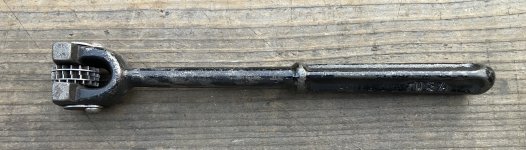
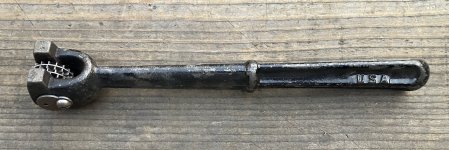
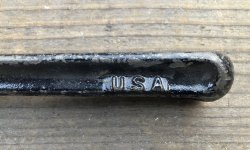
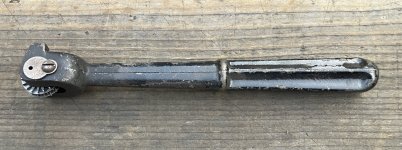
-Don
-Don
gsloan
Well-known member
Grinding wheel dresser
Private Lugnutz - just saw your request. It says “Vincent” on the other side@Ran58
What is the forged-in marking on the opposite side of the handle from "DETROIT"? I can't quite make it out.
I started collecting hand tools as a hobby to outfit my '43 Willys MB jeep, and expanded to General Mechanics' Toolkits from there. Dressers were not a wartime GMTK issue tool, but they were part of several wartime tool-sets (including 3rd Echelon Sets No. 1 and 2, special Armored Forces sets, etc) associated with any depot where a grinder would be found, and I have a few from that era, which is all just prelude for posting a very nice rendering of one from a wartime TM.