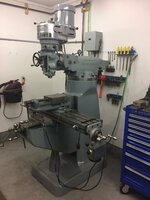
We sold all our huge CNC mills to a local shop 25 yrs ago, but we kept our Bridgeports. That tells you something. We don’t make aircraft parts on them anymore, but will make test fixtures, tools, repair things etc, on them.
No disrespect, but I’ve heard comments about the Bridgeports lack of rigidity many times. While I’m sure there is truth to it, I think the comment indicates a generational/cultural divide.
CNC machine operators (not describing you
@Firebrick43 ) think accuracy comes from the machine. Manual mill operators believe accuracy comes from the skill of the operator. I can feel the machine struggle in tough material, or when the cutter is worn, or I’ve taken too big a bite. I use my knowledge of the machine, it’s strengths and weaknesses, feeling the resistance on the hand wheels, the sound the cutter makes to fine tune the machines operation. A good manual machinist becomes one with his machine (just like a crane operator, or backhoe or tractor driver). The young folks I work with don’t get this. They don’t even draw pictures by hand, everything they produce is computerized.
Okay, one more disagreement (sorry to be disagreeable):
H&W is an essential supplier of (some people would say, “obsolete”) machine parts and information. I am a happy and supportive customer.
Their rebuilding efforts are focused on providing value to customers. I suspect (I know) customers tell them what they want done, how extensive a rebuild etc. Not fair to blame them for a part not replaced without knowing what the customer asked/paid for.
Here on the east coast, we have many old mills. I bought mine in good shape (.005” backlash, flaking everywhere but getting a little thin on the saddle) for $500. Because there are so many available, after rebuilding mine, I suspect it will not fetch what I have in it when I move/die. I would think a pristine BP in a ”machine tool desert” would be worth fixing.