We started using it about 4 years ago on residential or small jobs with no plan/specifications from an engineer. Went from using it on 2 or 3 jobs the first year to probably using GFRP 50% now. I don’t know how long it’s been around but as the price of steel has shot up, so has the use of GFRP. Cost is obviously the driving factor behind the recent popularity of GFRP but it’s being pushed hard as an alternative to steel with the benefits of being non corrosive, having over twice the tensile strength as steel, and its production leaves a much lower carbon footprint than the production of steel.
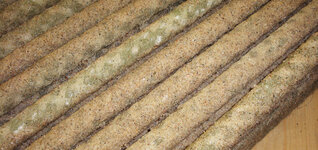
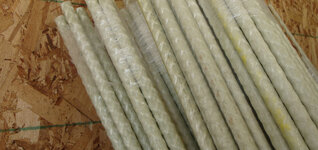
From a lot of experience working with it, I’ll give you my take on GFRP. ——Pros: 1) It’s lightweight so it’s much easier to handle than steel. 2) It can be cut faster than steel. 3) It can be cut using a variety of tools - chop saw/quicky saw, bolt cutters, hand saw, skill saw/circular saw. 4) When you add the 3 pros above it equates to having your mat laid out and ready to tie in less time than it would take for steel. ——Cons: 1) Gloves needed when handling. Some brands have a rough texture that I won’t touch without gloves, others are smooth but you get fragments when you cut them. You can see the difference in texture in the photos below. 2) When drilling and doweling into another slab or wall you will need steel. 3) Unlike deformed steel rebar that helps prevent movement between rods tied together, when parallel at splices or at perpendicular intersections, GFRP will slide where tied together. This relates to the different types of texture. The rough abrasive type is like that to create friction and prevent movement between two pieces. The type that has a smooth texture actually resembles deformed rebar with raised ridges to prevent movement. Both types fail in preventing movement. 4) It’s lightweight and is flexible. The advantage of being lightweight and easy to handle means its nearly impossible to keep from moving when you’re pouring. It gets pushed against forms and bends from the concrete coming out of the chute.
Rough texture
Smooth texture
In my opinion it’s overrated and I wouldn’t use it on anything of my own. I did quite a bit of research on it a few years ago and at that time it was said that it could never be used on anything structural because when tested for its ability to withstand heat from fire, it melted and failed long before the required time. So now, just three years later, a growing number bridges are being designed with GFRP. How does that happen? Maybe by changing the requirements so that GFRP now passes?


