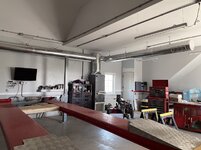
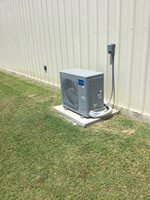
Nice building. If you were working in it daily, then it would be worthwhile to go to the higher SEER units. But, for intermittent use, the payback on energy savings vs additional upfront costs would put the break even point so far into the future as to be not worthwhile.
I'd also lean toward the two 24K units for the heating capacity. The ability of the units to ramp down in a/c mode would give you a capacity ranging from 6K btu with one unit running at minimum capacity to 62K btu with both units running at full load.
I agree that you want to take advantage of air stratification during the cooling season and leave any ceiling fans off. In the heating season, you can run a couple ceiling fans blowing upward to overcome the tendency of warm air to rise. Blowing down creates drafts while blowing upward causes the warmer air to travel outward and down the walls which avoids drafts while still getting the warm air back to floor level where it'll do the most good.
Re the Mr Cool units, IMO you pay a substantial premium for nothing more than a pre-charged tubing package. That's fine if Joe Homeowner wants to DIY a single unit in his house and has no interest in investing in any tools. But, for the typical "shop guy" person, it makes more sense to spend the money on a vacuum pump, set of gauges, and pressure testing apparatus which can also be used down the road for troubleshooting and repair of home and auto units as well as any mini splits installed in the shop.
Anyone who's set up for mig welding can use whatever shielding gas they use for mig (CO2, 75/25, etc) as their source for pressure testing rather than investing in a nitrogen cylinder that would likely be seldom used in the future. The cylinder is the big cost as an adapter and regulator can be bought for $50-$60 and have you set up to use whatever cylinder/gas you already have.
One caveat on the line sets that come with the Pioneer units, and it seems to be an issue on many other brands as well, is that the pre made flares on the tubing are too large. It's a simple matter to cut them off and make new flares of the proper size, but it's better to realize this up front and correct prior to installation rather than having to remake them after installation and finding they leak.
I'm a couple years into owning a pair of Pioneer minis and am well pleased with the build quality and performance of both units. I'd recommend the purchase of their line protector kits. They go together as they should and appear to be durable so far. I own a sheet metal shop with full capability to make line covers, but no way would I spend the time or the money for materials to make my own given the price and convenience of the cover kits.