

Astro_Pneumatic_Tools
Well-known member
We've come out with step drills tailored for the type who may use them for anything and everything that "sounds like a step drill might work so let's give it a try"
Basically heavy-duty tasks and abuse.
Video:
It's well known, or maybe it's not, that modern "titanium" coated drill bits and step drills have rode the coat tails of real TiN coated bits of the past by putting a decorative gold electroplating on and calling it "titanium" without any real benefit.
The reality is if you're paying $5 for a step drill or $20 for a 29pc drill bit set, the only thing titanium about them is the name. It costs us more than those amounts to even PVD the coating on at the factory.
That said, is a coating like traditional TiN or TiALN (in the case of 9442) necessary? Not always, and sometimes no. But it does help with heat at the cutting edge, avoiding chip welding, and can stay useful longer (more cuts and just not stopping during long cuts) which can be nice on a tool that you can't sharpen. Also, it allows us to design the cutting edges more aggressively to cut quicker without worrying they will be compromised.
Lastly, at their core these are M2 High Speed Steel. Most step drills today are made out of 4241 or 4341 (M1), because if you put titanium in the name people wont ask what the step drill is actually made from. These alloys will hog out thin material eventually with enough pressure, but cut cleanly for not many uses.
Introducing the 9442
Basically heavy-duty tasks and abuse.
Video:
It's well known, or maybe it's not, that modern "titanium" coated drill bits and step drills have rode the coat tails of real TiN coated bits of the past by putting a decorative gold electroplating on and calling it "titanium" without any real benefit.
The reality is if you're paying $5 for a step drill or $20 for a 29pc drill bit set, the only thing titanium about them is the name. It costs us more than those amounts to even PVD the coating on at the factory.
That said, is a coating like traditional TiN or TiALN (in the case of 9442) necessary? Not always, and sometimes no. But it does help with heat at the cutting edge, avoiding chip welding, and can stay useful longer (more cuts and just not stopping during long cuts) which can be nice on a tool that you can't sharpen. Also, it allows us to design the cutting edges more aggressively to cut quicker without worrying they will be compromised.
Lastly, at their core these are M2 High Speed Steel. Most step drills today are made out of 4241 or 4341 (M1), because if you put titanium in the name people wont ask what the step drill is actually made from. These alloys will hog out thin material eventually with enough pressure, but cut cleanly for not many uses.
Introducing the 9442
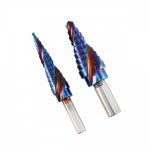
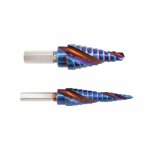
Two professional duty step-drills in popular sizes, up to ½” by 32ths and up to ¾” by 16ths
- Titanium Aluminum Nitride (TiALN) for extreme heat and wear prevention
Unique formulation continually replaces itself with a clear oxide wear preventative coating as it wears away from use
- Double fluted design for perfectly round holes with sharp cutting angles to quickly drill through everything from sheet metal to ½” thick plate
Attachments
Last edited:

