To avoid these ads, REGISTER NOW!

Atlas pv10 concrete concern

dustmandunkle

Member
Joined
Sep 13, 2020
Messages
8
Location
Pennsylvania
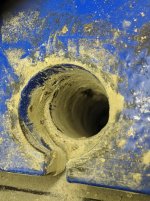
Hello we purchased a 10,000 lb 2 post lift from Atlas. we were told to wait at least 20 days we waited 26 and went to drill the holes for the anchors that were provided with the lift The manual did not specify a depth we drilled the holes 3 and 3/4 of an inch for the 5 and 1/2 inch anchors we installed them and torqued them to 90 lb later found out the torque spec was 150 which was not specified in the manual once we tried to torque them to 130 lb a few of them started to pull out of the ground and the rest of them pulled out some but then torqued down being concerned that they pulled out too far and having a few others not torqued down. We contacted the manufacturer and they recommended to cut them off move the lift and redrill new holes The entire way through the slab then install new anchors and torque to 150lb . The garage slab is 4-in thick but is 6-in in the area that the lift is being installed we drilled the new holes for the lift The entire way through the slab drilling was not too difficult however we were using a very large hammer drill that was borrowed. However after drilling the holes appeared to be soft and kind of powder-like white not a hard gray boar,we were sure to run a Shop-Vac while drilling the holes to keep the dust down and keep them clean some of the dust was coming off the bits in kind of clumps I'm not sure if this means the concrete is not cured enough? Or if it is a bad batch? I've read the concrete can be drilled in 7 days I have waited 26 and I'm not sure what the issue is but it seems like it should be harder than this however the surface appears nice hard and smooth. If I stick a screwdriver or pick down in the hole the walls of the hole can be scratched or gouged very easily. Dose anyone know why this would be? Thank you very much!
 
To avoid these ads, REGISTER NOW!

Kaizen

Well-known member
Joined
Jan 9, 2015
Messages
6,948
Location
New England
What psi was your concrete? Was their plastic under it? Is there a rush to get the lift up?

I have the same lift. I had similar problems with a few anchors. 150 ft lbs is ridiculously tough to do. I got zero help from Greg smith. Ended up getting epoxy anchors from hilti and using a dewalt epoxy that uses a normal caulking tube. Hilti has their own epoxy setup and stupid expensive.
My slab was sitting for over a year when I did mine. Think I’d leave the drilled holes for a week and see if they change appearance. Could also tape down clear 6 mil plastic over the holes and see if condensation forms in it.


Sent from my iPhone using Tapatalk
 

ConCretin

Well-known member
Joined
Jan 20, 2011
Messages
3,378
Location
Central Maine
Concrete typically achieve 70% of design strength in 7 days and 100% in 28 so the concrete should be pretty close to it's full strength by now. It's awfully hard to say based on your observations from drilling and scratching the concrete but there may be cause for concern. The only way to be sure is to have a testing lab test the slab.

I assume you were involved in the slab placement. What strength concrete was used and what is the minimum psi required by Atlas? Were you present for the placement? How much water was added to the concrete i.e. how wet was it?

It's a tough call due to the expense of testing but it's also a pretty critical safety issue. As Kaizen mentioned, it's entirely possible that it's just be an anchor issue.
 
OP
D

dustmandunkle

Member
Joined
Sep 13, 2020
Messages
8
Location
Pennsylvania
What psi was your concrete? Was their plastic under it? Is there a rush to get the lift up?

I have the same lift. I had similar problems with a few anchors. 150 ft lbs is ridiculously tough to do. I got zero help from Greg smith. Ended up getting epoxy anchors from hilti and using a dewalt epoxy that uses a normal caulking tube. Hilti has their own epoxy setup and stupid expensive.
My slab was sitting for over a year when I did mine. Think I’d leave the drilled holes for a week and see if they change appearance. Could also tape down clear 6 mil plastic over the holes and see if condensation forms in it.


Sent from my iPhone using Tapatalk
The concrete was done by professionals, the contactor that built my garage hired them to do it. I was told the concrete is 4,000psi there is a plastic liner under it. The entire slab is 4" thick and 6" where the lift is. I do know this for sure because of the chalk line on the walls before the concrete was poured and because I drilled a concrete of the 6-inch bit and just made it through with my drill bottomed out. I to ok a couple photos of the holes to where you can kind of see what I'm referring to if I can figure out how to add them.
 

finn

Well-known member
Joined
Mar 27, 2005
Messages
16,257
Location
The UP, God's country
An SDS or SDS + drill will give you a better quality anchor hole than a simple hammer drill.
The hammer drill is slow and yields a sloppy hole, unsuitable for wedge anchors.
 

Jking24

Well-known member
Joined
Feb 27, 2018
Messages
258
If you drilled all the way through you can just drive the bad anchors through and either try new ones or go the epoxy route. My personal experience is wedge anchors can be very finicky especially if an older bit was used and the holes are a little oversized. Also the ones supplied with the lifts are usually of the same quality of all the other components the lift was built with
 

Kaizen

Well-known member
Joined
Jan 9, 2015
Messages
6,948
Location
New England
If you drilled all the way through you can just drive the bad anchors through and either try new ones or go the epoxy route. My personal experience is wedge anchors can be very finicky especially if an older bit was used and the holes are a little oversized. Also the ones supplied with the lifts are usually of the same quality of all the other components the lift was built with


Before he even thinks of anchors he has to make sure the concrete is good. It should not easily be gouged as op indicated


Sent from my iPhone using Tapatalk
 

ConCretin

Well-known member
Joined
Jan 20, 2011
Messages
3,378
Location
Central Maine
An SDS or SDS + drill will give you a better quality anchor hole than a simple hammer drill.
The hammer drill is slow and yields a sloppy hole, unsuitable for wedge anchors.

Sds, Sds plus, spline drive, etc refers to the type of shank on the drill bit and corresponding chuck on the hammer drill. It has nothing to do with the quality of the hole. They all drill the same way and are used everyday to install wedge anchors.

Core drill and use epoxy.

Epoxy might be a good solution but there is no such thing as a core drill for holes this small.
 

Jking24

Well-known member
Joined
Feb 27, 2018
Messages
258
Before he even thinks of anchors he has to make sure the concrete is good. It should not easily be gouged as op indicated


Sent from my iPhone using Tapatalk

If the anchor torque's the concrete is good
 

Kaizen

Well-known member
Joined
Jan 9, 2015
Messages
6,948
Location
New England
If the anchor torque's the concrete is good


That was his old location. New location has question on quality. I agree if both locations are six inches apart most likely fine. If it was a swimming pool for a month that might explain why it has so much water. Waiting on op pics


Sent from my iPhone using Tapatalk
 

CraigStu

Well-known member
Joined
May 22, 2014
Messages
4,034
Location
Blacksburg, Va
Also maybe that 150# TQ spec should be verified. If there is no logo on the fasteners to use in research possibly new fasteners should be looked into so a TQ spec can be verified.
 
OP
D

dustmandunkle

Member
Joined
Sep 13, 2020
Messages
8
Location
Pennsylvania
The bit I used is 3/4" 6" long I bought it brand new for the install. The wholes seem to be straight and tight. Not wobbeld or anything. I'm pretty sure the anchors would probably torque down as is. 150lb seems like a lot so I would probably go around 100 at least for now. However my main concern is why the concrete seems soft.. how do I get it tested? Because I agree for sure I should not be able to gouge the concrete inside. Or do I just need to wait? So far I've left them open and keeping an eye on them.
 
To avoid these ads, REGISTER NOW!

Kaizen

Well-known member
Joined
Jan 9, 2015
Messages
6,948
Location
New England
Also maybe that 150# TQ spec should be verified. If there is no logo on the fasteners to use in research possibly new fasteners should be looked into so a TQ spec can be verified.


It was 150# last year when I did mine. It was in my instructions someplace.


Sent from my iPhone using Tapatalk
 

Kaizen

Well-known member
Joined
Jan 9, 2015
Messages
6,948
Location
New England
The bit I used is 3/4" 6" long I bought it brand new for the install. The wholes seem to be straight and tight. Not wobbeld or anything. I'm pretty sure the anchors would probably torque down as is. 150lb seems like a lot so I would probably go around 100 at least for now. However my main concern is why the concrete seems soft.. how do I get it tested? Because I agree for sure I should not be able to gouge the concrete inside. Or do I just need to wait? So far I've left them open and keeping an eye on them.


Make a few posts on other threads and post pics. Were the first set of holes as wet and soft? Same area or was this area a different cement truck?


Sent from my iPhone using Tapatalk
 

wssix99

Well-known member
Joined
Mar 2, 2011
Messages
5,161
Location
Chicago, IL
The bit I used is 3/4" 6" long I bought it brand new for the install.

This is usually the thing to do. Do you have rebar? A good new bit should drill through the concrete like butter.

How long did it take you to drill the holes? (each one)

Are you sure the bolts are pulling out? When you torque the bolts, they will stretch. When you loosen them, do they "go back in?"
 
OP
D

dustmandunkle

Member
Joined
Sep 13, 2020
Messages
8
Location
Pennsylvania
The lift is moved about a footprint away from the old location.
Which is around 2 ft. Yes there is steel mesh not necessarily rebar in the concrete, as far as the difficulty or time in drilling the holes It seemed to be fairly easy on the first go around but I did have a very large hammer drill and a brand new bit however the new set of holes took a little longer but I went twice as deep the first holes were only drilled three and three quarters of an inch The new holes were drilled the entire way through the slab which was about six and a quarter inches as far as the concrete being soft or wet to me it seems kind of soft on the interior but as not at all wet. And when it comes to tightening anchors All of the first anchors tightened down to 130 lb except for two they proceeded to lift out until the shank was showing however even the ones that did torque down also pulled out a fair amount there was roughly 2 in or more sticking above the plate The guys at Atlas said that was far too much at the most I should have half of an inch above the nut.
 

ConCretin

Well-known member
Joined
Jan 20, 2011
Messages
3,378
Location
Central Maine
However my main concern is why the concrete seems soft.. how do I get it tested? Because I agree for sure I should not be able to gouge the concrete inside. Or do I just need to wait? So far I've left them open and keeping an eye on them.

If the concrete is truly 'soft' after 26 plus days, waiting won't help much. The concrete has basically achieved it potential strength based on water cement ratio. It will continue to gain strength for quite some time but at a very slow rate.

Frankly I'd be surprised if you have a strength problem but only a testing lab can tell for sure. A Windsor Probe or Swiss Hammer can provide an indication of compressive strength but cutting and breaking cores is the only truly accurate method. If I had to guess, I'd say it would cost between $250 and $500.
 
OP
D

dustmandunkle

Member
Joined
Sep 13, 2020
Messages
8
Location
Pennsylvania
That's has been my thought also, it should be pretty much cured. So I guess the question is should I just install the anchors as is? torque them to say 100 and check them a few more times to see if I loosen up even though I can still scratch the inside of the hole with a screwdriver.. not sure why it is that way but I can't see it getting any harder. A few people have suggested that I put epoxy in around them also however I wouldn't be able to drive them down into the ground if I had an issue with epoxy.
 
OP
D

dustmandunkle

Member
Joined
Sep 13, 2020
Messages
8
Location
Pennsylvania
If they will post here is 2 photos of the holes drilled. The lighting makes it appear a little brown but you can see the soft chalk like appearance.
 

Attachments

  • IMG_20200913_195325.jpg
    IMG_20200913_195325.jpg
    119.9 KB · Views: 53
  • IMG_20200913_195340.jpg
    IMG_20200913_195340.jpg
    147.7 KB · Views: 46

Kaizen

Well-known member
Joined
Jan 9, 2015
Messages
6,948
Location
New England
If you put a screwdriver into the side and push can you take a chunk out? Is there water at the bottom of the hole?


Sent from my iPhone using Tapatalk
 

6sally6

Member
Joined
Aug 7, 2019
Messages
24
Location
Under my house
I don't know but...............what if you heated the holes with a propane torch? Kinda help the drying process?! Wouldn't that help to cure the holes?
6sally6
 
OP
D

dustmandunkle

Member
Joined
Sep 13, 2020
Messages
8
Location
Pennsylvania
It has been a little time since I checked them with a pick or screw driver but before I would say a chunk but could definitely gouge it . As far as moisture the concrete itself looks dry almost to dry? The bottom of the whole is pretty much 2rc gravel hard to tell but looks dry. Dose the concrete look off?? Or just me... I was more thinking it would be a shiny gray bore like glass.
 

ConCretin

Well-known member
Joined
Jan 20, 2011
Messages
3,378
Location
Central Maine
A hammer drill doesn't so much drill as it pulverizes. The bore, texture, dust and moisture level all look normal to me but no-one is going to be able to make a determination on concrete strength from the available information.

If it makes you feel any better, it is rare these days that concrete doesn't reach something close to design strength. We've placed hundreds of thousands of yards over the last 30 years and I've never seen a test come up more than 500 psi short.

Anything is possible but unless your finisher added enough water to turn the concrete to soup, you should be fine. If he had added that much water, you wouldn't have a hard polished surface. Plus, if you placed 4000 psi concrete, you have some margin for error.

Over the years, I've become much more comfortable with epoxy anchorage. It is commonly used in many critical applications. I'd probably go that route. You won't ever have to worry about driving the anchors down because there is no torquing process. Once they are in, they are in. Just clean the holes really well using a brush and a vac or compressed air.
 

Kaizen

Well-known member
Joined
Jan 9, 2015
Messages
6,948
Location
New England
It has been a little time since I checked them with a pick or screw driver but before I would say a chunk but could definitely gouge it . As far as moisture the concrete itself looks dry almost to dry? The bottom of the whole is pretty much 2rc gravel hard to tell but looks dry. Dose the concrete look off?? Or just me... I was more thinking it would be a shiny gray bore like glass.


An sds does that. Use air and a round bristled brush to clean out holes best you can. Obviously not the bottom. Did you get more fasteners of the same type/torque requirements?
At least now you can pound any failures down. I used some new vice grips in a few to stop the sleeve from spinning. No pneumatics here. If any fail move to epoxy ones.


Sent from my iPhone using Tapatalk
 
OP
D

dustmandunkle

Member
Joined
Sep 13, 2020
Messages
8
Location
Pennsylvania
That sounds pretty good That's probably what I'll do.if I have troubles without the epoxy I guess I could always drive them in and get some and go from there. Thanks everyone very helpful!
 

Kaizen

Well-known member
Joined
Jan 9, 2015
Messages
6,948
Location
New England
That sounds pretty good That's probably what I'll do.if I have troubles without the epoxy I guess I could always drive them in and get some and go from there. Thanks everyone very helpful!


Yup. Exactly. Good luck. Use your legs with torque wrench tied to foot if you get tired.


Sent from my iPhone using Tapatalk
 
To avoid these ads, REGISTER NOW!
Top Bottom