Like most homeowners, we tend to over-simplify projects. Your first task should be to check construction permit requirements. If you (or future owners) plan to store gas cans, lawnmower, snow blower, ATVs, propane tanks, motorcycle, etc. in the new space, OR the room becomes an extension of the existing garage, it must be finished with fire-rated material, generally sheetrock. The sheetrock is installed as a barrier to fire that might start in the storage area, and slows the fire’s progression to the living area. In Texas, garages must be completely sheet-rocked, taped, and finished; some states and locales allow the common wall only to be finished.
If your existing garage has sheetrock on the walls and ceiling, the home most likely shares the attic space above the garage. If this is the case, the new room will require finishing, or at least a fire rated door if adjoined by a door. Keep in mind that un-permitted construction can be ordered removed at your expense. It could also impede the future sale of your home. Don’t take chances with the safety of your family or the investment in your home.
The sill plate, (bottom of the wall) should be treated lumber and typically installed using a foam gasket or caulking to prevent water infiltration. If you plan concrete extending out away from the room addition, a concrete ledge would be warranted as the siding extends below top of the slab. The 4” slab is thick enough for support, but as Motofixxer indicated, proper footings are required. The permit should dictate the proper depth, width, and reinforcement required for your geographical area. I always heard the rule that if you connect the addition to the house, you connect the foundations as well. Typically, the new slab is connected using dowel rods made of rebar. With annual frost and ground movement, you don’t want the new slab to buckle or pull away from the existing structure.
I assume you are referring to the electrical “panel” being on the “other side of the wall”. I would expect to see a visible service connection on the outside of the house either coming up if buried or at the roofline if overhead. Most electrical services connect at the side of the home as easements are typically designated between houses. You will need to contact the electrical provider to ensure you don’t have an issue building at the back of the garage. Moving the electrical service can get expensive.
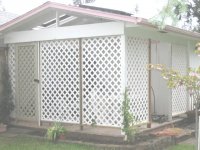
If I were you, I would extend the building to at least 10 feet. The additional cost is minimal and one can always use more space. You might want to consider a gable addition rather than a simple lean-to. The gable addition will provide sidewalls that are the same height as the back of the existing garage, eliminating pitch and slope issues and allowing gutters to wrap around the new addition. The gable will cost a bit more as it requires additional roof surface, but it will enhance the architecture on the back of the home.
I’m not a contractor, just another homeowner about to take on a similar project. My addition is 10x20 feet and includes a hip roof rather than a gable. I am planning to hire a contractor to do most of the work, but I will finish the interior as I want to add insulation, more electrical runs and additional bracing as I plan for cabinets and shelving.
If you plan do the work yourself, study and research the construction details thoroughly. There are lots of images and diagrams on the internet to provide details of the footings, slab, walls, and rafters, but make sure the design is applicable to your area. A couple of friends helping can increase confidence as well. Good luck with your project.