To avoid these ads, REGISTER NOW!

Attic ?? Calling all contractors/structural engineers

PatrickM

Active member
Joined
Feb 19, 2006
Messages
27
Location
Portland, Oregon
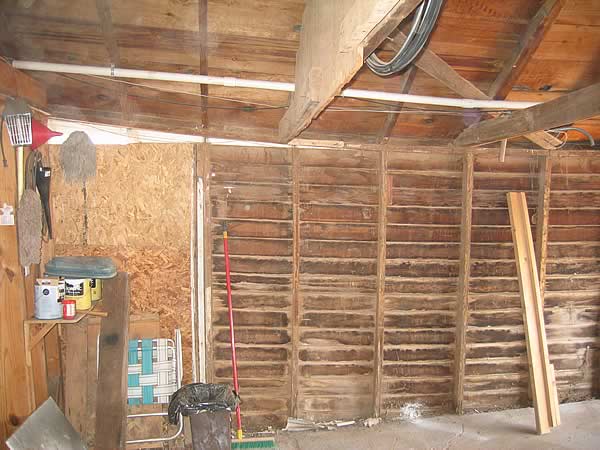
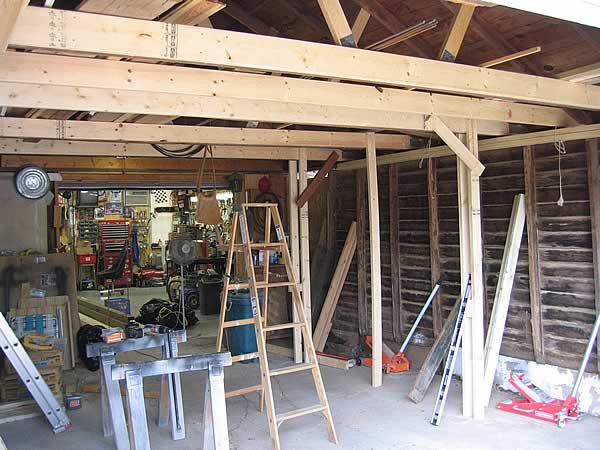
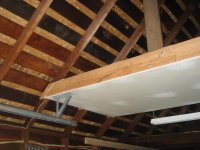
So about 4 years ago I built a "shelf" into my rafters to hang my garage door opener from. It has been fine and I don't store anything on it. It spans about 16 feet made from 3 sets of 3 2 x 6's bolted together, 24" OC. So, since I have a lot of room above in the rafters I was thinking of extending this same type of ceiling/floor all the way to the back of my garage, but I was going to use 2 x 10's or 12's, spanned 16 feet and put up a floor and attach to the rafters like the current garage door opener hangs from (see pics). Can I do this or will the rafters that I tie the ceiling/attic floor joists into break the rafters as soon as I add a load ?
 

Attachments

  • Picture 151.jpg
    Picture 151.jpg
    141.2 KB · Views: 122
To avoid these ads, REGISTER NOW!

KMR Construction

Well-known member
Joined
Oct 20, 2008
Messages
162
Location
Newport RI
a 2x10 will span just over 16' at 16" on center. Lumber is cheep right now, go 2x12 16" o.c. Cover it with 3/4" plywood glued and nailed
 

om-nc

Well-known member
Joined
Dec 31, 2005
Messages
80
Location
north alabama
FWIW, I would not do anything until I made sure that the roof loading would take the increased weight of the new "floor." From your picture, I am not sure that the roof would take the load if those are 2"x4" that support the decking.
 
OP
P

PatrickM

Active member
Joined
Feb 19, 2006
Messages
27
Location
Portland, Oregon
So, you're saying that I can tie the 2 x 12's into the 2 x 4 rafters ? Also, how can I go 16" OC when the existing roof rafters that I will be tying into are 24" OC ?
 

Kevin54

MEMBER EMERITUS
Joined
Jan 12, 2005
Messages
29,341
Location
Urbana, Ohio
Personally I would not do it. For one, you are weakening the rafter by lagging into them. Then you have the downward weight pulling down at the center of the rafter and at the ridgebeam. You really need to have the support out towards the walls which it looks like you have further towards the back. The rafter system that you have is really not designed to have a weight load attached to it. In comparison a webbed truss is designed to distribute a weight load (ie. sheetrock ceiling )
My dad has an older house and in his garage his rafters are basically like yours. Over the years he added a ceiling and tied it into the walls, but had supports coming down from the ridge beam. His roofline has a nice bow in it now. It just wasn't designed to do it.
 
To avoid these ads, REGISTER NOW!

Falcon67

Well-known member
Joined
Jun 11, 2009
Messages
18,371
Location
Merkel, TX
I would not continue what you have started, I would not try to load the rafters like that.

I would run joists from the intersection of the plate and the rafter, where the rafter sits on the plate. In my shop, I did 2x8 joists over a 20' span on 24" centers. Every 4' the joist is doubled - it sandwiches the rafter. Those doubles are also braced to the 2x6 rafters with angled supports. I floored two 8x8x3/4 sections up there for storage and there's at least 500lbs of **** up there. And has been for 10 years.

Edit, thinking out loud - I wonder if the span tables have been updated since I put up the building.

There is an older building that is tied to and in front of the shop. It's 16x20. It was in poor repair, with the NW corner sunk down about 14" from termite damage. Whoever built that just set the floor plates on bare ground. I jacked it up a couple of years ago and fixed it - used doubled 2x6 with construction glue to reinforce the old joists. I'll see if I can find the pics.

Not really good ones, but you can see old and old braced with new.
garageC.jpg

garageH.jpg
 
Last edited:

buening

Well-known member
Joined
Dec 17, 2007
Messages
1,338
Location
Decatur, IL
I agree, do not load as shown in your picture. You could lower the joists to tie into the top plate and run some diagonals from the joist to the top chords, essentially making them trusses. Storage would be limited to small boxes and the space would be reduced due to the diagonals. You would also lose some ceiling height due to lowering the joist to the top plate level, and it would affect your garage door height.
 
OP
P

PatrickM

Active member
Joined
Feb 19, 2006
Messages
27
Location
Portland, Oregon
Thanks for all of the info. What if I doubled the rafter below the ceiling joist alongside the existing rafter....essentially setting the 2 x 8 or 2 x 10 ceiling joist on top of a short rafter that would be then transmitting the load back down to the top plate?
 

tcianci

Well-known member
Joined
Feb 7, 2009
Messages
4,242
Location
Walpole, Ma
Although you can't give a definative answer just by looking at the pictures, You should probably construct a system that transfers the load to the walls instead of to those rafters at essentially mid-span. You could get by with adding stout rafters where you intend to attach the horizontal members of your shelf but the rafter needs to run the full length from ridge to top plate and attach your new horizontal members as close to the top plate of the wall as possible. If you partially sister the rafter as you propose, a portion of the weight will transmit to the top plate of the wall and the rest of it will still be applied to your rafter. If you do the complete rafter, and the opposite rafter on the other side of the ridge board, the weight of your new construction will be borne by the outside walls. I know there has been a suggestion here by a real engineer (which I am not) to add diagonals to the system and create trusses. The trusses you create are solving a problem you don't have... your roof is just fine, you just need to create a load path to the bearing walls and not stress the rafters you have in place already.
 
To avoid these ads, REGISTER NOW!
Top Bottom