You are using an out of date browser. It may not display this or other websites correctly.
You should upgrade or use an alternative browser.
You should upgrade or use an alternative browser.
Baby disston
- Thread starter RMR115
- Start date

RTM
Well-known member
I don’t recall ever seeing that in a Disston catalog.I suspect it was sold as part of a kit, similar to the Jennings kit linked here.

I have a two, both high quality saws, not a kid’s saw, and we scaled one of them to the appropriate size. Usually panel saws stop around 14”, and I think mine are ten” or less. Pix later
if you have an etch, make sure it’s more or less centered on the blade. Some of that size have been found cut down, with the etch ending up near the tip.
the two screws are a giveaway that it isn’t a panel saw, as most had three screws.
C. E. Jennings & Co.'s Tool Chest Catalog : C. E. Jennings & Co. : Free Download, Borrow, and Streaming : Internet Archive
47 p., illus., 26.8 cm, trade catalog
archive.org
I have a two, both high quality saws, not a kid’s saw, and we scaled one of them to the appropriate size. Usually panel saws stop around 14”, and I think mine are ten” or less. Pix later
if you have an etch, make sure it’s more or less centered on the blade. Some of that size have been found cut down, with the etch ending up near the tip.
the two screws are a giveaway that it isn’t a panel saw, as most had three screws.
RTM, thank you. Yes there is etching in the center of the blade in like a half moon says Henery Disston & son's alitte below it says Philadelphia USA, it's kind of hard to see what else by eye. Any pointers on how I may be able to see more? If I put wd40 or simple green on it and put it under the magnifying Led light and turn the saw back and forth I'm able to read it clearly.I don’t recall ever seeing that in a Disston catalog.I suspect it was sold as part of a kit, similar to the Jennings kit linked here.
C. E. Jennings & Co.'s Tool Chest Catalog : C. E. Jennings & Co. : Free Download, Borrow, and Streaming : Internet Archive
47 p., illus., 26.8 cm, trade catalogarchive.org
I have a two, both high quality saws, not a kid’s saw, and we scaled one of them to the appropriate size. Usually panel saws stop around 14”, and I think mine are ten” or less. Pix later
if you have an etch, make sure it’s more or less centered on the blade. Some of that size have been found cut down, with the etch ending up near the tip.
the two screws are a giveaway that it isn’t a panel saw, as most had three screws.
RTM
Well-known member
Usually the low raking light is your best bet, and rotate it around as you go. I set a flashlight on the bench, and rotated the saw for a really difficult one. Just don’t use a wheel, steel wool or sandpaper freehand on it, beware of chemicals like simple green or Evaporust.
I use high grit sandpaper on a hard wood block, so you don’t round the edge of the etch. WD as a lube is usually ok.
I use high grit sandpaper on a hard wood block, so you don’t round the edge of the etch. WD as a lube is usually ok.
Ok I'll stay away from the simple green. I used a razor to scrap away grim. I actually have a bunch of blades that I can almost make out it drives me nuts lol I just wanna know to read about ya know.Usually the low raking light is your best bet, and rotate it around as you go. I set a flashlight on the bench, and rotated the saw for a really difficult one. Just don’t use a wheel, steel wool or sandpaper freehand on it, beware of chemicals like simple green or Evaporust.
I use high grit sandpaper on a hard wood block, so you don’t round the edge of the etch. WD as a lube is usually ok.
RTM
Well-known member
A razor, used at a high angle, like a scraper, is a good first step, before sandpaper. Gets rid of flakey rust, oily accumulations too.
A razor, used at a high angle, like a scraper, is a good first step, before sandpaper. Gets rid of flakey rust, oily accumulations too.
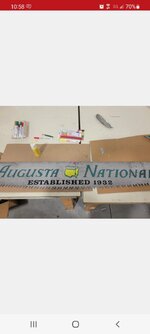
I've been learning slowly, not to long my buddy gave me an old logging saw and said I soaked it in vinegar like the internet said. It did hardly anything. So he said do whatever you want.... so I experimented. After all that he paints it!! Lol