To avoid these ads, REGISTER NOW!

Back drafting issue - Gas water heater and boiler

AntBru98

Member
Joined
Aug 20, 2024
Messages
15
Location
Long Island
Hello,
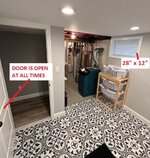
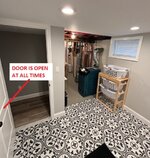
I've been dealing with a back drafting issue with both my gas water heater (year round) and boiler (winter use only). The mechanical area they are in is tight, but is directly off a 9'x9' laundry room. In the laundry area I have an awning window (roughly 28" x 12") that i find myself having to crack open pretty much for the entire winter so my appliances down there exhaust correctly. We have two Co2 detectors in there (redundant) and they never alert. However, I can smell something in the air when either unit is running. On top of all that the door is kept wide open at all times.

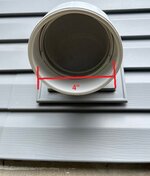
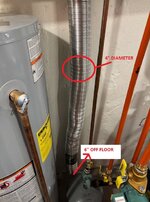
I recently installed a 12"x6" vent on the lower portion of the bedroom wall that is adjacent to the water heater area. I tested the water heater and nothing changed. This past weekend I installed a 4" fresh air pipe on the side of my house which goes down into the mechanical area hoping to correct the problem, NOPE same thing happens... right away the WH started to backdraft. Cracking the window open in the room stopped the back draft. I double checked that the air pipe is bringing in air and you can very noticeably feel air flowing in (window closed and no exhaust vents running in house, clothes dryer is off). The room itself was built out from scratch by myself during our house reno. All cracks and seams in foundation and sill areas were sealed and or repaired. The foundation walls were sealed with 2 coats of dryloc, insulated with 1/2" foam board and all studded walls are insulated with r13 insulation. So there's not many places air can get in that area.

What am I missing here? Please help! :unsure:


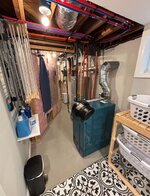
Here are some photos for reference showing the room in question with dimensions:
AA.jpg CC.jpg

DD.jpg EE.jpg

GG.jpg FF.jpg

Both installed 2019:
-AO Smith 50 gallon Gas fired water heater
-Burnham ES25 - Gas fired boiler (1 base board zone and hydronic heating)

Summer Months - water heater only:
- water heater backdrafts
- causes a noticeable combustion smell in the area
- exhaust pipe is cold while its running
- cracking the window open slightly immediately causes the exhaust pipe to heat up and the smell goes away relatively quickly

Winter Months - Both are in use:
- Both the water heater and boiler backdraft with window closed and door kept wide open
- the boiler thermal switch will trip and noticeable smell in the room
- with window cracked, the exhaust pipe is hot and no smell
 

Attachments
  • AA.jpg
    AA.jpg
    104.4 KB · Views: 22
  • BB.jpg
    BB.jpg
    143.4 KB · Views: 22
Last edited:
To avoid these ads, REGISTER NOW!

chinboys

Well-known member
Joined
Jun 20, 2011
Messages
434
Kudos to you for trying to get more air into the space where the back drafting problems are.

Do not have a vent from this area into the bedroom.
Put a carbon monoxide detector in the bedroom.

Redo the water heater's exhaust flue with more vertical sections, fewer elbows and less couragate flex piping?
Are the outside exhaust vents blocked?
 
Last edited:

PCustoms

Well-known member
Joined
Jul 23, 2011
Messages
23,684
Location
VT
Can you post a clear pic of the pipe used for the equipment vents?

Are they both plumbed to a single flue?

Edit: does the boiler have a powered vent?

I don't think this is a back draft issue...
 
Last edited:

bluedog225

Well-known member
Joined
Jan 31, 2012
Messages
3,375
Location
Texas
Agree on CO detector in bedroom. Esp since you are having issues. Also think a more vertical run over water heater before you turn may help.
 

danski0224

Well-known member
Joined
Jan 29, 2005
Messages
13,736
Location
Near Naperville, IL
Gravity or "natural draft" combustion air intakes don't work.

You need a powered combustion air intake system and the controls to make it work. Tjernlund makes a couple of models geared towards residential installations.

I'd also bet that the boiler needs a barometric damper, and water heater if that's natural draft.

A draft gauge and combustion analyzer is needed to ensure proper installation.

UL listed CO detectors may never alarm.

You need a "low level CO detector".

If the water heater has plastic grommets around the inlet *******, and if the plastic is melted, you have a venting problem.

Improper attic venting can cause gas appliance venting problems.
 
Last edited:
OP
A

AntBru98

Member
Joined
Aug 20, 2024
Messages
15
Location
Long Island
Kudos to you for trying to get more air into the space where the back drafting problems are.

Do not have a vent from this area into the bedroom.
Put a carbon monoxide detector in the bedroom.

Redo the water heater's exhaust flue with more vertical sections, fewer elbows and less couragate flex piping?
Are the outside exhaust vents blocked?
My entire house including the basement bedroom and mechanical room has hard wired smoke/co2 detectors that are all interlinked with one-another. I was thinking about taking away that vent in the wall as well. Thanks for the tip!
 
OP
A

AntBru98

Member
Joined
Aug 20, 2024
Messages
15
Location
Long Island
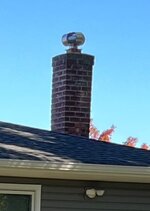
Picture of top of chimney?
I had a chimney guy come to check out everything with that. He said the liner looks almost brand new, totally open with no obstructions or debris inside at the bottom going into the mechanical area.

When he disconnected the exhaust pipes from both the water heater and boiler there was a noticeable draft coming down into the room. This is when he recommended i have a Vaccu-Stack installed to help with the down draft. So i had them install one and did notice a slight difference in the amount of air coming down, but it did not stop it completely.

aa.jpg
 
OP
A

AntBru98

Member
Joined
Aug 20, 2024
Messages
15
Location
Long Island
Gravity or "natural draft" combustion air intakes don't work.

You need a powered combustion air intake system and the controls to make it work. Tjernlund makes a couple of models geared towards residential installations.

I'd also bet that the boiler needs a barometric damper, and water heater if that's natural draft.

A draft gauge and combustion analyzer is needed to ensure proper installation.

UL listed CO detectors may never alarm.

You need a "low level CO detector".

If the water heater has plastic grommets around the inlet *******, and if the plastic is melted, you have a venting problem.

Improper attic venting can cause venting problems.
 
OP
A

AntBru98

Member
Joined
Aug 20, 2024
Messages
15
Location
Long Island
Thank you for that feedback! I will pickup a low level Co2 detector right away and install.

I've been told a "fan in a can" would help resolve my problems. I got several quotes for installation ranging from $1800 - $2500.

As far as the grommets on the water heater, yes they are both melted. Which i know is a bad sign :cautious:

My attic does have a powered exhaust fan installed right near the ridge of the roof. I have it set to only run when temps hit something like 85-90 and or when humidity levels rise to a certain point.
 

PCustoms

Well-known member
Joined
Jul 23, 2011
Messages
23,684
Location
VT
Your issue is appears to be 2 appliances incorrectly vented into a single flue
 
OP
A

AntBru98

Member
Joined
Aug 20, 2024
Messages
15
Location
Long Island
What is everyone's opinion on eliminating the gas fired water heater and going over to a storage tank for the hot water and setting up my boiler to handle everything. This way ill only have one appliance down there running on gas.
 

danski0224

Well-known member
Joined
Jan 29, 2005
Messages
13,736
Location
Near Naperville, IL
My attic does have a powered exhaust fan installed right near the ridge of the roof. I have it set to only run when temps hit something like 85-90 and or when humidity levels rise to a certain point.

Powered attic fan is a problem.

You need to disable it. It is pulling air from the house. Your chimney and combustion air inlets are letting in makeup air for the fan.

Search the web for "powerd attic ventilator" and there is plenty of reading material.
 
OP
A

AntBru98

Member
Joined
Aug 20, 2024
Messages
15
Location
Long Island
Can you post a clear pic of the pipe used for the equipment vents?

Are they both plumbed to a single flue?

Edit: does the boiler have a powered vent?

I don't think this is a back draft issue...
Yes, they are both feeding into one flue pipe up and out.

The Boiler is a Burnham ES25 model (2019)... I'm not totally sure if there is a powered vent on it. I know there is an electric damper on it that opens when it runs. Other than that I don't know.

bb.jpg
 

PCustoms

Well-known member
Joined
Jul 23, 2011
Messages
23,684
Location
VT
Yes, they are both feeding into one flue pipe up and out.

The Boiler is a Burnham ES25 model (2019)... I'm not totally sure if there is a powered vent on it. I know there is an electric damper on it that opens when it runs. Other than that I don't know.

bb.jpg
Same pic as before, not clear and doesn't show connection between 2 units, but it really seems this is all incorrect.


Who installed the mess of adjustable elbows?
 
OP
A

AntBru98

Member
Joined
Aug 20, 2024
Messages
15
Location
Long Island
Powered attic fan is a problem.

You need to disable it. It is pulling air from the house. Your chimney and combustion air inlets are letting in makeup air for the fan.

Search the web for "powered attic ventilator" and there is plenty of reading material.

That won't fix your problem

alright, ill take a look at those.

What do i do about the 4" fresh air pipe I installed? and the vent to the bedroom?
 

danski0224

Well-known member
Joined
Jan 29, 2005
Messages
13,736
Location
Near Naperville, IL
Yes, they are both feeding into one flue pipe up and out.

The Boiler is a Burnham ES25 model (2019)... I'm not totally sure if there is a powered vent on it. I know there is an electric damper on it that opens when it runs. Other than that I don't know.

bb.jpg

Not enough connector rise on the water heater. A shorty water heater would help. Or switch to a PVC vented model (which still needs makeup air).

Flue coming out of the wall is too low for water heater.

Not vented properly.

You can read Type B venting tables and instructions. Be aware that the system may still not work due to things like attic ventilators.
 

danski0224

Well-known member
Joined
Jan 29, 2005
Messages
13,736
Location
Near Naperville, IL
What do i do about the 4" fresh air pipe I installed? and the vent to the bedroom?

If the combustion air is done properly, and the venting fixed, you don't need them.

You need to go to the CO class offered by National Comfort Institute.

And/or find a competent contractor.
 
To avoid these ads, REGISTER NOW!
OP
A

AntBru98

Member
Joined
Aug 20, 2024
Messages
15
Location
Long Island
Same pic as before, not clear and doesn't show connection between 2 units, but it really seems this is all incorrect.


Who installed the mess of adjustable elbows?
im at work and cannot walk downstairs at the moment... here is another pic i took a few years ago during my reno.

cc.jpg
 
OP
A

AntBru98

Member
Joined
Aug 20, 2024
Messages
15
Location
Long Island
If the combustion air is done properly, and the venting fixed, you don't need them.

You need to go to the CO class offered by National Comfort Institute.

And/or find a competent contractor.
im not a contractor... i did not do the install of either unit. I only installed the air vent into the room hoping that would help.

When i crack the window in the laundry room all my issues go away immediately. That's what lead me to believe the room needed makeup air.
 

danski0224

Well-known member
Joined
Jan 29, 2005
Messages
13,736
Location
Near Naperville, IL
When i crack the window in the laundry room all my issues go away immediately. That's what lead me to believe the room needed makeup air.

Excellent observation, which may have saved your life.

The chimney connection in the basement is too low. There's no connector rise on the water heater.

Powered combustion air system is needed.

And if the flue connection in the wall can't be moved up, then you need shorty water heater, a PVC water heater or an indirect water heater run off of the boiler, which can have its own issues (like the boiler running in summer). Combustion air issues need to be addressed for any of those.
 
OP
A

AntBru98

Member
Joined
Aug 20, 2024
Messages
15
Location
Long Island
Excellent observation, which may have saved your life.

The chimney connection in the basement is too low. There's no connector rise on the water heater.

Powered combustion air system is needed.

I cant do much about the chimney connection as it is bored through the foundation to the bottom of the chimney.

So a fan in the can type system is what i needed installed all along?

Screenshot 2024-08-22 073503.png
 

bluedog225

Well-known member
Joined
Jan 31, 2012
Messages
3,375
Location
Texas
Thank you for that feedback! I will pickup a low level Co2 detector right away and install.

I've been told a "fan in a can" would help resolve my problems. I got several quotes for installation ranging from $1800 - $2500.

As far as the grommets on the water heater, yes they are both melted. Which i know is a bad sign :cautious:

My attic does have a powered exhaust fan installed right near the ridge of the roof. I have it set to only run when temps hit something like 85-90 and or when humidity levels rise to a certain point.

Which grommets are we talking about? I’m not familiar.

My CO meter reads level and highest level. Something like $20 on amazon. I got 3 of them. Came in handy during the big freeze when we were heating with the gas fireplace.

I’d say good effort trying to diy troubleshoot. But there’s a lot going on there. I’d keep that window open till you get a better solution.
 
OP
A

AntBru98

Member
Joined
Aug 20, 2024
Messages
15
Location
Long Island
Which grommets are we talking about? I’m not familiar.

My CO meter reads level and highest level. Something like $20 on amazon. I got 3 of them. Came in handy during the big freeze when we were heating with the gas fireplace.

I’d say good effort trying to diy troubleshoot. But there’s a lot going on there. I’d keep that window open till you get a better solution.
The Red and Blue grommets on top of my water heater... they are both partially melted.

I have no issue leaving the window cracked for the time being... just hoped the 4" fresh air vent I installed would have helped.
 

Jim greengo

Well-known member
Joined
Sep 3, 2018
Messages
7,415
Location
Behind my house
I had a chimney guy come to check out everything with that. He said the liner looks almost brand new, totally open with no obstructions or debris inside at the bottom going into the mechanical area.

When he disconnected the exhaust pipes from both the water heater and boiler there was a noticeable draft coming down into the room. This is when he recommended i have a Vaccu-Stack installed to help with the down draft. So i had them install one and did notice a slight difference in the amount of air coming down, but it did not stop it completely.

aa.jpg
That's what I was wondering,if there was any kind of cap up there to keep it from sucking air back into chimney.
 

rlitman

Well-known member
Joined
Oct 18, 2010
Messages
24,738
Location
Long Island
Step 1: find the model of your boiler and look up the installation manual. It will tell you the venting AND fresh air requirements.
My guess is that the open area of your 4" hole is way smaller than it calls for. Generally, the fresh air inlet hole requirements will be, at a minimum, the same opening as your flue. Is that 6" or 7".

My guess is the boiler shouldn't be too hard to fix, but the water heater venting is beyond help. That horizontal run just isn't going to vent properly. You could try with a shorter water heater, but you'd be better served with a power vented water heater. An indirect storage tank doesn't have a vent, so yes, that would be a better (but more expensive up front) option.

As for the attic fan, ANYTHING drawing air out of your house (dryer too) has the potential to reverse flow in your chimney if sufficient return air isn't available in a well sealed house. The attic fan should be drawing in air from your soffit or gable vents. If it's drawing any air from your house (see where match smoke goes around your attic door when the fan is on), that is a big problem that must be resolved.

As for CO (not CO2) detectors, it's no surprise to me that they're not going off - yet. Clean combustion does not generate enough CO to set off the detector. You need to either have a badly mis-tuned flame, or severe oxygen depletion in the space before alarm levels of CO can build up. Breathing exhaust gas is unsafe, even if there's no CO, so you're on the right path to fixing this.
 
Last edited:
OP
A

AntBru98

Member
Joined
Aug 20, 2024
Messages
15
Location
Long Island
Step 1: find the model of your boiler and look up the installation manual. It will tell you the venting AND fresh air requirements.
My guess is that the open area of your 4" hole is way smaller than it calls for. Generally, the fresh air inlet hole requirements will be, at a minimum, the same opening as your flue. Is that 6" or 7".

My guess is the boiler shouldn't be too hard to fix, but the water heater venting is beyond help. That horizontal run just isn't going to vent properly. You could try with a shorter water heater, but you'd be better served with a power vented water heater. An indirect storage tank doesn't have a vent, so yes, that would be a better (but more expensive up front) option.

As for the attic fan, ANYTHING drawing air out of your house (dryer too) has the potential to reverse flow in your chimney if sufficient return air isn't available in a well sealed house. The attic fan should be drawing in air from your soffit or gable vents. If it's drawing any air from your house (see where match smoke goes around your attic door when the fan is on), that is a big problem that must be resolved.

As for CO (not CO2) detectors, it's no surprise to me that they're not going off - yet. Clean combustion does not generate enough CO to set off the detector. You need to either have a badly mis-tuned flame, or severe oxygen depletion in the space before alarm levels of CO can build up. Breathing exhaust gas is unsafe, even if there's no CO, so you're on the right path to fixing this.

My attic fan only pulls air in from the soffits. I made sure during my reno to install foam baffles on all exterior walls going up into the attic space. The house has a hip roof, so there is nothing obstructing the soffit venting. The only opening to my attic from inside is a (new) pull down staircase. I do have a bathroom exhaust fan and kitchen range hood, each exhaust out on the roof, both have baffles that close when not in use.

Even if i went the indirect route, my boiler would still have the same issue with exhausting out. In the past the manual reset switch on the backside would trip, causing the system to shutdown. In turn id wake up in the middle of the night freezing my *** off, go downstairs, crack my window and reset the little button. Then all good.

Do you think a high efficiency combi boiler be my best bet here? Im just tired of the constant fear of CO build up and things not venting correctly unless I leave my window open 24/7.

...and now that i think about it, i do have a battery powered CO detector in that room along with the hardwired combo co2/smoke detector.
 

danski0224

Well-known member
Joined
Jan 29, 2005
Messages
13,736
Location
Near Naperville, IL
As for CO (not CO2) detectors, it's no surprise to me that they're not going off - yet.

UL listed CO detectors have to read over 120(?) ppm of CO for 2 hours before they alarm.

Yes, that means that if it is picking up 500ppm for 118 minutes and then someone opens a door, reducing the amount to 118ppm, it will not alarm.
 

rlitman

Well-known member
Joined
Oct 18, 2010
Messages
24,738
Location
Long Island
UL listed CO detectors have to read over 120(?) ppm of CO for 2 hours before they alarm.

Yes, that means that if it is picking up 500ppm for 118 minutes and then someone opens a door, reducing the amount to 118ppm, it will not alarm.
True. If you spend a little extra for the ones with the display, they usually have a peak-reading option (read the manual). The display will show 000 before you press the button, but a button press will show you a real number (I've seen as low as 040 PPM) that's below alarm threshold (I've tested this in an area near my running generator). Even so, I doubt he's getting much past 000. As I said, it takes either a mis-tuned flame or severe oxygen depletion to start making more than trace CO.

.... In the past the manual reset switch on the backside would trip, causing the system to shutdown. In turn id wake up in the middle of the night freezing my *** off, go downstairs, crack my window and reset the little button. Then all good...
Then you need more than a 4" round combustion air inlet. When I upgraded my boiler, I used a 7" round vent. I installed two of these back to back through my foundation wall, with the flapper removed from the outer one (so air is allowed in, but not out) and replaced with a 1/4" hardware cloth screen (to keep out rodents) and insect screen. I can hear the flapper every time the boiler starts and stops.
 

danski0224

Well-known member
Joined
Jan 29, 2005
Messages
13,736
Location
Near Naperville, IL
(I've tested this in an area near my running generator). Even so, I doubt he's getting much past 000. As I said, it takes either a mis-tuned flame or severe oxygen depletion to start making more than trace CO.

Consumer grade CO detectors should never be relied upon for testing or otherwise determining if an area is "safe".

The problem with "trace" CO is that it can very easily become an exponential curve.

It doesn't normally just go up a little bit at a time forever.

It'll read 5, 10, 20, 50, 100, 500, 2000...
 

Jackfre

Well-known member
Joined
Dec 26, 2010
Messages
4,425
Location
N CA
Many good suggestions here. You have an oversized masonry chimney, grossly inadequate combustion air and a wonky vent pipe set up. As it is a pretty new boiler install, grab the install manual and look up the combustion air requirements so you understand the actual need. Education is key for you here. Going to an indirect water heater off the boiler will improve the whole situation, but at substantial cost. As pointed out the water heater has zero rise before the first 90. It likely would not work properly even with the proper CA supply. Lined masonry chimneys absorb a great deal of heat before they begin to draw properly. Unlined are worse. I don’t care if you put a CO detector in the bedroom. Plug that vent off. It is a BR. I’m a fan of the Tjernlund Enforcer. I represented them in my business for 25 yrs, so bias noted.
As I look at the various issues you are faced with I can’t help but realize that it is all going ding ding ding ding representing real money. There isn’t a lot of choice as at least part of the system needs fixing. Perhaps contacting the utility to see what incentives there are for a change might be a good parallel track to follow. Going to a wall hung Direct Vent combi boiler is your best bet. You gain room, efficiency (you will not see the high 90’s as yours is a higher temp baseboard system), sealed combustion and safety. You could sell your current Burnham. It is a good cast iron boiler.
Whoever installed your current boiler should not be the guy installing the new system. Currently you have good equipment which the guy was able to shoehorn into the space. Incorrectly, but he got it in. He was relieved to do so but didn’t understand the consequences of his actions. Oh, and if you went the wall hung route, do a really good system flush before piping up the new boiler.
 
OP
A

AntBru98

Member
Joined
Aug 20, 2024
Messages
15
Location
Long Island
Many good suggestions here. You have an oversized masonry chimney, grossly inadequate combustion air and a wonky vent pipe set up. As it is a pretty new boiler install, grab the install manual and look up the combustion air requirements so you understand the actual need. Education is key for you here. Going to an indirect water heater off the boiler will improve the whole situation, but at substantial cost. As pointed out the water heater has zero rise before the first 90. It likely would not work properly even with the proper CA supply. Lined masonry chimneys absorb a great deal of heat before they begin to draw properly. Unlined are worse. I don’t care if you put a CO detector in the bedroom. Plug that vent off. It is a BR. I’m a fan of the Tjernlund Enforcer. I represented them in my business for 25 yrs, so bias noted.
As I look at the various issues you are faced with I can’t help but realize that it is all going ding ding ding ding representing real money. There isn’t a lot of choice as at least part of the system needs fixing. Perhaps contacting the utility to see what incentives there are for a change might be a good parallel track to follow. Going to a wall hung Direct Vent combi boiler is your best bet. You gain room, efficiency (you will not see the high 90’s as yours is a higher temp baseboard system), sealed combustion and safety. You could sell your current Burnham. It is a good cast iron boiler.
Whoever installed your current boiler should not be the guy installing the new system. Currently you have good equipment which the guy was able to shoehorn into the space. Incorrectly, but he got it in. He was relieved to do so but didn’t understand the consequences of his actions. Oh, and if you went the wall hung route, do a really good system flush before piping up the new boiler.

Many good suggestions here. You have an oversized masonry chimney, grossly inadequate combustion air and a wonky vent pipe set up. As it is a pretty new boiler install, grab the install manual and look up the combustion air requirements so you understand the actual need. Education is key for you here. Going to an indirect water heater off the boiler will improve the whole situation, but at substantial cost. As pointed out the water heater has zero rise before the first 90. It likely would not work properly even with the proper CA supply. Lined masonry chimneys absorb a great deal of heat before they begin to draw properly. Unlined are worse. I don’t care if you put a CO detector in the bedroom. Plug that vent off. It is a BR. I’m a fan of the Tjernlund Enforcer. I represented them in my business for 25 yrs, so bias noted.
As I look at the various issues you are faced with I can’t help but realize that it is all going ding ding ding ding representing real money. There isn’t a lot of choice as at least part of the system needs fixing. Perhaps contacting the utility to see what incentives there are for a change might be a good parallel track to follow. Going to a wall hung Direct Vent combi boiler is your best bet. You gain room, efficiency (you will not see the high 90’s as yours is a higher temp baseboard system), sealed combustion and safety. You could sell your current Burnham. It is a good cast iron boiler.
Whoever installed your current boiler should not be the guy installing the new system. Currently you have good equipment which the guy was able to shoehorn into the space. Incorrectly, but he got it in. He was relieved to do so but didn’t understand the consequences of his actions. Oh, and if you went the wall hung route, do a really good system flush before piping up the new boiler.

I did pull the BTU ratings for both units
- Burnham = 103,000 BTU or 20.6 sq inch of opening
- OA Smith = 40,000 BTU or 8 sq inch of opening

So i would need 29 sq inch of opening to properly provide air in. The 4" vent I installed is only yielding 12.6 sq inch, but still doesn't solve my zero rise on the exhaust port.

I didn't think converting over to an indirect water heater would cost a lot? Is it an involved process?
 
Last edited:

75gmck25

Well-known member
Joined
Jul 21, 2014
Messages
1,336
Location
Alexandria, VA
The arrangement of boiler and water heater is similar to my house, but due to my 80-82" ceiling height I had the boiler going into a chimney wall connection at about 4 1/2 feet, and the water heater into a 2nd chimney opening at about 5 1/2 feet. The boiler vent connection was original to the house when it was built in 1940, so it would have been really difficult to move.

It was a challenge to find a new gas water heater with enough capacity, but was still short enough to work with my existing venting height. I decided to switch to a Bradford White gas power vent water heater, which was a little more efficient, and only needed a PVC vent. We ran the vent through the ledger board (about as high as I could) and straight out the side wall. It does make a little noise when the power vent runs, but seems to be very effective and efficient.

As an added benefit, the water heater does not have a standing pilot, so we just turn off the switch when we are out of town for a while, and we aren't paying to heat any water.
 

fitter30

Well-known member
Joined
Jun 23, 2019
Messages
3,019
Location
Peace Valley,mo
What size is the flue liner? Both the boiler and water heater feed into it? Most water heaters want a 12" straight piece coming off of the draft diverter. Easy way to check the house pressure is crack a outside door and hold a match by the crack see which way the flame going. To see tight the house is check with your electric company see if they offer a energy audit that includes a blower door test.
 
Last edited:

Jackfre

Well-known member
Joined
Dec 26, 2010
Messages
4,425
Location
N CA
“Involved process?” You need the tank, circ, controls and piping. Piping is pretty straight forward. Not sure what control would look like. As you are finding out, everything is expensive.

On your CA sizing, note that the book calls for “Free Air”. Your 12.6 sq in 4” pipe may be as little as 8” when you take into consideration the body of the grill.
 
To avoid these ads, REGISTER NOW!
Top Bottom