To avoid these ads, REGISTER NOW!

Backdrag vs. Tooth Count

teagueo

Well-known member
Joined
Mar 7, 2017
Messages
463
What's the consensus on what matters more on ratchets: Backdrag or Tooth count?

To me, I prefer the feel of low backdrag and it's the reason I started buying Koken ratchets - they're just a lot smoother. I really only resort to high tooth count ratchets in extremely tight spots where you can only get a "click" or 2 swing.

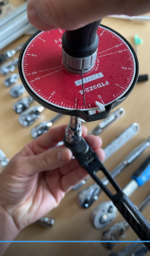
Here's a test of the Nepros NBR390A compared with the DLC coated TRO designs ratchet:
 
To avoid these ads, REGISTER NOW!

F-22

Well-known member
Joined
Jan 23, 2022
Messages
1,830
At some point it both gets quite meaningless to me. My Snap On dual 80 saved me some times, but I don't see the point in having a finer tooth count or even less backdrag. My nepros is also pretty smooth after a bit, most ratchets are a bit stiffer when brand new.


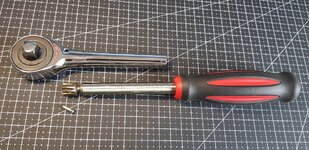
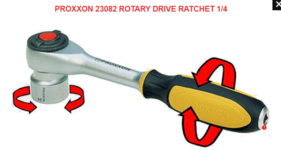
However I'm really liking the design of the Proxxon rotary ratchet. Untighten normally, then just spin the handle like a screwdriver to remove a screw - that generally works really fast, no matter how little space there is.
 

Tools4Me

Well-known member
Joined
Jun 22, 2021
Messages
546
It can be very hard to swing a long handled coarse toothed ratchet enough to engage the next ratchet tooth when working inside something like a modern engine compartment, however a coarse toothed stubby ratchet will usually work well everywhere. The longer a ratchet handle is, the more important it is for it to be fine toothed.

Low backdrag is what's most important to me when it comes to 1/4" drive ratchets or 3/8" drive ratchets that will be used on small fasteners or in tight areas. They need to have low backdrag because I often can't fit my other hand in there to help the ratchet along if the backdrag is too high.

Almost all of my 1/4" and 3/8" drive ratchets have been modified internally for lower than stock levels of backdrag. My 1/4" drive custom modified ratchets all sit between 2-2.5 inch ounces of backdrag. As long as 1/4" drive backdrag is 3.5 inch ounces or less, I'm happy.

My 3/8" drive custom modified ratchets all have 3.0-4.5 inch ounces of backdrag. As long as 3/8" drive backdrag is 6 inch ounces or less I'm happy.

For reference purposes-

A stock Snap-on ratchet screwdriver with no modifications has 1.5 inch ounces of backdrag. A stock Snap-on 3/8" drive dual 80 ratchet has about 8 inch ounces of backdrag when new and about 6 inch ounces once it's fully broken in.
 
Last edited:

qqzj

Well-known member
Joined
Nov 28, 2017
Messages
3,747
At some point it both gets quite meaningless to me. My Snap On dual 80 saved me some times, but I don't see the point in having a finer tooth count or even less backdrag. My nepros is also pretty smooth after a bit, most ratchets are a bit stiffer when brand new.


However I'm really liking the design of the Proxxon rotary ratchet. Untighten normally, then just spin the handle like a screwdriver to remove a screw - that generally works really fast, no matter how little space there is.

Agree that it is a not-so-meaningful topic. But in case one wants to dig into it, backdrag has no apparent relationship with tooth count. Fine tooth ratchet can have a lot of small teeth touching each other and have large backdrag. It all depends on ratchet design. I once watched a video, a PItts Pro fine tooth ratchet has the least amount of backdrag, because it has only a few small teeth touching. So at the expense of strength, you get small back drag. That is independent of other kind of mod like using fancy lubricant or modifying tension spring etc. That is a pretty good argument to buy a less expensive tool and be happy about it.
 
OP
T

teagueo

Well-known member
Joined
Mar 7, 2017
Messages
463
However I'm really liking the design of the Proxxon rotary ratchet. Untighten normally, then just spin the handle like a screwdriver to remove a screw - that generally works really fast, no matter how little space there is.
Crazy, I've never seen this before.

1674110995346.png
 
OP
T

teagueo

Well-known member
Joined
Mar 7, 2017
Messages
463
It can be very hard to swing a long handled coarse toothed ratchet enough to engage the next ratchet tooth when working inside something like a moden engine compartment, however a coarse toothed stubby ratchet will usually work well everywhere. The longer a ratchet handle is, the more important it is for it to be fine toothed.

Low backdrag is what's most important to me when it comes to 1/4" drive ratchets or 3/8" drive ratchets that will be used on small fasteners or in tight areas. They need to have low backdrag because I often can't fit my other hand in there to help the ratchet along if the backdrag is too high.

I agree 100% - couldn't have said it better myself!
My 3/8" drive custom modified ratchets all have 3.0-4.5 inch ounces of backdrag. I'm very happy with those numbers. If a 3/8" drive stock ratchet has 7 inch ounces or more of backdrag I usually end up disliking that ratchet.

You actually measure the torque? You take backdrag pretty seriously brother! Maybe that's not as rare as I thought on these forums... Those are pretty low numbers compared to most 3/8" drives.

Just got done measuring this Koken @ 1.8 oz-in and the TRO at 0.5-0.8 oz-in of torque, both 3/8" ratchets

Koken (2).png

TRO (2).png
 
Last edited:
OP
T

teagueo

Well-known member
Joined
Mar 7, 2017
Messages
463
Agree that it is a not-so-meaningful topic. But in case one wants to dig into it, backdrag has no apparent relationship with tooth count. Fine tooth ratchet can have a lot of small teeth touching each other and have large backdrag. It all depends on ratchet design. I once watched a video, a PItts Pro fine tooth ratchet has the least amount of backdrag, because it has only a few small teeth touching. So at the expense of strength, you get small back drag. That is independent of other kind of mod like using fancy lubricant or modifying tension spring etc. That is a pretty good argument to buy a less expensive tool and be happy about it.

The backdrag mostly depends on the spring force and the area of the teeth in contact with eachother - you're right about that. The smaller the gear mechanism, typically the smaller the teeth contact area, so they're a lot smoother.

So at the expense of strength, you get small back drag.

True.
 

Tools4Me

Well-known member
Joined
Jun 22, 2021
Messages
546
You actually measure the torque? You take backdrag pretty seriously brother! Those are pretty low numbers compared to most 3/8" drives.

Just got done measuring this Koken @ 1.8 oz-in and the TRO at 0.5-0.8 oz-in of torque, both 3/8" ratchets
I enjoyed modifying my ratchets to get the most out of them, but I didn't spend too much time on it. I modified one to a level of backdrag that felt good to me without causing malfunction issues, then I dupliated that procedure for any other ratchet that had the same guts. I only have several ratchets in each drive size, so it wasn't a big undertaking. The actual testing with my Seekonk inch ounce torque screwdriver came later. It was my way of adding actual data to GJ posts instead of being stuck saying, "this ratchet has slightly more backdrag than that ratchet" or "that ratchet is way smoother than this other one".

Many stock Koken ratchets are known to have very low backdrag, but I have never tried one myself because I'm happy with the ratchets I already have. I'm not sure if Koken has this issue or not, but problems can also occur from the backdrag being too low. If it's too low it becomes hard to hear or feel the ratchet clicks when you are ratcheting on a fastener blindly. You end up wondering if the fastener is coming out or just turning back and forth over and over along with the ratchet. That was the issue I ran into when I purchased and tried out a set of the Titan gearless ratchets. No clicks at all, and the backdrag was so low, if I couldn't see the fastener I couldn't tell what was going on any time a fastener was in the loose threading stage.
 
Last edited:

F-22

Well-known member
Joined
Jan 23, 2022
Messages
1,830
Crazy, I've never seen this before.

1674110995346.png
Love how out-of-the-box this concept is. One of those things that makes a ton of sense to exist once you think about it, and I'm surprised they're not more common. At max torque a top end conventional ratchet is probably stronger - but at the same time, that 90 degree power transfer likely also has stronger teeth than the ratcheting mechanism? And it can even be set up to ggive you a geared advantage on the screw when spinning the handle.

As far as I know, Proxxon is also the only one to have a (albeit one size smaller) square drive on the handle so you can use the ratchet like a 90 degree extension as well, and put a fair bit of torque through it.
 

Mr_B

Well-known member
Joined
Nov 21, 2016
Messages
5,374
Location
Reading
i try find the balance of around 72 tooth and fairly low backdrag .
my preference is low backdrag and minimal mechanism lash .
I do have some gearless ratchets that great when want almost zero drag & lash .
is a lot of good ratchets about and some are pretty affordable to all .
 

dnschmidt

Well-known member
Joined
Oct 3, 2014
Messages
7,268
Location
Phoenix, AZ
Love how out-of-the-box this concept is. One of those things that makes a ton of sense to exist once you think about it, and I'm surprised they're not more common. At max torque a top end conventional ratchet is probably stronger - but at the same time, that 90 degree power transfer likely also has stronger teeth than the ratcheting mechanism? And it can even be set up to ggive you a geared advantage on the screw when spinning the handle.

As far as I know, Proxxon is also the only one to have a (albeit one size smaller) square drive on the handle so you can use the ratchet like a 90 degree extension as well, and put a fair bit of torque through it.
Actually pretty common: TOPTUL makes one: https://www.toptul.com/en/product-445126/Rotatory-Ratchet-Handle-with-Push-Through-mechanism.html
 
To avoid these ads, REGISTER NOW!
OP
T

teagueo

Well-known member
Joined
Mar 7, 2017
Messages
463
Great test. This guy also tests Kokens in another video - I like his channel, I might be subbed actually.

He's testing with a 0-12 in-oz torque screwdriver - that's where most 3/8" drive ratchets fall in line.

Here's one testing with a 0-3 in-oz dial torque screwdriver (Snap-on FCF72, Koken 3725ZS, TRO Superleggera):


ToolRoom

Well-known member
Joined
Feb 19, 2014
Messages
83
Location
UK
High tooth count is handy in a real tight space where swing arc matters, and they do feel "nice" to use. But if they have a high backdrag they become annoying very quickly.

I've got some highish (80 tooth) count Stahlwille and some low backdrag (24 tooth) Koken. Both have their place IMO.

I'd like to pick up some of the new 72 tooth Koken as I suspect that would be the best of both worlds. Much over 72 tooth seems to be a case of diminishing returns.
 

JradM

Well-known member
Joined
Sep 4, 2019
Messages
1,813
Location
Alberta
The Proxxon isn't the only ratchet of that style. I have one from Westward, but if you search for "rotator ratchet" you'll find several options.

1000000944.jpg

I like it, but I rarely use it. Still, it's fun.

Tooth count is important on long-handled ratchets because the swing at the end of the handle is exaggerated. For regular-length 3/8" ratchets (that's usually ~ 9-11") 72 teeth is enough for me. I care about backdrag, finish, handle shape, style and other things after my minimum number of teeth requirement is met.

However, if we're talking about a long-handled 1/2" ratchet - I want more. If it's 1/4" or stubby, 60 is usually good.
 

ecotec

Well-known member
Joined
Oct 5, 2010
Messages
5,419
For home, I have the whole range of ratchets. All the shapes and tooth counts. I never really use the low tooth count ratchets anymore. I prefer 72 or more teeth.

For work, I only bring one ratchet. It has to be high tooth count and not have a big handle. I often have to work in tight spaces where you can only turn the ratchet a few teeth at a time.

I say 72… but even after I stopped buying low tooth count ratchets, I brought home a 60 tooth J.C. Penney 1/4” ratchet.

Even though I “stopped” buying low tooth ratchets… I still keep my eyes open… I am sure as **** not going to leave a Blackhawk Baldie, or other historic ratchet for you guys. Even if I never use it, it would be cool to look at for the rest of my life. I also did not leave behind one of those weird Craftsman ratchets with the wooden handle… so I guess that rules are meant to be broken.

I do not put any ratchets into my “good” ratchet drawer until they have been opened and greased. I almost always use SuperLube, but I have used UltraSlick and anti-seize assembly lube on rare occasions.
 

Attachments

  • E4746977-CB9C-4CBF-80A6-171168D22707.jpeg
    E4746977-CB9C-4CBF-80A6-171168D22707.jpeg
    1.3 MB · Views: 45
  • 682C7278-46B0-4640-9A63-DBDCC729D2B5.jpeg
    682C7278-46B0-4640-9A63-DBDCC729D2B5.jpeg
    798.5 KB · Views: 38

M6erfan

Well-known member
Joined
Dec 6, 2014
Messages
10,170
Location
'Merica!
I'm using this German-made ceramic/PTFE lube recommended by @Mr.zippy called Partikel Tactikel NST. Mostly meant for guns I believe, but the coefficient of friction is ridiculous. It's a dry film lube which is probably better on ratchets than oil/grease

DSC_3248~2.JPG

Well, if it has both 'nano' & 'tactical' in the description, you know it's good!

:LOL:
 

Citation

Well-known member
Joined
Jan 20, 2016
Messages
3,212
Location
Indy
When thinking about you count you also need to think about the slop in the mechanism. A 36T ratchet with zero slop needs 10* between teeth. That sounds half as good as a 72T ratchet with 5* between teeth. However if that 72T ratchet has 6*of slop before the mechanism reverses then you actually have a minimum swing of 11*. Project Farm tested this in one of their tests. Not all ratchets with the same tooth count had the same minimum swing.


Personally it totally depends and rarely is it critical.
 

General Geoff

Well-known member
Joined
Jan 12, 2013
Messages
3,871
Location
Allentown, Pennsylvania
One must ask: "How the hell did mechanics using 24 tooth ratchets in the 1950's possibly repair anything with those primitive high back drag ratchets." Apparently, very well. This is not a problem which will keep me up at nights.
Machines in the 1950s broke down a lot more often, relatively speaking, and were generally designed with frequent repair and maintenance access in mind.
 

WWheeler

Well-known member
Joined
Jun 23, 2015
Messages
4,105
Location
Middleofnowhere USA
Crazy, I've never seen this before.

1674110995346.png

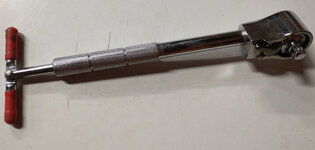
I still have this ratchet of a somewhat similar design I bought late 80s or early 90s. No idea the brand (iirc 'sidewinder'?) but pretty sure I bought it at a Pep Boys. It sure aint much today but man did it ever work miracles for me back then at helping get at those top bellhousing bolts when there was no room to get a swivel in there and there wasn't a such thing as a wobble end. I could get a normal ratchet ext and socket on them from underneath but there was no room to turn it. Before I stumbled onto this ratchet I couldn't count how many times I'd laid face down across the top of an engine with a stubby wrench snaked down behind the heads completely blind to what I was doing trying to flip the open end over for the tiniest of turns for 10 minutes or more for each bolt, cussing the whole time, all so we could avoid having to put a jack under the pan and remove one or both motor mounts so I could lower it to give me enough needed room, because that would have been even more work.

sidewinder-ratchet.jpg (GJ wouldn't let me attach files, so using an image host. Fingers crossed it works here)

With this ratchet laid over top of the ****** so it had a straight shot at those bolts with a combination of extensions sometimes a couple ft long I would have all of them out in a minute or two. I'll never forget us laughing the first couple times at how good it worked and how much time it saved. Of course this ratchet has by now been made completely obsolete in my tool arsenal thanks to wobble end extensions and cordless ratchets and such, and hasn't seen any use in a couple decades now, but I've still kept it. It earned it's spot in my box.
 
OP
T

teagueo

Well-known member
Joined
Mar 7, 2017
Messages
463
One must ask: "How the hell did mechanics using 24 tooth ratchets in the 1950's possibly repair anything with those primitive high back drag ratchets." Apparently, very well. This is not a problem which will keep me up at nights.

I say something similar to people who say they NEED 120+ tooth ratchets. They must be working on some tight *** engine bays.

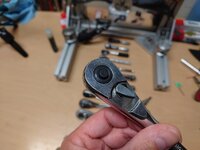
This thing has backdrag that can be measured in ft-lbs and no idea on tooth count, but I've never NEEDED anything more - it's my go-to ratchet and probably most used tool. I actually prefer the sound of low tooth count vs the gritty noise that tons of teeth make.

Newer ratchet advancements are cool to see though.

1674266709635.jpeg
 

Attachments

  • DSC_3259.JPG
    DSC_3259.JPG
    415.1 KB · Views: 19
  • DSC_3260.JPG
    DSC_3260.JPG
    341.9 KB · Views: 25
OP
T

teagueo

Well-known member
Joined
Mar 7, 2017
Messages
463
When thinking about you count you also need to think about the slop in the mechanism. A 36T ratchet with zero slop needs 10* between teeth. That sounds half as good as a 72T ratchet with 5* between teeth. However if that 72T ratchet has 6*of slop before the mechanism reverses then you actually have a minimum swing of 11*. Project Farm tested this in one of their tests. Not all ratchets with the same tooth count had the same minimum swing.


Personally it totally depends and rarely is it critical.
Great point, and rarely mentioned when it comes to specs.
 
OP
T

teagueo

Well-known member
Joined
Mar 7, 2017
Messages
463
I'd laid face down across the top of an engine with a stubby wrench snaked down behind the heads completely blind to what I was doing trying to flip the open end over for the tiniest of turns for 10 minutes or more for each bolt
I'd rather be waterboarded than go through that haha
 
To avoid these ads, REGISTER NOW!
Top Bottom