To avoid these ads, REGISTER NOW!

Backfilling a wet muddy garage foundation trench

bagged89s10

Well-known member
Joined
Mar 13, 2005
Messages
4,607
Location
CT
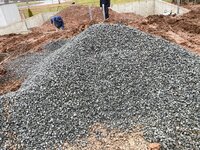
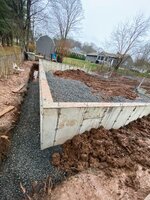
The foundation is poured but the trench for the foundation keeps getting ground water filling it up even with a pump going constantly. There is a lot of soupy mud.

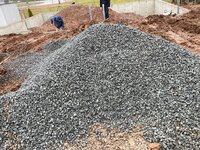
My best local options are 1-1/4” or 3/4” minus process stone or washed stone.

What’s best for this scenario. I’m thinking to start at the front middle which is the high side. Fill and compact pushing the mud and water to the back low side while keeping the pump pumping water. Would the process stone just turn to mud with all the water and mud already down there? Should I use larger clean rock at the bottom 12”. Then go with process stone on top of that?

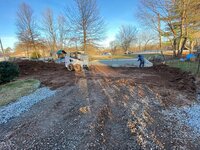
I have no where lower to drain the trench because it’s the corner of my property which is the low spot already.

bc1aa198400cfbd8e14f34f2316c9d26.jpg
e32b151507d35517d9298bcfba3452bb.jpg
64dc63f3b568dbdc108eda9af79ad714.jpg
 

Attachments

  • bc1aa198400cfbd8e14f34f2316c9d26.jpg
    bc1aa198400cfbd8e14f34f2316c9d26.jpg
    171 KB · Views: 0
  • e32b151507d35517d9298bcfba3452bb.jpg
    e32b151507d35517d9298bcfba3452bb.jpg
    199.1 KB · Views: 0
  • 64dc63f3b568dbdc108eda9af79ad714.jpg
    64dc63f3b568dbdc108eda9af79ad714.jpg
    259.8 KB · Views: 0
To avoid these ads, REGISTER NOW!

ConCretin

Well-known member
Joined
Jan 20, 2011
Messages
3,381
Location
Central Maine
The primary challenge is compaction, which is impossible with materials that wet. As you've already noted, crushed stone is your best option because it theoretically doesn't require compaction. 3/4" or 1 1/2" is fine. Larger stone is harder to move. I would start placing stone at one end and push the slop to an area where I could dig out as much as possible before continuing with the stone.

Once I started backfilling with stone, I'd continue using it right to the top. I wouldn't want to switch to a material with fines out of concern my slab base would subside as they worked their way into the voids in the stone. That stockpile in the middle will have to go or possibly be used on the outside where a little settlement may be acceptable.

For future reference, you can avoid this problem in the first place by over-excavating under the footings by 6-12 inches and placing stone before you start. Water can be pumped out from within the stone and the native soil isn't churned up by construction traffic.

Working in the wet requires perseverance but you can overcome it. Good luck with the rest of your project
 
OP
B

bagged89s10

Well-known member
Joined
Mar 13, 2005
Messages
4,607
Location
CT
The primary challenge is compaction, which is impossible with materials that wet. As you've already noted, crushed stone is your best option because it theoretically doesn't require compaction. 3/4" or 1 1/2" is fine. Larger stone is harder to move. I would start placing stone at one end and push the slop to an area where I could dig out as much as possible before continuing with the stone.

Once I started backfilling with stone, I'd continue using it right to the top. I wouldn't want to switch to a material with fines out of concern my slab base would subside as they worked their way into the voids in the stone. That stockpile in the middle will have to go or possibly be used on the outside where a little settlement may be acceptable.

For future reference, you can avoid this problem in the first place by over-excavating under the footings by 6-12 inches and placing stone before you start. Water can be pumped out from within the stone and the native soil isn't churned up by construction traffic.

Working in the wet requires perseverance but you can overcome it. Good luck with the rest of your project


It was fine until it started raining right before the concrete guys were about to put in forms. Then it all got wet and muddy. It’s like it basically never rained until we didn’t want it to rain.

So you think I should use stone without all the fines?

Yes I already told my excavator the pile in the middle will need to go. And he needs to take out a little more material under that pile. I think this is his first excavation project but he has been good about doing what is needed to make it right.
 
OP
B

bagged89s10

Well-known member
Joined
Mar 13, 2005
Messages
4,607
Location
CT
I do forgot to mention that I can get a recycled concrete aggregate for about the same cost as the stone.

Would that work better with all the water and mud?
 

Crawlin

Well-known member
Joined
Sep 12, 2008
Messages
687
Location
NC
Better off to use gravel like 57 or 67 (washed stone) from a quarry. They are just a lot more refined than concrete. Concrete is usually trashy and has some dirt in it and rebar. Clean stone is pretty much compacted when it comes out of the truck. Your grading guy should be able to get a mini ex in there and undercut the mud and lay in up the hill. Then move it again and let it dry somewhere or haul it off. After that place your washed stone until its on grade with your natural ground in the center. You can also use good fill but would have to have it compacted and its going cost almost as much. Seems like they should have thrown a sleeve in the wall to drain and water out during construction. It is also a good idea to daylight the footing out which was probably not possible on your lot but it lets the rainwater get out.
 

DHCrocks

Well-known member
Joined
May 2, 2008
Messages
1,349
Location
Hawaii
use the crushed stone grade A - #2 Course(1-1/2"-3/4") but you need to line the excavation and wrap it in a non-woven geotextile filter fabric. This will provide separation and prevent migration of fines into the drain rock. With out the fabric it will fail in no time. I'm not taking about a weed barrier type of material but a thick felt like fabric specifically for the purpose like Mirafi 140N.
 

Jlbc212

Well-known member
Joined
Dec 7, 2013
Messages
1,530
Location
Northeast MA
I had a similar situation this past spring with the addition I'm building on my son's house. Spring time was wet here in New England. I also had to run a pump in the excavation. When it finally came time to back-fill I used the dirt and stone that came up from the excavation. A good friend of mine was doing the back-fill work with a Bobcat skid-steer the excavator contractor allowed him to use. He just dumped it in with little or no compaction. The water got displaced by the fill. I purposely planned to have two feet of foundation wall exposed above the existing grade so I could add more fill to provide a slope from the foundation walls. When the grade is finally finished there will be about 12" of exposed foundation. It will take some time for the back-filled dirt to fully settle itself, but it will also be awhile before the finish grading work gets done. I did use 3/4" broken stone to fill in under the concrete floor slab. I added it in layers with compaction between successive layers.
 
OP
B

bagged89s10

Well-known member
Joined
Mar 13, 2005
Messages
4,607
Location
CT
use the crushed stone grade A - #2 Course(1-1/2"-3/4") but you need to line the excavation and wrap it in a non-woven geotextile filter fabric. This will provide separation and prevent migration of fines into the drain rock. With out the fabric it will fail in no time. I'm not taking about a weed barrier type of material but a thick felt like fabric specifically for the purpose like Mirafi 140N.


You’re saying to line the trench with the geotextile fabric then start putting in stone?
 

ConCretin

Well-known member
Joined
Jan 20, 2011
Messages
3,381
Location
Central Maine
So you think I should use stone without all the fines?

Yes. Clean crushed stone is considered self compacting. I don't think you'll be able to place layers and properly compact anything on top of the mud.

I thought you said groundwater but if it was rain and if you have the time, you could let it dry out and then dig out the silt and use any material you want.

You’re saying to line the trench with the geotextile fabric then start putting in stone?

That would be ideal but it's not really practical with all the slop in the hole.
 

TommyK

Well-known member
Joined
Mar 29, 2011
Messages
546
Location
CT
3/8" crushed stone until you are high and dry then put down a piece of filter fabric and continue with the backfill material of your choice.
 
OP
B

bagged89s10

Well-known member
Joined
Mar 13, 2005
Messages
4,607
Location
CT
3/8" crushed stone until you are high and dry then put down a piece of filter fabric and continue with the backfill material of your choice.


I was thinking 3/4” crushed stone. You think smaller is better?
 
OP
B

bagged89s10

Well-known member
Joined
Mar 13, 2005
Messages
4,607
Location
CT
We’ve decided to at least put a layer of 3/4 crushed stone at the bottom. I ordered about 20 tons for Monday. Now we’re fighting a snowstorm for Wednesday so hopefully the excavators can get this back filled and compacted.
 

DHCrocks

Well-known member
Joined
May 2, 2008
Messages
1,349
Location
Hawaii
You’re saying to line the trench with the geotextile fabric then start putting in stone?

yes, line the trench with the fabric, then pour the stone in and overlap the fabric over the top of the stone to completely envelope it. This is to keep fines out which would clog the system over time. It will also prevent the rocks from punching through into the subgrade which might cause settling problems.
 
OP
B

bagged89s10

Well-known member
Joined
Mar 13, 2005
Messages
4,607
Location
CT
yes, line the trench with the fabric, then pour the stone in and overlap the fabric over the top of the stone to completely envelope it. This is to keep fines out which would clog the system over time. It will also prevent the rocks from punching through into the subgrade which might cause settling problems.


Ok I told my excavator that’s going to be the plan and they are on board.
 

Bent Handle

Well-known member
Joined
Oct 23, 2016
Messages
201
Location
Iowa
I’m not a foundation guy, and I understand the clean rocks self packing nature to reduce settling. Aren’t you just creating a French drain/drywell up against the foundation with no exit? Seems like making an easy path for water to run deep along the foundation isn’t ideal. I know nothing about foundation best practices though, but know a fair amount about water issues and remediation.
 

VT JD

Active member
Joined
Dec 12, 2013
Messages
36
Location
Ontario, Canada
bagged89s10

I would suggest you follow LLWillysfan recommendation.

He is a very knowledgable concrete guy and has helped many members with their concrete related questions. He works in the concrete industry for a living so he knows what he is talking about.
 

Bretny

Well-known member
Joined
Jul 31, 2017
Messages
3,918
Location
Dutchess county NY
I’m not a foundation guy, and I understand the clean rocks self packing nature to reduce settling. Aren’t you just creating a French drain/drywell up against the foundation with no exit? Seems like making an easy path for water to run deep along the foundation isn’t ideal. I know nothing about foundation best practices though, but know a fair amount about water issues and remediation.

This is what I'm thinking by looking at the pics too. What's the point of stone if theres no where for the water to exit that stone. If you can daylight a pipe then backfill the native soil upt to that level then use stone/pipe.

I have never used a crushed stone that self compacts. It always needs some type of compaction. Good thing is this is just backfill and not under a foundation so alot of compaction isnt needed.
 
OP
B

bagged89s10

Well-known member
Joined
Mar 13, 2005
Messages
4,607
Location
CT
bagged89s10

I would suggest you follow LLWillysfan recommendation.

He is a very knowledgable concrete guy and has helped many members with their concrete related questions. He works in the concrete industry for a living so he knows what he is talking about.


That’s what I’m doing. A triaxle of clean stone is being dumped tomorrow morning for the bottom. I got some soil separator fabric which we will try to put down first under the clean stone. Then I think the fill we have is just too wet and muddy so I’m leaning towards ordering 3/4” minus process crushed stone with all the fines for the rest.


Edit: reading this again he recommends just clean stone to the top with will only cost me $100-200 per load. So I guess that’s the best idea.
 
OP
B

bagged89s10

Well-known member
Joined
Mar 13, 2005
Messages
4,607
Location
CT
The fabric will do essentially nothing in this particular case, except add cost and irritation. Fabric isn't the miracle some people think it is, and it only is useful for solving a particular problem. If you're going to have a concrete floor in this building, you don't have a problem that fabric can solve.

Just do like LLWilly said, backfill with stone up to near the surface. Then, put a layer of crushed rock that's half the size of the stone coarse backfill, and then your surface rock on top of that. The grading of different sizes will keep the small stuff from settling into the coarse rock and creating settlement.

You do need to scoop as much of the muck out of the middle as you can get, and try to get all the mud out. The coarse stone will take care of the rest.


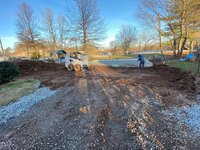
Well we got 3/4 clean stone (trap rock) and the excavators got half or so backfilled today. They took out a lot of that much and will continue to take more out. The inside is getting the rock up to where the slab line. The outside of the foundation is getting 2 feet of rock to get well above the water line and then dirt. They should finish filling and compacting tomorrow. I will let this sit until late spring or summer before pouring the slab so it will have tile to settle if it’s going to settle. Should I tarp the garage until it’s framed to keep and any more snow and rain from going in?

ba1f79d179614576fccb9bd447d2a2ed.jpg
424d495b5e104f4999faa8a91ebc939e.jpg
 

Attachments

  • 424d495b5e104f4999faa8a91ebc939e.jpg
    424d495b5e104f4999faa8a91ebc939e.jpg
    181.1 KB · Views: 0
  • ba1f79d179614576fccb9bd447d2a2ed.jpg
    ba1f79d179614576fccb9bd447d2a2ed.jpg
    317.9 KB · Views: 0
To avoid these ads, REGISTER NOW!
OP
B

bagged89s10

Well-known member
Joined
Mar 13, 2005
Messages
4,607
Location
CT
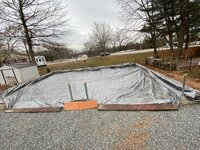
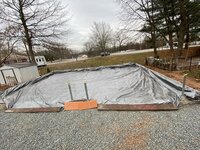
It got backfilled and compacted with most of the muddy clay removed and filled with 3/4 trap rock 2 days before we got 14” of snow. I know some spots probably had some mud left. They used a jumping jack to compact everything. I couldn’t watch them every minute but it looked like they were compacting in lifts. I just don’t know how much muddy clay was still left. I tarped the area before the snow because my thought is that I want the area to dry out and I think keeping as much water out of the garage pad area will be beneficial. Yesterday it got warm and we had heavy rain and winds. Most of the snow is gone. Now I have a swimming pool above the tarp.

Was tarping it a good idea until I get it framed and enclosed? Is the weight of the water on top of the tarp helping anything compaction wise?

Am I asking for trouble if all this water freezes?

In any case I will have to do a final grade and compaction before the slab is poured this coming summer.

4b30a8be24616436bd641afdc225096b.jpg
a0325b8e4ce8104a1b0d19c6931ca2c9.jpg
69c3f85b84808ff94e9eae6cafeadcbf.jpg
757e6b729a899559da2e19e72d02f85b.jpg
8d436828870ec40e8b02fab9724a306d.jpg
 

Attachments

  • 69c3f85b84808ff94e9eae6cafeadcbf.jpg
    69c3f85b84808ff94e9eae6cafeadcbf.jpg
    227.2 KB · Views: 0
  • 757e6b729a899559da2e19e72d02f85b.jpg
    757e6b729a899559da2e19e72d02f85b.jpg
    89.7 KB · Views: 0
  • 8d436828870ec40e8b02fab9724a306d.jpg
    8d436828870ec40e8b02fab9724a306d.jpg
    241.1 KB · Views: 0
  • a0325b8e4ce8104a1b0d19c6931ca2c9.jpg
    a0325b8e4ce8104a1b0d19c6931ca2c9.jpg
    229.4 KB · Views: 0
  • 4b30a8be24616436bd641afdc225096b.jpg
    4b30a8be24616436bd641afdc225096b.jpg
    151.9 KB · Views: 0

Bent Handle

Well-known member
Joined
Oct 23, 2016
Messages
201
Location
Iowa
I still don’t understand how creating a dry well against the outside foundation is a good thing. No, the weight of the tarp is not compacting anything.
 

Jlbc212

Well-known member
Joined
Dec 7, 2013
Messages
1,530
Location
Northeast MA
I can't think of any trouble this will cause. Do you have ice skates? You may be able to make use of the space this winter.
 

TractorJeff

Well-known member
Joined
Dec 8, 2013
Messages
3,309
Location
Elkhorn, WI
Not sure of your reasoning for covering?
In my opinion, you could have let it sit uncovered, water will drain through, freeze cycles which I believe will help to settle the Fill.
 

TractorJeff

Well-known member
Joined
Dec 8, 2013
Messages
3,309
Location
Elkhorn, WI
Not sure of your reasoning for covering?
In my opinion, you could have let it sit uncovered, water will drain through, freeze cycles which I believe will help to settle the Fill.
 

Bent Handle

Well-known member
Joined
Oct 23, 2016
Messages
201
Location
Iowa
I agree, uncovered will help settle the fill, which is what you’re trying to accomplish at this point.
 

ConCretin

Well-known member
Joined
Jan 20, 2011
Messages
3,381
Location
Central Maine
What you are facing is repeated thousands of time every day. People are over thinking this. Any water that gets into the base or sub base will percolate away. The stone material you used is structurally sound with or without water passing through it.

While you never want to place concrete on frozen ground, you don’t need to worry about the water freezing because it will will drain away from the surface. It’s not going to freeze as long as the water level (if there is one) is a few feet down.

I don’t think the tarp had much effect either way but otherwise you are doing great. Pay as much attention to the slab and I’m predicting a complete success.
 

wrenchguy

Well-known member
Joined
Sep 22, 2011
Messages
4,706
Location
NW Indiana
Drywell on the outside, wetwell on the inside without a underfooting hydro equalizing scheme. Keep the tarp on and drain it off.
 
OP
B

bagged89s10

Well-known member
Joined
Mar 13, 2005
Messages
4,607
Location
CT
What you are facing is repeated thousands of time every day. People are over thinking this. Any water that gets into the base or sub base will percolate away. The stone material you used is structurally sound with or without water passing through it.

While you never want to place concrete on frozen ground, you don’t need to worry about the water freezing because it will will drain away from the surface. It’s not going to freeze as long as the water level (if there is one) is a few feet down.

I don’t think the tarp had much effect either way but otherwise you are doing great. Pay as much attention to the slab and I’m predicting a complete success.


Thanks for the advise. I just went to make sure the sub base under the slab is prepped as good as possible before I pour the slab. The plan is to probably pour the slab in the beginning of June. Then I have time to let it cure before sealing or epoxy if the floor before moving everything into the new garage from my storage container. It would **** to dump $3800 into the concrete slab to have something go wrong.
 

mattbal

Well-known member
Joined
Aug 5, 2007
Messages
56
Location
Connecticut
I don’t think the tarp had much effect either way but otherwise you are doing great. Pay as much attention to the slab and I’m predicting a complete success.

Having followed LLWillysfan build(by far the largest and best concrete project on GJ) if he said I was going great concrete work I would print this out, frame it and hang it up in my garage!!!

Good luck with the rest of the project.

Matt
 
OP
B

bagged89s10

Well-known member
Joined
Mar 13, 2005
Messages
4,607
Location
CT
Having followed LLWillysfan build(by far the largest and best concrete project on GJ) if he said I was going great concrete work I would print this out, frame it and hang it up in my garage!!!

Good luck with the rest of the project.

Matt


Haha I should. I heard he was the resident concrete guy so I’ve tried to follow his advise. Just hoping the excavators followed directions when I wasn’t watching.
 
OP
B

bagged89s10

Well-known member
Joined
Mar 13, 2005
Messages
4,607
Location
CT
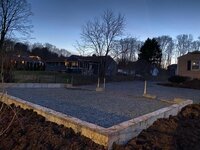
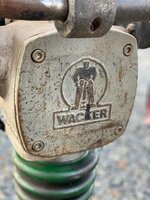
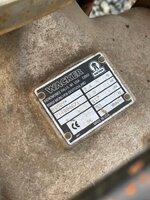
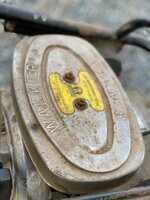
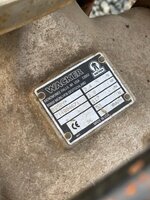
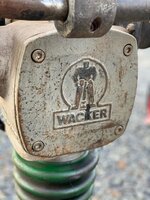
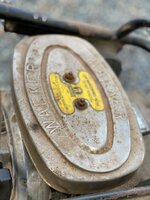
Last week I found a jumping jack tamper for sale by a retired contractor so I decided to buy it. It runs and cost $300. It will come in handy to final grade and compact before the slab is poured vs renting one. Also after the garage is framed, I can compact, soak, and compact multiple times to help ensure a solid base.

2d0f38e2b5aeeb71a546de7aee8d5e1c.jpg
a8ea8b5bad4cfcfd90c22d3325252b66.jpg
e679aecf2587f5f9427db5aab1440865.jpg
952283b0ce75b912ff4873d284034900.jpg
95c39cb2ef6d404112756b7703995cfa.jpg
79cc2ccd1d524d101f24f14715b83aeb.jpg
 

Attachments

  • 95c39cb2ef6d404112756b7703995cfa.jpg
    95c39cb2ef6d404112756b7703995cfa.jpg
    146.4 KB · Views: 0
  • 952283b0ce75b912ff4873d284034900.jpg
    952283b0ce75b912ff4873d284034900.jpg
    111.5 KB · Views: 0
  • e679aecf2587f5f9427db5aab1440865.jpg
    e679aecf2587f5f9427db5aab1440865.jpg
    248.3 KB · Views: 0
  • a8ea8b5bad4cfcfd90c22d3325252b66.jpg
    a8ea8b5bad4cfcfd90c22d3325252b66.jpg
    226.8 KB · Views: 0
  • 2d0f38e2b5aeeb71a546de7aee8d5e1c.jpg
    2d0f38e2b5aeeb71a546de7aee8d5e1c.jpg
    211 KB · Views: 0
  • 79cc2ccd1d524d101f24f14715b83aeb.jpg
    79cc2ccd1d524d101f24f14715b83aeb.jpg
    84.2 KB · Views: 0

crawler07

Well-known member
Joined
Jan 25, 2012
Messages
140
Thats a nice Wacker you got there ;) That would be a cool rebuild later after the garage is finished!
 

BombShelter

Well-known member
Joined
Nov 16, 2015
Messages
563
Location
State of Hockey
Great build, it's always fun to get the big projects done. It looks like most of the foundation work is almost finished but I thought I'd add some of my insight.

I'm with a few of the other guys here, I always recommend to never placing porous rock below grade around an exterior foundation for water drainage. Down by the footing as part of a drainage system with an exit is OK but above that and you'll get a moat. You'll see this done more with homes than detached garages. Your local code should have recommendations for back-filling materials if you have questions.

I'm assuming you didn't do slab on grade since your running water out to the garage? With the poured wall, I'd would have knocked those pins off and smeared on a big hand-full of CETCO Bentoseal on all of the exposed metal that was going to be below grade.

Everything may be fine but if you have future issues they will most likely be cracking concrete, the metal tie rods left in the concrete rust, the water sitting in the porous rocks will keep the area nice and moist, every thaw and freeze will keep cracking the concrete a little more each season.

I'm also looking at that parking lot that looks like it slopes towards your garage, hopefully that water goes someplace else but that could be an issue as well. I think any issue will be a few years down the road and it's hard to tell all that's going on without more information.

And don't forget the gutters, they are the cheapest return on investment for buildings.
 

Jacobsen

Member
Joined
Jan 4, 2021
Messages
6
Location
Ohio
Any stone without fines and dust isn't going to take compaction . I would only backfill with an open graded stone like 57 if I had a drain pipe underneath and planned to daylight it or pump it. Otherwise you just have water sitting in those voids every spring.
Soil backfill would have been fine but also controlled density fill (CDF) is a good option. Concrete company delivers sand mixed with light cement. It flows into the excavation pushing water out and sets firm like Concrete but its weak enough you could dig it with a shovel if needed. It excludes water and makes a nice easy job of it.
 
OP
B

bagged89s10

Well-known member
Joined
Mar 13, 2005
Messages
4,607
Location
CT
Great build, it's always fun to get the big projects done. It looks like most of the foundation work is almost finished but I thought I'd add some of my insight.

I'm with a few of the other guys here, I always recommend to never placing porous rock below grade around an exterior foundation for water drainage. Down by the footing as part of a drainage system with an exit is OK but above that and you'll get a moat. You'll see this done more with homes than detached garages. Your local code should have recommendations for back-filling materials if you have questions.

I'm assuming you didn't do slab on grade since your running water out to the garage? With the poured wall, I'd would have knocked those pins off and smeared on a big hand-full of CETCO Bentoseal on all of the exposed metal that was going to be below grade.

Everything may be fine but if you have future issues they will most likely be cracking concrete, the metal tie rods left in the concrete rust, the water sitting in the porous rocks will keep the area nice and moist, every thaw and freeze will keep cracking the concrete a little more each season.

I'm also looking at that parking lot that looks like it slopes towards your garage, hopefully that water goes someplace else but that could be an issue as well. I think any issue will be a few years down the road and it's hard to tell all that's going on without more information.

And don't forget the gutters, they are the cheapest return on investment for buildings.


There will be French drainage directing water away from the garage as well as gutters and gutter pipes doing the same. The driveway will also be regraded and paved so it’s not sloped towards the garage. I have to have the excavators push the stone out and regrade under the stone as they were rushing to finish moving the stone before dark and before the big snow storm. They will be back in the spring. Only the bottom foot or so is rock and then there is dirt on top. I will be putting a dry well in for the house drainage and maybe I will just put it next to the garage where my shed is after I move the shed. I’ll just dig it to the depth of the footings and throw in a drain pipe from them back corner of the garage to the dry well. I’ll be digging anyway.
 
Last edited:
To avoid these ads, REGISTER NOW!
Top Bottom