To avoid these ads, REGISTER NOW!

Bandsaw TPI

SusanX

Member
Joined
Oct 22, 2016
Messages
14
Hello, this is my 1st post on Garage Journal. I was into woodworking, then decided to buy a metal lathe, and now I have the metalworking bug. Because my 1 car garage is super packed with equipment, including full size wood lathe and Jet Mill Drill, I picked up a smaller than usual horizontal bandsaw. It is a tiny Bainbridge 536. It uses a 60" blade that needs replacing. Is it possible to get away with using one size tpi for all my cutting needs, or do I really need to buy multiple blades and change them depending on what I am cutting? Thanks guys :)
 
To avoid these ads, REGISTER NOW!
OP
S

SusanX

Member
Joined
Oct 22, 2016
Messages
14
I found a cheap source for steel, and my little vintage Craftsman 101.07301 lathe only has 18" between centers so I must use bandsaw to cut long rounds
 

ez-duzit

Well-known member
Joined
Jun 24, 2013
Messages
5,094
Location
Marina del Rey
Buy a bi-metal blade that will provide for at least 2 teeth to always be in contact on your thinnest workpiece.
 

jimreed2160

Well-known member
Joined
Aug 7, 2016
Messages
3,589
Location
Tallahassee FL
Welcome to GJ. There are many helpful threads here and no lack of opinions by members. Feel free to browse the Woodworking 101 thread for chatter about handplanes and other ww topics.

As for your bandsaw, I think that tool is more for metal than for wood. In the case of metal, it depends on what you intend to cut. Brass is softer than steel but brass is sticky. Rods are different from pipes.

I was a woodworker who transitioned into metal and I discovered that metal materials have a much larger variety than wood materials. Certainly different wood species have different characteristics but in the end, wood is wood. The different varieties and characteristics in metal is just staggering. For example, there are over 700 registered alloys of aluminum alone. Each one machines a little differently.

One recommendation I would make is that you concentrate on learning materials and branch out from there. For example, I machine cast iron, flat ground O-1 steel, and soft brass. There is much variety in just these materials but limiting my efforts to them has helped me to learn how to machine them.

It is said that Rome was not built in a day. But maybe that was because everyone was out messing around in their shops all day. Good luck and I hope you enjoy your time with the GJ community.
 

ez-duzit

Well-known member
Joined
Jun 24, 2013
Messages
5,094
Location
Marina del Rey
Welcome to GJ. There are many helpful threads here and no lack of opinions by members. Feel free to browse the Woodworking 101 thread for chatter about handplanes and other ww topics.

As for your bandsaw, I think that tool is more for metal than for wood. In the case of metal, it depends on what you intend to cut. Brass is softer than steel but brass is sticky. Rods are different from pipes.

I was a woodworker who transitioned into metal and I discovered that metal materials have a much larger variety than wood materials. Certainly different wood species have different characteristics but in the end, wood is wood. The different varieties and characteristics in metal is just staggering. For example, there are over 700 registered alloys of aluminum alone. Each one machines a little differently.

One recommendation I would make is that you concentrate on learning materials and branch out from there. For example, I machine cast iron, flat ground O-1 steel, and soft brass. There is much variety in just these materials but limiting my efforts to them has helped me to learn how to machine them.

It is said that Rome was not built in a day. But maybe that was because everyone was out messing around in their shops all day. Good luck and I hope you enjoy your time with the GJ community.


jr--seriously, did you read the OP's request for blade TPI? :)
 

Cope

Well-known member
Joined
Mar 8, 2013
Messages
2,067
Location
Houston, TX
SusanX, welcome to the forum! I usually use 18TPI on my Jet 4"x6" bandsaw. Lenox is a good brand.
 
To avoid these ads, REGISTER NOW!

royesses

Well-known member
Joined
Mar 28, 2009
Messages
789
Variable tooth 14-18 tpi bi-metal blade would do everything but very thin metals. The rule is minimum of 3 teeth in contact with the metal.
 

6PTsocket

Well-known member
Joined
Mar 12, 2014
Messages
4,593
Variable tooth 14-18 tpi bi-metal blade would do everything but very thin metals. The rule is minimum of 3 teeth in contact with the metal.
Correct. Too many teeth and you cut very slowly. Too few teeth ( less than three teeth on the work) and you break teeth. Wood can be cut at a much higher speed than metals. Generally wood that is cut is often thicker and tooth counts are much lower and cutting speeds are much higher. A little searching and you should find a lot of charts on blade count, and other specs like tooth set for different materials and thicknesses, that help you select the right blade. For metal, bimetal blades are a lot more durable and expensive than carbon steel. If the saw is variable speed the bimetals can also run faster. There is no magic blade but with a chart you can look at what you want to cut and select a blade or blades that best cover your needs.

Sent from my SM-G900V using Tapatalk
 

Doug Arthurs

Well-known member
Joined
Dec 1, 2012
Messages
1,137
Location
Ontario
Too may teeth and you overload the gullet and rip teeth out not too few. Minimum 3 teeth in cut at all times. Home use is tough for TPI becuase usually you have very little control over feed rate and if the blade is 1/2 wide no beam strength. start around 10 tooth get variable pitch bi metal if you rip teeth out go with a coarser tooth not finer. So many misconceptions about band saw blades. I deal with it all day.
 
OP
S

SusanX

Member
Joined
Oct 22, 2016
Messages
14
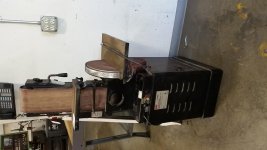
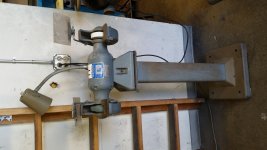
Wow. Thanks guys! I really appreciate all the info you shared. So far, y'alls seem to be an awesome, friendly group of folk :) I will try out Doug's detailed recommendation. Btw, on another note, I attended my first auction ever that was for a metal shop that had gone out of business. I was surprised to be the only female in the room. I bidded on and won the a Baldor 1800 rpm 7" grinder, and on a big Dayton 1-1/2hp belt/disc sander. Going to the auction was fun for me, but a little painful for my checking account since I wasn't planning on buying more than one item, but got caught up in just wanting to outbid others. I hope I don't get in trouble for getting off topic a little. Thanks again!
 

Attachments

  • 20170504_121639.jpg
    20170504_121639.jpg
    135.7 KB · Views: 17
  • 20170504_121647.jpg
    20170504_121647.jpg
    135.9 KB · Views: 18
OP
S

SusanX

Member
Joined
Oct 22, 2016
Messages
14
Doug, when you say, "go with a course tooth," do you mean go with less tpi? Or do you mean less variance in pitch? Forgive my ignorance, please
 

Doug Arthurs

Well-known member
Joined
Dec 1, 2012
Messages
1,137
Location
Ontario
When I say courser tooth I mean fewer teeth per inch. In the industrial world we do the math to work out chip load. This is so we don't overload the gullet or at the other end of the scale just grind away in a cut and not make a proper chip. This will wear the blade down.
 
To avoid these ads, REGISTER NOW!
Top Bottom