To avoid these ads, REGISTER NOW!

Basic circuit breaker tolerance/wire question

TheOtherGoose

Well-known member
Joined
Jan 15, 2012
Messages
545
Location
The Cornfields of Ohio
I did a search but was still unsure and would like to learn something from those more experienced.

My home has a 120V circuit that uses standard Romex-type 14 gauge solid wire and has a standard 15 amp breaker. There is one duplex outlet, two 60W lights and one 10W LED in the circuit (the lights & outlet are about 65' from the breaker).

Currently, an 1800W hair dryer is used (for a few minutes on average) while all the lights are on and the breaker doesn't trip.

Should the breaker trip? Is this situation within normal tolerances for the wire and breaker?

Thanks in advance for any help.
 
To avoid these ads, REGISTER NOW!

sparky 1971

Well-known member
Joined
Oct 9, 2018
Messages
7,969
Location
Central Iowa
If the hairdyer is actually 1800 watts and the two 60 watt lamps are really 60 watts each, you're looking at roughly 16 amps with the hairdryer and all three lights on. It's probably going to take around 30 minutes or so before the breaker gets hot enough to trip. It could take even longer, it may never trip. Nothing to be concerned about.
 
OP
T

TheOtherGoose

Well-known member
Joined
Jan 15, 2012
Messages
545
Location
The Cornfields of Ohio
Thanks for your replies, guys. I haven't confirmed the actual current draw. I assume that the various components (wire/outlet/breaker/etc) are all over-engineered to accommodate this kind of situation.

I read somewhere that standard breakers have a -20%/+25% tolerance to their given amperage - is that true?
 

mike93lx

ALLIANCE MEMBER
Joined
Dec 9, 2013
Messages
37,494
Location
Richmond, VA
I read somewhere that standard breakers have a -20%/+25% tolerance to their given amperage - is that true?
Breakers don't trip based on hitting their rating, but I have also never heard of a breaker that is functioning correctly tripping at under it.

To trip instantly, it needs a huge draw, which we tend to only encounter with a short
 

rlitman

Well-known member
Joined
Oct 18, 2010
Messages
24,596
Location
Long Island
You can look up the time trip curves for your breakers. Better breakers trip more quickly, but not knowing the brand and type of breaker, we're only speculating here.

As a rough guess though, I'd say that between 80%* and 120% of a breaker's nameplate rating of continuous load, you can expect it to trip after somewhere between 30 minutes and forever, with it probably not tripping at all if it's had 3 hours to heat soak and hasn't tripped yet. Looking at the trip curves for a Square D QOU (i.e. something really good), they suggest that below 900% of the nameplate rating, you will not trigger the magnetic "instantaneous" trip (instantaneous still may take up to one full cycle to clear the fault, so figure on up to 15 milliseconds to open). So, below 135 amps draw, you can be pretty sure that your breaker will not just trip off immediately. Cheaper breakers require even more current.

*Typically, a breaker is SUPPOSED to not trip at all below it's nameplate rating, and the published time trip curves for Square D QOU start out at 1x, but also technically, breakers are supposed to be derated for continuous use unless they're listed for such, and yes, I've seen breakers trip at a little under the nameplate rating after a few hours of continuous use.

Anyway, there's nothing unsafe about this. Breakers are ingenious devices designed to protect your wiring from thermal overload, and they do a great job of exactly that. It takes time for a wire to heat up to the point that the insulation sustains damage, and there's no point in tripping before that becomes an issue. My chop saw for example will trip the 20A breaker it's on every so often right when I pull the trigger. Yes, it very well could be drawing close to 200A for that moment, but there's nothing wrong with that.
 
Last edited:

nadogail

Well-known member
Joined
Jan 23, 2009
Messages
31,946
Location
Coronado, CA
In my limited experience I have been led to understand that breakers can have two tripping mechanisms; Magnetic and Thermal, the magnetic trips almost instantaneously with a significant overload and the thermal trips when overheated by less than significant overloads. The delay in Thermal tripping allows Circuit Breakers to handle the starting of electric motors.

Thermal trips can be compared to Time Delay Fuses.
 
To avoid these ads, REGISTER NOW!

Norcal

Well-known member
Joined
Mar 16, 2008
Messages
13,754
If my memory serves me a breaker can indefinitely hold at 30% overload.
 

mark flucke

Active member
Joined
Feb 14, 2016
Messages
33
needed a 25amp /240volt Cutler Hammer CH for my son's new a/c unit this summer- Home Depot .Com- Ship to store- online inventory at that store showed 5 in stock- picked up my order at the store- wandered back to the electrical department... 0 on self- I had mine though...
 

RPH

Well-known member
Joined
Dec 17, 2006
Messages
4,190
Location
Michigan Thumb
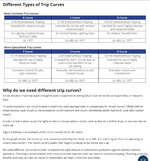
FB91C6E0-D6DB-4A51-BDB6-520D531B58DA.jpeg
For those who want to understand the operations.

“ How does a MCB work?
To understand a trip curve, it is helpful to understand how a miniature circuit breaker, or overcurrent protection device, functions. Figure 3 below is a look at the inside of a Miniature Circuit Breaker (MCB).

With both a bi-metallic strip (2) and a magnetic coil/solenoid (6), a miniature circuit breaker can be two separate types of circuit protection device in one. The bi-metallic strip provides overload protection in response to smaller overcurrents, typically 10X the operating current. The metallic strip consists of two strips of different metals, formed together, which expand at different rates as they are heated. In an overload situation, the bimetallic strip bends and this movement actuates a trip mechanism and breaks (opens) the circuit. The strip converts a temperature change into mechanical displacement.

The magnetic coil or solenoid (6) reacts to fast, higher overcurrents caused by short circuits, typically greater than 10X the operating current – up to tens or hundreds of thousands of amperes. The high current causes a magnetic field to be generated by the coil, moving the internal piston quickly (within microseconds) to trip the actuator mechanism and break the circuit.”

 
OP
T

TheOtherGoose

Well-known member
Joined
Jan 15, 2012
Messages
545
Location
The Cornfields of Ohio
Thanks for the trip curve information - exactly what I was curious about.

My curiosity was focused on the system's tolerance for temperature. I assume a "standard" 15A breaker's thermal trip tolerance does not exceed the safe temp limit for 14 gauge wiring regardless of the wire's installation (enclosed/free air/covered by insulation/etc) or load.

I assume that the system is designed to cut off power long before the wire would get hot enough to actually cause combustion.

I hope this thread isn't tedious... just trying to learn.
 

rlitman

Well-known member
Joined
Oct 18, 2010
Messages
24,596
Location
Long Island
Thanks for the trip curve information - exactly what I was curious about.

My curiosity was focused on the system's tolerance for temperature. I assume a "standard" 15A breaker's thermal trip tolerance does not exceed the safe temp limit for 14 gauge wiring regardless of the wire's installation (enclosed/free air/covered by insulation/etc) or load.

I assume that the system is designed to cut off power long before the wire would get hot enough to actually cause combustion.

I hope this thread isn't tedious... just trying to learn.
Your assumption is exactly correct.

One thing lost in the above curves is breaker coordination. A 12AWG circuit protected by a 20A breaker may have such a high short circuit current that it is able to trip the main breaker in a panel, provided that the wire is short enough. Remember that the current on a series circuit is the same all around the circuit, so upstream breakers will feel the same current. For this reason, breakers protecting equipment are often different than those protecting panels, because in the end, the main breaker in a panel is only meant to protect the wires feeding the panel and not the downstream legs.

I've had an incident at work where three 600A breakers all tripped at the same time, and another situation where a 20A, a 30A and a 225A breaker all tripped simultaneously. In that last instance, the Square D JGA36225 breaker shipped from the factory with the magnetic set to the most sensitive (these larger breakers are often tunable), assuming it was directly protecting equipment, when setting it to the least sensitive setting would have been more appropriate. The 1000A breaker upstream of that didn't even have an instantaneous trip, as it is computer controlled to hold back for 5 cycles to allow downstream protection time to clear a fault.

A lot of engineering goes into breakers.
 

kaffine

Well-known member
Joined
Dec 13, 2009
Messages
3,610
Location
Henderson, NV
Thanks for the trip curve information - exactly what I was curious about.

My curiosity was focused on the system's tolerance for temperature. I assume a "standard" 15A breaker's thermal trip tolerance does not exceed the safe temp limit for 14 gauge wiring regardless of the wire's installation (enclosed/free air/covered by insulation/etc) or load.

I assume that the system is designed to cut off power long before the wire would get hot enough to actually cause combustion.

I hope this thread isn't tedious... just trying to learn.

As long as the wire is in good condition yes the breaker will trip long before the wire gets hot. However loose connections can cause localized hot spots that can heat up enough to cause damage / fire without the breaker tripping.
 

Innovate1

Well-known member
Joined
Jul 28, 2014
Messages
4,288
Location
Illinois near St. Louis, Missouri
needed a 25amp /240volt Cutler Hammer CH for my son's new a/c unit this summer- Home Depot .Com- Ship to store- online inventory at that store showed 5 in stock- picked up my order at the store- wandered back to the electrical department... 0 on self- I had mine though...
On line inventory is horrible at all the big box stores in my experience. Surprised that with them showing 5 they didn't have a few but the counts are often not reliable. If I need something and have any doubt I will call and try to get someone to physically check the shelf rather than rely on what their system says they should have. Most of the employees know how unreliable the system is and will check although sometimes it takes asking them to check the shelves several times.
 
To avoid these ads, REGISTER NOW!
Top Bottom