Between PEX, copper, threaded pipe and shark-bites there's literally a thousand ways it could be done, it just depends on:
1) what material your supply piping is coming up from the basement
2) How much shows and how you want it to look
3) How economical you want to do it (does spending an extra $10 - $20 worth of fittings bother you to make it either easier to install or look better?)
But, I'm going to go out on a limb and make some assumptions here:
1) Your supply pipes from the basement are PEX (since you mentioned you're redoing the plumbing in PEX)
2) It's in a vanity cabinet, so unless you open the doors it's not visible, so how it looks isn't the biggest deal (as opposed to for pedestal sinks w/ exposed plumbing)
3) You want to avoid sweating copper joints (though it is a skill well worth having)
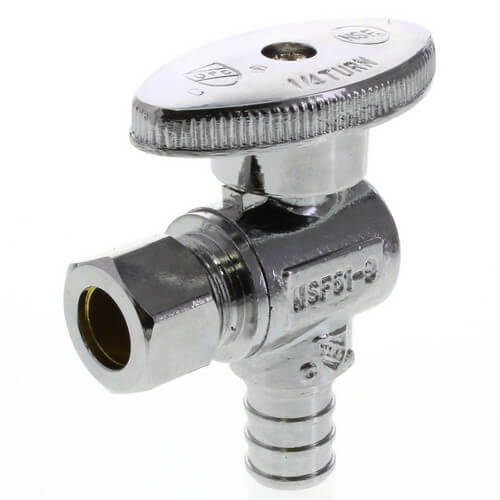
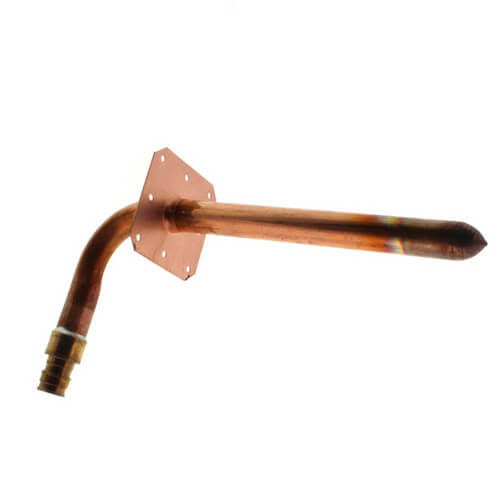
Based on this I'd recommend a turn plate such as the lower portion of the Family Handyman picture linked in Jim's post above, you can bring the PEX at a gradual 90 bend right into the cabinet, leave it long, cap it while the rest of the room is finished off. Other option is to crimp in a 90 PEX fitting if you don't have enough space to make that sweeping 90 degrees. The sweep is better for flow especially on PEX but sometimes in 2x4 stud walls it's tough to make that turn, especially when vent and drain & electrical lines can also be crowding things. Then once it's time for finish plumbing, you cut to length & install a fitting like below:
http://www.supplyhouse.com/Bluefin-PXASQ050-1-2-PEX-Angle-Stop-Valve-1-4-Turn-Lead-Free
Since you need an adapter to switch from PEX tubing to the threaded nut that the flexible braided hose from the faucet connects to anyways, the angle valve stops all do that for you anyways, so for $4/side you're set and it's simple.
Regarding Sharkbites, they are very handy to have. I like to keep one or two around in the common sizes for emergencies or certain situations, but they are pricey, usually 2X - 3X as much, so not the best to use as a first rule. I have had two in my time fail:
1) Was a cut O-ring, ever so slightly, from the edge of the copper pipe as it was inserted, slow leak afterwards but made a mess. That one was my fault. Always make sure if you are inserting copper especially that is is well deburred on the cut edge as well as a bit of lubrication applied (such as faucet grease) to the O-ring and the pipe goes a long way. I also recommend emery cloth on the area of the pipe that will stick into the fitting so that once it is seated it's a nice smooth surface for the O-ring to seal onto.
2) There was a side load on one of the pipes, which caused it to not seat well inside the fititng. This was a plumber's fault that did a water heater replacement for me a few houses ago (never again will I hire a plumber!) and I had to fix that w/ properly shimming the HWH so that the pipe was level and not loading the sharkbite fitting to one side.
So, they work well but are not infallible. I agree with the above comment that you should definitely avoid installing them in hidden or covered cavities or in the wall. In cabinets or basements or out in the open is OK.