To avoid these ads, REGISTER NOW!

Battery cable crimper

theoldwizard1

Well-known member
Joined
Feb 22, 2011
Messages
43,132
Location
SE MI
I worked with electronics, almost everything is soldered. That's bcuz of small size wires.
Define "small" ?

Phone cord, network cable (for RJ-11 or RJ-45 connectors) is 24 AWG and is acutely a actually a special type of crimp.

I don't think I would crimp any single wire smaller than 22 AWG. I made hundreds of RS232 cables with individual crimped pins, "back in the day". I used top of the line "pass through" crimpers with anvils just for the job.
 
To avoid these ads, REGISTER NOW!

cbracer

Well-known member
Joined
Feb 27, 2012
Messages
638
Location
Costa Mesa, CA
Awe yes the age old debate between crimping and soldering..... both have many potential failure points from workmanship & quality aspects, as well as environmental aspects such as corrosion and vibration. I've done both many times successfully in all environments. There is no single answer, do whatever gives you the best chance of success with what you have to work with.
 

pstemari

Well-known member
Joined
Jan 7, 2012
Messages
903
Location
Seattle
The big problem with soldering is that the wires become brittle. Same is true, in spades, of directly soldering wires to printed circuit boards. Add melted insulation and the risk of cold joints, and it's generally a bad idea. Properly crimped connections are far better, in any gauge.

The problem is that you need good tooling, and there's no one solution. Battery cables need big hydraulic crimpers, stuff in the 10-22 gauge range will work with a good set of ratcheting crimpers (e.g. Greenlee PA8000 series), and small stuff down to 28 ga requires yet different dies.

I don't do anything bigger than 45 amp PowerPoles, so can't really advise you on specific tooling. Generally you want something that controls crimp depth, which rules out the hammer jobs unless you measure the crimps with calipers or a mic.

Sent from my Nexus 6 using Tapatalk
 

ezgosparky

Active member
Joined
Jan 2, 2014
Messages
33
c61dd9bcd6317f4b5ee35291746ab4ae.jpg

These are my crimpers I use daily for large 6ga to 2/0 and the best wire cutters I've ever used. Been working on golf carts for the past 10 years.


Sent from my iPhone using Tapatalk
 

Attachments

  • c61dd9bcd6317f4b5ee35291746ab4ae.jpg
    c61dd9bcd6317f4b5ee35291746ab4ae.jpg
    621.7 KB · Views: 0

gungatim

Well-known member
Joined
Jan 8, 2013
Messages
8,101
Location
west mich
I have one of those crimpers you hit with a hammer for making battery cables for my demolition derby cars.

How do you solder a 2 gauge wire terminal and not melt the insulation? I tried soldering, and once it got hot enough to melt the solder, the insulation would melt. So I went with heat shrink and the hammer crimpers, seems to work fine even when trying to start an engine that ran without water its way hotter than normal.

heat the terminal full of solder and dunk the cable in. heat shrink over the exposed part.

now, it's easier said than done. I won't argue the good or bad, but will say it's a big pain to do right. I've done it a few times with my huge vintage soldering iron( or soldering copper?), and gave it up.

the HF hydraulic unit works ten times better, and is a hundred times faster to boot...I did recently acquire a nice vintage hammer type crimper but have yet to use it. the HF dies, as said are marked wrong, but they work just fine...
 

Infinia

Banned
Joined
Oct 2, 2016
Messages
845
Location
SoCal
These are my crimpers I use daily for large 6ga to 2/0 and the best wire cutters I've ever used. Been working on golf carts for the past 10 years.


Sent from my iPhone using Tapatalk

thank you ezgo I see your Blue Point PWC80A, what is the largest cable this works on?
finally someone arrives who knows what's what.
any words on making batt. cables?
 
Last edited:

manwithtools

ALLIANCE MEMBER
Joined
Aug 24, 2015
Messages
13,751
Location
Lebanon, TN
The proper way is crimping with a gas tight connector and the correct crimper. We do these up to 750MCM DLO Cable for high power applications. Our guy's in the shop will make over 100 connections next week of 500MCM DLO for 1300 amp DC breaker connections. 4 breakers with 3 cables on each (+) input and output and 3 on each (-) input and output.

Solder in power connections are never good, if the current surges and the connections heat up there can be unpredictable failures later on down the line.

We use a crimper like this:

130157-ProductImageURL.jpg


Manual ones work as well, just not as easily when you have many large connections to crimp. Manual ones are MUCH cheaper though.
 
Last edited:
To avoid these ads, REGISTER NOW!

ezgosparky

Active member
Joined
Jan 2, 2014
Messages
33
thank you ezgo I see your Blue Point PWC80A, what is the largest cable this works on?
finally someone arrives who knows what's what.
any words on making batt. cables?


The biggest I've cut with the blue point cutters is 1/0 and it cuts like butter. I wouldn't get carried away with golf cart cables. Normal golf cart is 36 or 48 volts DC with a speed controller rated around 275 amps. Any cart from the factory comes with 6ga cable and it's crimped. They may tin the connection for corrosion resistance. I've only done a few applications where I soldered 1/0 cables for a 72 volt 1,000 amp system.


Sent from my iPhone using Tapatalk
 

gte718p

Well-known member
Joined
Mar 12, 2009
Messages
3,972

Harbor freight just came out with a set of hydraulic crimpers that seems to get good reviews.

http://t.harborfreight.com/hydrauli...150.html?utm_referrer=https://www.google.com/

Demo -


The Harbor Freight tool gets bad reviews from a Marine cabling expert. AFAIK he said the dies are all marked wrong not the real sizes, I reckon if you play with it enough you might work it all out, but then the time and materials invested maybe more than the right tool.


I've built a dozen or so electric and solar vehicles. As a result I have made more battery cables in the last 10 years then most people will make in three or four lifetimes.

The amazon hammer crimper is not bad. I use it often. You jut have to be careful with aligning the anvil on the lug. If you can put it in a press is makes awesome repeatable crimps. However, it works fine with a solid base and a a BFH. I rewired my F350 with 3/0 welding cable a few years ago using one of these. I sectioned a spare lug and it looks like solid wire, which is exactly what you want.

The HF hydraulic crimper is actually fairly good. The biggest complaint is the dies are not marked correctly. Having owned a couple I can say it is absolutely a fair criticism. However, it is not a problem unless you are making 1/0 cables. Anything smaller has an appropriate die, just not the one marked for that cable size. Many people, including me, have made the 1/0 and 2/0 dies by enlarging the die with a grinder. The quality of the actual crimp is top notch.

The professional equivalent that the HF version blatantly copies is not much better and runs almost $800.
 

BajaScout

Well-known member
Joined
May 1, 2011
Messages
4,608
Location
San Diego, CA
Are there dies you could use with a shop press for crimping? Wouldn't mind putting my shop press to work a little more often. Dies would require less storage space too.
 

gungatim

Well-known member
Joined
Jan 8, 2013
Messages
8,101
Location
west mich
not entirely true, there are plenty of solder joints. auto mfgr's strive for the cheapest and most efficient processes, so they have gotten away from soldering as much as possible. look at a modern alternator, friction welded copper windings, circuit boards use waveform solder machines, etc. older vehicles you used to see more solder but just because it's been replaced with cheaper easier alternatives doesn't mean it cant't make a good joint when done properly. there are plenty of PCB's and other solder joints in a car, you just don't see them...
 

pedrodagr8

Well-known member
Joined
Aug 25, 2013
Messages
613
not entirely true, there are plenty of solder joints. auto mfgr's strive for the cheapest and most efficient processes, so they have gotten away from soldering as much as possible. look at a modern alternator, friction welded copper windings, circuit boards use waveform solder machines, etc. older vehicles you used to see more solder but just because it's been replaced with cheaper easier alternatives doesn't mean it cant't make a good joint when done properly. there are plenty of PCB's and other solder joints in a car, you just don't see them...
Soldering parts to a circuit board is NOT the same thing as soldering a connector on to a wire. Nor is friction welding in which, from my understanding, you are joining the same materials (ie copper with copper)

The FAA does not allow soldering of connectors on aircraft, the military does not allow soldering of connectors (at minimum on any of their vehicles) , NASA does not allow soldering of connectors ANYWHERE, and it wouldn't surprise me if the NHTSA has a regulation on it as well.

The reason is two fold and both are related to reliability:

First and foremost, the solder alloys with the copper in the wire. Several of the alloys that are formed are dramatically more brittle than copper. You end up with a joint which is very stiff and inflexible but also very prone to breakage over time. Keep in mind, these alloys form not just in the solder joint but via metallic diffusion up the wire itself

Second, the solder creates a hard transition between materials: the copper wires and the coppers solder junction. This means that all of your flexing occurs at this domain. Keep in mind these wires are already more fragile than raw copper due to the aforementioned issue. Repeated flexing in this area results in individual strand breakage. This adds up over time until finally the performance of the wire is degraded or the junction fails outright.

Now obviously soldered connectors CAN work, as they have for many hobbyists through history. That being said, they are significantly inferior and should not be used in high vibration, high reliability locations.


Sent from my LGLS992 using Tapatalk
 

WhiskeyRanger

Well-known member
Joined
Mar 28, 2015
Messages
398
Outside of the electronic repair shop, I think I've pulled out a soldering iron once in the last 6 years, and that was for a control wire that we didn't have a proper replacement crimp on terminal for. Everything gets crimped.
 

gungatim

Well-known member
Joined
Jan 8, 2013
Messages
8,101
Location
west mich
I'm definitely not advocating you should solder battery cables, but a car is not an airplane, nor a spacecraft. comparing them is ridiculous. Most repairs on a car are not high reliability or high vibration situations. (and vibration can be and is mitigated all the time)

we need to get back to reality on some of these discussions...you don't have to apply absolute best process for a rare exception to the norm in every situation. sometimes good enough is good enough...
 

bmwpowere36m3

Well-known member
Joined
Nov 8, 2012
Messages
1,125
I'm definitely not advocating you should solder battery cables, but a car is not an airplane, nor a spacecraft. comparing them is ridiculous. Most repairs on a car are not high reliability or high vibration situations. (and vibration can be and is mitigated all the time)

we need to get back to reality on some of these discussions...you don't have to apply absolute best process for a rare exception to the norm in every situation. sometimes good enough is good enough...

Come on man... this is GJ, best or nothing.

I'll admit that I've done a mix of all: soldering, crimping and both. For the home-gamer with a little skill, soldering is certainly cheaper and more "versatile". It also has the benefit of sealing the connection from corrosion. Biggest downside (besides cold joint or jacket melting) is solder wicking and potential for a brittle connection if not properly strain-relieved.

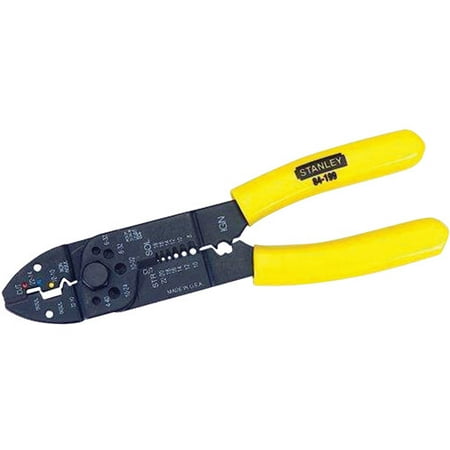
Crimping OTOH is more expensive due to the wide-variety of crimper/dies needed. Its much faster and doesn't suffer from any brittleness. However a good crimped connection, IMHO, is harder to achieve than a soldered one for the average home-gamer. This is assuming they use something like this:
d4620e6c-5a1d-4023-8f58-2fcbb8434073_1.3bed2b2cea3f89d883515510dd50bb39.jpeg

and these:
HTB1HEXVHVXXXXaGXpXXq6xXFXXXL.jpg


At work, helicopters, its almost entirely crimped if it involves wire/cabling. Any devices/components mounted to a PCB are soldered. There still a few solder-cup circular/MIL connectors out there. The crimp connectors are amazing quality and $$, the crimpers are all ratcheting and they are calibrated every few months.

As far as battery cables, I tried the solder/torch method and never got a good joint... cooled to fast, melted cable, etc. I ended up with that hammer anvil and it worked a treat when I was doing amp installs in my cars. Going forward, I would definitely try out that $40 hydraulic crimper.
 
To avoid these ads, REGISTER NOW!
Top Bottom