You are using an out of date browser. It may not display this or other websites correctly.
You should upgrade or use an alternative browser.
You should upgrade or use an alternative browser.
Bell system
- Thread starter Shelbylex
- Start date

Private Lugnutz
Well-known member
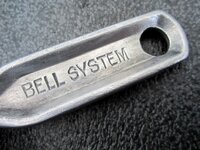
I don't know, but functionally, it looks like it has a clamping action, for holding a cable for splicing or deburring etc, but that's just a SWAG. Are you aware of the Bell System "Best Practices" (specifications, actually) archive site that RTM posted a link to last year? If you poke around in there, you may find it. The Tools are all over the place between the late 40's (mot much) and the 80's (lots) but even the newer stuff didn't change all that drastically to perhaps be able to identify a purpose.A Bell System C Handle for . . . ?
I found it easier to navigate from the main index, here.
But the Tools index is here.
Thanks, Private! I remember it being posted but did not make the connection.Are you aware of the Bell System "Best Practices"
I showed this to my dad last night and he was actually stumped. He called a buddy of his who told him it was for aerial work (think utility poles). It held the strand of wire tight so you could put a bug nut on and you would have slack for a splice opening. My dad did underground work in NYC which is why he had no clue about a tool used for aerial work.A Bell System C Handle for . . . ?
And that defines it! Thanks for the information.It held the strand of wire tight so you could put a bug nut on and you would have slack for a splice opening.
My pleasure. My old man loves it when I ask him about Bell System tools. He was a proud telephone worker for 35 years.And that defines it! Thanks for the information.
Private Lugnutz
Well-known member
I am totally claiming a WIN here...vIt held the strand of wire tight...

it looks like it has a clamping action, for holding a cable...
Two Bell System Files by Simonds, 47X120 and 47X121
Attachments
-
 Simonds 47-00.jpg753.4 KB · Views: 61
 -
 Simonds 47-02.jpg824.4 KB · Views: 25
 -
 Simonds 47-04.jpg785.9 KB · Views: 25
 -
 Simonds 47-06.jpg786.7 KB · Views: 23
 -
 Simonds 47-08.jpg799.8 KB · Views: 24
 -
 Simonds 47-10.jpg760.2 KB · Views: 21
 -
 Simonds 47-12.jpg752.4 KB · Views: 21
 -
 Simonds 47-14.jpg717.6 KB · Views: 32
"Lashing Wire Clamp"A Bell System C Handle for . . . ?
In the Norman Rockwell lineman's right hand.

Private Lugnutz
Well-known member
Norman Rockwell! That is awesome.
Outlawmws
Well-known member
That dang near looks like a photograph. Pretty impressive!

Old Radar
Well-known member
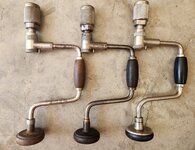
Acquired my third 2101 brace yesterday. This one is a Stanley with no mention of North Bros. or Yankee which indicates a manufacture date 1958 or later. The last mention I could find in Stanley catalogs for anything relating to a 2101 brace is in their 1967 35P Repair Parts Catalog.
This find is actually a 2101A designating a minor change to some internal mechanism.
I now have a pre-Stanley North Bros. 2101 (Brown composite handle, pre-1946, if there was a Bell System marking it was eradicated by a horrible mauling sometime in its youth)
A North Bros. 2101 as a Division of Stanley Tool Works (Black hard rubber handle, 1946-1958, marked Bell System)
The latest, a 2101A Stanley (Black plastic handle, 1958-196x, marked Bell System-B)
For those interested, there is a very good write-up on these braces here.
This find is actually a 2101A designating a minor change to some internal mechanism.
I now have a pre-Stanley North Bros. 2101 (Brown composite handle, pre-1946, if there was a Bell System marking it was eradicated by a horrible mauling sometime in its youth)
A North Bros. 2101 as a Division of Stanley Tool Works (Black hard rubber handle, 1946-1958, marked Bell System)
The latest, a 2101A Stanley (Black plastic handle, 1958-196x, marked Bell System-B)
For those interested, there is a very good write-up on these braces here.
Miss the Pontiacs
Well-known member
Seen the pics and reminded me of a couple I have. The first one, excuse the over shadow of light was part of an award I received. The second one a plate i purchased from a retired Bell Canada employee whose son lives In our area.


Bryan Burns
Well-known member
Bought this for $3 (1/2 off) and an estate sale last week. All I saw was Lufkin and the price and it was only when I was home that I saw it was Bell System. If it was ever used, it wasn't that much.
Bought this for $3 (1/2 off) and an estate sale last week. All I saw was Lufkin and the price and it was only when I was home that I saw it was Bell System. If it was ever used, it wasn't that much.
I got one of those in an antique shop on Rt. 1 in Maine. (I paid maybe $10?) But like yours it is all but pristine. Maybe there was an unissued supply of these things that went out into the world when the Bell System was broken up — or perhaps they just weren't that useful for Bell's technicians.
Miss the Pontiacs
Well-known member
I think this is more likely the reason.or perhaps they just weren't that useful for Bell's technicians.
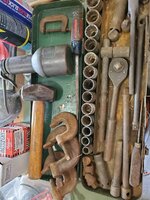
southalabama
Well-known member
Someone posted pics of the building dad spent his career at
southalabama
Well-known member
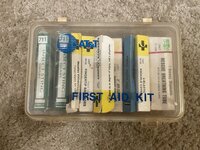
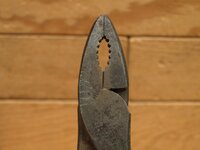
Crescent Bell System B 923-7 Slip Joint, Side Cutter Pliers
Attachments




RTM
Well-known member
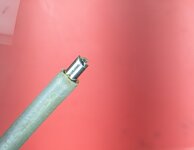
Here is a find from a while back, it got lost in the rubble of tools to be IDd. Sorry, the image looked better on the phone. It's a Bell KS-20827 L1, a manual wire unwrapping tool.
See it in the Bell Archives here, right hand column bottom.
Looking at the end of it, it looks like someone broke something off, but under magnification, you can see three tiny little claws. I haven't seen that "wrapped" style of wire in forever, so not sure how much good it will do me.

See it in the Bell Archives here, right hand column bottom.
Looking at the end of it, it looks like someone broke something off, but under magnification, you can see three tiny little claws. I haven't seen that "wrapped" style of wire in forever, so not sure how much good it will do me.
Outlawmws
Well-known member
Its been years since I've seen a wire wrap tool of any kind. Mind you I have 2 guns and likely a manual tool, but they haven't been out of the box, (or even the box out) in ages.
RTM
Well-known member
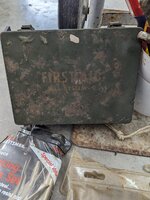
Here is a fun find. Got it from a buddy, I've been helping him to ID some tools from an estate he is helping liquidate, got it for postage.
Have not had the time to start to research part numbers etc, to see if anything is already in the right pockets, or if I have any other stuff to add to the roll. I searched the thread for roll and pouch, didn't find either, but have not been paying close attention to the details yet. I will start poking about in the telcom archive I posted upthread, to see what is what, and what I might actually already have, hidden somewhere.

Have not had the time to start to research part numbers etc, to see if anything is already in the right pockets, or if I have any other stuff to add to the roll. I searched the thread for roll and pouch, didn't find either, but have not been paying close attention to the details yet. I will start poking about in the telcom archive I posted upthread, to see what is what, and what I might actually already have, hidden somewhere.
jeffmoss26
Well-known member
I am sure you can find a whole contents list in an old BSP!

Private Lugnutz
Well-known member
Effing awesome find!
Thanks. It's a mystery how it even got there. I asked the lady if her dad or anybody in the family had worked for the phone company and she said no and she had no idea how it got there.Effing awesome find!
This is from my dad as to what it was used for:
It's wiping solder. We melted it down to wipe the lead sleeves that covered the wire splice.
Private Lugnutz
Well-known member


S-K Tool Fanatic!
Well-known member
Got this crescent made pair of linesmen pliers.
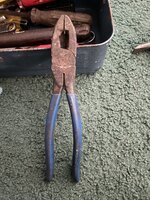
I also have a few of those useless wrapper/un-wrapper things kicking around here somewhere.
I also have a few of those useless wrapper/un-wrapper things kicking around here somewhere.
d42jeep
Well-known member
I’ll bet the evaporust will make those look like new.
-Don
-Don
S-K Tool Fanatic!
Well-known member
Yup, they cleaned up very nice!


Outlawmws
Well-known member
Nice!
S-K Tool Fanatic!
Well-known member
I don’t have these pliers anymore, traded them to my brother for this.


UNAIU posted two of these forks in 2019. I was just organizing my hoard a bit tonight and discovered I had two as well.
Outlawmws
Well-known member
Specially designed to short across 4 sockets? 
Stolen from the BS cafeteria?
And Silver plate? Are you kidding me?
So stolen from the Executive Cafeteria? Shocking!
Stolen from the BS cafeteria?
And Silver plate? Are you kidding me?
So stolen from the Executive Cafeteria? Shocking!
Last edited:
southalabama
Well-known member
Cool. Never seen any.
UNAIU posted two of these forks in 2019. I was just organizing my hoard a bit tonight and discovered I had two as well.
At a point in time AT&T had dental insurance but not vision. Dad would always ask them if they wanted him to chew his work since he couldn’t see it.
Private Lugnutz
Well-known member
I was thinking linemen's mess kits.