
You are using an out of date browser. It may not display this or other websites correctly.
You should upgrade or use an alternative browser.
You should upgrade or use an alternative browser.
Belzer tools?
- Thread starter bimmer630
- Start date


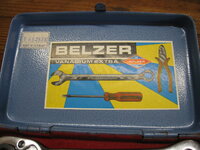

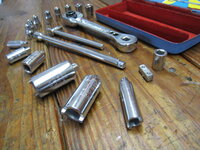
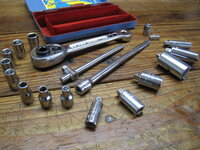
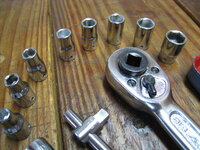


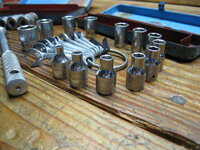


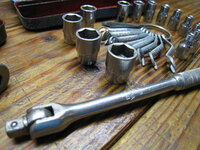
I have a Belzer catalog from 1957 it also features Itma in the back of the catalog. I also have an ever-growing collection of Belzer tools. I live in The Netherlands and am very lucky. There are a lot of Belzer tools available on the second-hand market.
I proudly present to you the catalog. You can view it using this link to my google drive.
Have fun! and leave a comment if you like it. :>
I proudly present to you the catalog. You can view it using this link to my google drive.

Have fun! and leave a comment if you like it. :>








Oregon Dave
Well-known member
- Joined
- Sep 16, 2023
- Messages
- 298
Oscar, I just came across your information today and processed it through Google’s translator.1884 gründete Robert A. Belzer ein Werkzeug-Export-Geschäft. Er belieferte hauptsächlich die nordischen Länder. 1912 übernahmen die beiden Kaufleute Walter Dörken und Walter Schlingensiepen das Geschäft, das damals seinen Sitz an der Hastener Straße 4 in Cronenberg (ab 1929 Teil von Wuppertal) hatte. Der 1. Weltkrieg und die zunehmende Technisierung erhöhten die Nachfrage und die Anforderungen an die Qualität. Insbesondere die neue Automobilindustrie schuf neuen Bedarf, sodass Belzer 1920 eine eigene Produktion aufnahm. Das Unternehmen hatte etwa 100 Mitarbeiter.
1925 wurden die ersten Schraubenschlüssel, Schraubendreher und Zangen aus hochwertigem Vanadium-Stahl hergestellt und zunächst unter der Markenbezeichnung „Eigenheim“ verkauft. Der Katalog von 1937 umfasste auf 200 Seiten mehrere Tausend Werkzeuge, Belzer produzierte mit 290 Mitarbeitern vor allem Spezialwerkzeuge für den Automobil- und Fahrzeugbau, für die Luftfahrt und die Maschinenindustrie, zwischenzeitlich auch unter der Marke „Becro“.
1943 wurde das Verwaltungsgebäude an der Hastener Straße zerstört, die Produktionshallen blieben vor den Bombenangriffen glücklicher Weise verschont und so konnte die Produktion nach dem Krieg schnell wieder anlaufen. Das Sortiment wurde mit neuen Werkzeugen für spezielle Berufe (wie Uhrmacher, Optiker, Radio- und Fernmeldetechniker) erweitert. Ende der 1950er Jahre wurden wieder 60% der Produktion exportiert, die Zahl der Beschäftigten stieg auf 650. Der Erfolg führte dazu, dass das Belzer-Werk wieder erweitert werden musste.
Mit 1. Oktober 1970 verkauften die Eigentümerfamilien Belzer an die teilstaatliche Saarbergwerke AG. Belzer wurde 1974 mit der Remscheider Werkzeugfabrik Dowidat zur DWU (Deutsche Werkzeug-Union) verschmolzen. Während Belzer primär Werkzeuge für die Luftfahrtindustrie sowie Forschung und Entwicklung lieferte, konzentrierte sich Dowidat eher auf die Ausstattung von Industrie und Handwerk. Es entstand auch eine gemeinsame Marke „Belzer-Dowidat“. 1977 berichtete der „Spiegel“, dass das Unternehmen „mit 100 Millionen Mark Umsatz als Marktführerin in der Werkzeugbranche gilt“ und „nach vielen verlustreichen Jahren 1976 mit gut 500.000 Mark in die Gewinnzone“ rückte (1).
1988 kaufte der schwedische Bahco-Konzern die DWU. 1991 wurde Bahco wiederum von der 1862 gegründeten Sandvik-Gruppe, einem der größten europäischen Hersteller von Werkzeug, übernommen. Die Firma lautete somit ab Oktober 1991 Sandvik-Belzer und versprach sich eine verbesserte Marktstellung und eine sichere Zukunft für ihre insgesamt 500 Mitarbeiter (davon über 200 in Wuppertal).
Schon 1993 wurden in Wuppertal allerdings 70 Beschäftigte entlassen, die Produktion von geschmiedeten Produkten nach Hasborn, dem zweiten Betriebstandort, verlagert. 1997 wurde Hasborn im Saarland geschlossen und die Produktion nach Argentinien verlegt. Die verbliebenen 140 Mitarbeiter in Cronenberg produzierten noch Schraubendreher und Werkstattwagen. Die Klage einer Anrainerin wegen Geruchsbelästigung der seit 1989 betriebenen Lackieranlage gefährdete 1996 den Verbleib der Firma am Standort. 1997 wurde die Verwaltung aufgegeben und am Hauptsitz in Schweden zentralisiert. Wiederum gingen weitere 40 Arbeitsplätze verloren. Im Juni 1999 verkaufte Sandvik dann den Geschäftsbereich „Sägen und Werkzeuge“ – und damit auch ihren Cronenberger Betriebsteil – an den 1920 gegründeten amerikanischen Werkzeug-Konzern „Snap-on“.
Grundstück und Gebäude in Wuppertal wurden um 2000 von der Wuppertaler Wirtschaftsförderungsgesellschaft gekauft und seither als Gewerbepark betrieben. Eine der dort ansässigen Firmen war immer noch Sandvig-Belzer, bis 2004 auch die Schraubendreherproduktion – die letzte verbliebene Werkzeugherstellung – nach Spanien verlagert wurde.
2005 fusionierte Snap-on die 1995 erworbene Herramientas Eurotools SA und die Bahco Group AB zur SNA Europe Group.
Leer stehende Gebäude auf dem ehemaligen Firmengelände in Wuppertal dienten 2015 als Flüchtlingsunterkünfte, das Verwaltungsgebäude wurde auch entsprechend adaptiert. In Südamerika wird heute (2018) noch Werkzeug der US-Apex Tool Group unter der Marke Belzer verkauft.
It has been 8 years ago and my appreciation may never reach you, but, thanks very much for sharing. I very much like obtaining, sometimes refurbishing but mainly using quality hand tools and that brings the skill and effort to design and build them up close and personal for me.
I also like being reminded that history is a movie; not a photograph.
Thanks again, Dave from Oregon USA; grandson of a German.
KnurledNut
Well-known member
Translation:
In 1884, Robert A. Belzer founded a tool export business. It mainly supplied the Nordic countries. In 1912, the two merchants Walter Dörken and Walter Schlingensiepen took over the business, which at that time had its headquarters at Hastener Straße 4 in Cronenberg (from 1929 part of Wuppertal). The First World War and the increasing mechanization increased the demand and the demands on quality. In particular, the new automotive industry created new demand, so that Belzer started its own production in 1. The company had about 1920 employees.
In 1925, the first wrenches, screwdrivers and pliers were made of high-quality vanadium steel and initially sold under the brand name "Eigenheim". The 1937 catalogue comprised several thousand tools on 200 pages, Belzer with 290 employees produced mainly special tools for automotive and vehicle construction, for aviation and the machine industry, in the meantime also under the "Becro" brand.
In 1943, the administration building on Hastener Strasse was destroyed, the production halls were fortunately spared from the bombing raids, and so production was able to resume quickly after the war. The range has been expanded with new tools for specific professions (such as watchmakers, opticians, radio and telecommunications technicians). At the end of the 1950s, 60% of production was exported again, and the number of employees rose to 650. The success led to the Belzer plant having to be expanded again.
On 1 October 1970, the owner families sold Belzer to the partially state-owned Saarbergwerke AG. In 1974, Belzer was merged with the Remscheider Werkzeugfabrik Dowidat to form the DWU (German Tool Union). While Belzer primarily supplied tools for the aviation industry as well as research and development, Dowidat concentrated more on equipping industry and trade. A joint brand "Belzer-Dowidat" was also created. In 1977, Der Spiegel reported that the company was "considered the market leader in the tool industry with a turnover of 100 million marks" and that "after many years of losses, it moved into the profit zone in 1976 with a good 500,000 marks" (1).
In 1988, the Swedish Bahco Group bought DWU. In 1991, Bahco was again taken over by the Sandvik Group, founded in 1862 and one of Europe's largest manufacturers of tools. As of October 1991, the company was renamed Sandvik-Belzer and hoped for an improved market position and a secure future for its 500 employees (more than 200 of them in Wuppertal).
As early as 1993, however, 70 employees were laid off in Wuppertal, and the production of forged products was relocated to Hasborn, the company's second location. In 1997, Hasborn in Saarland was closed and production was moved to Argentina. The remaining 140 employees in Cronenberg still produced screwdrivers and workshop trolleys. In 1989, a complaint filed by a local resident about the odour nuisance of the paint shop, which had been in operation since 1996, endangered the company's continued existence at the site. In 1997, the administration was abandoned and centralized at the headquarters in Sweden. Another 40 jobs were lost. In June 1999, Sandvik sold its saws and tools division – and with it its Cronenberg division – to the American tool group "Snap-on", which was founded in 1920.
The land and buildings in Wuppertal were bought around 2000 by the Wuppertal Economic Development Agency and have been operated as a business park ever since. One of the companies based there was still Sandvig-Belzer until 2004, when screwdriver production – the last remaining tool production – was relocated to Spain.
In 2005, Snap-on merged Herramientas Eurotools SA, which had been acquired in 1995, and Bahco Group AB to form SNA Europe Group.
In 2015, vacant buildings on the former company premises in Wuppertal were used as refugee accommodation, and the administration building was also adapted accordingly. In South America today (2018), tools from the US-Apex Tool Group are still sold under the Belzer brand.
KnurledNut
Well-known member
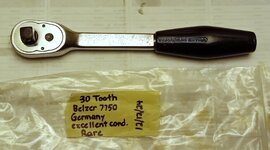
One of my finer ratcheting wrenches...
Last edited:
JSCraftsman
Well-known member
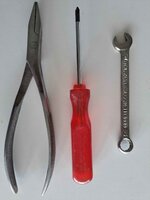
These recently peaked my interest, neat ratchets... and very tough to find. This is one I just recently acquired. Here is what this particular 7750 originally looked like with the hard plastic handle. The earlier 7750 variant resembled the Snap-On F-71 which is the one that got me started on these. I don't have one of those yet, but hopefully one day I will find one in the wild.I saw this interesting ratchet today. I’ve heard of a lot of brands but never belzer.
They seem to be made in Spain (?), and owned by Apex.
This one says Germany on ithttp://www.belzer.com.br/
Sent from my iPhone using Tapatalk

Attachments


SwissMetric
Well-known member
Belzer was also known as Belzer Dowidat for some time.
Very high quality but was never widespread here in Switzerland. As child I had the impression that Belzer was even higher ranked as Stahlwille and yes, as child I got my first Stahlwille tools with my "pocket money". Indeed I still use some tools I got during my childhood.
For historic reasons Stahlwille had always a strong presence in Switzerland (also members of the founder family Wille live (or lived?) in Switzerland) until Asian tools became popular. Hazet is sort of less present though well known. Gedore (Blue line) is available too but not common.
Nearly all other German wrench manufacturers either no longer exist as such or their market share is very small. Also some only sell Asian tools but kept their (once) respected name though they no longer manufacture anything.
Very high quality but was never widespread here in Switzerland. As child I had the impression that Belzer was even higher ranked as Stahlwille and yes, as child I got my first Stahlwille tools with my "pocket money". Indeed I still use some tools I got during my childhood.
For historic reasons Stahlwille had always a strong presence in Switzerland (also members of the founder family Wille live (or lived?) in Switzerland) until Asian tools became popular. Hazet is sort of less present though well known. Gedore (Blue line) is available too but not common.
Nearly all other German wrench manufacturers either no longer exist as such or their market share is very small. Also some only sell Asian tools but kept their (once) respected name though they no longer manufacture anything.
corradishop
Member
- Joined
- Sep 3, 2025
- Messages
- 12
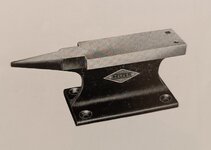
In my old watchmakers tools catalog from the 1960s... this little Belzer anvil isn't easy to find, but unlike today, the printing is very accurate and there are excellent details about the shape, size, and weight that help you recognize it.
The brand is a guarantee, or at least it was while it was in business. Archive.org has a number of very detailed catalogs.
The brand is a guarantee, or at least it was while it was in business. Archive.org has a number of very detailed catalogs.
Attachments

corradishop
Member
- Joined
- Sep 3, 2025
- Messages
- 12


3baygarage
Well-known member
That's  worthy. Congratulations on that find.
worthy. Congratulations on that find.four.cycle
Well-known member
^ now all you need to do is find all the right pliers to fill it up! 
59Sled
Well-known member
Found a cabinet at my work full of catalogs and brochures of tools or machine shop tooling. All are from the late 50's to the mid 80's.
I was told I can help myself to all the ones I want. Already grabbed about 40 of them. Just need to find the time to take some pics and document what I have.
But this Belzer catalog from 1958 was in there. Really good condition.
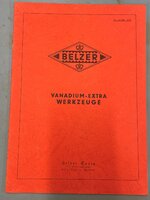
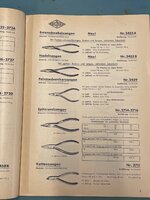
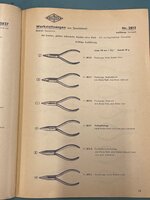

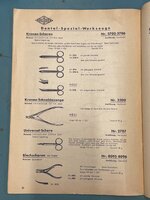

I was told I can help myself to all the ones I want. Already grabbed about 40 of them. Just need to find the time to take some pics and document what I have.
But this Belzer catalog from 1958 was in there. Really good condition.
LeeG
Well-known member
Found a cabinet at my work full of catalogs and brochures of tools or machine shop tooling. All are from the late 50's to the mid 80's.
I was told I can help myself to all the ones I want. Already grabbed about 40 of them. Just need to find the time to take some pics and document what I have.
Maybe consider uploading them to http://vintagemachinery.org/ A huge archive of old tool manuals and catalogs.
3baygarage
Well-known member
That's pretty awesome. One of the salesmen at my work doesn't like clutter and trashed stacks of old parts catalogs a whole back when he was new. It wasn't hurting anything, just sitting on shelves. That's info that can't be found easily.Found a cabinet at my work full of catalogs and brochures of tools or machine shop tooling. All are from the late 50's to the mid 80's.
I was told I can help myself to all the ones I want. Already grabbed about 40 of them. Just need to find the time to take some pics and document what I have.
But this Belzer catalog from 1958 was in there. Really good condition.
59Sled
Well-known member
I will have to go through them to see what I have. I did leave behind a few manuals and catalogs of machine stuff, like lathes and mills. Or tooling catalogs for those type of machines. I can always go back and get them. I was more interested in the hand tool stuff.Maybe consider uploading them to http://vintagemachinery.org/ A huge archive of old tool manuals and catalogs.
I need to go through them. I've talked Mark Stansbury of International Tool Catalog Library to talk about getting them scanned for the ITCL site.
Belzer made some of the highest quality hand tools I have ever seen. While quite unknown I'm pretty sure in the early 20th century they invented the prominent tool steel still overwhelmingly used today. Chrome Vanadium. They made aerospace grade tools too and often had BELZER Chrome Vanadium Extra stamped on them. I was lucky to snag some of their late NOS Aerospace sockets & bits & pieces.
M.Jay
Well-known member
Carrying this over from my introduction thread, since other people might find this interesting and want to join the conversation.
In the early 30s they started to market their tools under the 'Becro' name, keeping the hat in the logo:

In 1937 the 'Belzer' name was registered as brand name, and the top hat vanished:
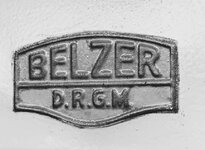
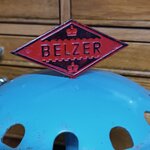
Then, in 1950 the well known rhombus with crowns was introduced:

After the merge with Dowidat in 1974, the rhombus was dropped and the name changed to 'DWU Belzer Dowidat' with an underline:

With the takeover by Bahco 1988, it became a plain and simple 'Belzer-Dowidat' with a interconneted 'LZ':

I can't say for sure, but probably at least until the mid 30s.Do you know how long Belzer & Kopp used their early top hat logo after registering the trademark in 1884?
(Later, it was a cursive company name, in the '50s a rhombus with a crown above and below the company name, or modern versions without any extras...)
As my ratchet (used also by Hazet in its 230 sets ~1925-1933) with this old Belzer hat logo.


In the early 30s they started to market their tools under the 'Becro' name, keeping the hat in the logo:
In 1937 the 'Belzer' name was registered as brand name, and the top hat vanished:
Then, in 1950 the well known rhombus with crowns was introduced:
After the merge with Dowidat in 1974, the rhombus was dropped and the name changed to 'DWU Belzer Dowidat' with an underline:
With the takeover by Bahco 1988, it became a plain and simple 'Belzer-Dowidat' with a interconneted 'LZ':