I was in your position a year a half ago. I wanted a mini-mill as a starter unit, figuring I needed "something" to learn milling, but knew I would have to upgrade down the road to something larger. After 6mo of serious looking I broke down and realized I needed to get the biggest mill I could still move easily if I moved (was renting a house). I spent an honest 12mo I've looking, researching, shopping, etc. And let me tell you what I learned in a heartbeat:
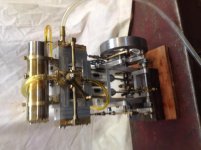
1) Unless you are building those mini steam engines and tiny stuff as your hobby, buy the biggest mill you can afford & fit into your space - You'll thank me in the long run.
2) Round Column vs Dovetail: A round column requires that you re-zero and re-index your work every time you raise and lower the head. Round column is more versatile in respects that you can fit bigger stuff in a similar sized mill, but every time you move the column the zero point for your work can change, as does the relation to X-Y axis. For _me_ this was unacceptable. I'll take a slight limitation on work size over re-zeroing the work. Personal preference.
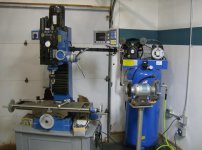
3) Grizzly Machines (and Craftex in Canada), are actually great value for the money. Research the limitations, be sure you're okay with them, and never look back. For example, my Craftex machine has a nylon gear and two brass gears in the head. Online complaints about the same machine with a Grizzly logo suggested the gears are prone to stripping if you overload the machine. I simply factored the cost of gears into my purchase budget and bought a 'spare set' when I bought the machine. I may never use them, and could have wasted $75 sitting on the shelf...but I have them should I crash the machine mid-project.
4) The mill is only part of the purchase budget, you'll spend a lot more on tooling - If your budget is $1k, and you want to be up and running after purchase, you're actually looking at $500 mill and $500 in bits, tools, work holding, etc. A lot of guys start by buying a mill, and then slowly buying tooling as they can afford it / need it. I'm of the opinion that you should buy a mill and a whack of tooling to get you started, because ultimately it's far more useable in the long run. (I also think a new car enthusiast should buy a socket SET, not just the socket they need for the first job). So take your budget, cut it in half and spend half on tooling, half on the mill.
5) Lastly, and most importantly, recognize the size and quality of your machine and work within it's limitations. My Craftex 601 unit isn't a Knee Mill, so it's going to vibrate and chatter before a knee mill does. BUT, knowing that I simply have to work according to my machine. I take smaller passes, I work a little slower, and my machine is milling projects just as well as a buddies $60k mega-mill. Only difference? My jobs take longer.
Search my username and posts you'll find a thread with information about my mill and some more info that might help you out.
-Dave