To avoid these ads, REGISTER NOW!

Best Glue for Plastic?

Matt M PA

Well-known member
Joined
Oct 21, 2008
Messages
3,174
Location
SE PA
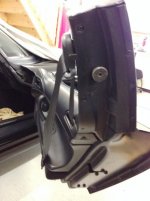
There's a plastic part on the door of the RT that you can only see when the door is open. It's ridgid plastic, and they don't wear well. They're held in place by 5 screws...and the piece cracks around the screw holes.

When I got the car, they both were bad and I replaced them. I also put a pair of new ones away. Now, the one on the driver's side has already developed a few cracks. I thought it might be a good idea to put a coating of epoxy around the screw holes and repaint the piece.

Can anyone give a recommendation on a good epoxy-glue for plastic? I want to use it more as a reinforcement than to join two pieces.

Back in the day, I fixed up the one that was on the car by putting epoxy around the screw holes and repainting the outside. I didn't rough up the plastic before applying the epoxy, so it can be chipped off the back side. It looks like new on the outside. I was using Devcon 5 minute epoxy.

Before I re-do the epoxy, I was hoping for a recommendation.

Worse...the new one from 4 years ago (as mentioned above) started to crack so I removed it and did the epoxy trick. Then, I stripped it in a paint stripper made for model railroading/modeling. I then put a coat of build primer (also supposedly safe for plastic) and it cracked the whole part. Arg!
 
Last edited:
To avoid these ads, REGISTER NOW!

Hammer1963

Well-known member
Joined
Jan 2, 2011
Messages
2,048
Location
Kentucky
I work with plastic repair on a daily basis and there is no one glue that will repair all plastics available to the general public. Ideally a 2 part rigid plastic repair epoxy would work best. Something like Dominion Sure Seal brand. Your best best is to use something like the Devcon you mentioned. The back side of the broken piece needs to be prepared with 120 grit sand paper and then washed thoroughly with a scouring cleanser and rinsed till clean.

Take reinforcing mesh (plastic/fiber weave) and cut it to match the shape/contour of the piece in question and apply it to the back side of the part. Drywall mesh will work. Apply the glue to the back side and then press mesh into the glue. Let dry.

Take an 1/8" ball cutter in a Dremel type tool and cut a groove into the cracked fascia. Taper grooves with tapered stone bit in the Dremel tool and apply the epoxy into the grooves. Let dry. Sand all fascia areas starting with 120, followed by 220, 320 and finish with 500. Prime with plastic primer. Sand with 500 grit and paint. An added tip: do not sand to the point of building heat as this can cause the epoxy to lose its bond

One important note: Clean, clean, clean and DO NOT USE ANY SOLVENTS ON PLASTIC! Isopropyl Alcohol only!
 

vpogv

Well-known member
Joined
Mar 26, 2012
Messages
62
Location
NW OH
Definitely epoxy. I have been using a locktite epoxy lately with good results. Used it to repair the plastic bumper on my Avalanche with no issues so far. The drywall mesh is a really good idea especially since you can't drill holes for added strength. I would. Recommend roughing up the plastic first though.
 

RickP

Well-known member
Joined
Jan 15, 2013
Messages
1,548
Location
Annapolis, MD
I work with plastic repair on a daily basis and there is no one glue that will repair all plastics available to the general public. Ideally a 2 part rigid plastic repair epoxy would work best. Something like Dominion Sure Seal brand. Your best best is to use something like the Devcon you mentioned. The back side of the broken piece needs to be prepared with 120 grit sand paper and then washed thoroughly with a scouring cleanser and rinsed till clean.

Take reinforcing mesh (plastic/fiber weave) and cut it to match the shape/contour of the piece in question and apply it to the back side of the part. Drywall mesh will work. Apply the glue to the back side and then press mesh into the glue. Let dry.

Take an 1/8" ball cutter in a Dremel type tool and cut a groove into the cracked fascia. Taper grooves with tapered stone bit in the Dremel tool and apply the epoxy into the grooves. Let dry. Sand all fascia areas starting with 120, followed by 220, 320 and finish with 500. Prime with plastic primer. Sand with 500 grit and paint. An added tip: do not sand to the point of building heat as this can cause the epoxy to lose its bond

One important note: Clean, clean, clean and DO NOT USE ANY SOLVENTS ON PLASTIC! Isopropyl Alcohol only!

^^^ This is great advice.

Make sure to use an epoxy made for plastic. Something like this one:
G/Flex from West System Epoxy

It's not cheap, but it's made for exactly what you're trying to repair. They made a video of a torture test on a plastic boat where they dragged it over rough ground and the repair held up.
 

nicksnothereman

Well-known member
Joined
Oct 19, 2013
Messages
3,608
Location
In the Mojave
There's a plastic part on the door of the RT that you can only see when the door is open. It's ridgid plastic, and they don't wear well. They're held in place by 5 screws...and the piece cracks around the screw holes.

When I got the car, they both were bad and I replaced them. I also put a pair of new ones away. Now, the one on the driver's side has already developed a few cracks. I thought it might be a good idea to put a coating of epoxy around the screw holes and repaint the piece.

Can anyone give a recommendation on a good epoxy-glue for plastic? I want to use it more as a reinforcement than to join two pieces.

Back in the day, I fixed up the one that was on the car by putting epoxy around the screw holes and repainting the outside. I didn't rough up the plastic before applying the epoxy, so it can be chipped off the back side. It looks like new. I was using Devcon 5 minute epoxy.

Before I re-do the epoxy, I was hoping for a recommendation.

Worse...the new one from 4 years ago (as mentioned above) started to crack so I removed it and did the epoxy trick. Then, I stripped it in a paint stripper made for model railroading/modeling. I then put a coat of build primer (also supposedly safe for plastic) and it cracked the whole part. Arg!

RT I'm guessing viper?

If it's cracking it's probably too rigid and the vibrations are causing it. Very possible on a viper. I'm not sure epoxy is the way to go if it's rigid if it's flexible then yeah maybe. You mean the "sill", I think.

Here's my actual recommendation: use a hot glue gun on the underneath and spread the glue in total. over the piece thin enough that the door still closes and you screw the fasteners back in. Might want to coat the visible part in something to prevent cracking from that side but not sure what exactly wouldn't look dumb and would wear well (plasti-dip would look dumb). If you don't coat it, put some sort of plastic protectorant on it. Otherwise just get aftermarket replacements made of metal (they probably make them for this car).

Different things are acceptable to different people.:bounce:
 

wssix99

Well-known member
Joined
Mar 2, 2011
Messages
5,156
Location
Chicago, IL
Before you do anything, check the two or three letter code on the back of the part. That will tell you the exact type of plastic and you can use that info to choose the best repair material.
 

PCO6

Well-known member
Joined
Dec 25, 2008
Messages
4,573
Location
Newmarket, Ontario
I recently repaired a Jeep TJ interior door panel that had a 2" crack centred on a screw hole. With the panel off the door I could press it and the crack was almost invisible. It was quite noticeable though before I removed it from the door.

I repaired it from the back side with a small amount of JB Weld. I cut 2 small strips of 22 gauge sheet metal to reinforce the repair. I smeared a thin layer of JB Weld around the hole, laid the metal on top of the JB Weld and then put another thin amount of it on top of metal. It worked great and is strong.
 

theoldwizard1

Well-known member
Joined
Feb 22, 2011
Messages
43,121
Location
SE MI
Take reinforcing mesh (plastic/fiber weave) and cut it to match the shape/contour of the piece in question and apply it to the back side of the part. Drywall mesh will work. Apply the glue to the back side and then press mesh into the glue. Let dry.

Great tip !! I'll need to buy some of that drywall mesh.
 

GarageWarrior

Well-known member
Joined
Oct 31, 2012
Messages
378
Location
Westerly, RI
Check if that plastic can be welded - welding can give you much stronger joint than glue. I welded many car bumpers, plastic trim, parts.
 
OP
M

Matt M PA

Well-known member
Joined
Oct 21, 2008
Messages
3,174
Location
SE PA
Thanks for all the advice, guys. To answer some questions and hopefully make this clearer....

I have found the word XENOY on the back of these parts. I searched and see that this is a resin of typically polyester (polybutylene terephthalate, PBT, or polyethylene terephthalate, PET) and polycarbonate.

Here is a pic of the part and where it goes on the car. Only passenger side parts are currently available...and I know of nothing in the aftermarket. Lots of early Viper guys need this part. Mine is a '96, but the same part is used 1992-1996.
 

Attachments

  • RT piece2.jpg
    RT piece2.jpg
    55.9 KB · Views: 62
  • RT piece.jpg
    RT piece.jpg
    52.2 KB · Views: 61

Fastfish

Well-known member
Joined
Mar 5, 2014
Messages
105
Location
North Central MA
Just one more suggestion. I have good success with Marine Tex. Will not stick to polypropylene or poly ethelene though. I don't think anything will stick to those, which should be thermally welded.
 
To avoid these ads, REGISTER NOW!

rlitman

Well-known member
Joined
Oct 18, 2010
Messages
24,591
Location
Long Island
Thanks for all the advice, guys. To answer some questions and hopefully make this clearer....

I have found the word XENOY on the back of these parts. I searched and see that this is a resin of typically polyester (polybutylene terephthalate, PBT, or polyethylene terephthalate, PET) and polycarbonate.

Here is a pic of the part and where it goes on the car. Only passenger side parts are currently available...and I know of nothing in the aftermarket. Lots of early Viper guys need this part. Mine is a '96, but the same part is used 1992-1996.

Some plastics take well to various adhesives, and some do not. Xenoy is not going to take well to most glues, though supposedly polyurethanes stick to it.
It is a good candidate for plastic welding too.

Maybe something like this?
http://3mcollision.com/3m-semi-rigid-parts-repair-08237.html

Can you embed some fiberglass in the back side?
 

zoominomad

Active member
Joined
Sep 10, 2014
Messages
42
You may also try putting gaskets under your screw heads to allow the plastic to flex a little bit after installation.
 

Danno1

Well-known member
Joined
Oct 16, 2014
Messages
1,377
Location
Mass. Northshore/Merrimack Valley
.


The piece cracks around the screw holes bec the screws are flatheads which tend to wedge the plastic too much when tightened.

I have fixed many automotive (car, motorcycle, etc) parts using Devcon Plastic Welder II. It is a methacrylate epoxy with solvents in it to temporarily soften the plastic while the epoxy cures so it gets a good "bite". The epoxy cures to a less brittle stiffness than most (like the G-Flex mentioned earlier, only less $$$). It closely matches the flexibility of the base material when cured. Back it up with some aluminum roof flashing instead of drywall mesh. Or you could also use woven fiberglass. Not the random sprayed mat you see in most places. Pretty much guaranteed to never fail again.

You can buy it fr McMaster-Carr but I've seen it in Wallmart too!!!


BTW, Made in USA.


DC.


.
 

Chitown_hillbilly

Well-known member
Joined
Sep 6, 2011
Messages
982
Location
Morris, IL
Here is a pic of the part and where it goes on the car. Only passenger side parts are currently available...and I know of nothing in the aftermarket. Lots of early Viper guys need this part. Mine is a '96, but the same part is used 1992-1996.

It's on the doors? Stop using them! Luke Duke that Sh!t
 

Hammer1963

Well-known member
Joined
Jan 2, 2011
Messages
2,048
Location
Kentucky
Thanks for all the advice, guys. To answer some questions and hopefully make this clearer....

I have found the word XENOY on the back of these parts. I searched and see that this is a resin of typically polyester (polybutylene terephthalate, PBT, or polyethylene terephthalate, PET) and polycarbonate.

Here is a pic of the part and where it goes on the car. Only passenger side parts are currently available...and I know of nothing in the aftermarket. Lots of early Viper guys need this part. Mine is a '96, but the same part is used 1992-1996.

Xenoy is what I would refer to as a "problem plastic". Use Dominion Sure Seal XRF 4006 rigid repair. It should be available through an auto paint and supply store or online. Best Adhesion I have found for this type of plastic. Remember to sand at a low rate of speed so as not to generate heat causing the plastic to release resins/oils
 
OP
M

Matt M PA

Well-known member
Joined
Oct 21, 2008
Messages
3,174
Location
SE PA
Thanks again for all the advice!

Hammer....if I use the Sure Seal...would I also want to back it with some sort of mesh, cloth, etc?

I see that 3m also has a product for xenoy...
 
OP
M

Matt M PA

Well-known member
Joined
Oct 21, 2008
Messages
3,174
Location
SE PA
Guys....an update.

I contacted Dominion about their product, and it's use on xenoy. A tech said he'd have to check with engineering and call me back. They didn't.

I was at the auto body supply shop, and got a tube of the 3M semi rigid repair stuff. It is dispensed using a 3m pneumatic gun, which I borrowed from the local body shop. They also recommend an adhesion promoter. You only have three minutes working time with the glue so I did a test yesterday on one of these parts that was beyond repair.

Amazing. I put the adhesive on the part, then pressed in some screen. Within 30 minutes it was dry and added tremendous strength to the part.

Thanks again for all the help guys!
 
To avoid these ads, REGISTER NOW!
Top Bottom