To avoid these ads, REGISTER NOW!

Best tv antenna

Glammers37

Well-known member
Joined
Feb 28, 2013
Messages
78
Location
Minnesota
I am finally going ditch the cable tv. Been jacked around by charter long enough. Final straw is my rate went up. And now many channels need a box on the tv for me to get them. Enough a about that! My question is, what is the best tv antenna for watching regular local tv? I will probably this fall do some sort of dish, but for summer when I don't watch much TV, I think I am going to just do an antenna. What's everybody doing for conventional tv antennas? What's the best.
Thanks

Greg.
 
To avoid these ads, REGISTER NOW!
OP
G

Glammers37

Well-known member
Joined
Feb 28, 2013
Messages
78
Location
Minnesota
Thanks, I kinda figured it depended on location. I will try that site. I am about 60 miles south of Minneapolis.
 

JC23

Well-known member
Joined
Dec 31, 2009
Messages
11,718
Location
Northcoast
I don't watch much TV, either. So an on-air antenna and Netflix on the WiFi does it for me. Keep in mind there are extra channels on air that usually aren't on cable or dishes. Antenna TV is one, so is ME TV and even the Living Well channel has some cool stuff.
 

brownbagg

Well-known member
Joined
Mar 20, 2006
Messages
5,208
i built an antenna with coat hanger and a piece of plywood, i can pick up 51 HD channels from as far as 150 miles, still crystal clear during heavy rain.

google diy hd antenna
 

Jarcese

Well-known member
Joined
Aug 17, 2010
Messages
194
Location
Boston, MA
I cut the cable cord myself and decided to give one of these a try.

http://www.amazon.com/dp/B004QK7HI8/?tag=atomicindus08-20

Worked really well so I bought another. It just sticks on your wall near your TV and plugs into the antenna/cable jack. It won't work well in a basement or interior room though. I actually have mine behind wall mounted flat screens so you don't even know it's there.
 

elav

Well-known member
Joined
Nov 12, 2008
Messages
122
I did this very thing a few years ago. I suggest going to antennaweb.org. Based on your address they will show you all the stations you can receive, what direction the antenna needs to point and the size of the antenna to pull in those stations. I'm in the Bay Area and was able to get 1 antenna pointed between San Francisco and Oakland to pull in the stations from both areas and a second antenna to pull in the stations from San Jose. I used a combiner that joins the signals so I can reach all the stations without adjusting antennas. While most stations (if not all stations) should be UHF now, I found that one station in my area was still VHF so I got a combo UHF/VHF antenna. Having VHF reception also allowed me to pull in FM radio stations too. You can supplement your movie viewing via an Xbox, PS or Apple TV (there are other internet boxes beyond this list). I think the hardest adjustment for me was not being able to watch Monday Night Football as ESPN has that locked down and no way to get that without cable or a dish.
 

Jeff

Well-known member
Joined
Dec 10, 2009
Messages
2,706
Location
Sonova Beach
I did this very thing a few years ago. I suggest going to antennaweb.org. Based on your address they will show you all the stations you can receive, what direction the antenna needs to point and the size of the antenna to pull in those stations. I'm in the Bay Area and was able to get 1 antenna pointed between San Francisco and Oakland to pull in the stations from both areas and a second antenna to pull in the stations from San Jose. I used a combiner that joins the signals so I can reach all the stations without adjusting antennas. While most stations (if not all stations) should be UHF now, I found that one station in my area was still VHF so I got a combo UHF/VHF antenna. Having VHF reception also allowed me to pull in FM radio stations too. You can supplement your movie viewing via an Xbox, PS or Apple TV (there are other internet boxes beyond this list). I think the hardest adjustment for me was not being able to watch Monday Night Football as ESPN has that locked down and no way to get that without cable or a dish.

x2 for antennaweb

Tons of info for starting out correctly.

I too have a 2 antenna system, one towards Jacksonville, the other towards Orlando. 30+ HD stations. Gotta love ditching cable.
 

theoldwizard1

Well-known member
Joined
Feb 22, 2011
Messages
43,127
Location
SE MI
The good news is the days of the giant TV antenna are over ! There are many DIY antennas shown on the internet and YouTube and most of the work well.

The bad news is that DTV is very much "line-of-sight". At 60 miles, the curvature of the earth may be an issue. It just means you need to go higher.

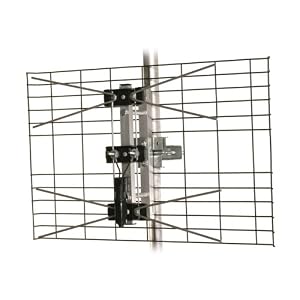
This style works well
5130Z14AYGL._SY300_.jpg

and most of the DIY antennas mimic this

If you are going to run multiple TVs I would recommend an amplifier. The cable company put one of these in front of an 8 way splitter.
 
Last edited:

Stuart in MN

Well-known member
Joined
Sep 8, 2005
Messages
23,065
Location
Minneapolis
The bigger the better for a 60 mile range. All you need to do is point towards the Twin Cities.

You can probably pick up the stations in Austin and Rochester as well. Ch. 5 in Minneapolis has several sub-channels as does Channel 2 (PBS), both have some good shows.

Check on Antennaweb or one of the other sources to make sure which channels are broadcast in UHF and which are VHF - before the big switchover most digital channels were in the UHF band but since then some of them switched back to VHF. That will determine if you need both types of antennas.
 

Tarheelgarage

Well-known member
Joined
Dec 14, 2008
Messages
3,865
Location
NC
I've never had cable tv; a waste of precious time.

My current set up:

$15 TV from Goodwill; tube is going bad, everyone has green skin....:lol_hitti
$10 analog to convertor box
$3 set of rabbit ears from Goodwill
 

yuk

Well-known member
Joined
Nov 18, 2012
Messages
142
Location
Living in quiet rural Missouri.
if you are looking for a long distance directional, the AntennasDirect 91XG works pretty good.
i also use a channelmaster amp on mine.
all stations are north of me and the closest one is 30 miles away.
i keep anout 20 channels in my line up. there are about 10-15 more that i keep deleted due to lack of interest in their content.
 

tatra

Well-known member
Joined
Dec 2, 2007
Messages
4,785
Location
pirate contest city
any one got ibfo on what will work in canada and where to go for info on the net ?......live on the prairies in manitoba and at one time back in the day we could recieve north dakota staions....
 
To avoid these ads, REGISTER NOW!

bczygan

Well-known member
Joined
Nov 4, 2009
Messages
22,002
Location
DETROIT! Arsenal of Scrappers
To pick up the most channels, and the most distant channels, it is still true that a directional antenna mounted as high as possible with a rotator is the answer. Get the best quality Yagi that covers the VHF and UHF digital bands and mount it on the tallest mast (Guyed or un-guyed) that you can afford. Then mount a quality powered amplifier at the antenna. Use quality coax and connectors and splitters. Cap unused outputs.
You can use an omnidirectional antenna without a rotator, but less channels will be available. Not a problem in a metro area, but a rotator may still be a good idea if stations are in different directions.
 

theoldwizard1

Well-known member
Joined
Feb 22, 2011
Messages
43,127
Location
SE MI
... Get the best quality Yagi that covers the VHF and UHF digital bands ...

VHF died with "analog" broadcast TV (NTSC). Digital broadcast TV (ATSC) is all UHF which is why you no longer need antennas with long elements.

Yagi design antennas work well. Note how short the elements are.
SHD9095_medlrg.jpg
 

blindbug

Well-known member
Joined
Mar 5, 2013
Messages
119
Location
Louisville, KY
I ditched cable over 2 years ago and got an over-the-air digital antenna and built a Home Theater PC. I use this (http://www.amazon.com/dp/B000EHUE7I/?tag=atomicindus08-20) Antenna Direct DB2 antenna and this (http://www.amazon.com/dp/B003B99KDK/?tag=atomicindus08-20) 8-way Coaxial Amplifier. In total, I spent just over $650, including all the cable I cut myself, the PVC antenna mount, the amplifier, antenna and HTPC. Saving myself $60 a month in cable bills, I've paid for it 2 times over already. If you just go with the antenna and amplifier, it'll pay for itself in 3 months... with just the antenna, it'll pay for itself in 2.

I now use Netflix ($8 a month for streaming) and the online websites. For instance, during March Madness, I could watch ANY of the games live using the March Madness Live website. For 'Premium' shows, I actually download them. Add Hulu and/or Amazon Instant Video (free if you pay for an Amazon Prime account) and there isn't much you are missing. With the Home Theater PC, I added coaxial in, so we actually record shows using Windows Media Center (anything that comes over the air, which is CBS / NBC / FOX / ABC... though I get about 30 channels in total).

Also, the BIGGEST issue with switching to OTA antenna from cable is typically sports. Not all sports come on the big 4 stations above, so if you watch tons of ESPN, antenna is probably not your thing.
 
Last edited:

Glenn M.

Well-known member
Joined
Aug 8, 2012
Messages
3,180
Location
VA/ SWFL
Great thread! I don't have cable available in my rural area, don't want to spend the $$ for satellite when I watch precious little TV anyway. I'm still on rabbit ears, but only get a few stations. Will try out some of the tricks I've seen here!
Thanks for the info!
Glenn M.
 

elav

Well-known member
Joined
Nov 12, 2008
Messages
122
Incorrect. There are still stations using the VHF broadcast band.

While all stations were suppose to switch to UHF, this statement above is correct. NBC remained VHF in my area. Plus you can use the antenna for FM radio stations too...
 

theoldwizard1

Well-known member
Joined
Feb 22, 2011
Messages
43,127
Location
SE MI
Incorrect. There are still stations using the VHF broadcast band.

I stand corrected !

The old low band VHF is still allowed, but not often used. Digital broadcasting seems to work better on high band VHF and UHF. Many/most/al (?) HDTV antennas are designed for UHF and will not pick the low band VHF well.
 

frozen_bohemian

Well-known member
Joined
Dec 12, 2007
Messages
77
I have also ditched the dish service I had at the lake place 160 miles north of Minneapolis. I assumed in addition to a digital antenna I would need a digital converter box for my 15 year old tv. Is that correct?
 

elav

Well-known member
Joined
Nov 12, 2008
Messages
122
I have also ditched the dish service I had at the lake place 160 miles north of Minneapolis. I assumed in addition to a digital antenna I would need a digital converter box for my 15 year old tv. Is that correct?

Just need a regular antenna to get the signal but sounds like you will need a digital converter box (but with TVs as low as $200, might want to consider a new flatscreen with built-in digital receiver).
 

bczygan

Well-known member
Joined
Nov 4, 2009
Messages
22,002
Location
DETROIT! Arsenal of Scrappers
Just need a regular antenna to get the signal but sounds like you will need a digital converter box (but with TVs as low as $200, might want to consider a new flatscreen with built-in digital receiver).

If you get a converter box, consider one with analog pass through. Not all stations were required to go digital. Small, low power stations, especially ones in metro areas and colleges etc., were exempt, and still broadcast analog. A pass through receiver allows you to switch back and forth more easily.

And the old rule of thumb that Hams use is "The more aluminum you can use, and the higher you can get it in the air, the better." Theoretically, you could use multiple long element Yagi's.
You get more gain (stronger signal) from a better antenna setup, than you do from amplifiers. But it is important to find out where your stations of interest are. If you live in a major metro area with plenty of choices, it is kind of pointless to try to pull in other stations from 50 miles away. But if you are way out in the country, you may need state of the art antennas....or just get stuff off the net.

Bill (AA8MF)
 
Last edited:

brownbagg

Well-known member
Joined
Mar 20, 2006
Messages
5,208
it be nice to get rid of cable or satelitte but i need my internet and my history channel, duck dyansty, how its made, and hbo
 

Highbeam

Well-known member
Joined
Feb 15, 2011
Messages
2,292
Location
Mt Rainier foothills, WA
I made my antenna with left over romex and a chunk of 2x6. It hangs in the attic and gives me all of the local channels and several that I don't want from over 40 miles away. Easy peasy. Most UHF antennas also pick up high band vhf which is important since it is TRUE that the digital transition did NOT mean the end of VHF. Low band VHF requires a huge antenna and luckily, none of my desired stations stayed on low band VHF.

I'll be watching jeapordy here in 25 minutes using my homemade antenna in the attic during our typical rainstorm.

Oh and when you get a show broadcast OTA in HD you get real HD and not the compressed **** that cable sells as HD. With a nice HD TV and OTA antenna, television has never looked as good. Alex Trebec wears lots of makeup.
 

theoldwizard1

Well-known member
Joined
Feb 22, 2011
Messages
43,127
Location
SE MI
... since it is TRUE that the digital transition did NOT mean the end of VHF. Low band VHF requires a huge antenna ...

The low band of VHF seems to be dieing on it own. I'm surprised that the FCC has not already reclaimed it. Probably no one wants it because of antenna size and low bandwidth capabilities.
 

djd99

Well-known member
Joined
May 4, 2009
Messages
1,006
Location
Owosso,Michigan
VHF died with "analog" broadcast TV (NTSC). Digital broadcast TV (ATSC) is all UHF which is why you no longer need antennas with long elements.

Yagi design antennas work well. Note how short the elements are.
SHD9095_medlrg.jpg


I bought a fm antenna from radio shack for the stereo receiver so I put a splitter on that and scanned channels. To my surprise it worked very well.
 

darcyh

Well-known member
Joined
Aug 27, 2010
Messages
185
Location
London Canada
As someone that's been playing with TV (and FM) antennas for decades I have learned like everything else there's no cheating the laws of physics.

In almost every case the more elements and more directional the antenna is the better the results you will achieve with distant stations.

In most cases 60 miles is about the best you can do for RELIABLE 100 % reception of a station. Of course it depends somewhat on your location.

Even at 30 miles OTA reception can be affected by atmospheric conditions.

Well made antennas are expensive. Make sure it's properly grounded.

Good Luck
 
To avoid these ads, REGISTER NOW!
Top Bottom