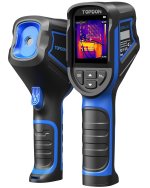
What's your use case? If you're doing basic shop or house stuff, probably anything will work. If you're doing real engineering or inspection, and need to put images into reports, etc, you need something better.
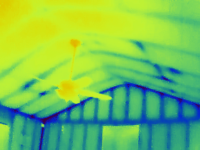
The cheap stuff might not be as accurate, but the sensitivity is good. If it doesn't matter whether it tells you something is 77 when it's actually 80, they're fine. This is more than good enough for finding building insulation leaks, in floor heating, finding the hot spot on a circuit board, checking if radiators are flowing properly, and other such tasks. The cheap ones also don't save thermographic (the actual temperature of each pixel, not just a color scaled on the hot spot) data, they're just taking a screenshot. again, that's fine if you're trying to make sure you don't drill a hole in your in floor heat.
Stepping up to the fancy stuff gets more reliable accuracy, and the ability to capture images that contain the thermographic data. Some of the more expensive cheap stuff, like many of the topdon cameras, expose the raw data if you hook the camera up to a computer and use their software. (I have no idea if it's possible to use other software with the things.)
My uses are all in the "where's the (hot|cold) spot?" category, so I bought a super cheap one. It's branded 'Mileseey', but there are a bunch of identical looking, and identical spec'd, units on amazon. It was ~$100 at christmas 2024. It's so low end it doesn't have a removable memory card, if you want to get images off, you have to hook it up to a computer. It's also got a usb-c connector, but isn't actually usb-c, so you have to use a usb-a to usb-c cable, not just to charge, but for data. (this annoys the hell of me. It doesn't cost anything to do it right.)