Although Park does make many of their own tools, a good number of the generic tools are sourced from other manufacturers and can be obtained for less money (or there are better options available). For example, Bondhus has made many of Park's hex key tools, and the Bondhus versions are cheaper and otherwise identical. Park is very open about this; the tools are described on their site as being from Bondhus. Park often offers two levels of product for some purposes; buy the best one and you won't be sorry.
Some of Park's tools are just not as good as those offered by other companies, and it's important to look into specific tool reviews and user feedback. Check out
BikeForums and
RoadBikeReview for more information on specific tools.
The only Snap-On tools in my bike tool box are 14mm and 15mm thin-wall flank drive 3/8" drive sockets I bought in the 1980s for crank arm bolts. Snap-On and SK were the only sockets that were suitable for that use back then.
The most expensive bike tools are for wheel building and work on frames, which you probably don't need (yet). Many bike tools are component-specific because of the rapid changes in componentry (although most modern components cannot be repaired or rebuilt, only replaced).
Pedro's tools vary in quality; the best are superb and often better than an equivalent Park tool, IMHO. But they source many items from Asia, and they can change frequently. Pedro's brake & cable tools, and large hex keys, are excellent and have a place in my toolbox. Park has even copied some of Pedro's designs!
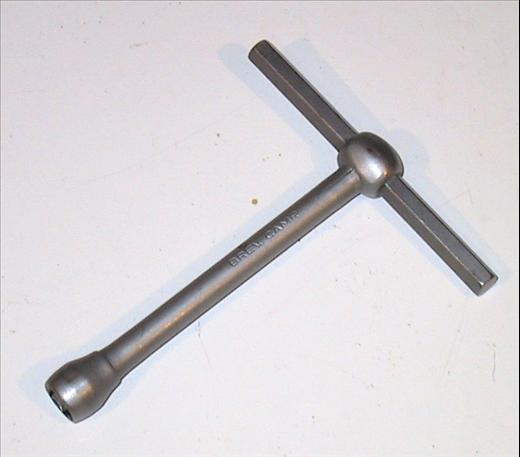
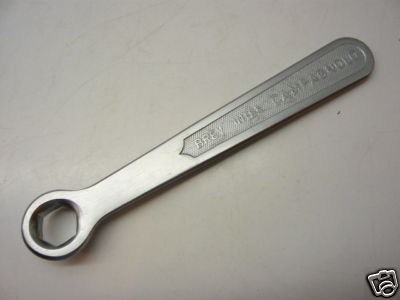
Campagnolo tools are in a class by themselves; they're very highly regarded by bike mechanics, for very good reason. For work on classic top-end components, nothing is better; many eclipse Park tools (in quality and price!). A Campy toolset eclipses Snap-On for tool worship and is the sign of a top-quality shop.
The generic tools would be various lengths of metric hex keys (most modern component fittings are metric hex), a 1/4" drive 6-point metric socket set, quality flat and phillips screwdrivers, metric open/box wrenches, a Dremel for external cable housing cutting and smoothing, and a soft-face dead-blow hammer. For some uses, a 1/4" drive torque wrench might be appropriate (especially if you're working on a bike made from carbon fiber).
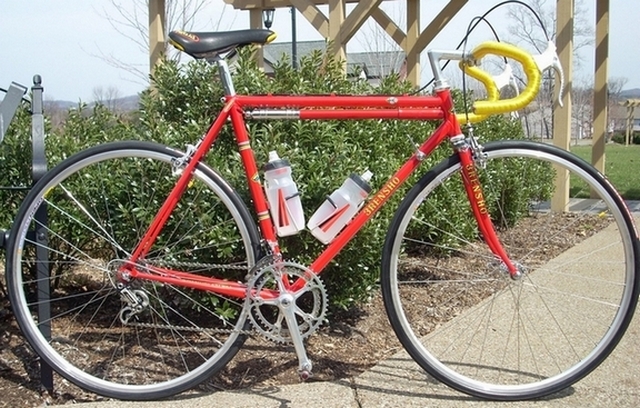
I have a very rare 1984 3Rensho road bike, with mostly Campy NR/SR components:


 but these are specialty tools, but truely are bling bling