To avoid these ads, REGISTER NOW!

biscuit joiner? Yea or Nay?

HoosierBuddy

Well-known member
Joined
May 9, 2006
Messages
2,918
Location
Southern Indiana
Hey guys,

My youngest son is working away on his 4H woodworking project which is a set of turned chess pieces and a box to keep them in (he did the board as last year's project).

The box is going to be walnut, about 14" X 18" X 4". The plan is to make it out of 1/2" stock. The bottom and top will be glued up out of 5" wide boards.

Question for anyone that has experience with glued up panels in general or biscuit joiners in particular: Would it be worth it to buy a biscuit joiner for this project just use on the edges of the panels?

I was all hot to buy one and then when we were watching "how to" videos on Youtube, one of the reviewers said that he didn't feel they were at all necessary for edge gluing and doubted they added any strength.

Thoughts?

Phil
 
To avoid these ads, REGISTER NOW!

Cahark

Well-known member
Joined
Sep 28, 2016
Messages
340
Location
Dayton,Oh
I don't know that they add a ton of strength. They probably add a little bit.
I usually use biscuits to aid in alignment on a large glue up. It definitely helps keep all the boards flush.
On the smaller things I work on, I just glue them up and use a few clamps to help keep the boards aligned. So far I haven't had any joints pull apart yet


Sent from my iPhone using Tapatalk
 

lilredex

Well-known member
Joined
Apr 29, 2006
Messages
5,956
Location
Toronto
I would not use them on 1/2" short stock, maybe on longer 3/4" and up just to keep them aligned, while gluing up.

Don't think they add anything strengthwise, I don't have one.

Anytime I need help with alignment, I use a floating spline joint. Easily done with a router.
 
Last edited:

Roju1985

Well-known member
Joined
May 23, 2013
Messages
138
Most people will tell you when doing edge glue ups if everything is properly glued and clamped the glue line will be as strong as the wood itself. Some people like to use biscuits to aid in alignment of the glue up.
 

LEVE

Well-known member
Joined
Jun 23, 2008
Messages
1,727
Location
On the Willapa
I have had one for three years. I have yet to use it. I keep kicking myself and want to try it out... someday, just not today.
 

theoldwizard1

Well-known member
Joined
Feb 22, 2011
Messages
43,114
Location
SE MI
The box is going to be walnut, about 14" X 18" X 4". The plan is to make it out of 1/2" stock. The bottom and top will be glued up out of 5" wide boards.

I usually use biscuits to aid in alignment on a large glue up. It definitely helps keep all the boards flush. On the smaller things I work on, I just glue them up and use a few clamps to help keep the boards aligned. So far I haven't had any joints pull apart yet.

Depending on the wood and what type of finish you put on it, narrower pieces (<5") would have less chance of warping. Make sure you alternate the "crown" on each board in your glue up.
 

gungatim

Well-known member
Joined
Jan 8, 2013
Messages
8,101
Location
west mich
I wouldn't waste my time with a biscuit joiner, they ad zero strength to that type of joint, they only aid in alignment. if you have some quick grip clamps or other means just use those to align the boards for the glue-up. I rarely use my biscuit joiner anymore, and I have no problem with large and small glue-ups wthout them...
 

4Kings

Well-known member
Joined
Nov 2, 2010
Messages
263
Location
Southwest Missouri
I've had one for over 20 years and use it all the time in 3/4"+ stock for alignment. I wouldn't use it for 1/2" stock because the biscuits swell and that "bump" will be noticeable in your glued up panel
 

rsanter

Well-known member
Joined
Dec 22, 2007
Messages
18,493
Location
visalia ca
I have one and use it. Great tool.
For this one time use I think if I was you, I would cut blind slots in the pieces and then cut an insert to fit. This will give the alignment and increased glue area you would be looking for. This can be done with a router table or on the table saw.

The other way would be to cut toung and groove in the pieces and glue them up. Same thing, you get the alignment and the increased glue area.

Bob
 

terry603

Well-known member
Joined
Sep 17, 2011
Messages
377
I have borrowed one 2-3 times in the past
I have decided I don't like them

they do not help with alignment as much as you would think
 

MoonRise

Well-known member
Joined
Nov 5, 2010
Messages
4,028
Location
NJ
+4 (or whatever the current count is :D ) on not using biscuits on 1/2" thick stock.

On 3/4" stock, to help with alignment, sure. Or for quick-n-dirty T-joints without cutting a dado or groove, sure. Or alignment and strength on 'big enough' stock on mitered corners, sure.

Just do 'decent' prep work on glue the board edges together with 'decent' woodworker's glue (like TiteBond).

To help with alignment, possible run some "cauls" across the glue-up.

And/or, just glue up two boards at a time, let those dry, then glue up two more, let dry, and then glue up two of the 2x glue-ups to make a 4x panel. Repeat as needed until you have the width you need.

Or you can do a 'housed' (hidden) tongue and groove, or floating spline/tenon, or similar.
 

MarkG

Well-known member
Joined
May 23, 2012
Messages
1,219
Location
Elgin, IL
I use mine a lot, but not for panal glue-ups. If your boards are prepped right, the joints won't need any extra strength and you'll still need to whack boards into alignment a little anyway. A nice fitting glue up will be plenty strong on it's own----the key words here are 'nice fitting'.

The places a biscuit joiner is useful are corner joints in plywood cases----that's my primary use. You can build a strong set of cabinet boxes with a biscuit joiner and proper glue-up and clamping. Almost all my shop cabinets/jigs, etc. are built this way.
 

theoldwizard1

Well-known member
Joined
Feb 22, 2011
Messages
43,114
Location
SE MI
I use mine a lot, but not for panal glue-ups. If your boards are prepped right, the joints won't need any extra strength and you'll still need to whack boards into alignment a little anyway. A nice fitting glue up will be plenty strong on it's own----the key words here are 'nice fitting'.
For "high quality" glued up panels, the best way to get a good fit up is with a jointer.
 

gungatim

Well-known member
Joined
Jan 8, 2013
Messages
8,101
Location
west mich
For "high quality" glued up panels, the best way to get a good fit up is with a jointer.

I agree, but if you don't have one of those, a good GLR (glue line rip) blade on a quality cabinet saw does a great job as well....or go old school with a properly tuned hand plane...

but honestly most of my glue ups come straight off the Unisaw...
 

theoldwizard1

Well-known member
Joined
Feb 22, 2011
Messages
43,114
Location
SE MI
I have one and use it. Great tool.
For this one time use I think if I was you, I would cut blind slots in the pieces and then cut an insert to fit. This will give the alignment and increased glue area you would be looking for. This can be done with a router table or on the table saw.

:thumbup:

Good suggestion, but you need a vert thin rim blade for your table saw.

What is the best way to get the grove in the center using either method ? (Other than running each piece through twice, once in each direction, which means that the spline might be loose.)
 

ford33

Well-known member
Joined
Feb 26, 2011
Messages
2,118
Location
Chicago, IL. USA
I have a biscuit joiner and like it. It does add strength and help align joints. I would not use it on your small box project. It is not necessary. Just prepare the joints correctly and use a quality wood glue.
 

PelicanPines

ALLIANCE MEMBER
Joined
Apr 30, 2014
Messages
38,106
Location
New Jersey, USA, Earth, My own reality
I use a biscuit jointer for hidden fastners on outdoor decking... the ss fastners use the biscuit slot... you screw the fastner down to the joist then slip the next plank with the slot onto the fastner then move onto the next board.

That is all I use the biscuit jointer for now...

I'm a dowel guy...

Nuff said.
 

gungatim

Well-known member
Joined
Jan 8, 2013
Messages
8,101
Location
west mich
:thumbup:

Good suggestion, but you need a vert thin rim blade for your table saw.

What is the best way to get the grove in the center using either method ? (Other than running each piece through twice, once in each direction, which means that the spline might be loose.)

on the table saw I would use a dado blade set to 1/4". on the router table you can use a 1/4" bit. either way you're going to want to run it twice to verify center.

they make matched sets of tongue and groove router bits that, when setup correctly, will give you a matched well fitting joint.

neither of which is required for a proper glue-up, especially a box, but if you just want the kid to learn, those are options.

you can also cut the tongue and groove with a regular blade in a couple passes.

they also make drawerlock bits for the router table that are useful for building boxes--that is what I generally use for cabinet drawers.

the fun part of woodworking is there are a dozen ways to do the same thing...just don't get overly focused on making something as strong as it possibly can be. proper fitting alphatic glued joints are plenty strong and how most furniture has been made forever...

if you overcomplicate it, the kid may lose interest...
 
To avoid these ads, REGISTER NOW!

ez-duzit

Well-known member
Joined
Jun 24, 2013
Messages
5,094
Location
Marina del Rey
This is the correct joint for your son's project, a box or finger joint.

50322-06-1000.jpg
 
OP
H

HoosierBuddy

Well-known member
Joined
May 9, 2006
Messages
2,918
Location
Southern Indiana
This is the correct joint for your son's project, a box or finger joint.


Yes. Agree...but what I was questioning was the glue up for the top and bottom. It will take 3 boards glued edge to edge to make a piece wide enough for the top and bottom of the box.

Phil

By the way...attached will show his skill level. I think it's damned impressive for a 15 year old.
 

Attachments

  • chess1.JPG
    chess1.JPG
    105 KB · Views: 71
  • chess2.JPG
    chess2.JPG
    96.3 KB · Views: 65
Last edited:

Fcvapor05

Well-known member
Joined
May 4, 2014
Messages
1,079
That's quite a nice looking set. I see he was able to cut them off accurately in the lathe ha ha.

How did you end up doing that?

Back on topic- I'll catch flak for this probably, but in my opinion there's nothing a biscuit joint does that a quality doweling tool doesn't do as well or better, and a really nice doweling setup is a lot cheaper than a biscuit joiner is.
 

McFarmer

Well-known member
Joined
Aug 29, 2009
Messages
2,139
I would say no for that project.

They can show through on thinner wood. The biscuit swells and raises the wood.
 
OP
H

HoosierBuddy

Well-known member
Joined
May 9, 2006
Messages
2,918
Location
Southern Indiana
That's quite a nice looking set. I see he was able to cut them off accurately in the lathe ha ha.

How did you end up doing that?

Back on topic- I'll catch flak for this probably, but in my opinion there's nothing a biscuit joint does that a quality doweling tool doesn't do as well or better, and a really nice doweling setup is a lot cheaper than a biscuit joiner is.

Based on the advice here, which I passed along to him, he went to "single size" pieces rather than using a long piece and trying to get 3 or more pawns out of a single dowel. Although that (in theory) increased his wastage, prior to that he was running about a 80% scrap rate. Once he started working with shorter pieces and parting them off after they were complete (Carefully) he began to have success. He finished the basswood pieces first, probably making 20 to 22 pieces to get 16 good ones. I don't think he's had any scrap on the walnut yet.

phil
 

Attachments

  • chess3.JPG
    chess3.JPG
    135.7 KB · Views: 65

The Cobbler

Super Moderator
Staff member
Joined
Oct 24, 2013
Messages
25,836
Location
Niagara Region, Ontario, Canada
biscuit joiners don't add strength per sai, it aids in flushing the joint .
I use mine in custom wide casing to join the head pc to the side pieces and keep them f;ush ( think 1x6 )
also use it to help secure base to casing if there's nothing to nail the base to because of the wide casing ( custom wide trim again)
Also use it when installing cam locks onto cabinets for the cam to lock into the cut out( no biscuit)
not s tool I'd run out to buy just to have, but I do have occasion to use it.
 
Last edited:

joe--h

Well-known member
Joined
Jan 30, 2013
Messages
536
I have one, bought it about 2004 I think.

Finally used it last year.

Joe H
 

Gizmosity

Well-known member
Joined
Jun 17, 2014
Messages
376
Location
SW Wisconsin
I'll add to the pile...

Strength? Nothing measurable in edge gluing hardwood.

Alignment? Depends on the tool. I've had several that were anti-alignment aids. One was a Porter Cable 555. Absolutely worthless. I tried two Dewalts, neither of which cut a groove parallel to the fence and returned both of them. I had great success with an old borrowed Virotex and a Lamello.

I managed for 15 years without one and recently bought a Makita which I've found to be dead accurate. I really only use it to cut slots on the inside of table skirts to accept Z-clip fasteners. I did use it once for some down and dirty face frames.

Fair warning for biscuit users gluing up panels. Eventually you will either cut into one so that its visible on the end grain or plane down into them, or when raising a panel have one show. I've experienced all three scenarios. If a glue up requires alignment aids, I re-evaluate my glue up method.

If I was making a 4" tall box, I'd miter the corners and add 3 1/8" keys with a contrasting wood. I use a Rip blade so the slots are flat bottomed. As mentioned, finger joints are a nice choice too, although with a contrasting wood, they can look 'busy'. I like the slight contrast of the end grain on same species sides on finger joints.

Kudos to you and your son. Nice looking work.
 

rsanter

Well-known member
Joined
Dec 22, 2007
Messages
18,493
Location
visalia ca
:thumbup:

Good suggestion, but you need a vert thin rim blade for your table saw.

What is the best way to get the grove in the center using either method ? (Other than running each piece through twice, once in each direction, which means that the spline might be loose.)

Does not have to be in the center.
Just be sure to set the pieces orintied the way you want them.
Then draw some squiggly lines across the faces.
When you run through have the squiggle lines at the fence every time.
When you glue together be sure all the squiggly lines are all up.
The faces will be aligned that way

Bob
 

MarkG

Well-known member
Joined
May 23, 2012
Messages
1,219
Location
Elgin, IL
For "high quality" glued up panels, the best way to get a good fit up is with a jointer.

That's what I do. Either that or my jointer plane, which is even better (for those who know how to use one and use it right). I was just referring to keeping a couple boards at a corner in alignment with biscuits-----plywood case making, stuff like that. There's no question they add strength to plywood case work.
 
Last edited:

buildyourown

Well-known member
Joined
Jan 8, 2010
Messages
185
Nay. It was on my list forever and then I did some research. Ended up just getting and making a couple dowel jigs. Stronger and fast
 

MarkG

Well-known member
Joined
May 23, 2012
Messages
1,219
Location
Elgin, IL
If you want to read what an actual authority on the subject has to say about different joints and their relative stengths, check out Fine Woodworking magazine #111, April '95, where they do an in-depth, scientific test of various joints, including biscuit. Biscuit joints with 2 and 3 biscuits had higher strengths than mortise and tenon and loose tenon joints.

There's a lot more to it than just 'strength'---how fast a joint fails, if loaded to that degree, may or may not be important to your project too. Unless you are abusing your projects, or over-loading them, or just designing them wrong, there are probably other things more important than sheer 'maximum strength' that come into play, especially on projects that don't see much, if any, big loads or loads well within reason.

In my basic shop projects, the ease, accuracy, and strength added by plate joinery wins hands-down every time.
 

Socket Pounder

Well-known member
Joined
Feb 7, 2017
Messages
329
Location
Santa Clarita
This idea that biscuits don't add strength is an internet myth. I have built cabinets with **** joints, biscuits and glue then later tried to break those joints apart. Try it then tell me they don't add any strength. You will delaminate the plywood before breaking the joint. And I've built plenty of light duty shelves over the decades that are holding up just fine. That said, they don't do anything that you can't do another way. You can use a doweling jig which works great until the joints fall apart because dowels shrink and will fail about 75% of the time after a few decades. You can also use splines, pocket hole screws, or traditional joinery.
 

muddywater

Member
Joined
Feb 3, 2012
Messages
7
Location
East TN
My take:

They are fast..with practice.

Alignment is key benefit

They definitely add strength to **** joints

I primarily use them with sheet goods.

They still need clamps.

Pocket screws are another alternative...no clamping to dry.

I have used probably 100,000 biscuits.
 

ez-duzit

Well-known member
Joined
Jun 24, 2013
Messages
5,094
Location
Marina del Rey
mw--indeed often biscuits require heavy clamping pressure to overcome the interference fit of some biscuits. Pocket screws cheapen the work and end product; almost seems like vandalism to me. :)
 

myredracer

Well-known member
Joined
Nov 1, 2015
Messages
557
Location
Langley, BC
I took woodworking 11 & 12 in high school. Best courses I've ever taken (incl. 2 college degrees). One of the first things that was taught to us is the strength of glued joints. We all had to edge glue pieces of wood together with ordinary carpenter's glue and when dry, try and break the joints apart. In every single case the wood broke near the joint but never the actual joint. The key is wiping glue evenly on each piece then clamping snugly together and letting it fully dry. Another important thing was the use of ordinary wax paper when clamping pieces so things won't stick to the glue you don't want to. Thank you Mr. Halmshaw for teaching some of the most basic things about woodworking! Every time for the past nearly 1/2 century I glue wood together, I think of his lessons... Every high school oughta have woodworking, metalworking and auto shop classes!

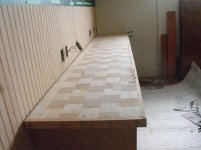
The photo is a 2'x12' counter top under an overhead bookshelf in my den. It's made from 3"x3" pieces of maple edge glued. The maple was milled from a tree on our property and air-dried for 10-15 years and joints have opened up.

I have a biscuit joiner and use it where I want tighter alignment and the best possible secure joint. I would say it's not a must-have tool.
 

Attachments

  • 2050_1231Craigslist0278.jpg
    2050_1231Craigslist0278.jpg
    146.3 KB · Views: 27

dave*99

Well-known member
Joined
May 5, 2009
Messages
4,255
Location
Coastal NJ
As others have said.... I've had a Porter Cable biscuit joiner for over 20 years. I've used it quite a bit and it makes strong joints.

But also as others have said, you don't need them on your project. Glue is sufficient for edge to edge joinery of 1/2" flat stock.
 
To avoid these ads, REGISTER NOW!
Top Bottom