To avoid these ads, REGISTER NOW!

Black Hat Shop Works

aggierailroad

Well-known member
Joined
Jan 8, 2012
Messages
581
Location
Houston, TX
Decided to consolidate everything from here on out to make it easier on me for posting purposes. I know, very selfish..

Fist, Black Hat comes from the pseudo name for my micro-brewery setup, my other major hobby that makes every other hobby easier :beer: I wore a black cowboy hat at my wedding, a 100X Stetson, my pride and joy. The name kind of stuck and here we are.

On to the fun stuff:

This weekend I finally got around to making a router sled that will allow you to "plane" timbers, tabletops, slabs, you name it. It takes a router with a decent amount of horsepower, and ideally a large surface planing (bottom cleaning) bit like this. I only had a 3/4" rabbeting bit that worked fine, besides, my 1.5 HP router would struggle with anything larger than that.

Anyways, another reason I got started on this was because I was given a large pecan slab that had more waves than Hawaii. I think it was roughed out with one of those chainsaw sawmills by a friend twice removed.

IMG_0685_zps156dc81e.jpg


IMG_0695_zps45042063.jpg


Other side:
IMG_0696_zps14b13ad1.jpg


As you can see, it was pretty far out of "flat". I saw one of these jigs a few weeks ago, and having recently acquired some uni-strut and those nice fiberglass/resin C-Channel beams, I had a golden opportunity on my hands.

I just happened to have a piece of particle board (ideal because it is flat) a few inches longer than the wings on this slab. I first used the circular saw to plunge cut out the rough opening. A jig saw finished up the cross cuts.

IMG_0700_zps0c8b5b37.jpg


Attach the beams (can be 1x4s or higher) using some screws and glue. The point is to minimize deflection to not have a parabolic slab! Those C-channel beams are incredibly rigid and light, perfect for this application.

IMG_0701_zpsefa5a7b4.jpg


Add the end caps to contain the jig from sliding off of your rails. I let the protrude on both the top and bottom to contain the router as well.

Once you get it all built, chuck up a bit and clean up your hole using the limits of the channel as a guide. Make several passes as needed to avoid tearout and overloading your router.

Voila!

IMG_0702_zps9901257c.jpg


Now, you need to get your rails parallel to each other. First step is to ensure that they have flat edges, use a jointer if you have one to true up your boards, or some straight steel/aluminum stock. I started by lightly clamping them to the table, which is flat (enough) for this purpose.

Then tie/clamp some heavy string or wire in an X across the rails. Elevate one leg of the X by one string diameter by wrapping a tail around and underneath.

IMG_0697_zps8a1fe6a2.jpg


It should look like this:

IMG_0698_zpse8702c5c.jpg


Now, adjust your rails using shims until the string just "kiss" each other in the middle.

IMG_0699_zps0ae5926e.jpg


Boom, now your straight rails are parallel with each other as well. Set your slab on the table and find which side has the most points of contact, if it's cupped, you want the cup facing down, or else you might just replane the shape back into it. I didn't need to secure the slab because it was just so darn heavy and never moved on me. :dunno:

IF you don't have much to flatten, find the low point and set your bit to that depth plus a hair. I stuck to a max of 1/8-3/16 of depth per pass. It took 3 passes on the "top" side for me..

IMG_0703_zps7ab66a5f.jpg


Here's a skim off the top (er, bottom) so that I could get it flat enough to concentrate on the top.

If you are pushing the router away from you, cut left to right, the rotation of the bit will pull it into the wood and help with control. Make a pass, move the jig up about half a diameter, and repeat. 100x... :rocker:

You'll eventually get something like this going:

IMG_0705_zpsfcb6078a.jpg


IMG_0707_zpse2046cb1.jpg


Clean up the "milling" marks with your restored 1917 Stanley #5 plane..

IMG_0708_zps9430c2a6.jpg


So that you can take off your bulky ear protection and mask and make shavings, instead of sawdust...

IMG_0709_zps6475fd00.jpg


Flip it over and repeat. Here's a shot showing just how far out the top was. It was curled in both directions.

IMG_0713_zpseaab2c84.jpg


Caution, this process can make some sawdust... About 5 gallons worth, tightly packed.

IMG_0714_zps904d2c16.jpg


But it does give excellent results:

IMG_0716_zpsbb39df20.jpg


The clamp was just gluing on a bit of tearout I had from the split.

Thanks for reading, there's always more to come. This technique isn't new, don't credit me with coming up with it. IF someone was to make a wavy cutting board, a small one of these would flatten one up in a hurry!:willy_nil
 
To avoid these ads, REGISTER NOW!

DoghouseForge

Well-known member
Joined
May 11, 2013
Messages
374
Location
Lakeland, Fl
OK,

This is rad!

Questions:

Do you have to tie the strings to the same place on each rail end. It looks like yours are in different places so Im confused as to how you get the parallel if they arnt equal distances... I guess your only trying to find a level up/down plane not really a equal distance apart. The jig measures that, so I think i just answered my own question. :headscrat

How does the router not push up off of the jig frame with the existing contures in the wood? is it just your weight pushing down or does the shallow depth keep that from happening?

Its sad, I have 3 routers and a router table but ive never used one. I do most of the relief work in my pieces by removing material with the depth and location of the table saw blade. And my edgework with the sander... Im such a cave man. Guess that comes from the "just hit it till its there" mind set.

I will educate myself on the router, its time... like you mentioned ive seen guys use jigs like this to even up cutting boards. especially when they are making large ones or counter tops with lots of different height scraps. Saves the effort in trimming them all the same first.

Good show man and thanks for the details...welcome to the " hours to write up and photo embed a post" club. :thumbup:

JP
 

coma13

Well-known member
Joined
Nov 5, 2012
Messages
247
Looking good. One thing though, there is no reason that your crossed strings would be any indicator of parallelism, unless I'm totally missing something. A single point of contact can be created at any angle between the two strings.
 
OP
A

aggierailroad

Well-known member
Joined
Jan 8, 2012
Messages
581
Location
Houston, TX
OK,

This is rad!

Questions:

Do you have to tie the strings to the same place on each rail end. It looks like yours are in different places so Im confused as to how you get the parallel if they arnt equal distances... I guess your only trying to find a level up/down plane not really a equal distance apart. The jig measures that, so I think i just answered my own question. :headscrat

No, I think I wasn't clear enough about the strings. You aren't worried about the rails being parallel to each other (you are, but just use a tape measure to get them close) but being parallel in the same plane (like you said). You did answer your own question!

How does the router not push up off of the jig frame with the existing contures in the wood? is it just your weight pushing down or does the shallow depth keep that from happening?

It doesn't push up because it's also turned on when you are using it (and cutting) :thumbup: But really, the weight keeps it in place just fine, like using a router normally. I barely applied any down force at all. I also recommend waxing the base of your router, because mine started to chatter a bit and I would have to stop and clean it.

Its sad, I have 3 routers and a router table but ive never used one. I do most of the relief work in my pieces by removing material with the depth and location of the table saw blade. And my edgework with the sander... Im such a cave man. Guess that comes from the "just hit it till its there" mind set.

If you were to make a standard size of table, you could make an MDF jig and use a flush trim router bit to really knock out the final sizing of your boards quickly. Tearout could be an issue with all of your changing grain orientations, but a good bit and good speed will prevail, or use a backer board. Eh, stick with the saw. :dunno:

I will educate myself on the router, its time... like you mentioned ive seen guys use jigs like this to even up cutting boards. especially when they are making large ones or counter tops with lots of different height scraps. Saves the effort in trimming them all the same first.

Good show man and thanks for the details...welcome to the " hours to write up and photo embed a post" club. :thumbup:

Thanks man.

JP

subscribed

Looking good. One thing though, there is no reason that your crossed strings would be any indicator of parallelism, unless I'm totally missing something. A single point of contact can be created at any angle between the two strings.

You bet it can, but when they touch, and with the "string spacer" put in, they will also be parallel. It will mean that the bottom left point will be in plane with the top right one, and vice versa. Since they are straight beams, every point inbetween will be in plane as well.

^ I assumed the strings were the same length.

String length doesn't matter. I guess I should have said that the bars will be in plane, rather than parallel, because people are thinking parallel like railroad tracks, in stead of the "Z" axis (vertical).

Sent from my iPhone using Tapatalk

Thanks for the thoughts and kind words. Happy to explain further if needed.
 
OP
A

aggierailroad

Well-known member
Joined
Jan 8, 2012
Messages
581
Location
Houston, TX
This weekend I was almost able to finish my "upcycled" unistrut shelving.

The material came from a refinery tear down. I only had to purchase some 3/16"x2" flat bar and 1/8"x2" flat for the end caps. I don't have any pics of the cutting/welding, but you'll get the idea.

First I used the Northern dry-cut saw to cut the standards (vertical pieces) and brackets to length. The standards are the same height as the IKEA cabinets I have in the corner.

Then, I cut the retaining tabs and all of the mounting tabs, and drilled two 5/16" holes for mounting.

Weld up the tabs to the bracket arms, carefully ensuring that the mounting side is perpendicular. I used a red welding magnet. :dunno:

Because they are zinc coated, I would use a flap wheel to cut into some fresh metal. Welding the zinc is a bear, and can cause "zinc headaches". I recommend good ventilation, a filtering mask, and the other usual welding PPE.

Lastly, paint them up and hang them. I used two 5/16"x2.75" lag bolts per standard. I'm thinking about adding a third. I also used one standard on every other stud, but made 7 just to account for sagging. I'm still probably going to add standards inbetween just because I don't want my nice hardwoods to warp.

IMG_0692_zps3a8a0472.jpg


IMG_0693_zps68ab4976.jpg


Oh, and don't start hanging brackets from the bottom like I did....

I used 1/4" spring nuts as retainers. I could hang from the brackets no problem.

I used 3/4" MDF as shelving because it was also free :) I know MDF will tend to sag over time, hence my extra 3 standards I can add, but the Sagulator tells me that I will have about .029" of deflection, which is just barely above perceivable for a 32" span. I'm OK with that.

I notched out the back of the MDF a little to fit around the bolts and standards a little bit. I've got one more rack to add, which is at a 16" depth to allow for the large storage totes to fit on it for longer term storage.

IMG_0694_zpsbd96db84.jpg


Oh yeah, if you don't have a long level like I do, use a straight board and hold the level against it to set your bracket heights.

Voila:

IMG_0715_zps20461b90.jpg


Hope this helps someone with storage ideas. I needed to get that **** off the floor so I can get a new, shiny air compressor.
 
OP
A

aggierailroad

Well-known member
Joined
Jan 8, 2012
Messages
581
Location
Houston, TX
So.... The pecan had more moisture in it than I thought... I had it on that table for about a week, came back out and noticed this:


The lesson here is that don't believe your friends when they say it's been dried, and two, put "stickers" under it to allow for air circulation. What happened was that the top dried out, shrinking the wood, while the bottom stayed wet (which it was noticeably damp), pulling it into a pringle shape.

The solution is to flip it over, and let it breath and dry out evenly. I'll paint the end grain with some poly or something to keep it from drying out faster than the rest.

Lastly, the top shelf brackets were completed, 16" length to accommodate the bigger sheet stuff I have. Almost killed myself loading the 10' sheets of 18ga. that high.

Crappy cell pics from this morning at 5am..


DoghouseForge

Well-known member
Joined
May 11, 2013
Messages
374
Location
Lakeland, Fl
Oh boy.... im affraid I would have thrown a temper tantrum like no other if id discovered all that hard work bowed up like that. Will flipping it over pull it back clise to even. Good ol' gravity doing the labor... or are you looking at basicly needing to half that thickness again to levrl it back out?

The shelves look great!

JP
 
OP
A

aggierailroad

Well-known member
Joined
Jan 8, 2012
Messages
581
Location
Houston, TX
Oh boy.... im affraid I would have thrown a temper tantrum like no other if id discovered all that hard work bowed up like that. Will flipping it over pull it back clise to even. Good ol' gravity doing the labor... or are you looking at basicly needing to half that thickness again to levrl it back out?

The shelves look great!

JP

Naaa, it'll flatten back out once the other side that was down dries. I don't know if you can see the spot, but it's a orangeish looking circle that's about 1/16" lower than the rest. I'll rig it all back up and take a finish pass on the top once I get my new router bits in and the wood is "totally" dry.

Definitely going to do a few of those butterfly ties on a some of the cracks. This is by no means nice lumber, just mainly an experiment.
 
OP
A

aggierailroad

Well-known member
Joined
Jan 8, 2012
Messages
581
Location
Houston, TX
Got an addition and thus another project in the shop.

It's a 113.2752 10" Craftsman table saw. 1HP motor, and only lacking the splitter attachment, which came as an add-on anyways, so I'm not too hurt about it.

I know a lot of guys see these in their areas for around $50, but the used tool market in Texas seems to be a bit more treacherous. Got this for $110 and a beer and was happy for it.

Here goes:


Thing is a beast, I can't lift it by myself. I would love to find a 1.5HP motor for it, but don't think the cash outlay will be worth it.


This engine turned aluminum panel is giving me fits. I've tried everything to clean it up, but the pitting and corrosion is too bad. I'm starting to think of stripping it and re-turning it....


In the pic above, note the badly pitted and corroded chrome handles and knobs. I'm assuming a chrome shop will clean them up without me having to spend too much time on them. Does anyone know if they will fix this type of stuff?

Came with two miter gauges and a rusty top!


Here's the grime I was starting with. This gray is the original color, someone spray painted it the ugly blue somewhere between 1950 and now...


Cast pulleys, I'm tempted to upgrade to machined...

Cleaned up with a soak in Ajax for degreasing, electrolysis for derusting, wire brushing for the stubborn parts, more degreasing, primer and finally my signature Rustoleum hammered gray topcoat. Sorry for the flash, it washes the color out.


Starting on the motor. Naturally there was a dirt dobber nest in there... Will get new bearings this Friday. I got new bearings for the saw already.


Soaking some of the shafts in vinegar for rust removal. Works like a charm. That cup was clear vinegar two days ago...


My nemesis panel, one of the reasons I am attracted to this type of saw, and also the bane of my restoration existence...


If anyone knows of a way to clean this up without ruining the finish, let me know. Please don't suggest sandpaper, emery cloth, scotch brite pads, or the like. Brasso will rub these marks off, they are very delicate!

More shots of the damage :eyecrazy:


And.... lastly..... a preview of the stack of drawers I acquired from my parent's new (old) garage. Vintage turn of the last century (1900) Warren hardware drawers.


Thanks for looking.
 

69supercj

Well-known member
Joined
Jan 26, 2010
Messages
555
If you cant restore the engine turned finish, visit your local vinyl sign shop and get some thin vinyl from them that has this design on it and have them wrap the piece for you. I bought some vinyl chrome diamond plate and used it on an old tool stand and it came out pretty good. If you try to restore that finish you cant use anything abrasive and toothpaste I think will be too abrasive. Its probably gonna have to be a spray/wipe type of cleanup. Might try some mag wheel cleaner made for clearcoat wheels, its usually not real agressive.
 
Last edited:

works4me

Well-known member
Joined
Aug 11, 2011
Messages
250
Location
Houston Texas
Wohoo! This will be a great thread!

I'll make sure to post a lot of unhelpful, disparaging comments when you work on electrical projects ;-)
 

works4me

Well-known member
Joined
Aug 11, 2011
Messages
250
Location
Houston Texas
The more I think about cleaning that panel, the more I think of the similarities to restoring surfaces on an old car. You might want to contact someone like Griot's Garage & see if they could recommend polishes/cleaners for that kind of surface.
 
OP
A

aggierailroad

Well-known member
Joined
Jan 8, 2012
Messages
581
Location
Houston, TX
Wohoo! This will be a great thread!

I'll make sure to post a lot of unhelpful, disparaging comments when you work on electrical projects ;-)

You, sir, ****.


Now that you mention electrical repairs.... I know just the electrical wizard that lives just down the road South of me... I should get HIM to help me out!
 
To avoid these ads, REGISTER NOW!
OP
A

aggierailroad

Well-known member
Joined
Jan 8, 2012
Messages
581
Location
Houston, TX
How's the fridge coming?

Believe it or not I was just talking about that. Must have had my ears burning..

It warped bad on me again, to the point of I'm frustrated with it, not going to lie. I've seriously thought about cutting the "stretch" out of it, and welding it back to its original size, mainly to save on having to stretch the outside box too. I'd lose two kegs worth of capacity, but who are we kidding, do I need 4 kegs?

I need to get the motivation (and courage) to tackle this thing because I am needing the room.

On the positive, did learn to gauge the sweet spot to planishing. One hit too many, and blam-o, it all goes the wrong way! Unfortunately, I'm not up to speed on correcting those kinds of mistakes. Do you have any advice?

I've also thought about out-sourcing it, but I don't know who else would want to tackle such a project, besides maybe you! I hate to be a quitter though.
 

quietsailor

Active member
Joined
May 22, 2012
Messages
34
Location
Cork, Ireland
I remember reading a thread on here by a poster who restores a lot of 1950s woodworking machines - redLeader or the poster who has "1950s garage" in his signature.

The created this effect in new steel by using a pencil eraser and very very mild abrasive - like something used to polish silver or soft aluminium. The pencil was in a pillar drill with the eraser touching the metal and the drill was running
 

Kevin54

MEMBER EMERITUS
Joined
Jan 12, 2005
Messages
29,341
Location
Urbana, Ohio
For your engine turned panel, try a good "cleaner wax" for cars. A lot of them have a very, very , mild abrasive in them. Pure wax (carnuba) won't do it unless you want "patina" :lol:

Toothpaste may work, but it's not much more abrasive that an automotive cleaner wax.

I don't know whether a Clay Bar, would do any good or not, but you may want to try that also.

You can redo the engine turning using a Craytex rod, or get some Clover lapping compound and a phenolic or wood dowel. But to redo it with more engine turning would be a very tedious job.

What are the plans for the large slab? Cut it up or make a table out of it?
 
OP
A

aggierailroad

Well-known member
Joined
Jan 8, 2012
Messages
581
Location
Houston, TX
:eek: I went and searched for that thread - and discovered you'd posted in it already so you probably know about it thread link

Thanks for looking though!

For your engine turned panel, try a good "cleaner wax" for cars. A lot of them have a very, very , mild abrasive in them. Pure wax (carnuba) won't do it unless you want "patina" :lol:

Toothpaste may work, but it's not much more abrasive that an automotive cleaner wax.

I don't know whether a Clay Bar, would do any good or not, but you may want to try that also.

You can redo the engine turning using a Craytex rod, or get some Clover lapping compound and a phenolic or wood dowel. But to redo it with more engine turning would be a very tedious job.

What are the plans for the large slab? Cut it up or make a table out of it?

I did some reading about Craytex rods today... it's intriguing. Not going to lie, I think I'm only going to be happy if I redo the panel.

The slab will be a table once it has dried a bit more. It finally flattened back out. I'll have to put a moisture meter on it this weekend if I can find the thing... I'm going to have the live edges mitered and "fall" off the top, with an homage to salvador dali's persistence of memory painting with the sagging, running clocks. If it *****, it was free wood!
 

Kevin54

MEMBER EMERITUS
Joined
Jan 12, 2005
Messages
29,341
Location
Urbana, Ohio
Thanks for looking though!


I did some reading about Craytex rods today... it's intriguing. Not going to lie, I think I'm only going to be happy if I redo the panel.

The slab will be a table once it has dried a bit more. It finally flattened back out. I'll have to put a moisture meter on it this weekend if I can find the thing... I'm going to have the live edges mitered and "fall" off the top, with an homage to salvador dali's persistence of memory painting with the sagging, running clocks. If it *****, it was free wood!

Something I've seen quite a bit of lately and you may want to consider it, or not....as you know what's in your head as far as a table, but I've seen a few tables using Singer Sewing Machine legs. And an old Singer can be bought cheap anymore.

Make sure you post up whatever you do with it though, as I most on here would be interested :thumbup:
 

onewaydave

Well-known member
Joined
Sep 28, 2009
Messages
961
Location
Down the road from Dorothy and Toto
My experience with the old C'man tooled flashings is that they are a decal placed over a piece of aluminum. In the day, decals were applied after soaking in water and allowed to dry in place.

Anything you clean it with will remove it. Then you will have a plain piece of aluminum. DAMHIKT.

One could reproduce the decal with today's mylar printer application or tedious work.

My Dad "machine tooled" the bolt of his rifle using a wood dowel and valve grinding compound on his Shop Smith in the drill press set-up.
 

69supercj

Well-known member
Joined
Jan 26, 2010
Messages
555
Check with your local sign shop, they might have that stuff on vinyl. Or maybe the folks that do the hydro transfer stuff might have it as well.
 

MP&C

Well-known member
Joined
Oct 21, 2009
Messages
4,401
Location
Leonardtown, MD
Check with your local sign shop, they might have that stuff on vinyl. Or maybe the folks that do the hydro transfer stuff might have it as well.

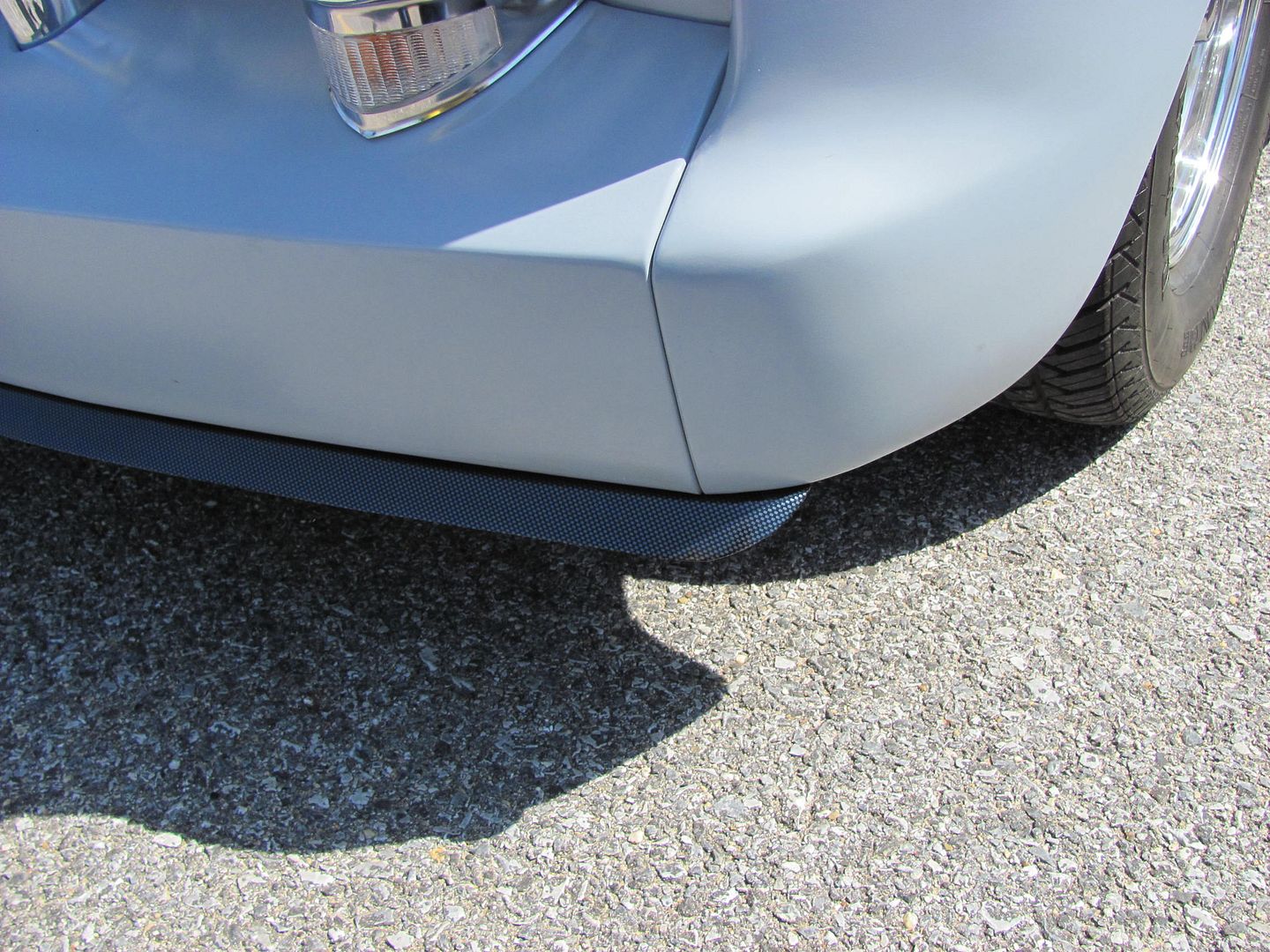
A buddy of mine is restoring his fathers old truck, and made an air dam for the front....


Picture004.jpg


Picture003.jpg


He had quite a few inquiries of who made the carbon fiber piece for him, but it's actually sheet aluminum covered in vinyl......so yeah, its another option ;)
 

DoghouseForge

Well-known member
Joined
May 11, 2013
Messages
374
Location
Lakeland, Fl
personally, i will no longer follow your thread unless you complete every project in the most difficult and time consuming way possible...

cheater


:lol:

Jp
 
OP
A

aggierailroad

Well-known member
Joined
Jan 8, 2012
Messages
581
Location
Houston, TX
personally, i will no longer follow your thread unless you complete every project in the most difficult and time consuming way possible...

cheater


:lol:

Jp


I feel like you and my wife went to the same school of treachery and meanness.

I appreciate your concern :lol_hitti and will now crawl back into my cave of sorrow.
 
OP
A

aggierailroad

Well-known member
Joined
Jan 8, 2012
Messages
581
Location
Houston, TX
Well, I went out early this morning and promptly broke what appears to be the only irreplaceable part on the table saw, the arbor shaft.

Used the numbers matching bearings from the shop down the street. Pressed the first one on the threaded side and absolutely smashed the threads. For whatever reason, the bearings they sold me have a .589 ID, vs the .625 needed. I even froze the shaft and heated the bearings, but did not mic them first.

Lesson learned.

If anyone knows where to get a 113.XXXXX table saw arbor, I'm all ears. Rumor has it that the Ridgid TS3650 arbors will fit, but I haven't found a picture of one, or dimensions for that matter.

Since assembly is halted, and I got a little upset at breaking the shaft, I decided to not strip the bottom of the table. Cleaned it with washing powder, flipped it, and spent two hours derusting the top. It's in worse shape than I thought, but I think I can get it flat and smooth enough. Likely I'll run it as is, and keep stepping up a grit of sandpaper when my patience rebuilds.

Also decided to not strip the inside of the sheet metal body. Mild surface rust in there, but without a sandblaster, I'm just not up to stripping it. I feel like a slacker, but it's out there now. Primered the outside, and first coated with the hammered gray.

That's all until I can find an arbor, this saw may be trashed.
 

bullnerd

Well-known member
Joined
Sep 17, 2012
Messages
5,690
Location
Jersey
I have the same saw...I think.

I got it from a coworker about 20 yrs ago. He said come get this big saw out of my basement. He had just bought a house and it was left behind. I replaced the motor,Arbor, built the base and added a Biesmyer fence. I've made countless projects with it. I didnt go for the restored look.

The only thing I want to add now is a link belt. The stock belt makes it vibrate a bit, but not too bad.

BTW, I got a new arbor and both bearings from sears parts, they are/were still the same as the newer saws.

Let me look ,I may still have the old stuff.

Good luck with yours.
 

Attachments

  • DSCF2412.jpg
    DSCF2412.jpg
    145.4 KB · Views: 211
  • DSCF2413.jpg
    DSCF2413.jpg
    148 KB · Views: 250
Last edited:
OP
A

aggierailroad

Well-known member
Joined
Jan 8, 2012
Messages
581
Location
Houston, TX
You may be a lifesaver.... I think I found the part at Sears for $104, more than I paid for the saw!

I really, really like your wings and outfeed setup with the integrated router. That's pretty slick.

I got the link belt, but of course, can't use it yet! Try Amazon or Grizzly, $28.


***UPDATE***

I think I've "verified" that the replacement part # is 508511, which is in fact the replacement arbor for current Ryobi and Ridgid saws. Interesting that a 60 year old arbor design is still around. I think I'm going to gamble and get the new one. Bullnerd, I'll keep this updated with regard to this. I really, really appreciate your offer though!
 
Last edited:

bullnerd

Well-known member
Joined
Sep 17, 2012
Messages
5,690
Location
Jersey
Cool, hope it works out.

I found my original. The end that the drive pulley fits on is all effed up.(could be fixed though) The threads are basically fine. I can get the part number if it helps. Mine was $48 in 1994, still have the paperwork.

Let me know, I can take pics if you want. If you cant get a new one your welcome to this one. Some time on a metal lathe could fix it.

EDIT: I just saw the pics of your arbor. Where is the shoulder the blade rests against? Also, you may still have enough thread there to work on a single blade. Dado might be out of the question though.
 
Last edited:
OP
A

aggierailroad

Well-known member
Joined
Jan 8, 2012
Messages
581
Location
Houston, TX
Bullnerd, you're right. I generally do dados on the router anyways. I will probably just cut the bad part off and just use single blades. Turns out the bearing guys gave me a metric ID bearing. Same part number. Mic your bearings guys!!

In other news I got the replacement shaft and proper sized bearings today. Pics to come..

Thanks for everyone's help, this is a good community here.
 
To avoid these ads, REGISTER NOW!
Top Bottom