
You are using an out of date browser. It may not display this or other websites correctly.
You should upgrade or use an alternative browser.
You should upgrade or use an alternative browser.
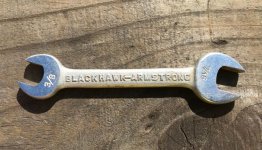
Blackhawk Armstrong wrench
- Thread starter alton1911
- Start date

hemifalcon
Well-known member
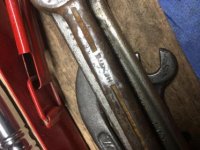
I agree—beautiful design with the Hexite tag as well. I have a lot of them..
Sent from my iPhone using Tapatalk
Sent from my iPhone using Tapatalk
d42jeep
Well-known member
Private Lugnutz
Well-known member
Blackhawk and Armstrong had a very intriguing relationship for many years. I believe it went beyond co-production/co-branding into science and engineering. Below in the thumbnails is an Armstrong combination wrench, for example.
As you can see, it's the same groove-shank design as the Blackhawk and the Blackhawk-Armstrong wrenches. Note the HI-TENSILE branding. My theory is that "HI-TENSILE" was Armstrong's version of the Blackhawk "HEXITE" branding. It was used in the same time period. It never appears on any Blackhawk tools. When it's used on Armstrong-only groove-shank wrenches, it's always in the same place as the "HEXITE" is on Blackhawk-only groove-shank wrenches.
That turns a couple things on its head, though. The HI-TENSILE marking is considered a wartime tell. It's believed to represent an alloy steel that was approved by the WPB for a composition that did not contain excessive amounts of the restricted minerals, either one of the triple-alloys or a composition of their own making. But Todd believes HEXITE was banned during wartime for the opposite reason.
As you can see, it's the same groove-shank design as the Blackhawk and the Blackhawk-Armstrong wrenches. Note the HI-TENSILE branding. My theory is that "HI-TENSILE" was Armstrong's version of the Blackhawk "HEXITE" branding. It was used in the same time period. It never appears on any Blackhawk tools. When it's used on Armstrong-only groove-shank wrenches, it's always in the same place as the "HEXITE" is on Blackhawk-only groove-shank wrenches.
That turns a couple things on its head, though. The HI-TENSILE marking is considered a wartime tell. It's believed to represent an alloy steel that was approved by the WPB for a composition that did not contain excessive amounts of the restricted minerals, either one of the triple-alloys or a composition of their own making. But Todd believes HEXITE was banned during wartime for the opposite reason.
Attachments


Last edited:
Blackhawk and Armstrong had a very intriguing relationship for many years. I believe it went beyond co-production/co-branding into science and engineering. Below in the thumbnails is an Armstrong combination wrench, for example.
As you can see, it's the same groove-shank design as the Blackhawk and the Blackhawk-Armstrong wrenches. Note the HI-TENSILE branding. My theory is that "HI-TENSILE" was Armstrong's version of the Blackhawk "HEXITE" branding. It was used in the same time period. It never appears on any Blackhawk tools. When it's used on Armstrong-only groove-shank wrenches, it's always in the same place as the "HEXITE" is on Blackhawk-only groove-shank wrenches.
That turns a couple things on its head, though. The HI-TENSILE marking is considered a wartime tell. It's believed to represent an alloy steel that was approved by the WPB for a composition that did not contain excessive amounts of the restricted minerals, either one of the triple-alloys or a composition of their own making. But Todd believes HEXITE was banned during wartime for the opposite reason.
I am seriously amazed at how blurry the lines get between tool companies of the past and present.
Thank you again for the info.
alton1911
twertsy
Well-known member
Blackhawk and Armstrong had a very intriguing relationship for many years. I believe it went beyond co-production/co-branding into science and engineering. Below in the thumbnails is an Armstrong combination wrench, for example.
As you can see, it's the same groove-shank design as the Blackhawk and the Blackhawk-Armstrong wrenches. Note the HI-TENSILE branding. My theory is that "HI-TENSILE" was Armstrong's version of the Blackhawk "HEXITE" branding. It was used in the same time period. It never appears on any Blackhawk tools. When it's used on Armstrong-only groove-shank wrenches, it's always in the same place as the "HEXITE" is on Blackhawk-only groove-shank wrenches.
That turns a couple things on its head, though. The HI-TENSILE marking is considered a wartime tell. It's believed to represent an alloy steel that was approved by the WPB for a composition that did not contain excessive amounts of the restricted minerals, either one of the triple-alloys or a composition of their own making. But Todd believes HEXITE was banned during wartime for the opposite reason.
It's not a belief, I read it somewhere........I'll have to dig it up again. I believe it is in some of the adverts from '46/'47 hyping the return of Hexite Tools, noting it was not allowed during the war.
Here's one Snippet: https://books.google.com/books?id=q...ved=0ahUKEwj47_3GgqPZAhWLt1MKHSS7ARgQ6AEILzAB
You can also use this search and read the descriptions of the wartime hits: https://www.google.com/search?biw=1......0...1c.1.64.psy-ab..0.0.0....0.qB-mt9U2ZLk
Last edited:
Private Lugnutz
Well-known member
Thanks. Sorry for misstating. And yes, I'd like to see that, just to put the questions to rest.It's not a belief, I read it somewhere........I'll have to dig it up again. I believe it is in some of the adverts from '46/'47 hyping the return of Hexite Tools, noting it was not allowed during the war.
In my faulty recollection I thought the basis for the 'no Hexite in wartime' theory was no Nuggies production. The problem with that is that Nuggies sockets and handles weren't restricted because of composition. After all, Blackhawk could've poured any steel into the Nuggies dies. They weren't allowed because of the terms in WPB Limitation Order L-216. The 7/16" drive size may have been considered clever and economical by Blackhawk, but ironically, it was considered just the opposite by the WPB. Since it wasn't one of the approved drive sizes, it was considered redundant to the junior (3/8") and/or standard (1/2") drive sizes, and therefore a waste of steel, regardless of the composition.
I found a wrench like yours yesterday. Big bold raised letters on the handle, but the head on mine is just marked “Armstrong Chicago “ I think.Here is my only Blackhawk-Armstrong wrench. I picked it up a couple weeks ago.
-Don


Thanks,
alton1911
RTM
Well-known member
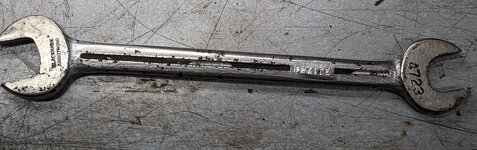
Here is a find from Friday's Estate Sale. This was tucked into the KlipTite holder, but obviously wrong, but saw the Blackhawk and kept it. Later, when I was sorting into piles, took a moment to read the tiny Armstrong under the Blackhawk. Not in nice shape, but it's a 4723, says Hexite on both side panels, 3/8 and 7/16 DOE. Now, do I store it with Armstrong, or Blackhawk bits?

Oldtuleguy
Well-known member
- Joined
- Nov 4, 2017
- Messages
- 10,467



four.cycle
Well-known member
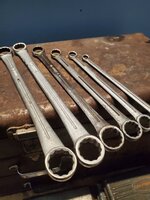
Blackhawk Armstrong
1931 Research Club Blackhawk Armstrong Williams ad pp 93

1929 Automobile Trade Journal Blackhawk Armstrong ad pp 126

1937 Janney Semple Hill & Co catalog Armstrong Blackhawk Elite Niehoff ad pp 3055

1939 Dunham Carrigan & Hayden Co. catalog Armstrong Blackhawk ad pp 192
1931 Research Club Blackhawk Armstrong Williams ad pp 93
1929 Automobile Trade Journal Blackhawk Armstrong ad pp 126
1937 Janney Semple Hill & Co catalog Armstrong Blackhawk Elite Niehoff ad pp 3055
1939 Dunham Carrigan & Hayden Co. catalog Armstrong Blackhawk ad pp 192