To avoid these ads, REGISTER NOW!

Bought a used Bridgeport mill, what do I have

A747

Well-known member
Joined
Sep 11, 2011
Messages
96
Location
San Diego, Ca
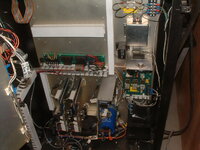
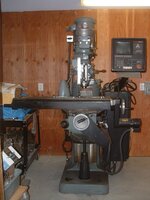
I need some help in identifying what I have. I picked up this Bridgeport mill a couple of weeks ago from a car restoration/fabrication shop that was moving cross country. The building was sold and the seller had to vacate fairly quickly. I'm completely new to milling machines so I don't know if the price I paid ($2500) was a good, fair or overpriced for what I got. It came with no tooling but the transport was free to my garage. I'm just figuring out the power requirements and have ordered a VFD hopefully appropriately spec'd for the machine. The other question is the digital control panel. What does it do? There is no local power controls for the X & Y axis drives. The power for both feed cables go to the huge control box with a lot of circuit boards inside. Anilam, the manufacturer appears to be out of business and according to the seller the display is not working, says the backup battery is the cause. Any help for a newby is appreciated.
 

Attachments

  • 2023-07-16 18.11.51.jpg
    2023-07-16 18.11.51.jpg
    311.5 KB · Views: 340
  • 2023-07-16 18.12.09.jpg
    2023-07-16 18.12.09.jpg
    321.2 KB · Views: 318
  • 2023-07-16 18.12.28.jpg
    2023-07-16 18.12.28.jpg
    289.4 KB · Views: 300
  • 2023-07-16 18.12.39.jpg
    2023-07-16 18.12.39.jpg
    275.8 KB · Views: 288
  • 2023-07-16 18.12.59.jpg
    2023-07-16 18.12.59.jpg
    323.6 KB · Views: 288
  • 2023-07-16 18.13.11.jpg
    2023-07-16 18.13.11.jpg
    313 KB · Views: 301
  • 2023-07-06 14.58.32.jpg
    2023-07-06 14.58.32.jpg
    350.1 KB · Views: 323
To avoid these ads, REGISTER NOW!

WhoWhatNow

Well-known member
Joined
Feb 22, 2011
Messages
1,889
Location
Collegeville, PA
You have a manual Bridgeport converted to a CNC. They controls are most likely obsolete. If you are not familiar with CNC, it could be worth stripping the CNC bits and turning it back into a manual machine. lol of the parts are available. The head is a variable speed head so as long as the ways are in good shape you would have a nice machine.
 
OP
A

A747

Well-known member
Joined
Sep 11, 2011
Messages
96
Location
San Diego, Ca
Thanks. Without any local control for the power feeds, I thought that may be the case. I'll see if I can locate the operating manual for the Anilam Crusader controller and go from there.
 

dutchgray

Well-known member
Joined
Sep 28, 2014
Messages
6,468
Location
Dorset. England.
Look under the table and see if it's still got an acme lead screw or if it has a ball screw.
If it has ball screws you can't go back to manual without changing the screw and nuts, which isn't cheap to do.
If the controls are dead they can be replaced with something else but you'll need to know what you're doing with that kind of stuff.

It actually looks pretty good in the pictures, not that you can really tell, but old CNC Bridgports usually look beat to death.
 

solo machinist

Well-known member
Joined
Nov 21, 2022
Messages
155
Location
North West, Ohio
I think for 2500.00 is pretty good. The controls are way old. 1970's I believe.

We have a mill at work what looks like the same motors, but newer controller.
Proto TRAK CNC.
You may give them a call and check prices for a new controller since everything is already installed,
it may not be to badly priced.
 

GeoBruin

Well-known member
Joined
May 5, 2018
Messages
3,740
I think everything that could be said has been said with regard to whether you could restore the cnc functionality. The question in my mind is whether you should. By your own admission, you're completely new to milling machines. In my opinion, learning to operate a manual mill will give you a far better intuitive understanding of the fundamentals than starting with cnc. If you get really into it, and decide you want to run cnc, there are probably better options these days than a BP conversion.

I any case, even if I had a giant Haas cnc monster in my shop, I'd still want to have a manual BP around.
 
OP
A

A747

Well-known member
Joined
Sep 11, 2011
Messages
96
Location
San Diego, Ca
For now I'm concentrating on getting the manual functions of the mill working, putting off any work on the controller for now. I don't know if the previous owners replaced the lead screw with ball screws, will be checking under the table the next day or so. I'm going to assume there is no way to use the current drive motors for manual operation.
 

RoninB4

Well-known member
Joined
Jul 22, 2020
Messages
3,565
Location
Under My House
-I'm not going to question your reasons for getting this mill but, like others, would suggest not rushing into getting the CNC part operational. Stating that you're new to milling will be a learning curve by itself, having axis control is a sure recipe for shattered cutters that will spit sharp chunks of metal out of the mill, mangle work pieces, and possibly ruin the machine itself. Cranking the handles (manual mode) means any time something is going wrong you just stop and shut the spindle off before something bad becomes worse. Having a CNC machine means it may not stop as quickly as you want it to and bad can/will become worse.

Best to go over the machine for a working central lube system (they get plugged up sometimes) listen for bearings going bad, and run the spindle through the speed range. The variable speed heads are nice when in good working condition but there are known issues with them. That doesn't make them bad, just sometimes in need of repair due to problems being ignored for too long. Listen for odd noises at certain speeds as you run up/down the speed range. Do learn how to switch from low to high speed properly. Failure to ensure it's in gear will result in a noise you won't soon forget. It happens a lot with new mill hands and is quite destructive to the machine. There's a procedure for changing from low to high speed, be sure to read about this.

If any of the electronics aren't working I wouldn't concern myself with it right now. CNC capability is for down the road when you have paying customers lined up. The DRO is nice to have but not essential right now, if it's not working it might be repairable for less than the cost of a new one. Anilam used to be a good make, don't know how expensive it is to repair now. Concern yourself with the basic machine for right now. If you can crank the handles and the spindle is quiet that's all that matters for right now.
 

RPH

Well-known member
Joined
Dec 17, 2006
Messages
4,190
Location
Michigan Thumb
Mark the board locations. Pull the boards and get pics of both sides. Does the unit have a control transformer? If so a pic of the label will help.
First find the battery. Then the next steps. Let’s find out what you have here.
 

Firebrick43

Well-known member
Joined
May 12, 2015
Messages
14,076
Location
West central Indiana
I think for 2500.00 is pretty good. The controls are way old. 1970's I believe.

We have a mill at work what looks like the same motors, but newer controller.
Proto TRAK CNC.
You may give them a call and check prices for a new controller since everything is already installed,
it may not be to badly priced.
Not any where close to the 70's.

A crusader M is a conversational control from the late 80's/early 90's. I really don't care for them but they were ok 3d capable controls with limited memory. Cetainly not punch tape machines of the 70's

I need some help in identifying what I have. I picked up this Bridgeport mill a couple of weeks ago from a car restoration/fabrication shop that was moving cross country. The building was sold and the seller had to vacate fairly quickly. I'm completely new to milling machines so I don't know if the price I paid ($2500) was a good, fair or overpriced for what I got. It came with no tooling but the transport was free to my garage. I'm just figuring out the power requirements and have ordered a VFD hopefully appropriately spec'd for the machine. The other question is the digital control panel. What does it do? There is no local power controls for the X & Y axis drives. The power for both feed cables go to the huge control box with a lot of circuit boards inside. Anilam, the manufacturer appears to be out of business and according to the seller the display is not working, says the backup battery is the cause. Any help for a newby is appreciated.
Series 1 was a 2j head bridgeport. Around 1970 they came out with the series 2 bridgeports which were significantly larger than its smaller brother. It was 4 hp vs the 2 hp 2J head and larger table/travel. Also weighed nearly twice as much. To differentiate it from the small brother they renamed the smaller one the "Series 1"

Anilam was purchased by Heidenhain as was acurite. Both were in jamestown NY but were relocated to Schamburg IL where Heidenhain is in 2007 or 08 maybe? Acurite supports anilam products but i don't know how many parts they have left???
 

isr2kba

Well-known member
Joined
Apr 6, 2009
Messages
324
Location
MA
Looks like you have manual cranks so you can move x,y,z (I dont see the knee crank but hopefully you have it, if not they cant be too tough to find) by hand for manual operation. The thing that is missing on x and y are the dials so you know how far the table moves when you crank.

It’s only a guess but I would wager that if you can get the CNC control to “power up” it would serve as a DRO and show you how far the table moves as you hand crank it. If thats true, you would be off to the races, manually machining to your heart’s content.

Down the line you might learn enough about the controls to use the CNC capabilities as power feeds.

Its impossible to evaluate a machine condition with pictures but the pictures you published suggest to me that that it was a well maintained mill living in a clean shop as opposed to a clapped out beater abused by hackers. That bodes well and if I was in the market for a mill like that I would definitely take a hard look at it.

As to whether you paid a fair price, that comes down to how good condition the machine turns out to be in and where you are geographically. I looked for a Bridgeport for my home shop (New England) for the better part of 10 years before I got one. Unfortunately for me, my budget was less than 1/3 of yours and I can tell you that I watched dozens of nice examples fetch $2000+ and saw lots of clapped out junk fetch a grand. In any case, once you start tooling up, you will start to look at the $2500 mill as a “free puppy”.

I wish you lots of luck.
 

Grant Gunderson

Well-known member
Joined
May 17, 2013
Messages
2,320
Location
Bellingham, WA
The nice thing about bridgeports is they are dead simple to work on. I just replaced my spindle bearings and it just took little over an hour.
A ¾” wrench and a couple hex drive sockets, will damn near do anything on a Bridgeport, add a good hook spanner and that’s just about all of the tools you need to work on it.

H+W machine is the best place I’ve found to source parts. Be careful of ordering parts elsewhere a lot of times sellers will try to pass off parts made for the cloans as Bridgeport parts but they don’t always fit!

I wouldn’t worry about not having the hand dial indicators as long as you have a working DRO. The exception is the z axis. I prefer that dial over the DRO.
 
  • Like
Reactions: KML

AEAdam

Well-known member
Joined
May 27, 2023
Messages
2,767
Location
SE PA
I’ll come out and say it. Yes, I think you paid too much. As it stands you have both a non working CNC and a non-working manual mill. $2500 should have bought you a functioning, worn, machine. I’m not seeing that.

I’ll tell you what I would do (have done). I’d strip it and restore to manual. Looks like there’s a quill scale. You want to keep stuff like that because you can probably make that work. I’d try to sell the CNC parts on eBay.

Peopke make a big deal about wear on BPs. Cleaning and adjusting goes along way to improving the function and performance of old Bridgeports. I personally feel variable speed heads are not as desirable if VFD is used. Just more clattery **** you don’t need.

Rebuilding, and not necessarily rescraping, is a great way to learn about how Bridgeports work, how they need to be maintained etc. Extra points if you can inspect what you have, learn inspection techniques, all necessary for basic machining, but also critical first steps if you ever want to scrape it. So, from where you are, my first purchase would have been (was) a surface plate, not a VFD.
 

NORTON'S SHOP

Well-known member
Joined
Dec 30, 2010
Messages
1,580
Location
Upper Midwest
Look under the table and see if it's still got an acme lead screw or if it has a ball screw.
If it has ball screws you can't go back to manual without changing the screw and nuts, which isn't cheap to do.
If the controls are dead they can be replaced with something else but you'll need to know what you're doing with that kind of stuff.

It actually looks pretty good in the pictures, not that you can really tell, but old CNC Bridgports usually look beat to death.
Kinda confused. Why can't a manual Bridgeport have ball screws?
 

NORTON'S SHOP

Well-known member
Joined
Dec 30, 2010
Messages
1,580
Location
Upper Midwest
they can. Just not fun to use. There’s essentially no clearance in a ball screw.
Interesting. I purchased a new Bridgeport in 2007 that had ball screws. No complaints from anyone that used it. Worked great for climb milling.
 
Last edited:

AEAdam

Well-known member
Joined
May 27, 2023
Messages
2,767
Location
SE PA
Interesting. I purchased a new Bridgeport in 2007 that had ball screws. No complaints from anyone that used it. Worked great for climb milling.
Usually climb milling is one of the biggest reasons why people don’t like ball screws. Another is that people say you can lean on the table and it moves. Third, I don’t know if how ball screws are adjusted. I think they wear VERY slowly, but once worn, no way to compensate?

Not telling you you are wrong. If you have them and like them that’s a good data point. My mill is a 1967, like tubalcain‘s, and its table moves like it’s on glass. The hand wheels spin easily, with very little back lash. You can screw with it until it feels the way you want.

Since you have them and recommend them, maybe that’s one less thing to worry about? You tell us.
 
Last edited:

NORTON'S SHOP

Well-known member
Joined
Dec 30, 2010
Messages
1,580
Location
Upper Midwest
Usually climb milling is one of the biggest reasons why people don’t like ball screws. Another is that people say you can lean on the table and it moves. Third, I don’t know if how ball screws are adjusted. I think they wear VERY slowly, but once worn, no way to compensate?

Not telling you you are wrong. If you have them and like them that’s a good data point. My mill is a 1967, like tubalcain‘s, and its table moves like it’s on glass. The hand wheels spin easily, with very little back lash. You can screw with it until it feels the way you want.
Every CNC machine that we have in the shop has ball screws. Millions and millions of cycles and still very accurate, so I think the wear on a Bridgeport with ball screws with considerably less cycles would be a moot point. Climb milling on a Bridgeport with very little backlash (acme screw) or with ball screws (no backlash) is very noticeable.

I'll be seeing Pete (tubalcain) in September. I'll ask him what he thinks about it.
 

AEAdam

Well-known member
Joined
May 27, 2023
Messages
2,767
Location
SE PA
Every CNC machine that we have in the shop has ball screws. Millions and millions of cycles and still very accurate, so I think the wear on a Bridgeport with ball screws with considerably less cycles would be a moot point. Climb milling on a Bridgeport with very little backlash (acme screw) or with ball screws (no backlash) is very noticeable.

I'll be seeing Pete (tubalcain) in September. I'll ask him what he thinks about it.
Please ask him about his mill. Mine is/was green like I believe his was. I believe green mills were made in the late 60s only. Some people say BP never made anything other than gray. I think mine originally came with a column coolant system
 
To avoid these ads, REGISTER NOW!

NORTON'S SHOP

Well-known member
Joined
Dec 30, 2010
Messages
1,580
Location
Upper Midwest
Please ask him about his mill. Mine is/was green like I believe his was. I believe green mills were made in the late 60s only. Some people say BP never made anything other than gray. I think mine originally came with a column coolant system
I'll do that.
 

Bob-B

Well-known member
Joined
Jul 21, 2011
Messages
451
Location
Long Island, NY
The die casting shop I worked at 26 years ago had 6 Bridgeports. 3 of them had been rebuilt and had been converted to ballscrews. Yes, you could climbmill, and they were a pleasure to use. I certainly wouldn't let that scare me off.
 
Last edited:

Citation

Well-known member
Joined
Jan 20, 2016
Messages
3,219
Location
Indy
A747,
Depending on what you want to do with this thing (ie just use it or it becomes it's own project) you might consider retrofitting a totally new controller system where the only original CNC parts are the drivers and the encoders. All the brains and power electronics get replaced. I know a guy who did something similar with a 70's vintage factory Bridgeport CNC. I think he installed a MachMotion system. His mill used steppers and those are the only retained part of the old CNC system. I think the cost several years back was around $5k (I may be way off since this was done at least a decade back).

There are a range of retrofit options from dedicated computer interfaces based on PC hardware (MachMotion for example) or just a desktop computer connected to a breakout box such as the type used on this micromill https://taigtools.com/product/micro-mill-2018cnc/

You can then look into the value of the old CNC power electronics and control interface. You might be able to offset a lot of your purchase price with part sales.

Note, I'm not recommending either of these specifically, just saying there are options if you want to play with the machine itself.
 
Last edited:

dutchgray

Well-known member
Joined
Sep 28, 2014
Messages
6,468
Location
Dorset. England.
Kinda confused. Why can't a manual Bridgeport have ball screws?
Usually they don't hold the table still without a drive motor to hold the screw still, that's what you usually find on the old CNC ones.
You can get ball screws with suitable thread pitches that self lock.
I doubt the machine the OP ĥas would be nice to use if you just pulled the drive motors off.
 
OP
A

A747

Well-known member
Joined
Sep 11, 2011
Messages
96
Location
San Diego, Ca
Never heard of ball screws until now. Looking at several ball screw installations on mills on Youtube, I still don't know what to look for when inspecting the underside of my table whether I have the original lead screw or ball screws. Are lead screws automatically changed out to ball screws for power drives. IF I'm reading the comments correctly, the only reason that you shouldn't use ball screws on a manual mill is that it won't hold table position without a drive motor to lock it.

My focus right now is to get power to the mill so I can get the motor running and assess the variable speed and that is the reason I ordered the VFD first. The VFD came in yesterday so I'll start working on getting the power hooked up and the mill running in a week or so. I still have other bits for the power supply on order. There is a run meter and currently reads 2071 hours. The meter is hooked up but don't know if it's functional.

Here is where I currently sit. I have drive motors that are non functional but have manual control of the table without dial indication or a DRO. I think my best option to go full manual at this time is to get the Anilam controller working as a DRO only if this is even possible or remove the current drive motors and install handwheel indicators. I'm open to other ideas.
 
Last edited:

Grant Gunderson

Well-known member
Joined
May 17, 2013
Messages
2,320
Location
Bellingham, WA
Never heard of ball screws until now. Looking at several ball screw installations on mills on Youtube, I still don't know what to look for when inspecting the underside of my table whether I have the original lead screw or ball screws. Are lead screws automatically changed out to ball screws for power drives. IF I'm reading the comments correctly, the only reason that you shouldn't use ball screws on a manual mill is that it won't hold table position without a drive motor to lock it.

My focus right now is to get power to the mill so I can get the motor running and assess the variable speed and that is the reason I ordered the VFD first. The VFD came in yesterday so I'll start working on getting the power hooked up and the mill running in a week or so. I still have other bits for the power supply on order. There is a run meter and currently reads 2071 hours. The meter is hooked up but don't know if it's functional.

Here is where I currently sit. I have drive motors that are non functional but have manual control of the table without dial indication or a DRO. I think my best option to go full manual at this time is to get the Anilam controller working as a DRO only if this is even possible or remove the current drive motors and install handwheel indicators. I'm open to other ideas.
I honestly wouldn’t bother with handwheel indicators. They will cost more than a decent DRO and even a cheap Chinese DRO is more accurate then the hand wheel indicators.

Here is the thing with VFD they are great for allowing you to run a 3phase motor on household current. Yes you can dial motor speed in with them. The problem with VFD on Bridgeport’s is they give you a very narrow power band range. So they are far from a replacement for a variable speed head or changing belt positions on a J head. At best on a j head they may keep you from changing one belt position any more than that you loose too much torque to be useful. I mostly only use the VFD motor speed control to slow things down for use with an edge finder and not have to change belt position to go back to machining.

I am willing to bet you could sell the servo motors and ball screws for close to the price of replacement with standard acme.

Other option is Ditch the archaic cnc controls, keep the servo motors and start fresh with a new modern controller. All depends on if you see yourself doing lots of cnc or mostly just one off fan projects where manual is quicker / easier.
 

rsanter

Well-known member
Joined
Dec 22, 2007
Messages
18,521
Location
visalia ca
Kinda confused. Why can't a manual Bridgeport have ball screws?
The reason is that with ball screws the table has more os a tendency to move from cutter pressure as the ball screws have less “ self holding” than the ache screws.

An operator will need to remember to lock the table in the axis they are not moving
 

Citation

Well-known member
Joined
Jan 20, 2016
Messages
3,219
Location
Indy
OP, why would you get a VFD when that mill appears to have a CVT type speed control already?
 

AEAdam

Well-known member
Joined
May 27, 2023
Messages
2,767
Location
SE PA
OP, why would you get a VFD when that mill appears to have a CVT type speed control already?
Not the OP, but probably because the motor is 3 phase and he doesn’t have 3 phase where he is. That’s the typical reason. Most or all BPs are 3 phase
 

AEAdam

Well-known member
Joined
May 27, 2023
Messages
2,767
Location
SE PA
I honestly wouldn’t bother with handwheel indicators. They will cost more than a decent DRO and even a cheap Chinese DRO is more accurate then the hand wheel indicators.

Agree. They look pretty , but not really used if you have a DRO.
Here is the thing with VFD they are great for allowing you to run a 3phase motor on household current. Yes you can dial motor speed in with them. The problem with VFD on Bridgeport’s is they give you a very narrow power band range. So they are far from a replacement for a variable speed head or changing belt positions on a J head. At best on a j head they may keep you from changing one belt position any more than that you loose too much torque to be useful. I mostly only use the VFD motor speed control to slow things down for use with an edge finder and not have to change belt position to go back to machining.
The term to Google is “sensorless vector” control. Without it, you lose HP at about 50% of the motors RPM or around 30hz. With SV, I think you can go to 1/100 of the motors rated rpm. Gotta pick the right VFD. There are several good YouTube videos. Quick answer, Teco L510 can do it.

With respect to GJ, you really need to read Practicalmachinist.com. You are getting good advice here, but there’s just a lot more content there. There’s a whole forum for VFDs. Also, lots of debate about ball screws.
 
Last edited:

RoninB4

Well-known member
Joined
Jul 22, 2020
Messages
3,565
Location
Under My House
Never heard of ball screws until now. Looking at several ball screw installations on mills on Youtube, I still don't know what to look for when inspecting the underside of my table whether I have the original lead screw or ball screws.

Here is where I currently sit. I have drive motors that are non functional but have manual control of the table without dial indication or a DRO. I think my best option to go full manual at this time is to get the Anilam controller working as a DRO only if this is even possible or remove the current drive motors and install handwheel indicators. I'm open to other ideas.
1690029104174.png
-Acme thread form


-Ball screw thread form
1690029386928.png


Acme has fairly straight side flanks and gullet. Ball screws have round sides/gullet for balls to run in. Look closely at yours under good light and magnification. Should be fairly easy to tell what you have.

I think your approach to just getting the spindle powered for evaluation is the best first step. Getting the axis capable of manual operation would be the next step. Less cost (perhaps) and quicker to be in operation. Wouldn't worry much about possibly not being good for climb milling, it's not an essential machining method to produce good parts. I seldom use climb milling unless I know there's not much wear in the nut with an acme lead screw. When I do use climb milling I have the table lock on "drag" to avoid problems. Almost all other times conventional milling is good enough. If you need a better finish there are other methods for producing an acceptable surface finish. If you need better accuracy you're using the wrong machine. A turret mill (Bridgeport) is considered a graduated drill press in some circles.
 
OP
A

A747

Well-known member
Joined
Sep 11, 2011
Messages
96
Location
San Diego, Ca
Someone already answered for me but yes, I don't have three phase power in my garage thus the need for the VFD. The mill will be the only three phase motor that I currently have so the VFD looks to be the best and quickest option to get started.

Looking under the table this morning, it appears that I have a ball screw setup. It looks exactly like the ball screw from the drawing sent by RoninB4. If I'm understanding the comments correctly, the ball screw should not be an issue with manual operation as long as I lock the table in the axis I don't want moving during milling operations. Since I don't have the dial indication on the X&Y axis I will need some sort of DRO. The mill already has the linear scales (correct term?) installed for the Anilam controller. Can those be used for another brand of DRO?
The other option is to try to get the Anilam controller functional as a DRO only, probably a long shot.

Like some, perhaps most of you on GJ, I'm a hobbyist and enthusiast for metal working. I don't plan putting the Bridgeport through a work out. My ultimate goal is to be good enough to make car parts for my vintage British sports car when I need to. I was planning on using the Jet vertical mill at my local Makers Space when I ran across the Bridgeport. The convenience factor can't be overstated.
 

AEAdam

Well-known member
Joined
May 27, 2023
Messages
2,767
Location
SE PA
Since I don't have the dial indication on the X&Y axis I will need some sort of DRO. The mill already has the linear scales (correct term?) installed for the Anilam controller. Can those be used for another brand of DRO?
The other option is to try to get the Anilam controller functional as a DRO only, probably a long shot.
Theoretically, you can get a reader for your scales. The question is the price of it. Its possible to find an old reader for your old scales. I think you have at least three axes tho, which are rarer in the older models. Shumatech might be an answer. But …you may be better off selling or trashing what you have sadly. The newer Sino models are good and cheap.

As you will soon discover (or already know), mills are all about tooling. What you can or cannot do really comes down to tooling. You have to think about this as a long journey. Again, my advice is to start it with a surface plate. The sooner the better.

The mill isn’t secondary, but with manual mills, technique, tooling choices, adjustments, allow you to do almost anything, hold almost any tolerance.

BTW, next thing to look for is a one shot oiler. If you don’t have one, try to figure out if your machine was greased (bad) or oiled (fingers crossed). Then you need to assess the ways.
 

Firebrick43

Well-known member
Joined
May 12, 2015
Messages
14,076
Location
West central Indiana
Usually climb milling is one of the biggest reasons why people don’t like ball screws. Another is that people say you can lean on the table and it moves. Third, I don’t know if how ball screws are adjusted. I think they wear VERY slowly, but once worn, no way to compensate?

Not telling you you are wrong. If you have them and like them that’s a good data point. My mill is a 1967, like tubalcain‘s, and its table moves like it’s on glass. The hand wheels spin easily, with very little back lash. You can screw with it until it feels the way you want.

Since you have them and recommend them, maybe that’s one less thing to worry about? You tell us.
I am not sure where you are coming up with this stuff.

Climb milling, you can not do it with an acme screw typically because backlash allows it to grab and drag the work forward and then the cutter is taking to big of a chip load and is damaged or breaks.

With a ball screw you can climb mill all day long if you maintain your hand on the wheel at all times while in the cut. The axis you not moving should be locked.

Ball screws are preloaded at the factory. They typically can not be adjusted correctly in the field. The life if propperly lubricated can be decades. I have changed worn ball screws on machines used 24 hours a day with automated loading for 25 years before being changed out if sized and correctly lubed.

Also in another post you talked about a rebuild. A rebuild of a bridgeport is going to require scraping. Otherwise your just replacing the felts/way wipers.
 
Last edited:

AEAdam

Well-known member
Joined
May 27, 2023
Messages
2,767
Location
SE PA
I am not sure where you are coming up with this stuff.
see what you think of this:

When you climb mill, the cutter pushes the work piece in the direction of the table motion. Ball screws cannot theoretically react that load. The ball screw, with no restraint, (friction/preload) will turn where an acme screw will not. For CNC, the stepper motors react that load. Depending on the depth of cut, type of cutter, spindle speed, ball screws can work fine by hand*.

The problem with climb milling on a machine with a worn screw is the table may jump forward or vibrate resulting in a crappy cut. Most BPs have split nuts that can be adjusted for wear. Not a perfect system, but wear doesn’t mean trash. Older machines can be easily modded into split nut configuration.

*The proof is in the pudding. Climb milling can be accomplished with either type of screw. Some argue ball screws don’t produce the same finish quality because your hand isn’t rigid enough to react the vibration. The argument devolves into a subjective cut quality discussion….I don’t have an opinion. And FWIW, I didn’t recommend replacing the ball screws. I just tried to explain why people would recommend it.

Generally, axes not being used should ALWAYS be locked. That has nothing to do with the screws, tho I understand why that is maybe a bigger deal with ball screws. Some old hands apply a little table lock to the axes they are moving, this is like tightening the gib and can improve surface finish.

Regarding rebuilding, there are strong unchangeable opinions on the definition of machine rebuilds, which I find wholly unhelpful. These discussions never wade into the detailed of condition of the machine or quantify it’s wear (which is quite involved). I‘ve never seen discussion of how much wear is too much wear or any sort of quantitative evaluation on the relationship between wear and tolerances or surface finishes. There’s a certain stubborn group who enjoy telling people anything short of a rescrape is a pointless “lipstick on a pig“ exercise.

The reality is, Bridgeports are well made and have adjustments to compensate for wear. Good technique can be used to make good parts on imperfect machines. Rescraping has It’s place, but in my opinion, it’s not helpful to suggest it to new BP owners drinking from the machinist fire hose.
 
Last edited:

Firebrick43

Well-known member
Joined
May 12, 2015
Messages
14,076
Location
West central Indiana
Climb milling has nothing to do with the type of screw other than the backlash that it has. Any acme screw has back lash and it’s to much to safely climb mill. With very light cuts you can cheat it by lightly engaging the lock as you mentioned but in reality it shouldn’t be done out of safety. Back lash cant be completely adjusted out of a used screw as wear is never even on a manual machine that doesn't have timed lube cycles. X axis is always the worst and most of the wear is in the middle. New Bridgeport's have .002" to .007" backlash spec. Used ones you would be lucky to get that .007"

Most 1/4" end mill on aluminum or soft cast iron are in the .002" chip load per tooth, harder materials will be under .001". Even 1/2" endmills on aluminum are .004" chip load per tooth. Climb milling on a manual machine will result in snapped endmills due strictly because of the back lash.

"Conventional Milling is the traditional approach when cutting because the backlash, or the play between the lead screw and the nut in the machine table, is eliminated (Figure 1). Recently, however, Climb Milling has been recognized as the preferred way to approach a workpiece since most machines today compensate for backlash or have a backlash eliminator."
https://www.harveyperformance.com/in-the-loupe/conventional-vs-climb-milling/

Every text on machining will talk about "backlash" not self driving ball screws. Hand on the wheel of screw in use stops self driving ball screw, it does not stop back lash on an acme screw.

On the other hand a double nut preloaded precision ball screws along with the just as important preloaded precision support bearings are considered junk at 5 microns or more back lash. That is .00019", well within the spec of endmills chip load. I have never had a problem on Bridgeports, Trak, Tree, or DeVlieg jig mills with CNC controls using the hand wheels by hand.

As for the rebuilding, I don't recommend a new machinist to start scraping either. But calling anything else but correcting back to the orgininal machine geometry tolerances and calling it a rebuild is false advertisement. Most of the time this is accomplished by scraping on a plain way machine. Just like acme screws, gibs can not be adjusted to compensate for uneven wear that is always present on a used machine.

Bridgeport set specs in the .001" tolerances for positioning and its a rule of thumb that you need 10 times the accuracy of your tolerances in your machine.

http://www.lathes.co.uk/bridgeport-series-1-cnc/img14.jpg

Selling an engine as a rebuilt engine that hasn't been reset to factory clearances is false advertising as well.

I have scraped machines in for years as has my coworkers and several contractors we hired on large jobs. We have all seen customers purchase "rebuilt machines" that was nothing more than a coat of paint and new way wipers. Hell one colchester lathe that H&W "rebuilt" didn't even get new wipers or a new oil pump belt.

Choosing to or not to rebuild is a proper discussion. The definition of a machine rebuild is pretty set by the industry. Any thing less is a repair not a rebuild.
 
Last edited:

RoninB4

Well-known member
Joined
Jul 22, 2020
Messages
3,565
Location
Under My House
I'm only going to stick my nose into this thread to help, if I can, get the OP's mill running to evaluate the machine condition. If I understand his goals it would be to get an operational machine first for the lowest cost, improvements after that if warranted. Yes plenty of things can and might need to be purchased later but first things first.

Making parts for his Brit-mobile and getting familiar with milling will likely not require anything but bracket footprints and clearance/tapped holes until he feels confident enough to attempt more critical parts. Before buying cutting tools, before measuring tools, before a vise or any other tooling the machine needs evaluation. Bearings might be toast, ways/gibs might have excessive play, ball screws might even be worn. Machine evaluation before anything else. He may have a boat anchor on his hands (not likely) he may just need to plan/budget for repairs later. He may even decide this is too much work and flip the machine for profit (hope he doesn't). Evaluation before all else.

To the OP- Even if there's a lot of play in the lead screws that might not be a critical flaw. It's always about how close the tolerances are for what you're doing. Sometimes a hack saw and a sander/grinder/file is plenty good enough, other times a brand new Bridgeport isn't good enough or ever will be. You don't need to consider ball screw replacement right now, maybe never. If you're only concerned, right now, with making some parts for the Brit-mobile you're likely making 1-10 parts at a time. CNC capability is really for making parts in batch quantities greater than 10, large area/length milling in multiple quantities, or complex surfaces (continuous 3 axis milling). Anything else really doesn't justify the cost of the controls. When you're needing CNC capability you'll know it by then, now is not the time.

Get a quote on repair for the DRO, it may just need to have power run to it or a capacitor replaced. The Heidenhain on my jig borer went out and it only need a minor soldering job to put it right. A repair can be a lot less expensive than a replacement. While a DRO will be nice to have (multiple functions with them) I wouldn't think a set of dials for the mill would be that expensive, they aren't difficult to make for the average machine shop. You'll learn how to make them soon. The important factor, besides shaft fitment, is the lead ratio of the screw itself. One revolution on a dial means what distance traveled? Almost all lead screws (ball, acme, square, etc.) use a distance-per-revolution in round numbers that's either inch or metric based. The OEM lead screws for Bridgeport were in .200 per revolution. The imports sometimes use weird numbers for American imports, don't bother with those. Since I don't know what tooling you have it's difficult to advise a method for determining what your lead screws are. Do you have collets for the mill? Drill chuck? Vise you can mount on the table? Do you know a buddy that's a machinist? A decent dial/digital caliper should be your first purchase at this point, it can/will be of use even if you toss the mill. No need to get a real good one right now, even a crappy one from Horrible Freight will serve the purpose and be low cost. Were you closer this could be sorted out in short order.
 
To avoid these ads, REGISTER NOW!
Top Bottom