dsl_mech
Member
I have a 32'x40' shop with 11' walls and scissor trusses. The ceiling height is 13' at the peak. A contractor was hired for this job. There was an engineer involved in this job who did a Framing Field Review, which passed and I have received a document called a Schedule C-B which essentially means the engineer has signed off on the whole job. The schedule C-B has to be given to the township at Final Inspection before they will close the permit. Long story short I had paid the contractor approximately $40k more then the job was quoted and he walked away from the job after I would not agree to keep giving him more money. At that time the job was nowhere near completion among many other issues that had popped up along the way. Going on two years since the permit was opened I am working towards finishing this project and getting the permit closed.
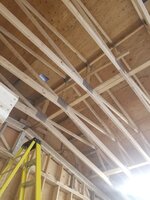
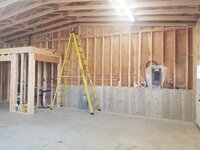
The engineered truss package came with two flat bottom gable trusses and the rest scissor trusses. One day while browsing this foum I came across a post talking about how this can be bad and some jurisdictions will not allow it. Further researched found numerous people complaing about movement on the end wall. I went to my shop and found if I shake the end wall there is defintelly movement at the joint between the end wall top plate and bottom of the flat gable truss. I had the building inspector here yesterday for a framing inspection which passed. I directly asked about the movement on this end wall and he advised it wasnt an issue. He felt I shouldnt be worried because I have a passed framing field review and the job was been signed off by the engineer. The building inspector also felt the trusses had been braced satisfactorly by the contractor when installed. The framing inspector asked for a stamped copy of the truss package from the truss company(he had a copy but not stamped) which led to me calling them for this yesertday and receiving the truss package the contractor would have received. This was my first time seeing this paperwork. I have been trying to understand this document and confirm bracing is complete and whether any more bracing could be added to help reduce the movent at the end wall. The contractor also feels the movement will lessen once finish has been applied to the interior.
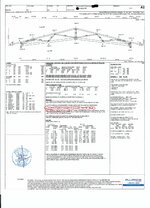
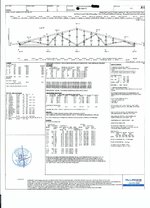
My question is can someone understand what the truss document is saying. Especially the bracing part I circled in red. I can see where a 1x4 continuous lateral brace is required on webs C-N and G-J. The contractor has installed this but used 2x4. They have also installed three 2x4 continuous lateral braces on the bottom cords which the building inspector explained was a building code requirement and not truss manufacturer requirement. The contractor also installed one diagonal brace at each end of the building from the peak at the gable across 4 of the scissor trusses. The part I am questioning on the paperwork from the truss manufacturer is "DBS = 4-0-0 which is discribed as diagonal brace spacing max. Does this mean there should be more diagonal braces somewhre and if so where? And will these braces do anything for the movement on the end wall?
The engineered truss package came with two flat bottom gable trusses and the rest scissor trusses. One day while browsing this foum I came across a post talking about how this can be bad and some jurisdictions will not allow it. Further researched found numerous people complaing about movement on the end wall. I went to my shop and found if I shake the end wall there is defintelly movement at the joint between the end wall top plate and bottom of the flat gable truss. I had the building inspector here yesterday for a framing inspection which passed. I directly asked about the movement on this end wall and he advised it wasnt an issue. He felt I shouldnt be worried because I have a passed framing field review and the job was been signed off by the engineer. The building inspector also felt the trusses had been braced satisfactorly by the contractor when installed. The framing inspector asked for a stamped copy of the truss package from the truss company(he had a copy but not stamped) which led to me calling them for this yesertday and receiving the truss package the contractor would have received. This was my first time seeing this paperwork. I have been trying to understand this document and confirm bracing is complete and whether any more bracing could be added to help reduce the movent at the end wall. The contractor also feels the movement will lessen once finish has been applied to the interior.
My question is can someone understand what the truss document is saying. Especially the bracing part I circled in red. I can see where a 1x4 continuous lateral brace is required on webs C-N and G-J. The contractor has installed this but used 2x4. They have also installed three 2x4 continuous lateral braces on the bottom cords which the building inspector explained was a building code requirement and not truss manufacturer requirement. The contractor also installed one diagonal brace at each end of the building from the peak at the gable across 4 of the scissor trusses. The part I am questioning on the paperwork from the truss manufacturer is "DBS = 4-0-0 which is discribed as diagonal brace spacing max. Does this mean there should be more diagonal braces somewhre and if so where? And will these braces do anything for the movement on the end wall?