TXNinAZ
Well-known member
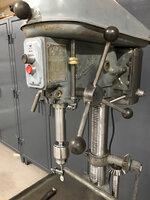
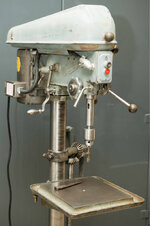
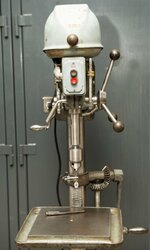
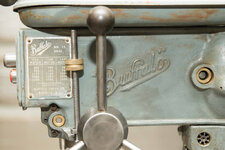
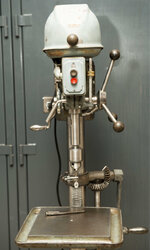
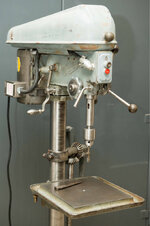
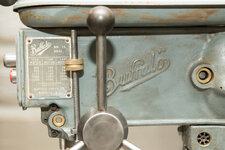
Hi all, thought I'd share my just completed refurb/refresh of a Buffalo No 15 and maybe help someone with an idea or technique.
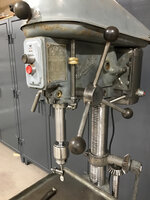
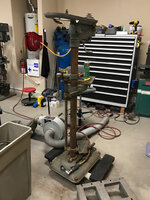
Bought the press at an estate sale. Last of acres of junk included the drill press and not much else. Took it home for $100, which is a great deal for old iron around here.
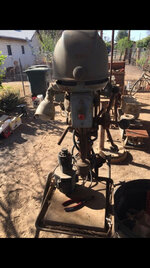
How it sat:
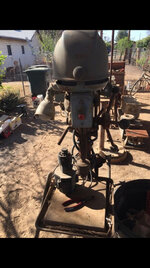

Getting it apart was a giant mess. It was covered in dirt, oil, and rust.
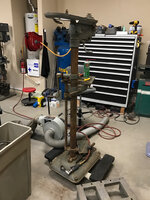
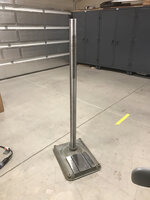
The most stubborn disassembly was removing the column from the base. Clamping bolts above and below base, and a thick layer of rust. A small sledge and aluminum pusher got it down though. The column is solid cast iron, not a pipe. Put it on my shipping scale: 96 lbs!

Made a new friend on the motor.

FYI brake cleaner kills spiders.
I made a huge mistake at this point- I didn't test the motor before cleaning it inside and out. Spent $18 on LectraMotive cleaner and a whole lot of time wire wheeling hardware only to find the motor was toast. Fired it up and the smoke tried escaping. Fortunately I planned for this possibility and bought a 1 horse Baldor 1740 rpm motor on Craigslist that would be a replacement for the 1/2 horse GE.
Time to get the very heavy column cleaned up. The last drill press I did this to, I used a plumbers test plug and a drill to spin it, and nylon casters as a spinning rest. This time I have a lathe, but no steady rest yet. So I used two fixture plates (1-1/2" thick each) and used toe clamps to hold down those same casters as a roller rest. Worked out fine, though it would have been a lot easier with a proper steady rest. Unfortunately the cheapest one I can find is $850 on eBay.


A lot of labor, but a combination of a die grinder with wire wheel, emory cloth strips, scotch brite, a nylon stripping wheel and a lot of cleanup did the job. Unfortunately my lathe chuck jaws grooved the end of the column as I was slowing it down against the chuck, but nothing a sanding wheel couldn't fix.
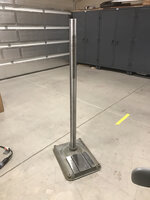
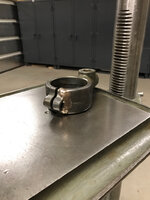
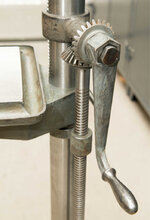
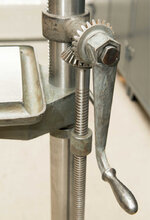
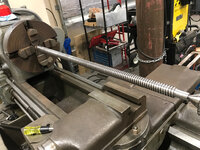
The mechanism for raising the table is beautifully engineered. The lead screw is an inch in diameter and has a very heavy layer of rust on it.

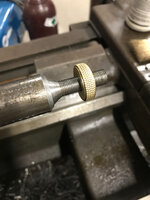
So back in the lathe. This time I wrapped some 8 gauge copper wire on the chucked end of the screw to prevent damage, and in the live center on the tailstock.
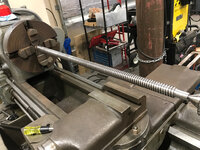
Took a lot of time. Ordered some abrasive cord which helped a lot, and ground a tool down to cut down into the corners of the threads.

Bought the press at an estate sale. Last of acres of junk included the drill press and not much else. Took it home for $100, which is a great deal for old iron around here.
How it sat:
Getting it apart was a giant mess. It was covered in dirt, oil, and rust.
The most stubborn disassembly was removing the column from the base. Clamping bolts above and below base, and a thick layer of rust. A small sledge and aluminum pusher got it down though. The column is solid cast iron, not a pipe. Put it on my shipping scale: 96 lbs!
Made a new friend on the motor.
FYI brake cleaner kills spiders.
I made a huge mistake at this point- I didn't test the motor before cleaning it inside and out. Spent $18 on LectraMotive cleaner and a whole lot of time wire wheeling hardware only to find the motor was toast. Fired it up and the smoke tried escaping. Fortunately I planned for this possibility and bought a 1 horse Baldor 1740 rpm motor on Craigslist that would be a replacement for the 1/2 horse GE.
Time to get the very heavy column cleaned up. The last drill press I did this to, I used a plumbers test plug and a drill to spin it, and nylon casters as a spinning rest. This time I have a lathe, but no steady rest yet. So I used two fixture plates (1-1/2" thick each) and used toe clamps to hold down those same casters as a roller rest. Worked out fine, though it would have been a lot easier with a proper steady rest. Unfortunately the cheapest one I can find is $850 on eBay.
A lot of labor, but a combination of a die grinder with wire wheel, emory cloth strips, scotch brite, a nylon stripping wheel and a lot of cleanup did the job. Unfortunately my lathe chuck jaws grooved the end of the column as I was slowing it down against the chuck, but nothing a sanding wheel couldn't fix.
The mechanism for raising the table is beautifully engineered. The lead screw is an inch in diameter and has a very heavy layer of rust on it.
So back in the lathe. This time I wrapped some 8 gauge copper wire on the chucked end of the screw to prevent damage, and in the live center on the tailstock.
Took a lot of time. Ordered some abrasive cord which helped a lot, and ground a tool down to cut down into the corners of the threads.
Attachments
-
 50698e73c58b5ed670b11491c3a452bb.jpg543.7 KB · Views: 0
 -
 35f860d99ac13ecf51a3b090e586cba8.jpg752.7 KB · Views: 0
 -
 b62b8b1727b7b5cfe8dfd35bfc6ecf84.jpg129.6 KB · Views: 2
 -
 3c2df2b90f16ae84674e0e8d1da66ea3.jpg611.9 KB · Views: 1
 -
 0341fc56ff8ee17cbe85e882306df8bd.jpg729.7 KB · Views: 2
 -
 1884141cec36a7fa1a7752b7f5a8dc4f.jpg784.6 KB · Views: 1
 -
 db7285b93a89d3ebac110a78faa9092f.jpg593.4 KB · Views: 1
 -
 3814e34a52308b33c680801aad836855.jpg783.6 KB · Views: 1
 -
 c6fea25f8044b9652bc2b1b082fe4b4d.jpg783.5 KB · Views: 1
 -
 5ee22082427181420ad4d5b872bcaacf.jpg765.8 KB · Views: 4
 -
 9c79ea83085866db0567319ee4ee3270.jpg552.3 KB · Views: 3
Last edited: