To avoid these ads, REGISTER NOW!

buy a sheldon or monarch?

joe121

Active member
Joined
Jun 30, 2014
Messages
42
Location
orland park, illinois
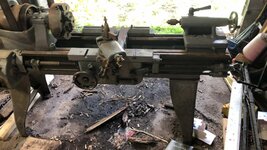
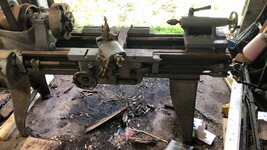
I am trying to decide on two older lathes, sheldon txl-18856 or a monarch A. From the pics they both run, minimal tooling.I do not mind some restoring. Will not be using it for anything in particular but do not want to put a lot $ into it. So is there any big disadvanteges to either one or both? thanks, joe
 
To avoid these ads, REGISTER NOW!

larry_g

Well-known member
Joined
Apr 28, 2007
Messages
16,888
Location
oregon
I have a EXM and a EXL model Sheldon lathe. I do not recognize the TXL model and can you confirm that is not a mistype? The Sheldon lathe is a good lathe but it had a long life span and many models from light weight to heavy high precision lathes. Monarch is also a good brand but with any old machine condition is everything. So I would suggest that you place hands on both of them and run them a bit.

I searched out the Monarch A lathe and see that it is probably over a 100 years old with a plain bearing spindle. Not bad in itself but you need to pay attention to that because if it is worn out you will be pouring new babbitt. Not finding a Sheldon with that model number you posted It's hard to compare. Pictures of both would be helpful.

lg
no neat sig line
 
OP
J

joe121

Active member
Joined
Jun 30, 2014
Messages
42
Location
orland park, illinois
I have a EXM and a EXL model Sheldon lathe. I do not recognize the TXL model and can you confirm that is not a mistype? The Sheldon lathe is a good lathe but it had a long life span and many models from light weight to heavy high precision lathes. Monarch is also a good brand but with any old machine condition is everything. So I would suggest that you place hands on both of them and run them a bit.

I searched out the Monarch A lathe and see that it is probably over a 100 years old with a plain bearing spindle. Not bad in itself but you need to pay attention to that because if it is worn out you will be pouring new babbitt. Not finding a Sheldon with that model number you posted It's hard to compare. Pictures of both would be helpful.

lg
no neat sig line
1755716702579.png
 

Firebrick43

Well-known member
Joined
May 12, 2015
Messages
14,109
Location
West central Indiana
I am trying to decide on two older lathes, sheldon txl-18856 or a monarch A. From the pics they both run, minimal tooling.I do not mind some restoring. Will not be using it for anything in particular but do not want to put a lot $ into it. So is there any big disadvanteges to either one or both? thanks, joe
Not familiar with that specific Sheldon either but appears to be a taperered bearing XL model, 10” swing with a 56” bed. If it has tapered roller bearing head it’s the one I would pick


The monarch model A is a 20’s line shaft model. I will not say it’s junk because a good machinist can make decent parts but it’s large swing with Babbitt bearings means it’s going to be very slow and suffer surface finish with small diameter parts many are apt to make in in their home shop. I always hated these old beast because of this unless I was machine a large diameter piece and then they performed well.
 

RoninB4

Well-known member
Joined
Jul 22, 2020
Messages
3,575
Location
Under My House
-I usually recommend Monarch as one of the better made lathes while Sheldon is considered a lessor make. However, if the Monarch is indeed a model from the 20's that was powered by a line shaft then it's probably a big step down from the Sheldon. Condition is everything to machinery and the photo of the Sheldon that was posted looks to be in decent shape. You really need to check the back gear (bull gear) for missing teeth as this is not an uncommon thing. People put it in back gear to spin off the collar that holds the chuck on and over stress the gear (fracturing some teeth). Excessive wear on the bed near the headstock may/may not be acceptable. Also check for excessive wear on the compound and carriage (post if you don't know how to check this) The Sheldon has a QC gear box and threading capability so that may also put it way ahead of the Monarch, haven't seen the one in consideration. Run all the speeds and feeds listening for odd or cyclic noise and whether the head stock is noisy.

I worked for Sheldon Lathe (Knox Ave.) right up until bankruptcy and the closing of the doors just before Christmas. I even have possibly the last OEM (Buck) 4 jaw chuck that was standard equipment with the smaller lathes, it was on the stock equipment shelves when they had to be dismantled. I guess that makes it the very last Buck chuck to leave the factory. It's never been mounted or used.

Were both lathes of similar vintage and condition I'd take the Monarch but they're not. The Sheldon is likely newer, more modern, and may have faster RPM's. I'd take the Sheldon if it all checks out. There's also a Sheldon Owners Group that fairly active.
 

Firebrick43

Well-known member
Joined
May 12, 2015
Messages
14,109
Location
West central Indiana
-I usually recommend Monarch as one of the better made lathes while Sheldon is considered a lessor make. However, if the Monarch is indeed a model from the 20's that was powered by a line shaft then it's probably a big step down from the Sheldon. Condition is everything to machinery and the photo of the Sheldon that was posted looks to be in decent shape. You really need to check the back gear (bull gear) for missing teeth as this is not an uncommon thing. People put it in back gear to spin off the collar that holds the chuck on and over stress the gear (fracturing some teeth). Excessive wear on the bed near the headstock may/may not be acceptable. Also check for excessive wear on the compound and carriage (post if you don't know how to check this) The Sheldon has a QC gear box and threading capability so that may also put it way ahead of the Monarch, haven't seen the one in consideration. Run all the speeds and feeds listening for odd or cyclic noise and whether the head stock is noisy.

I worked for Sheldon Lathe (Knox Ave.) right up until bankruptcy and the closing of the doors just before Christmas. I even have possibly the last OEM (Buck) 4 jaw chuck that was standard equipment with the smaller lathes, it was on the stock equipment shelves when they had to be dismantled. I guess that makes it the very last Buck chuck to leave the factory. It's never been mounted or used.

Were both lathes of similar vintage and condition I'd take the Monarch but they're not. The Sheldon is likely newer, more modern, and may have faster RPM's. I'd take the Sheldon if it all checks out. There's also a Sheldon Owners Group that fairly active.
This thread made me realize I need to stop saying from the teens or 20's, as it could be confusing.
 
To avoid these ads, REGISTER NOW!
OP
J

joe121

Active member
Joined
Jun 30, 2014
Messages
42
Location
orland park, illinois
-I usually recommend Monarch as one of the better made lathes while Sheldon is considered a lessor make. However, if the Monarch is indeed a model from the 20's that was powered by a line shaft then it's probably a big step down from the Sheldon. Condition is everything to machinery and the photo of the Sheldon that was posted looks to be in decent shape. You really need to check the back gear (bull gear) for missing teeth as this is not an uncommon thing. People put it in back gear to spin off the collar that holds the chuck on and over stress the gear (fracturing some teeth). Excessive wear on the bed near the headstock may/may not be acceptable. Also check for excessive wear on the compound and carriage (post if you don't know how to check this) The Sheldon has a QC gear box and threading capability so that may also put it way ahead of the Monarch, haven't seen the one in consideration. Run all the speeds and feeds listening for odd or cyclic noise and whether the head stock is noisy.

I worked for Sheldon Lathe (Knox Ave.) right up until bankruptcy and the closing of the doors just before Christmas. I even have possibly the last OEM (Buck) 4 jaw chuck that was standard equipment with the smaller lathes, it was on the stock equipment shelves when they had to be dismantled. I guess that makes it the very last Buck chuck to leave the factory. It's never been mounted or used.

Were both lathes of similar vintage and condition I'd take the Monarch but they're not. The Sheldon is likely newer, more modern, and may have faster RPM's. I'd take the Sheldon if it all checks out. There's also a Sheldon Owners Group that fairly active.

From all of your advise i will contact the sheldon owner. What is the way to check the bed wear,also if it only has one chuck is it easy to get one for desent price? I read that if the spindle bearing are bad replacement ones are like $400.
 

tombell572

Well-known member
Joined
Oct 3, 2015
Messages
1,036
Location
Sea Cliff, NY & Portland, OR
The easiest and quickest (although not the most accurate) way to check general condition of the ways is to crank the carriage up and down the length of the bed. A lathe will often be used most frequently for chuck work on relatively short pieces. This can result in most wear closer to the headstock. If the carriage moves easily at first nearest the headstock but begins to bind as you move it toward the tailstock it's usually an indication of uneven bed wear. Again, this is a quick down & dirty way to check for wear without running the machine or turning a test piece. Also visually inspect the V-ways to see any ridges that may be present. If so, see if they are deep enough to catch a finger nail.

Tom B.
 

RoninB4

Well-known member
Joined
Jul 22, 2020
Messages
3,575
Location
Under My House
What is the way to check the bed wear,
-Bed wear is one of those things that can be checked at the headstock only or over the entire bed length. Checking over the entire bed length isn't easily accomplished with any real accuracy and most people will concern themselves with where most of the operations take place, near the headstock. Even with some wear most will simply compensate for the wear in the bed, that's what I did when using an old lathe. The simplest way for checking for wear on the bed is the finger/thumb nail test, dragging your nail across the "V" and flat part of the bed ways feeling for ridges that get wear from the years of sliding the carriage to/away from the headstock. A dial indicator can also be used to determine if the apron rocks in/out relative to the bed when changing directions. This can be partially compensated for with the carriage/saddle lock so make sure it's not partially on. Cross slide and compound should be checked for wear by the amount of backlash on the dials. Go one direction to get movement, then very gently reverse the direction and feel for how much "slop" there is before it starts to reverse motion. Setting "zero" on the dials gives you numbers to quantify the backlash in the lead screw/nut on cross and compound. There are also dovetails in the cross and compound slides with adjustable gibs to take-up wear in the slides themselves but we needn't go into that unless you have the lathe.
also if it only has one chuck is it easy to get one for desent price?
-That will depend upon what you consider a decent price and what configuration the spindle nose is. Sheldon had many options specified by the buyer so each lathe is somewhat individual. There was the collar, threaded nose, and cam-lock system of mounting a chuck. The collar was a PITA, the threaded nose meant you'd either have to have a threaded mount type of chuck or an adaptor plate. These two mounting systems are also prone to over-tightening and can be difficult to unthread when rust bonds everything together. This is what often leads to engaging the back/bull gear and stressing that gear to the point of damage/fracturing of the gear when attempting to remove the chuck. Contact me for a safer method than the wrench-and-hammer method. The cam-lock was and is the preferred mounting because it was easier to mount/dismount, considered safer by some, more consistent by some, and is more readily available today. I can't tell from the photos what you have as there's no photo showing the area between the chuck and headstock. I'll include a link below that documents a LOT of information regarding Sheldon lathes. For instance, the double lever QC gearbox and drive type indicated that this one is a later model. The "T" prefix to the stamped model number suggests either the drive type, a taper attachment, or the presence of tapered bearings vs plain bearings in the headstock. A lot of information about any particular lathe was only found on the build sheet paperwork. There were so many different options offered that the original build sheet was the only reliable source, without it you have to examine the lathe itself for configurations/options. The link below has all this info and several good photos, including one with a paint scheme that looks similar to your candidate.

-If the tooling is minimal I would have to ask what you plan on using it for. You stated that it was probably general type work but I'll hope that long shafts isn't one of them if there's no steady or follower rest. Unsupported work after a certain length becomes very vibration prone and difficult to machine accurately. The bed shows a number of dings/dents in the bed by your photo but that's to be expected with an older lathe, very careful selective stoning can improve things. I have a soft spot for the Monarch but would probably still opt for the Sheldon if things check out, the Monarch doesn't look like it was cared for very well.
I read that if the spindle bearing are bad replacement ones are like $400.
-Spindle bearings are a critical part of ANY machine whether it's a lathe, milling machine, or surface grinder. You'll want to listen for excess noise while it's running, crunchy or cyclic sounds are real bad. Excessive heat at the headstock isn't a good sign either. Slop in plain bearings can be determined by using a 2x4 under the chuck and GENTLY prying up while having an indicator on the chuck to check for deflection. Some owners would be horrified to see this but if done gently it's no big deal. Replacing bearings in the headstock will have very defined methods and I wouldn't suggest replacing them unless you truly know what you're doing so pay attention when evaluating any machine. If you think $400 is expensive you should price out what spindle bearings for a surface grinder are going for, even the bearing grease cost more than a nice restaurant dinner. I'd consider $400 to be a bargain for what they do. Metalworking machinery, tooling, or measuring instruments are expensive. If it's not expensive it's either used or not very good quality, either step up or step aside.

 
Last edited:
OP
J

joe121

Active member
Joined
Jun 30, 2014
Messages
42
Location
orland park, illinois
From all of your advise i will contact the sheldon owner. What is the way to check the bed wear,also if it only has one chuck is it easy to get one for desent price? I read that if the spindle bearing are bad replacement ones are like $400.
I checked out the sheldon and it had around 15 broken teeth on the spindle gears and excessive way wear so i passed.
 

RoninB4

Well-known member
Joined
Jul 22, 2020
Messages
3,575
Location
Under My House
I checked out the sheldon and it had around 15 broken teeth on the spindle gears and excessive way wear so i passed.
-As disappointing as that was it's best that you did pass on it. Buying used machinery can be like buying a used car except cars are usually better taken care of than machinery. Owners that don't really know much skip maintenance, neglect the critical surfaces, and try to sell to others that they hope won't know much either. There can be many disappointments you wish you hadn't taken the time to go evaluate. There should be other candidates in your area, I used to live/work in Chicago and am well aware of the industrial base it used to have so the used machinery market ought to be fairly good even on a limited budget. This also means that there are probably a lot of others seeking a small lathe and much like houses/cars/motorcycles/etc. the better buys are quickly sold. I had to actively hunt for weeks and then travel almost 200 miles out of state for the lathe I bought and had several local candidates I wasted the time to inspect. It's out there.
 

Ultradog MN

Well-known member
Joined
Jan 20, 2024
Messages
779
Location
Twin Cities
Whatever you buy don't be in a hurry.
It took me a couple of years to find my lathe.
And though I love the Monarchs I would Not want that old Conehead Model A - or any brand that old. Get a newer gear head with quick change gear box for feeds and threading.
 
To avoid these ads, REGISTER NOW!
Top Bottom