I use Ashlar Vellum Graphite. Its works with a mindset that's similar to the way old pencil & parallel rule drawings are made, which is how I learned. So I can work pretty fast.
AutoCad is really clunky to me, but seems to sort of got started before anyone else.
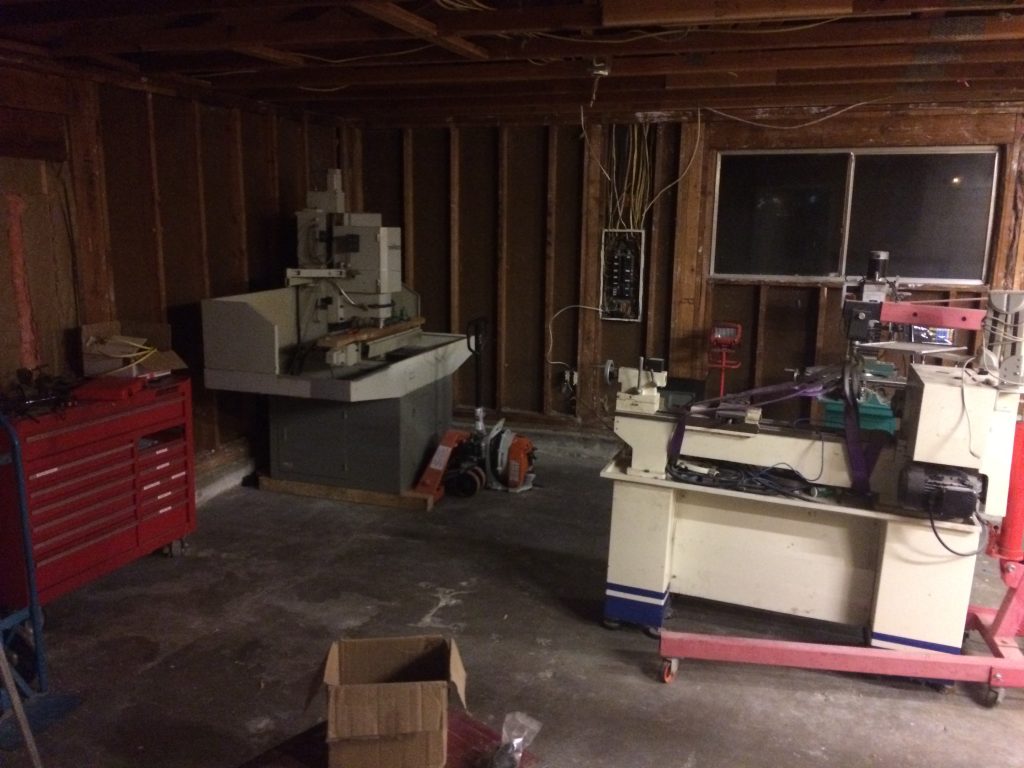
Just to add, it sort of comes down to how accurately you want to model your machinery. I have a few similar things in my shop, Fadal, bridgeport, a Steptoe shaper, K&T some Monarchs, amongst others.
The best layout I ever drew to fit things together was just scaling by memory on a clean sheet of paper and then I refined it with a tape measure. No CAD involved.
One of the big problems with manual mills is the axis travels have to be taken into account, eventually, and showing the max limits on a pure overhead view looks to take up huge amounts of room. Also depending on how you are packed in, some of the axis travels have to be compromised slightly. To get the full X- travel on my small horizontal mill, I'd have to take the spinner off the handle... Its also tricky to model the Z-axis travel.
A potential tool for setting things up is to put your machines on custom-made pallets so that a pallet jack can roll them around. The setup is easily changed up to the length of the power cords. Once you finalize the layout, you can commit to rigging everything off the pallets and place them on the floor. I left the 2x6 blocks permanently under all of my lathes, either I'm too tall or they are too short