To avoid these ads, REGISTER NOW!

Calibrating a wooden level?

Cleave

Well-known member
Joined
Jul 11, 2018
Messages
353
Location
Back Porch
I just picked up my first wooden level, a Stanley No. 0. I did the old check before buying, where you flip it and see if it reads the same, and it didn't read the same - but I optimistically blamed it on the warped deck boards I checked it on. I repeated the test at home in a more controlled manner and its definitely off.
I suppose a guy could plane the reference side until it reads true, but is there a better way? I like the old tools but don't have much use for a level that isn't true.
 
To avoid these ads, REGISTER NOW!

RTM

Well-known member
Joined
May 13, 2019
Messages
13,088
Location
SF Bay Area
Last edited:
OP
C

Cleave

Well-known member
Joined
Jul 11, 2018
Messages
353
Location
Back Porch
That's a great article, thanks for the link. It brought me to a better write up by the same man here,
that goes through the process with a few pictures and important points highlighted.
The level I found is a fairly beat up No. 0, nothing too special, but could still become a good tool. May as well give it a shot if I ever have a few minutes to focus (5 young apprentices at home). Of course the plaster of paris will cost more than the level did!
 

slowtwitch73

Well-known member
Joined
Apr 18, 2019
Messages
5,876
Location
Hellgate
If the level is warped you're sol. I have a fancy oak n brass Stanley out in the garage that was my dad's.. sob is so twisted as to be useless.

Also, warrped boards shouldnt have mattered.. should read the same once flipped 180 no matter what... as you found out, its the level.
 

Mike'smeatshop

Well-known member
Joined
Apr 1, 2023
Messages
1,273
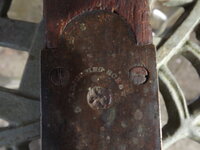
Hate to hack in but how to find a old Stanley model if not marked. I have had a few with numbers on the ends but this one may have been trimmed down. Pat, 1862 to 1872. 14 inch long by 1.25 x 1.50. Thanks.
 

Attachments

  • DSCF5458.JPG
    DSCF5458.JPG
    657 KB · Views: 13
  • DSCF5460.JPG
    DSCF5460.JPG
    493 KB · Views: 13
  • DSCF5461.JPG
    DSCF5461.JPG
    365.6 KB · Views: 13
OP
C

Cleave

Well-known member
Joined
Jul 11, 2018
Messages
353
Location
Back Porch
Correct - the surface doesn't need to be level. I just wasn't sure I had located it in exactly the same place and the boards were so warped, it could have made a difference. I was in a hurry so just bought it....
The wood looks straight and true by eye.
 

crguy

Well-known member
Joined
Jan 24, 2016
Messages
2,646
Location
SW Washington
A lot of the common wood levels had adjustable vials. You could buy one that was adjustable cheaper and easier than you can mess with that one.
 
To avoid these ads, REGISTER NOW!

nadogail

Well-known member
Joined
Jan 23, 2009
Messages
31,917
Location
Coronado, CA
Would a Cheap New level look good in a Display Case?

Not everybody buys old tools to actually work with them.
 

Leviton

Well-known member
Joined
Feb 25, 2019
Messages
896
Location
Oregon
That's a great article, thanks for the link. It brought me to a better write up by the same man here,
that goes through the process with a few pictures and important points highlighted.
The level I found is a fairly beat up No. 0, nothing too special, but could still become a good tool. May as well give it a shot if I ever have a few minutes to focus (5 young apprentices at home). Of course the plaster of paris will cost more than the level did!
Thanks for the blog link. Great info in there. I'm going to give it a go.

I can appreciate repair parts or material that cost 5x the second-hand cost of the tool I'm repairing. However, there are some fun projects you can make with kids (or grand-kids) using the extra Plaster of Paris (if I am interpreting your apprentice comment correctly).
 

RTM

Well-known member
Joined
May 13, 2019
Messages
13,088
Location
SF Bay Area
Hate to hack in but how to find a old Stanley model if not marked. I have had a few with numbers on the ends but this one may have been trimmed down. Pat, 1862 to 1872. 14 inch long by 1.25 x 1.50. Thanks.

Start by going to DATAMP dot org, entering your patent dates, and then they might tell you what it was used on.

Then you can go to the International Tool Catalog Library at Archive dot org, enter Stanley, sort by date published, then look at catalogs up to about 15 years after your patent dates. The first pages of the level section will often describe features for the levels, then you can work from there to a model number abd size.


Mike'smeatshop

Well-known member
Joined
Apr 1, 2023
Messages
1,273
Start by going to DATAMP dot org, entering your patent dates, and then they might tell you what it was used on.

Then you can go to the International Tool Catalog Library at Archive dot org, enter Stanley, sort by date published, then look at catalogs up to about 15 years after your patent dates. The first pages of the level section will often describe features for the levels, then you can work from there to a model number abd size.

Thanks.
 
OP
C

Cleave

Well-known member
Joined
Jul 11, 2018
Messages
353
Location
Back Porch
Hey guys, while resetting the vial sounds fun, I found a better way. I just won an auction lot for $10 including a Disston No. 12 saw in fantastic condition (1917-1927), a couple framing squares, and a Stanley level, about 2' long, that has the adjustment screw, and is pretty accurate with the flip test.
 

rlitman

Well-known member
Joined
Oct 18, 2010
Messages
24,582
Location
Long Island
Would floating it on water not be an ideal way to check its accuracy?
Not really. While the water's surface will be on average level, there's no reason to believe that the density of the wooden level is even throughout, or that it will float level.
 

RTM

Well-known member
Joined
May 13, 2019
Messages
13,088
Location
SF Bay Area
At least one of mine would sink, being rosewood with brass corners. The others probably would sink also, not much cross section.
 
To avoid these ads, REGISTER NOW!
Top Bottom