
You are using an out of date browser. It may not display this or other websites correctly.
You should upgrade or use an alternative browser.
You should upgrade or use an alternative browser.
Can I use this for 200A SE cable?
- Thread starter bczygan
- Start date
wyliesdiesels
Well-known member
The SER does not need to be in conduit.
Stripping the SER and using individual conductors is a violation if theyre not labeled but obviously OP dont care.
Not pulling a permit could equal trouble when seling property.
Not involving PoCo in cutover could equal hefty fines. Pulling a meter here will net hefty fines...electricians cant even pull them. Has to be the PoCo...
Stripping the SER and using individual conductors is a violation if theyre not labeled but obviously OP dont care.
Not pulling a permit could equal trouble when seling property.
Not involving PoCo in cutover could equal hefty fines. Pulling a meter here will net hefty fines...electricians cant even pull them. Has to be the PoCo...
Terry D
Well-known member
The SER does not need to be in conduit.
Stripping the SER and using individual conductors is a violation if theyre not labeled but obviously OP dont care.
Not pulling a permit could equal trouble when seling property.
Not involving PoCo in cutover could equal hefty fines. Pulling a meter here will net hefty fines...electricians cant even pull them. Has to be the PoCo...
Not all areas, we are allowed to pull them if licensed. We have a couple of jurisdictions that we cant pull them, but most areas we can. We also make the connections up. Only thing we are not allowed to do anymore is detach a overhead and relocate it, like to a mast. That is a 500.00 fine
The SER does not need to be in conduit.
Stripping the SER and using individual conductors is a violation if they're not labeled but obviously OP doesn't care.
Not pulling a permit could equal trouble when selling property.
Not involving PoCo in cutover could equal hefty fines. Pulling a meter here will net hefty fines...electricians cant even pull them. Has to be the PoCo...
House is in the family and will never be sold. Won't do individual conductors, why should I.
The existing entrance cable is so weather worn that the ground is exposed for most of it's length. The sheath on this SER is very thin. I don't trust it to be exposed. And aren't you supposed to guard it where it could be damaged, inside or out? This is next to a deck. A lot of people here put SE cable in conduit. Might even be code now.
Still looking for answers to questions.
Bill
Last edited:
wyliesdiesels
Well-known member
There is no ground wire on a service entrance cable from the weatherhead to the main service panel.
So you have an exposed neutral. Can you post some pics
So you have an exposed neutral. Can you post some pics
There is no ground wire on a service entrance cable from the weatherhead to the main service panel.
So you have an exposed neutral. Can you post some pics
Don't have a photo but this was installed 1940ish.
I have a 60A fused main panel (2 30A main buss type fused and 8 circuits) and another side panel with a 40A and a 30A breaker.
Entrance cable is similar to a SEU in shape and there are thin wires wrapped around it diagonally. That is what is showing.
Bill
wyliesdiesels
Well-known member
SEU has a concentric neutral so that would be your neutral wire.
NOT GOOD TO HAVE IT EXPOSED TO THE ELEMENTS???
Bill
There is a lot of SE cable installed and if it were a problem then changes would be made. The use of SE cable is regional in PG&E and SCE territory it is not recognized by those utilities, only use here in PG&E territory is 1950’s or older services.
Plus your are asking questions that you should not be asking if you knew what you are doing.

bigdav160
Well-known member
Maybe it's me or perhaps the picture but it doesn't look to be the proper gauge to handle 200amps.
What is it? #6?
What is it? #6?
MrSurly
Well-known member
I'm left wondering how you or your "electrician" are going to address the connection to the drop.... Are you planning to
1. wire it while it's HOT...or
2. are you going to pull the POCO's cutouts?
Just so you know, #1 is insane (unless absolutely necessary, which it clearly isn't in this case)
and #2 is illegal in most areas.
1. wire it while it's HOT...or
2. are you going to pull the POCO's cutouts?
Just so you know, #1 is insane (unless absolutely necessary, which it clearly isn't in this case)
and #2 is illegal in most areas.
Like I said earlier, strip the wire and just put the (3) 4/0's in the conduit. There is no need for the 2/0 ground to be in there. So what if its one more violation.
Your already doing the work without a permit.
Your pulling the meter without being licensed. We have some jurisdictions here where even a licensed electrician cant pull a meter.
Plus your are asking questions that you should not be asking if you knew what you are doing.
It is precisely because I don't know everything that I must ask these questions. And it is also why anyone who wants me to be safe, will do all they can to advise me on every detail needed, to meet that goal. That's what all the codes are there for anyway. You don't need codes and permits to be safe, if you install it properly.
Last edited:
Jim greengo
Well-known member
Service drops are hooked up hot all the time by electricians,its not that big of a deal.I'm left wondering how you or your "electrician" are going to address the connection to the drop.... Are you planning to
1. wire it while it's HOT...or
2. are you going to pull the POCO's cutouts?
Just so you know, #1 is insane (unless absolutely necessary, which it clearly isn't in this case)
and #2 is illegal in most areas.
Where a good pair of leather gloves.
I'm left wondering how you or your "electrician" are going to address the connection to the drop.... Are you planning to
1. wire it while it's HOT...or
2. are you going to pull the POCO's cutouts?
Just so you know, #1 is insane (unless absolutely necessary, which it clearly isn't in this case)
and #2 is illegal in most areas.
I've watched the POCO pull the cutouts recently, when they replaced the lines.
The POCO made the connection hot, when they gave me a new drop at that time. And many electricians here do it too.
I have the POCO's installation drawings and standards and will follow them.
Another reason to not get them involved is that changes in the SE requires going UG at owners expense.
So a couple more questions to add to the list:
Torque for parallel connectors at the connection to the drop?
Covering for those connections? None?, Friction tape?, Other?
Bill
mike93lx
ALLIANCE MEMBER
It is precisely because I don't know everything that I must ask these questions. And why anyone who wants me to be safe will do all they can to advise me on every detail needed to meet that goal. That's what all the codes are there for anyway. You don't need codes and permits to be safe, if you install it properly.
Some expertise should be paid for. But you don't care
wyliesdiesels
Well-known member
I've watched the POCO pull the cutouts recently, when they replaced the lines.
The POCO made the connection hot, when they gave me a new drop at that time. And many electricians here do it too.
I have the POCO's installation drawings and standards and will follow them.
Another reason to not get them involved is that changes in the SE requires going UG at owners expense.
So a couple more questions to add to the list:
Torque for parallel connectors at the connection to the drop?
Covering for those connections? None?, Friction tape?, Other?
Bill
The PoCos out here only use compression connectors crimped with battery powered hydraulic crimpers.
What does your PoCo use?
The PoCos out here only use compression connectors crimped with battery powered hydraulic crimpers.
What does your PoCo use?
I didn't catch that part of the operation. I will look at the connections.
OK!
I just went out and took photos.
Notice how exposed the existing entrance cable is.
And what kind of connectors are they using?
Bill
Attachments


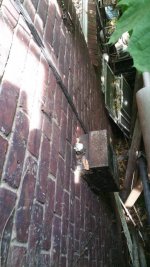
Last edited:
jeffmoss26
Well-known member
yikes...
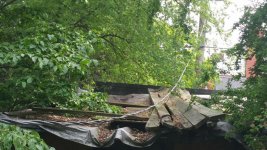

Personally if I had what you have there and I was trying to avoid buying anything else I would strip the three conductors out of a long enough piece for the riser and run it through the conduit, it is probably not properly marked but if it's not going to be inspected I doupt it will matter. I would buy a piece of SEU cable to go from the meter can to the main panel, this should be pretty short anyways. Use the rest of the ser cable to feed subpanel if you want, I'm not sure that it will fit into a breaker to feed the sub with some hassle but you might luck out.
Sent from my SM-T510 using Tapatalk
Sent from my SM-T510 using Tapatalk
wyliesdiesels
Well-known member
yes those are parallel connectors.
Those arent used around here anymore. hydraulic crimped connectors are way better
Personally i would do a rigid mast and 3 pieces of XHHW for longevity.
Use the SER for subpanel feeders....
Those arent used around here anymore. hydraulic crimped connectors are way better
Personally i would do a rigid mast and 3 pieces of XHHW for longevity.
Use the SER for subpanel feeders....
Last edited:
Jim greengo
Well-known member
And I see they are using parallel connectors.
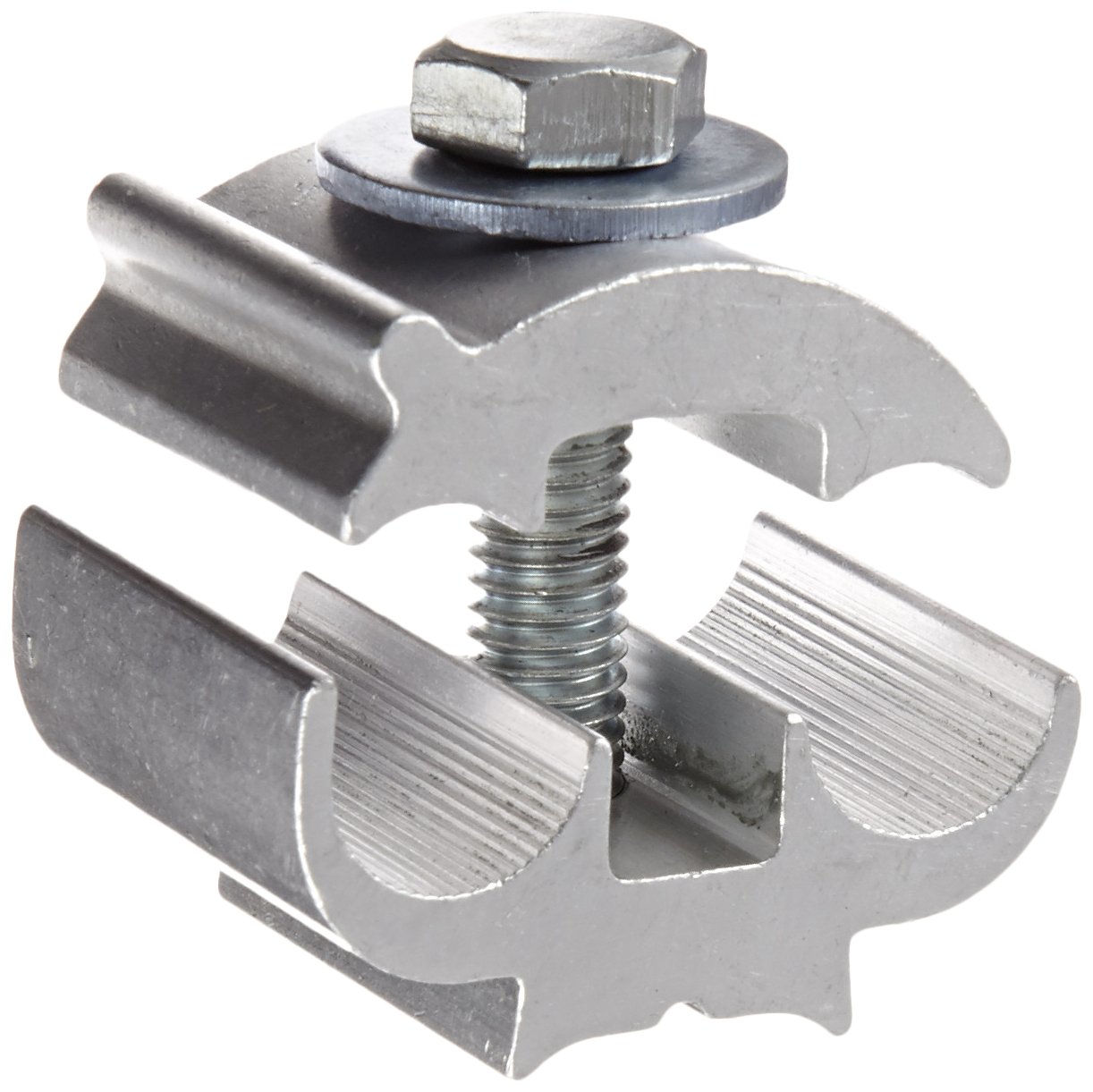
Bill
I've never seen those before.
Jim greengo
Well-known member
I really prefer metal conduit if longevity is more important than price. Either IMC or aluminum rigid is nice. I'd save money on aluminum vs copper wire but I don't like PVC or exposed SE cable.
Exactly.

Jim greengo
Well-known member
yes those are parallel connectors.
Those arent used around here. hydraulic crimped connectors are way better
Personally i would do a rigid mast and 3 pieces of XHHW for longevity.
Use the SER for subpanel feeders....
mrobins297aaa
Well-known member
Plenty of slack in the drop.
But I think the sheathing is pretty far gone on the existing entrance cable.
1940's rusty meter can and weird entry from the bottom?
Might be time to redo it???
Bill
Bill I can't imagine your going to try and re-use that old meter can.
it looks like one of those old meter boxes that the meter doesn't pull out and you have to back out the bolts inside the can to cut the power. I don't think there even good for more than 60 amps. iirc there's a bunch of wiring inside those cans that are maybe at the most #6 copper.
So if you going to install the newer style can, the kind that the meter pulls out.
and if you do the work your self you still have to get DTE to come out and install the meter.
when we were doing them they would give you the meter cans but not the meters that was something they had to come out and install themselves and if it's not to code they would just tag it and not install the meter until the violations were corrected.
Last edited:
mrobins297aaa
Well-known member
I know you said there was not going to being any permits pulled, but there is still going to be a inspection by DTE.
just something to think about
just something to think about
mrobins297aaa
Well-known member
one last thing, are you sure your existing drop to the meter can is alum wire?
that bare ground sure looks like it has a green tint to it.
some of those old services had what they call alum coated copper wire (it might have been steel coated copper I can't remember) but it looked just like alum wire you had to look real close at the ends to tell. either way it was still considered to be copper wire by DTE.
the point I'm making is DTE doesn't like dis similar metals in there meter boxes.
I got tagged for that before
just something to be aware of.
on the good side we did hundreds of meters for DTE interruptible service for AC when doing HVAC and they never once asked to see a permit..........they have there own set of rules or least they use to.
So they may not care about a permit but make sure what ever wire you use is up to there standards, if not it'll get tagged.
that bare ground sure looks like it has a green tint to it.
some of those old services had what they call alum coated copper wire (it might have been steel coated copper I can't remember) but it looked just like alum wire you had to look real close at the ends to tell. either way it was still considered to be copper wire by DTE.
the point I'm making is DTE doesn't like dis similar metals in there meter boxes.
I got tagged for that before
just something to be aware of.
on the good side we did hundreds of meters for DTE interruptible service for AC when doing HVAC and they never once asked to see a permit..........they have there own set of rules or least they use to.
So they may not care about a permit but make sure what ever wire you use is up to there standards, if not it'll get tagged.
Last edited:
Bill I can't imagine your going to try and re-use that old meter can.
Of course not!
it looks like one of those old meter boxes that the meter doesn't pull out and you have to back out the bolts inside the can to cut the power. I don't think there even good for more than 60 amps. iirc there's a bunch of wiring inside those cans that are maybe at the most #6 copper.
It does pull out. It's a 200A capable smart meter.
So if you going to install the newer style can, the kind that the meter pulls out.
and if you do the work your self you still have to get DTE to come out and install the meter.
I will just do it myself! Pop it out and pop it back in the new meter box.
when we were doing them they would give you the meter cans but not the meters that was something they had to come out and install themselves and if it's not to code they would just tag it and not install the meter until the violations were corrected.
No reason for them to come out.I know you said there was not going to being any permits pulled, but there is still going to be a inspection by DTE.
just something to think about
one last thing, are you sure your existing drop to the meter can is alum wire?
that bare ground sure looks like it has a green tint to it.
some of those old services had what they call alum coated copper wire (it might have been steel coated copper I can't remember) but it looked just like alum wire you had to look real close at the ends to tell.
the point I'm making is DTE doesn't like dis similar metals in there meter boxes.
I got tagged for that before
just something to be aware of.
The OH drop is all new aluminum triplex adequate for 200A. Verified by the installation crew.
on the good side we did hundreds of meters for DTE interruptible service for AC when doing HVAC and they never once asked to see a permit..........they have there own set of rules or least they use to.
So they may not care about a permit but make sure what ever wire you use is up to there standards, if not it'll get tagged.
It's all OK. But thanks for the info.
Bill
mrobins297aaa
Well-known member
Bill just curious how are you going to get the new meter?
Last edited:
mrobins297aaa
Well-known member
I guess I'm not following you, you must have a newer can with a newer meter. that I didn't see.
because those old meter cans from the 40' and 50's the meter didn't pull out.
well I hope it all works out ok seems like you got it figured out.
because those old meter cans from the 40' and 50's the meter didn't pull out.
well I hope it all works out ok seems like you got it figured out.
I guess I'm not following you, you must have a newer can with a newer meter. that I didn't see.
because those old meter cans from the 40' and 50's the meter didn't pull out.
well I hope it all works out ok seems like you got it figured out.
It pulls out. I've done it before.
I just make sure that all loads in the house are off so no arc flash.
Everything will be built and ready for the changeover. Call DTE, pull the meter, change over the drop and reinstall the meter. Will just take a few minutes or so. Then pull off all the old ****.
Bill
Last edited: