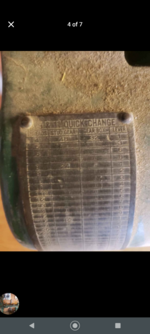
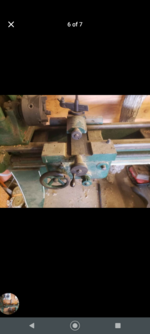
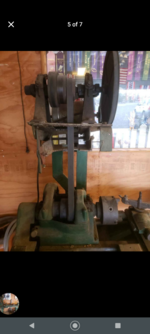
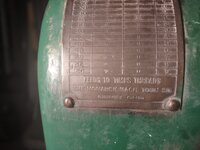
A good friend of mine said it looks like a Barnes. It appears to function properly but I only had time to unload it and leave for Christmas. I'd really like to know what it is and find some literature on it.
Thanks,
John
Thanks,
John

Thanks for the reply Tom! When I get home I will take better pictures and clean up the tag and look for more identifying numbers.Small pictures make it difficult. Lettering at top of thread chart looks like (?) & N QUICK CHANGE. The hand wheel on the left side of the apron could indicate a British machine. It's usually located on the right side of the apron on American lathes.
Tom B.
RoninB4, sorry I certainly didn't mean to inconvenience anyone. I can assure you I came to this forum after searching considerably for information.Perhaps a little digging on lathes.uk would provide some photos/drawings to help you. It's always appreciated when you try to do the research yourself before asking for the help/time of others, especially for your first post. Would be glad to help afterwards. The photos aren't very good.
Thanks for the reply Ed! I'll be home tomorrow and will look for numbers around the chuck.I'm not sure what it is but I would look at the Ohio area lathe builders. Cincinnati, Cleaveland, and Sidney area companies were prolific and often shared design features. Some clues....The way the Headstock bearing towers are tied together straight across level with a swell to accommodate the largest pulley is Sidney like. Most vintage lathe castings tying the towers are lower closer to the chuck.
Also the rounded guard on the end of the headstock is similar. The rounded oval top of the compound tool rest is also consistent with many lathes from the area. Leg shape and tailstock features match as well. There are many less well known manufacturers from the area to sort through though. Just some observations. Ed.
... The hand wheel on the left side of the apron could indicate a British machine. It's usually located on the right side of the apron on American lathes.
Tom B.
Bear--you are correct. No excuse other than a brain fart, thanks. The usual location of the hand wheel for carriage travel on British lathes in at the right side of the apron.
I think you have that backwards...
-Bear