To avoid these ads, REGISTER NOW!

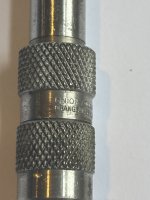
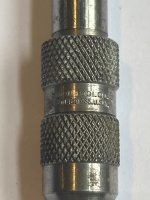
Can you identify this precision machine tool?

Prof Steve

Member
Joined
Jul 26, 2026
Messages
23
As some of you know, I am liquidating some tools from my late father's precision machine shop. He ran hardinges till he retired in the late 1990s, and some of the tooling is left over. AI originally thought this Union Mfg tool was a center punch, and I know that's not the case. I imagine it was a set up tool. Does anyone know what its called? Thanks!
 

Attachments

  • 66 1.jpeg
    66 1.jpeg
    490.5 KB · Views: 36
  • 66 2.jpeg
    66 2.jpeg
    343.7 KB · Views: 35
  • 66 3.jpeg
    66 3.jpeg
    309.5 KB · Views: 37
  • 66 4.jpeg
    66 4.jpeg
    267.7 KB · Views: 34
  • 66 5.jpeg
    66 5.jpeg
    442 KB · Views: 33
  • 66 6.jpeg
    66 6.jpeg
    342.2 KB · Views: 33
  • 66 10.jpeg
    66 10.jpeg
    336.3 KB · Views: 32
  • 66 11.jpeg
    66 11.jpeg
    357.1 KB · Views: 33
  • 667.jpg
    667.jpg
    570.2 KB · Views: 36
To avoid these ads, REGISTER NOW!

RoninB4

Well-known member
Joined
Jul 22, 2020
Messages
3,656
Location
Under My House
^ correct ID in the post above. They're used for locating the edge of a block in milling operations. Can't see using one in a lathe, although Hardinge did make cute little milling machines in addition to the more well known lathes. Some folks prefer using the older "wiggler" instead of a more modern cylindrical edge finder. They're not really very accurate but they aren't expensive and often accurate enough for some types of work. My condolences for the loss of your father to you and your family.
 

alfadan

Well-known member
Joined
Mar 9, 2007
Messages
2,135
Location
Augusta, ks
I remember seeing a video where the guy pointed out a wiggler could be used more accurately if the work was stopped before it kicked out. He put sharpie on the ball and snuck up on it until you could see it rubbed off, but no more. I've thought about testing that out.
 
OP
P

Prof Steve

Member
Joined
Jul 26, 2026
Messages
23
^ correct ID in the post above. They're used for locating the edge of a block in milling operations. Can't see using one in a lathe, although Hardinge did make cute little milling machines in addition to the more well known lathes. Some folks prefer using the older "wiggler" instead of a more modern cylindrical edge finder. They're not really very accurate but they aren't expensive and often accurate enough for some types of work. My condolences for the loss of your father to you and your family.
Thank you. When he started his shop in 1960, not sure what was available. He also had a lathe in the shop, but pretty sure he used this with his high precision Hardinge machine. Maybe the more modern edge finders weren't available yet.
 
To avoid these ads, REGISTER NOW!

RoninB4

Well-known member
Joined
Jul 22, 2020
Messages
3,656
Location
Under My House
Thank you. When he started his shop in 1960, not sure what was available.
-Starting his shop in 1960 meant he was what they now call "old school". I came into the trades about 17 years later and learned under men like your father. I still have a deep respect for what they had to accomplish with what they had to work with back then, crude/primitive by todays standards. The machines back then were certainly capable of doing good work but you really had to know more than just running the machine itself. I probably would have liked to have met your dad and worked with/for him.
He also had a lathe in the shop, but pretty sure he used this with his high precision Hardinge machine.
-The milling machines Hardinge made were fairly small but were well regarded then and even now by many veteran machinists. For some of them that are still of working age they just want to have one as an object of admiration, a collector type of affection for older iron from when this country still made world class things. The "footprint" was small enough for even a small shop at home and the build quality was good. The little Hardinge mills still draw admiration from those that routinely operate machinery large enough to park a car on.
Maybe the more modern edge finders weren't available yet.
-They likely were available back then. The cylindrical edge finders have been around since the 70's but, being creatures of habit, we tend to lean on the familiar that have produced acceptable results. It's also about just how accurate you need to be. I have devices I prefer to use but only when the level of precision/accuracy calls for it. Much like the grumpy old men from the old school and the devices they used, they do not suffer fools gladly. I have a wiggler but rarely use it because it almost broke my finger once and I haven't entirely forgiven it yet.
 
OP
P

Prof Steve

Member
Joined
Jul 26, 2026
Messages
23
I have a lot of small items like this. Am I better off trying to sell them piecemeal, or lump them into large groups?
 

RTM

Well-known member
Joined
May 13, 2019
Messages
13,359
Location
SF Bay Area
Am I better off trying to sell them piecemeal, or lump them into large groups?
Bought a few lots at auction where they are obviously grouping less likely to sell items w good stuff, make disposing of the **** your problem. So rather than putting all the wigglers together and having them not sell, mix up the hot sellers with obscure stuff.
 
To avoid these ads, REGISTER NOW!
Top Bottom