To avoid these ads, REGISTER NOW!

can't cut or drill my slab?

NAPPY

Well-known member
Joined
Jun 30, 2011
Messages
54
Location
san tan valley,az
hello,

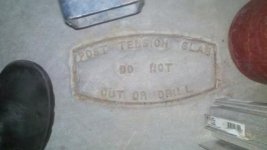
don't know if this is the section for this question. the floor in my garage has a stamp in the concrete that says "post tension slab do not cut or drill". what is post tension and why can't i modify it? i want to mount some anchors in my floor. is the home builder just covering there ***, or is it for real. what happens if i need to have repairs done that involve cutting my floor?

thanks for the help.
 

Attachments

  • slab.jpg
    slab.jpg
    15.3 KB · Views: 334
To avoid these ads, REGISTER NOW!

geologist

Well-known member
Joined
Dec 14, 2011
Messages
5,326
Most residential foundations in the United States are constructed with rebar or wire mesh as their reinforcement to minimize shrinkage cracks and to resist the stresses created by the weight of the building. An alternative is the use of post-tensioned strands in lieu of conventional bonded reinforcing. Post-tensioned foundations have been around since the 1960s and historically have been used for expansive and compressive soil conditions that are prevalent in Texas, California, and other parts of the Southwest. Concrete is naturally weak in tension, but good in compression, so it is in the best interest of the concrete to be in compression.

The general philosophy of post-tensioning is to apply a large enough force to the concrete such that any tensile stresses are reduced to acceptable levels. Placing the concrete in a compressed state will minimize the potential for cracking and improve the integrity of the slab.

If you cut or drill, you could potentially cut through one of the "tendons" that have been used to post-tension the slab. Generally, these run in a grid pattern on 48" centers. See below:

post_tension_slab4.jpg


So basically, they tell you not to cut or drill because it would be like snapping the cable of a suspension bridge. The sudden release of energy from a snapped tendon could potentially cause serious injury to you, your slab, or both. The concrete itself isn't the danger, it's the tendons used for post tensioning.

NOTE: The tendons shown above haven't yet been pulled. You lay out the pattern first, pour the concrete, and then tension the cables to compress the concrete.
 
OP
N

NAPPY

Well-known member
Joined
Jun 30, 2011
Messages
54
Location
san tan valley,az
thanks for the info. i was hoping they where pulling my leg. i'm gonna have to head back to the drawing board on this one.
 

RivennHewn

Well-known member
Joined
Jun 4, 2011
Messages
10,399
Location
PNW
You can have a structural imaging company X-ray your slab, or at least a small section of it, if you have a specific location that you want to drill or core a hole.
 

Scotty72SS

Well-known member
Joined
Oct 25, 2011
Messages
89
Location
The Woodlands, TX
Like was stated, you can see around the edge of your slab where the PT cables were tensioned. There will be 3-4" grouted holes every three or four feet. You could mark and lay these grids out and if you were not going to have to drill close to them you could carefully drill a small 1/2" or smaller hole for anchors. Drill slow, and if you see red plastic, STOP! Never attempt to cut or core in a PT slab without getting the slab scanned. Stud finder won't work. I have heard horror stories of people cutting these and throwing core rigs across a job site and hurting or killing people.
 

Nighttrain

Well-known member
Joined
Aug 6, 2009
Messages
2,682
Location
Dripping Springs, Tx
We had these at our old house. When they came back to put tension on them, several weeks after the slab was poured they used a hydraulic type ram which pulls one end of cable something like 10,000 fp. So as the others mentioned you do not want to drill into one.
 

HemiRambler

Well-known member
Joined
Apr 20, 2010
Messages
270
Location
Cleveland, Ohio
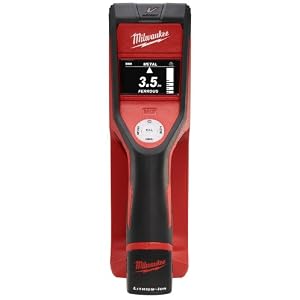
They also make hand held scanners - sorta like an industrial "stud finder" for rebar.

We use them at work when drilling the floors at hospitals.

I bet you can rent one.
 
To avoid these ads, REGISTER NOW!

cderalow

Well-known member
Joined
Nov 13, 2011
Messages
1,326
Location
Potomac, MD
To have accurate readings you'll need GPR (ground penetrating radar) or x-ray to see the locations.

What type of scan you need will vary on slab thickness.

Pt concrete is more common in large concrete structures like high rises or office buildings. Dont think I've ever heard of it being used in residential unless you have a crawl space or basement under your garage area. Which in itself would be unique.
 

TommyK

Well-known member
Joined
Mar 29, 2011
Messages
546
Location
CT
Find a private underground utility locating company in your area. They will be able to accurately mark the tendon locations for you. You are only concerned with the cables in the immediate vicinity of where you want to install your anchors so it won't take them long.

A pachometer is the instrument used to properly locate rebar in concrete.
 
OP
N

NAPPY

Well-known member
Joined
Jun 30, 2011
Messages
54
Location
san tan valley,az
Find a private underground utility locating company in your area. They will be able to accurately mark the tendon locations for you. You are only concerned with the cables in the immediate vicinity of where you want to install your anchors so it won't take them long.


that's a good idea! thx.
 

crash02

Active member
Joined
Feb 20, 2010
Messages
30
Location
OKC, Oklahoma
Could you use epoxy instead? I have heard of guys that use epoxy to anchor steel building poles to the concrete instead of using studs drilled into the floor.
 

metaleltr

Well-known member
Joined
Sep 4, 2009
Messages
2,681
Location
Western Ohio
Holes have to be drilled, then epoxy is used to hold studs in the concrete. You can do it, but you still have to locate the tendons.
 

Kwantum

New member
Joined
Sep 27, 2009
Messages
4
Diggin' up an old one here...

In my search for info on mounting my air compressor in the garage, I found this thread to be one of the top hits. I figured it would be beneficial to others to post some info that I recently found out.

I spoke to a company that uses ground penetrating radar to locate tendons. They charge $250 for the first hour and $175 for each additional hour. Seemed a little steep considering I only need a 3' x 3' area scanned.

I then called a company that does a lot of the post tension slab install and repair work in my area. Apparently, the tendons get hit by framers on occasion. When this happens, he said, the tendon shoots out the side of the slab by about 8" or so. Everything I previously read spoke to horror stories of these things lashing out and cutting people in two and/or shattering part of the slab. This doesn't seem to be the case. Again, this is from a guy that installs and repair these things for a living. It is not to say worst fates haven't befallen a drill operator, he has just never seen it.

Another thing he mentioned is that the tendons are mounted approximately midway through the slab. He said that framers usually mark their drill bits with a piece of masking tape and don't drill any deeper than 3" into an 8" slab. When using that method they disregard the tendon location as they will not encounter it at that depth.
 

JordonMusser

Well-known member
Joined
Jan 5, 2009
Messages
367
Location
Dallas, TX
Yup.. i had to have a huge hole cut in my slab for a leak. They used a chop saw and stopped when they hit the black plastic, and then around it. My thought is... if it was going to be instant death, they would have been more careful.

YMMV :) Still scary...!!
 

driz

Well-known member
Joined
May 22, 2008
Messages
701
Location
Northern NY
Glad mine is just a regular slab. :thumbup: So if this particular demon cable was so big and bad and also sheathed in plastic what's stopping you from drilling like you normally would. I mean come on drill 1/8 inch and look, drill 1/8 look blow it out and just keep repeating. If that cable was so big and bad you aren't going to just blast right through it no way no how.
But of course that's just me, I carried a loaded gun my whole working life and even found the courage to hand prop a plane or two and never died single time though I won't juggle chain saws.:willy_nil . I'm also the guy that just bought a brand new tractor and the first thing I did was duck tape that damned seat safety :rocker:down. Seriously , if that guy could run a concrete saw and control it good enough Ray Charles could do it with a hand drill and a little care You are talking some pretty small holes for an air compressor right, not that it really matters.
 

n8n

Well-known member
Joined
Mar 11, 2014
Messages
3,608
Location
Curtis Bay, MD
If you have any friends that do commercial electrical or sprinkler work x-raying for core drilling is very common in high rises, they may be able to recommend someone that will do it reliably and hopefully not too expensively.

As others have said, I personally would never touch a post-tensioned slab with any kind of cutting tool unless I was VERY confident in the location of all the cables.
 
To avoid these ads, REGISTER NOW!
Top Bottom