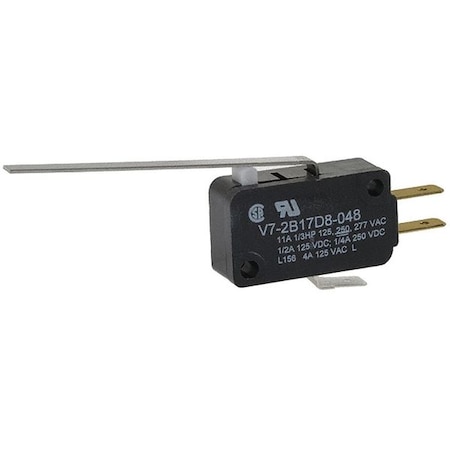
That's a great idea. I could use one of those on the garage door to indicate it's open (and kill the lift). If the door is open, some vehicles would hit it and some (most) wouldn't. The geometry for me is a little complicated.
Maybe, but if you want to see if the garage door is open, I'd use an alarm contact that breaks the moment the door is anything other than fully closed.
Simply testing that the door is fully open doesn't prevent one from opening the door while the lift is up. Also, while a GDO has limit switches, putting two similar limit switches in parallel (your is the second, to sense the door), may not reliably activate the second switch, since the open door position may vary by more than the movement of the lever.
Then again, that will prevent any use of the lift with the door open, which may not be what you want. Plus you probably want to prevent the door from opening with the lift up.
Maybe something with a light beam and two reflectors could be made to stop the lift at one height with the door up, and allow a higher lifting with the door down. It might take some thinking.
This is also a good idea but there's a couple details to also consider. The limit switch pictured is rated for 0.25A @ 240vac. The one lift I've been involved with has an el-cheapo contact that is pulled open by a cable strung across the top. It does however have enough ampacity to handle the 2-3hp motor current which is somewhere in the 6-9A range steady-state.
That switch would also have to be wired to a relay or contactor which could handle the motor amperage. A person would also have to consider how to enclose the switch properly if it were wired for 240vac....
100% agreed. I made the [poor] assumption that the upper limit switch is on a 24V control circuit, and that neither the switch nor its wiring sees full motor current. While it might be possible to switch motor current directly with such an arrangement, I would strongly advise against it.
If the lift in question has it's own control circuit and contactor, all the better. If not, you could wire your own with a contactor, but there are easier options as well, such as relays with built in transformers (often made for furnaces or built-in-vacuums and such).
Just be aware that not all packaged relays will work for this purpose. In a different project, I used a Functional Devices RIB01SBCDC, which has low voltage "dry contact" input that at first glance would appear perfect for this. However, it suffers from a delay of several seconds after making or breaking contact to the change of state, and with a moving device like a lift, that delay is unacceptable.