To avoid these ads, REGISTER NOW!

Carbide Rotary Files

Wamsutta

Well-known member
Joined
Jan 8, 2014
Messages
10,883
Location
Amarillo, Texas
How well do they remove welds? Are they faster than a grinding wheel? So far the fastest thing I've found to remove welds is a 3M Cubitron II grinding wheel. I get the 5 inch diameter x 1/4 inch thick wheels. My gut feeling tells me the rotary file doesn't remove welds any faster, but I thought I'd ask just to make sure.
 
To avoid these ads, REGISTER NOW!

gahrajmahal

Well-known member
Joined
Dec 12, 2008
Messages
2,538
Location
Cincinnati, Ohio
I use them to smooth welds. You won’t get any sparks either if that’s an issue. Removing welds, I still use a cutting wheel but that means sparks.
 

zendriver

Well-known member
Joined
Dec 10, 2014
Messages
30,075
Location
Indiana
I bought some and a die grinder, too smooth out an exhaust port

Did the job find in the bits looked like they had a scratch on them

I don’t know why it wouldn’t smooth out welds and since you mentioned it, I’ll probably give them a try on the upcoming rust job. I gotta do on a pick up truck.
 

jbfab

Well-known member
Joined
Jun 17, 2014
Messages
65
Definitely not better than a grinding wheel, but necessary for areas with restricted access sometimes. A better alternative is an air arc, although there is some expense for the electrode holder, it's loud, throws a lot of sparks, and does require a little technique to do it well. It is however very quick at removing weld if you have a lot to do.
 

dcg9381

Well-known member
Joined
Jun 20, 2018
Messages
11,829
Location
Austin, TX
Grind wheel is way faster with welds. But I love carbide files (rotary burr). Typical use for me is "adjusting" holes or slots.

A better alternative is an air arc, although there is some expense for the electrode holder, it's loud, throws a lot of sparks, and does require a little technique to do it well. It is however very quick at removing weld if you have a lot to do.
I think this is a "plasma cutter", no? I've never heard it called an air arc. These are great tools for cutting steel, very fast, but in my experience they tend to butcher some of the steel.. I wouldn't use it on something I had to put back together the same way.
 

yaidunno

Well-known member
Joined
Feb 10, 2011
Messages
1,336
Location
WI
Grind wheel is way faster with welds. But I love carbide files (rotary burr). Typical use for me is "adjusting" holes or slots.


I think this is a "plasma cutter", no? I've never heard it called an air arc. These are great tools for cutting steel, very fast, but in my experience they tend to butcher some of the steel.. I wouldn't use it on something I had to put back together the same way.

Air arc, otherwise known as gouging. Uses a consumable carbon based electrode to melt the metal, and then compressed air to blow said molten metal away. Commonly used in heavy industry, particularly in weld removal.
 

fatfillup

Well-known member
Joined
Jan 17, 2009
Messages
10,334
Location
Finksburg, Md
Grind wheel is way faster with welds. But I love carbide files (rotary burr). Typical use for me is "adjusting" holes or slots.


I think this is a "plasma cutter", no? I've never heard it called an air arc. These are great tools for cutting steel, very fast, but in my experience they tend to butcher some of the steel.. I wouldn't use it on something I had to put back together the same way.
I use a burr quite often when processing adjustable wrenches for resale. If they won't close all the way it is normally because it was used as a hammer. Where the adjustment arm exits the wrench when fully closed gets deformed because of hammering, I open up the hole with a burr. Quick and works well

I do believe an air arc is different then a plasma cutter. Air arc hooks up to your stick welder and air hose where a plasma cutter is a stand alone unit I think
 
To avoid these ads, REGISTER NOW!
OP
W

Wamsutta

Well-known member
Joined
Jan 8, 2014
Messages
10,883
Location
Amarillo, Texas
Had to google rotary file. Figured it was what is also called a burr. Seems my thinking was correct.
I got that name out of a catalog somewhere. I used to read machinist supply catalogs before the internet was invented.

But when you think it about it, it does work like a file and it does rotate. . .
 

danielbuck

Well-known member
Joined
Apr 15, 2014
Messages
925
We call them burr bits.

They make small slivers that get in ya and piss ya off, cover up.
Yep! There's a time and a place for burr bits for sure, but generally I don't use them unless I have to. Mainly for all the tiny metal splinters that it shoots out. A single cut burr bit can leave a very smooth finish though :)
 

speed bump

Well-known member
Joined
May 28, 2008
Messages
6,317
Location
Butte Montana
Are you wanting to remove welds or grind them flat? For grinding them your best bet is the biggest grinder wheel you can fit/handle.
 
OP
W

Wamsutta

Well-known member
Joined
Jan 8, 2014
Messages
10,883
Location
Amarillo, Texas
Are you wanting to remove welds or grind them flat? For grinding them your best bet is the biggest grinder wheel you can fit/handle.
I'm trying to remove the welds altogether. I'm able to do so, but it's time consuming; especially on triple pass welds.
 

thaxboyd

Well-known member
Joined
Apr 14, 2010
Messages
3,867
Location
Utah
I'm trying to remove the welds altogether. I'm able to do so, but it's time consuming; especially on triple pass welds.
Can you upload a Pic of what you're doing. Possible that there is an easier way.
 
OP
W

Wamsutta

Well-known member
Joined
Jan 8, 2014
Messages
10,883
Location
Amarillo, Texas
Can you upload a Pic of what you're doing. Possible that there is an easier way.
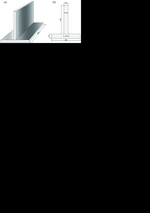
I've been running a pass on each side of a T-joint. More commonly known as a fillet weld. Instead of tossing the sample T-joint aside into the scrap pile like normal people would do, I've been disassembling the entire sample and reusing the steel for more samples. So far the quickest way to go about it I've found is to take a cut-off wheel and make a cut along the full length of the runner above the weld, and then grind what's left of the runner and the weld off of the sleeper with a grinding disc. I prefer to get the sleeper completely flat like it was before it was welded. So basically restoring the runner and sleeper back to original. It's a lot of grinding, but maybe it will motivate me to pay more attention to the process of running the weld passes and not screw up. Every once in a while I'll run a perfect pass by accident and those I don't have to disassemble.

WEB = "runner"
FLANGE = "sleeper"

T-Joint.png
 
Last edited:

speed bump

Well-known member
Joined
May 28, 2008
Messages
6,317
Location
Butte Montana
I'm trying to remove the welds altogether. I'm able to do so, but it's time consuming; especially on triple pass welds.

If it's something where you really need to remove them then an air arc gouging rod or a plasma gouging setup is going to be the move.

For practice at $1.5/lb 2.5" wide 3/8 strap probably costs you as much in consumables as it does to start over.
 

thaxboyd

Well-known member
Joined
Apr 14, 2010
Messages
3,867
Location
Utah
I've been running a pass on each side of a T-joint. More commonly known as a fillet weld. Instead of tossing the sample T-joint aside into the scrap pile like normal people would do, I've been disassembling the entire sample and reusing the steel for more samples. So far the quickest way to go about it I've found is to take a cut-off wheel and make a cut along the full length of the runner above the weld, and then grind what's left of the runner and the weld off of the sleeper with a grinding disc. I prefer to get the sleeper completely flat like it was before it was welded. So basically restoring the runner and sleeper back to original. It's a lot of grinding, but maybe it will motivate me to pay more attention to the process of running the weld passes and not screw up. Every once in a while I'll run a perfect pass by accident and those I don't have to disassemble.

WEB = "runner"
FLANGE = "sleeper"

T-Joint.png
You can't get a cut-off wheel on an angle grinder in there then flat grind after?
 
OP
W

Wamsutta

Well-known member
Joined
Jan 8, 2014
Messages
10,883
Location
Amarillo, Texas
You can't get a cut-off wheel on an angle grinder in there then flat grind after?
I have found that there's no way to remove the weld while leaving the T-joint fully intact without cutting into the runner. Eventually the runner get's cut off from trying to remove the weld from the sleeper. So I figure I might as well go ahead and cut the runner off preemptively so that I have easier access to the weld on the sleeper.

And also when trying to remove the weld while the T-Joint is intact, I have to use the vertical edge of the grinding disc. That decreases the diameter of the disc at a faster rate than using the bottom side of the disc. So in essence I end up losing part of the runner that is behind the weld.
 

ER70S-2

Well-known member
Joined
Jan 2, 2015
Messages
805
Just get some and try it. Burrs are essential tools that you should have anyway. I don't think they're appropriate for this application, though.
 
To avoid these ads, REGISTER NOW!
Top Bottom