
flht1997
Well-known member
Little walk through about what I did at school today.
I have a foundry and molders bench in my metals shop, and the first year metals students are required to make a casting, while the second year students make a pattern and a casting.
Today I made a casting of a split pattern hammer. It is made of aluminum, but it is a very useful hammer to have and when it gets damaged too bad, you toss it in the forge and make another one.
Start with the split pattern

Place it in the drag and apply parting compound
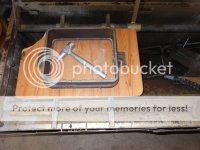
Start the forge up. I use mainly old small engines and screen door frames, I tried soda cans but it takes too long and there is too much dross.

Using the fine screed you need to get a good covering of fine grain sand over the pattern, then switch to the course screed for another covering, then scoop in the rest.

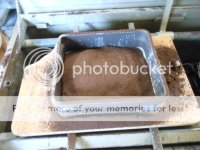

Then using the rammer you compact to perimeter first, then the middle


then strike off the extra sand and flip it over
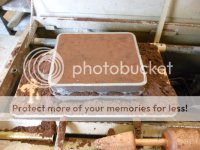

Had a little fall out around the head, but it will work. Now install the top half of the pattern and repeat.

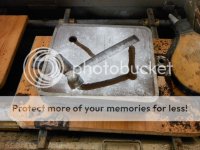
cut in the sprue and riser, some people do this while they are filling the cope, but i like to just cut them in after.
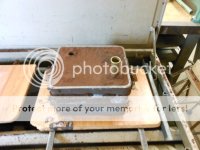
cut in the gates, I like to do two on the hammer cause it is so long
Forge is hot and crucible is ready, I am not the best a judge when exactly to pour, but a little super heat is in it, I'm guessing the Al is around 1500f right here.

pour it in and let it cool

remove and cut of the extra and sand off the flash

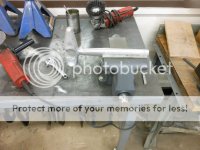
then pass it through the blast cabinet

beginning to end is about two hours or so. I do not let the students handle the liquid aluminum and I will pour about forty of these hammers every school year, this is the first one I have made for myself. Hope you enjoyed the show
I have a foundry and molders bench in my metals shop, and the first year metals students are required to make a casting, while the second year students make a pattern and a casting.
Today I made a casting of a split pattern hammer. It is made of aluminum, but it is a very useful hammer to have and when it gets damaged too bad, you toss it in the forge and make another one.
Start with the split pattern
Place it in the drag and apply parting compound
Start the forge up. I use mainly old small engines and screen door frames, I tried soda cans but it takes too long and there is too much dross.
Using the fine screed you need to get a good covering of fine grain sand over the pattern, then switch to the course screed for another covering, then scoop in the rest.
Then using the rammer you compact to perimeter first, then the middle
then strike off the extra sand and flip it over
Had a little fall out around the head, but it will work. Now install the top half of the pattern and repeat.
cut in the sprue and riser, some people do this while they are filling the cope, but i like to just cut them in after.
cut in the gates, I like to do two on the hammer cause it is so long
Forge is hot and crucible is ready, I am not the best a judge when exactly to pour, but a little super heat is in it, I'm guessing the Al is around 1500f right here.
pour it in and let it cool
remove and cut of the extra and sand off the flash
then pass it through the blast cabinet
beginning to end is about two hours or so. I do not let the students handle the liquid aluminum and I will pour about forty of these hammers every school year, this is the first one I have made for myself. Hope you enjoyed the show

